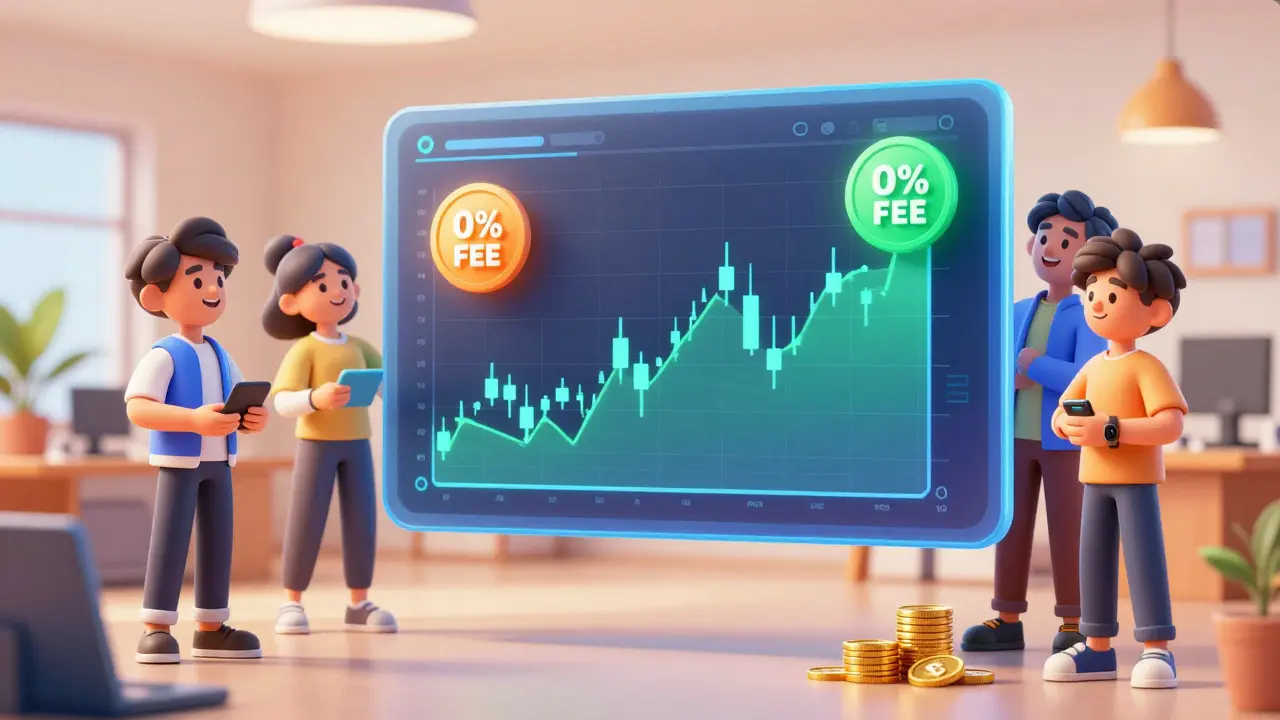
Imagine paying zero fees to trade spot cryptocurrencies. Now imagine doing it without ever uploading your passport or proving who you are. That is the promise of KCEX, a cryptocurrency exchange platform known for its aggressive fee structure and privacy-focused operations. Since launching in 2021, this Seychelles-based entity has carved out a niche that traditional giants like Binance or Coinbase simply cannot touch. But does this low-friction model come with hidden traps? As we move through 2026, the landscape for unregulated exchanges is shifting fast. If you are an active trader looking to maximize profits by minimizing costs, KCEX might be your new best friend. If you are a beginner needing hand-holding and fiat on-ramps, it might be a headache.
I’ve spent time analyzing the data from mid-2025 through early 2026, digging into user reviews, technical specs, and regulatory stances. Here is the raw truth about whether KCEX deserves a spot in your trading portfolio.
The Fee Structure: Why Traders Are Flocking to KCEX
Let’s start with the elephant in the room: money. Specifically, the money you keep instead of handing over to the exchange. In the crypto world, fees eat into margins faster than you can say "slippage." KCEX has disrupted the market by offering some of the most aggressive pricing models I have seen since the early days of decentralized exchanges.
For spot trading, both maker and taker fees are 0%. Yes, zero. This means if you buy Bitcoin or Ethereum, you pay nothing in commission. For derivatives traders, the numbers are equally striking. Maker fees on perpetual futures are also 0%, while taker fees sit at a razor-thin 0.01%. To put that in perspective, major competitors often charge between 0.02% and 0.05% for similar actions. If you are scalping or day trading high volumes, those basis points add up to thousands of dollars saved annually.
| Fee Type | KCEX Rate | Industry Average | Savings Potential |
|---|---|---|---|
| Spot Maker | 0% | 0.10% | High |
| Spot Taker | 0% | 0.10% | High |
| Futures Maker | 0% | 0.02% | Medium |
| Futures Taker | 0.01% | 0.05% | High |
However, there is a catch. These low fees are part of a user acquisition strategy. Experts like Dr. Elena Rodriguez from BTCC.com have noted that such negative or zero-maker fee structures are rarely sustainable long-term without other revenue streams. While great for now, keep an eye on future announcements. The platform may introduce tiered fees or subscription models as it matures.
Privacy First: The No-KYC Advantage
In 2026, identity verification (KYC) is mandatory on almost every regulated exchange. You upload photos, scan IDs, and wait days for approval. KCEX takes a different path. It operates on a no-KYC policy for withdrawals under 30 BTC daily. At current prices, that is roughly $1.8 million in liquidity per day without showing your face.
This feature attracts two main groups: privacy-conscious individuals who value financial anonymity, and high-net-worth traders who want to avoid regulatory friction. For users in jurisdictions with strict capital controls or complex tax reporting requirements, this freedom is invaluable. You sign up, deposit crypto, and start trading. No questions asked.
But here is the reality check: this lack of regulation cuts both ways. Without KYC, there is no recourse if something goes wrong. If you lose your account credentials or fall victim to a phishing attack, customer support has limited ability to verify your ownership beyond wallet signatures. You are entirely responsible for your security. This is not a bank; it is a tool. Treat it accordingly.
Technical Performance: Speed and Liquidity
Low fees mean nothing if the engine stalls during volatility. KCEX boasts a sophisticated matching engine capable of processing transactions with an average latency under 5 milliseconds. During stress tests conducted by independent analysts, slippage remained below 0.1% even for large block trades. This is crucial for futures traders who need precise entry and exit points.
The platform supports over 700 futures trading pairs with leverage options up to 100x. Liquidity depth is another strong suit, with tight bid-ask spreads across more than 800 liquidity pools. According to CryptoCompare data from late 2025, KCEX captured approximately 4.7% of global derivatives trading volume, ranking it among the top 10 exchanges worldwide.
For algorithmic traders, the API is robust. It offers 99.98% uptime and handles up to 100 requests per second via WebSocket integration. This makes it viable for bots and automated strategies that require real-time data feeds. However, documentation is rated as "good but not exceptional," which might frustrate developers accustomed to the polished guides provided by Coinbase or Kraken.
Security Architecture: What You Need to Know
Security is paramount when dealing with digital assets. KCEX employs multi-signature withdrawal protocols and offers an optional 24-hour delay feature for enhanced protection. This delay allows users to cancel unauthorized withdrawals if their account is compromised. It is a simple yet effective layer of defense.
However, the platform lacks third-party security certifications such as SOC 2 Type II. This absence raises eyebrows among institutional investors. Dr. Rodriguez pointed out that the "absence of regulatory sandbox membership creates significant counterparty risk." In plain English: there is no external audit verifying that KCEX holds all user funds in cold storage. While the track record so far has been clean, the lack of transparency is a red flag for conservative investors.
Additionally, KCEX does not maintain an insurance fund for derivative positions. On platforms like Binance or Bybit, an insurance fund covers auto-deleveraging events. On KCEX, if the market moves violently against open positions, liquidations happen strictly based on margin levels. Traders must manage their risk meticulously.
User Experience and Mobile App
Design matters. A cluttered interface leads to mistakes, and mistakes cost money. KCEX’s mobile application, available on Android and iOS, has garnered a 4.5-star rating from over 14,000 reviews on Google Play. Users praise its intuitive layout and smooth navigation. Beginners can execute basic trades within 15 to 30 minutes of signing up, according to internal onboarding metrics.
However, the experience is not perfect. Customer support response times are a frequent complaint. Trustpilot reviews cite average wait times of 48 to 72 hours for non-urgent inquiries. If you encounter a critical issue during peak trading hours, you might be left waiting. Community resources, including a Telegram channel with 85,000 members and a Discord server with 42,000 participants, serve as informal support hubs, but they are not official channels.
Another limitation is the lack of a demo trading mode. New users cannot practice with virtual funds before risking real capital. This steep learning curve might deter beginners who prefer to test strategies in a risk-free environment first.
Limited Fiat Access: The On-Ramp Hurdle
Here is where KCEX falls short for many users. There are no direct fiat on-ramps. You cannot buy Bitcoin with a credit card or bank transfer directly on the platform. You must deposit cryptocurrency from an external source, such as Coinbase, Kraken, or a peer-to-peer service.
This adds friction. You incur transaction fees on the sending exchange, network gas fees for the transfer, and potentially time delays depending on the blockchain used. For users in regions with limited access to other exchanges, this barrier is significant. Reddit users frequently mention using intermediaries, which adds complexity to what should be a simple process.
If you already hold crypto and want to trade actively, this is a non-issue. But if you are starting from scratch with only USD, EUR, or NZD, you will need to use another platform first. Factor these additional costs into your decision-making process.

Regulatory Risks and Geographic Restrictions
KCEX operates in a gray area. It blocks access from 18 territories, including the United States, Canada, and the European Union, using IP-based restrictions. This suggests awareness of regulatory pressures but also highlights the platform’s vulnerability. If global regulations tighten further, KCEX could face forced shutdowns or asset freezes.
The target demographic skews heavily toward Asia (52% of users), Latin America (28%), and Africa (15%). These regions often have less stringent enforcement or higher demand for privacy-focused tools. However, relying on geographic arbitrage is a risky long-term strategy. Chainalysis Regulatory Report from August 2025 gave KCEX only a 40% probability of sustained operation through 2027 due to increasing global scrutiny.
As a trader, you must assess your own risk tolerance. Are you comfortable using a platform that exists outside traditional regulatory frameworks? If yes, KCEX offers unparalleled efficiency. If no, stick to fully compliant exchanges like Coinbase or Kraken, despite their higher fees.
Who Is KCEX For?
KCEX is not for everyone. It shines for specific types of users:
- Active Derivatives Traders: Those who trade high volumes of perpetual futures and benefit from near-zero fees.
- Privacy Advocates: Individuals who prioritize anonymity and wish to avoid KYC procedures.
- Experienced Crypto Holders: Users who already possess cryptocurrency and do not need fiat on-ramps.
- Algorithmic Traders: Developers who leverage the robust API for automated strategies.
Conversely, KCEX is likely not suitable for:
- Beginners: Newcomers who need educational resources, demo accounts, and responsive customer support.
- Fiat-First Investors: Users who want to buy crypto directly with bank transfers or cards.
- Risk-Averse Individuals: Those who require third-party audits, insurance funds, and regulatory compliance.
Final Verdict
KCEX represents a bold experiment in decentralized-style efficiency within a centralized framework. Its fee structure is unbeatable, its speed is impressive, and its privacy focus appeals to a growing segment of the crypto community. However, these benefits come with trade-offs: limited fiat access, slower customer support, and regulatory uncertainty.
If you are an experienced trader seeking to maximize returns through cost reduction and privacy, KCEX is a powerful tool. Just remember to diversify. Do not store all your assets on one platform, especially one without third-party security certifications. Use hardware wallets for long-term storage and treat KCEX as a trading venue, not a savings account.
The crypto market evolves rapidly. Keep an eye on KCEX’s roadmap, particularly the planned introduction of options trading in late 2025. As regulations shift, the platform’s viability may change. Stay informed, stay secure, and trade wisely.
Is KCEX safe to use in 2026?
KCEX employs multi-signature withdrawals and optional 24-hour delays, which enhance security. However, it lacks third-party audits like SOC 2 Type II and an insurance fund. While no major breaches have been reported, the absence of regulatory oversight means you bear full responsibility for your funds. Use strong passwords, enable all security features, and consider it a high-risk, high-reward platform.
Can I buy Bitcoin with USD on KCEX?
No. KCEX does not offer fiat on-ramps. You must deposit cryptocurrency from another exchange or wallet. This means you need to use a platform like Coinbase or Kraken to convert fiat to crypto first, then transfer it to KCEX. Be mindful of network fees and transfer times.
Does KCEX require KYC verification?
KCEX operates with a no-KYC policy for withdrawals under 30 BTC daily. This allows users to trade and withdraw without providing identity documents. However, this privacy comes with risks, including limited recourse in case of account issues and potential regulatory crackdowns.
What are the trading fees on KCEX?
KCEX charges 0% fees for both maker and taker orders in spot trading. For futures trading, maker fees are 0%, and taker fees are 0.01%. This is significantly lower than industry averages, making it attractive for high-volume traders.
Is KCEX available in the United States?
No. KCEX restricts access from 18 territories, including the United States, Canada, and the European Union. Users attempting to access the platform from these regions may find their IPs blocked. Always check the latest terms of service for updated geographic restrictions.

Comments
the whole no-kyc thing is just a fancy way of saying they dont care about you until you try to withdraw and then they ghost you. i have seen this play out a dozen times with these offshore entities. they love the volume but hate the liability. it is not freedom, it is negligence dressed up as privacy.
Oh my god, zero fees?! 🤯 This sounds too good to be true but honestly, who cares if it works for now? I am just here for the gains! 💸✨ If they shut down next year, at least I will have made some money in the meantime. Live fast, die young, leave a beautiful legacy (or empty wallet). 😂🚀
When we look at the broader implications of financial anonymity in a digital age, one must consider that the absence of regulatory oversight creates a vacuum where trust is replaced by speculation, and often, what we perceive as freedom is merely the absence of structure which can lead to chaos rather than liberation, especially when dealing with assets that are inherently volatile and unbacked by any tangible physical commodity or government guarantee.
I have been analyzing the API documentation for similar platforms and while the uptime claims are impressive, the lack of third-party security audits is a massive red flag that most casual traders ignore until it is too late because they are blinded by the allure of low fees without understanding the underlying risk management protocols that institutions rely on to protect capital from systemic failures or malicious insider threats.
It is really interesting to see how different regions approach crypto trading; perhaps there is value in exploring both regulated and unregulated options depending on your specific needs, so please feel free to share your experiences if you have used KCEX or similar platforms, as community knowledge can help everyone stay safer and more informed about potential risks.
The liquidity depth is clearly fabricated to attract retail idiots who think tight spreads mean safety. In reality, the order book is likely spoofed during high volatility events to trigger stop losses before reversing. It is a classic predatory market making strategy disguised as efficiency. You are not saving money on fees; you are paying with your slippage and emotional stability.
its just wrong to support platforms that evade taxes and regulations. they are basically laundering money for criminals and terrorists and calling it privacy. we need to hold them accountable instead of praising their 'efficiency'. shame on anyone who uses this without knowing the ethical implications.
I totally get why people like the low fees!! its super exciting to keep more of your profits... but maybe start small just to test it out?? safety first yall!!! don't put all your eggs in one basket tho!!! hope everyone stays safe and happy trading!!! 🌟💖
While the fee structure is certainly attractive, it is important to note that the lack of fiat on-ramps significantly limits accessibility for new users who may not already possess cryptocurrency holdings, thereby creating a barrier to entry that contradicts the platform's apparent goal of broad adoption among diverse demographic groups seeking efficient trading solutions.
The delta between maker and taker fees is negligible compared to the counterparty risk exposure inherent in an un-audited exchange model. Without SOC 2 Type II certification, the probability of fund misappropriation increases exponentially, rendering the cost savings irrelevant in the event of a catastrophic security breach or insolvency event triggered by leveraged position liquidations.
i use it for scalping mostly since the fees are basically nothing. just make sure you move your profits to a cold wallet regularly because leaving big amounts on any exchange is risky business regardless of the reputation.
Everyone says it is risky but nobody talks about the real risk: boredom! 😴😴😴 Trading on Coinbase is like watching paint dry. Here, you feel alive! Or dead, if you get rug-pulled, but at least it was an adventure! 🎢💥 Who needs safety when you have drama and zero fees? Let the games begin! 🎲🔥
Wake up sheeple! The IP restrictions are just a smokescreen to make you think they are compliant while they feed data to shadowy intelligence agencies. They are testing global surveillance capabilities under the guise of crypto trading. Your 'anonymity' is an illusion crafted by the deep state to track dissidents. Do not fall for the narrative!
It is fascinating to observe how cultural attitudes towards privacy vary across borders, with some societies valuing absolute financial anonymity while others prioritize regulatory compliance and consumer protection mechanisms, suggesting that the success of platforms like KCEX is deeply intertwined with geopolitical contexts and local enforcement capabilities rather than purely technical merits or fee structures alone.
i think it depends on what you need. if you are advanced and know what you are doing, it might be fine. if you are new, stick to the big ones. no right or wrong answer really.
You claim zero fees but do not mention the hidden costs of withdrawal delays and potential account freezes during 'maintenance'. This is deceptive marketing aimed at inexperienced traders who fail to read the terms of service thoroughly. I demand transparency regarding the actual operational risks associated with such aggressive pricing models.
Boring post. Everyone knows this stuff. Just trade and stop whining about regulations. Life is short.
The irony of seeking privacy in a system designed for public ledgers is not lost on me, yet here we are, flocking to centralized exchanges that promise anonymity while holding our keys. It is a paradox wrapped in an enigma, served with a side of greed. 🙃📉
they are hiding something big. the lack of audits means they are probably mixing user funds with corporate accounts to cover bad bets. typical scam setup. stay away unless you want to lose everything. :(
unethical to avoid kyc. pay your taxes. simple as that.
listen up noobs. if you cant handle the risk, go back to stocks. real traders use tools like this to maximize alpha. stop crying about security and start trading. 🐻📈
omg the fees are so low!! i am gonna try it out but only with a tiny bit of money first. lets gooo!! 🙌💰
Considering the intricate dynamics of global financial regulation, it becomes evident that platforms operating outside traditional frameworks offer unique opportunities for those willing to navigate the complexities of self-custody and risk assessment, although one must remain cognizant of the potential legal ramifications and the ever-shifting landscape of international cooperation among regulatory bodies.
The technical specs are decent but the business model is unsustainable. They are burning cash to acquire users who will eventually churn when the novelty wears off or a major hack occurs. It is a race to the bottom on price with no margin for error.