
Real-World Asset (RWA) tokenization is moving fast. By 2030, the market could hit nearly $24 billion. But speed doesn't mean safety. If you’re looking to tokenize assets like real estate or commodities, the biggest hurdle isn’t technology-it’s law. The core question is simple but tricky: does your token represent actual legal ownership, or just a promise from a company? Getting this wrong can turn your project into a lawsuit.
What Is RWA Tokenization?
RWA Tokenization is the process of converting rights to physical or financial assets into digital tokens on a blockchain. Think of it as taking a piece of land, a gold bar, or a royalty stream and splitting its value into digital shares. These tokens sit on a ledger, but they point to something in the real world.
The goal is clear: make illiquid assets tradable, allow fractional ownership, and cut out middlemen. However, the blockchain itself doesn’t grant legal title. It only records data. That’s why the legal wrapper around the token matters more than the code.
The Core Legal Question: Ownership vs. Contract
Every RWA project must answer one question early: is the token the asset, or is it a claim against an entity holding the asset?
- Direct Tokenization: The token represents direct legal title to the asset. This is rare because most national laws don’t recognize a blockchain entry as proof of ownership for things like land or art. Without statutory recognition, courts may not enforce your rights.
- Indirect Tokenization (SPV): A Special Purpose Vehicle (SPV)-usually a private company or trust-holds the asset. The tokens represent shares or beneficial interests in that SPV. This is the standard approach because it fits into existing corporate and securities laws.
In indirect structures, you don’t own the building; you own a slice of the company that owns the building. This distinction is critical during insolvency. If the platform collapses, are you a secured creditor with a claim on the asset, or an unsecured creditor chasing dust? The legal structure decides that.
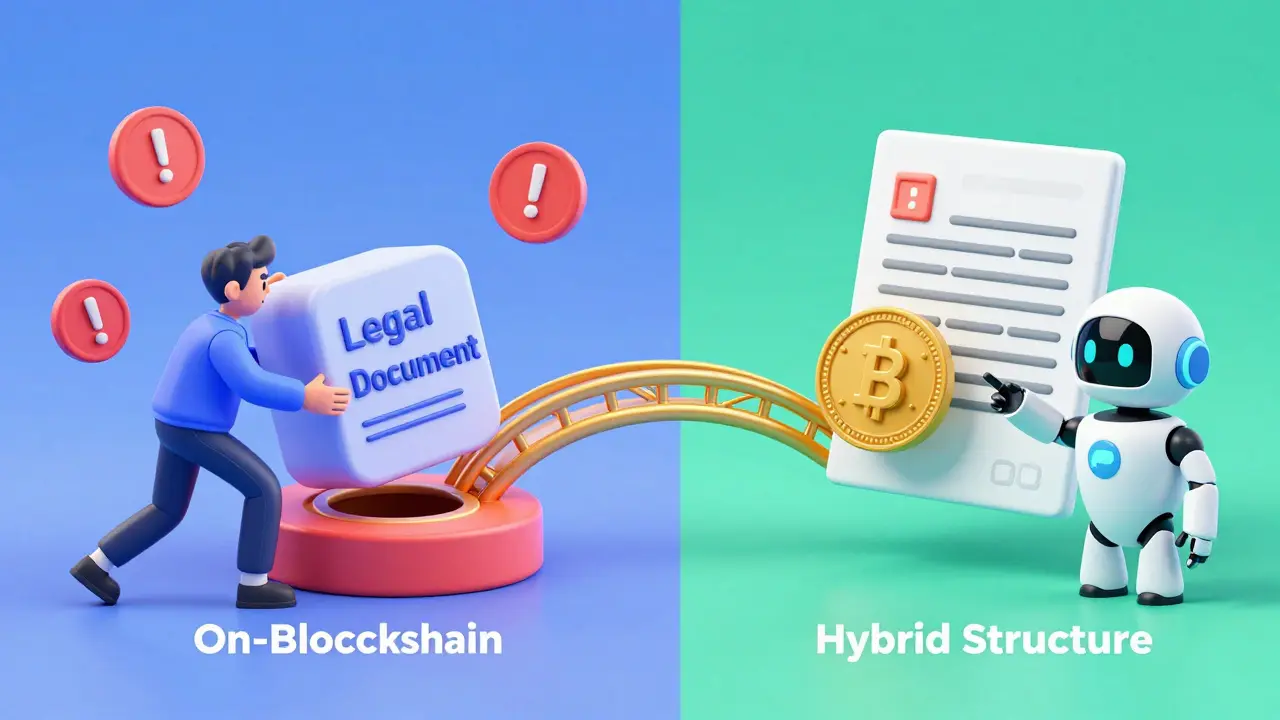
Token Structures: On-Chain, Off-Chain, and Hybrid
How you manage the legal and technical sides determines your risk profile.
| Structure Type | Description | Legal Certainty | Best For |
|---|---|---|---|
| On-Chain | All legal info and transfers happen on the blockchain. | Low (unless supported by specific national laws) | Crypto-native assets, stablecoins |
| Off-Chain | Tokens are digital receipts; rights are held by third parties via traditional contracts. | High (relies on established contract law) | Real estate, fine art, commodities |
| Hybrid | Ownership records are on-chain, but sensitive docs stay off-chain with registries. | Medium-High | Private credit, intellectual property |
Most successful RWAs use a hybrid or off-chain approach. The blockchain handles efficiency and transparency, while traditional law handles enforceability. Don’t try to force a square peg into a round hole by putting everything on-chain if your local law doesn’t support it.
Regulatory Landscapes: EU vs. US
Where you launch changes everything. Regulatory clarity varies wildly between jurisdictions.
European Union: MiCA
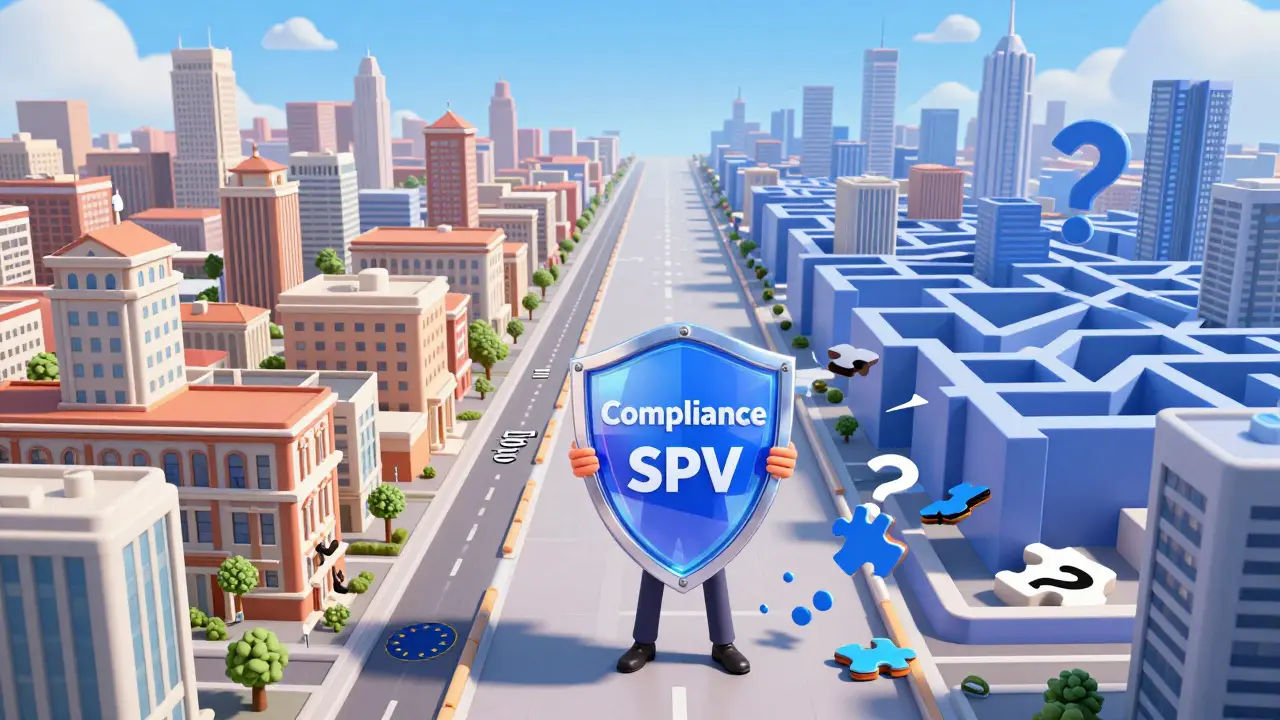
The EU leads with MiCA (Markets in Crypto-Assets Regulation). Effective since June 2023, MiCA provides a unified rulebook. It clearly defines what counts as a crypto-asset versus a security. If your RWA falls under MiCA, you have legal certainty. You still need to comply with Anti-Money Laundering (AML) rules and the Travel Rule, which requires sharing sender/receiver details for every transfer. But at least the path is paved.
United States: Fragmented Rules
The US lacks a single federal framework for RWAs. Instead, you face the Howey Test, a Supreme Court ruling used to determine if a token is an investment contract (i.e., a security). If it is, you must register with the SEC or find an exemption.
- Regulation D: Allows sales to accredited investors without full registration.
- Regulation A+: Permits smaller public offerings with limited disclosure.
- Regulation S: Covers offshore transactions.
Navigating this requires careful legal opinion work. Misclassifying a token as a non-security when it’s actually a security can lead to heavy fines and forced buybacks.
Building the Legal Wrapper
You can’t code your way out of bad legal structuring. Here’s what needs to be in place before you mint a single token.
- Asset Selection & Valuation: Not all assets tokenize well. Real estate works because titles are clear. Art is harder due to authenticity issues. Ensure the asset has a verifiable value and clear ownership history.
- SPV Formation: Create a separate legal entity for each asset or portfolio. This isolates liability. If one property fails, it doesn’t drag down your other tokens. Use Series LLCs or distinct trusts to prevent cross-contamination.
- Smart Contracts & Legal Agreements: Your smart contract should reference the legal agreement. It acts as the execution mechanism, not the source of truth. Include clauses for transfer restrictions, KYC checks, and dispute resolution.
- Custody Solutions: Who holds the keys? Use licensed custodians who offer legal segregation and insurance. Self-custody is risky for institutional-grade RWAs.
Expect to spend 200-400 hours on legal documentation for a single asset. Costs range from $50,000 to $250,000 depending on complexity. This isn’t overhead; it’s insurance.
Compliance Essentials: AML and KYC
Regardless of jurisdiction, regulators demand transparency. Your platform must integrate robust Know Your Customer (KYC) and Anti-Money Laundering (AML) checks.
The Travel Rule is particularly strict. Every transaction must carry originator and beneficiary information. This means anonymous trading is off the table for compliant RWAs. You’ll need identity verification tools that work seamlessly with your blockchain infrastructure. Failure to comply can result in license revocation and criminal charges.
In the EU, the upcoming Digital Operational Resilience Act (DORA), effective January 2025, will add cybersecurity requirements. Platforms must prove they can withstand cyberattacks without losing user funds or data. Build resilience into your architecture from day one.
Risks and Pitfalls to Avoid
Even with perfect structure, risks remain. Here’s what keeps lawyers awake at night.
- Title Risk: If the underlying asset’s title is flawed, the token is worthless. Always conduct thorough due diligence on the asset’s legal status.
- Insolvency Confusion: In bankruptcy, token holders often become unsecured creditors unless the legal structure explicitly protects them. Ensure your SPV agreements prioritize tokenholder claims.
- Regulatory Arbitrage: Launching in a lax jurisdiction to avoid stricter rules backfires. Regulators cooperate globally. A project banned in one country may get blacklisted elsewhere.
- Tax Uncertainty: Tax treatment of tokenized assets varies. Are they capital gains? Income? Property? Get a tax opinion early to avoid surprises for investors.
A failed art tokenization project in 2024 serves as a warning. The team used direct asset tokenization without strong contractual protections. When the platform collapsed, token holders had no legal claim to the art-they were treated as general creditors. They lost everything.
Future Outlook: Standardization and Growth
The industry is maturing. The International Swaps and Derivatives Association (ISDA) is drafting standardized legal templates for RWAs, expected in late 2024. This will reduce legal costs and increase consistency.
Deloitte predicts an 85% chance that RWA tokenization becomes a standard asset management tool within 7-10 years. Institutional interest is growing, with 68% of investors saying clearer regulations would boost their participation. As frameworks like MiCA stabilize and global standards emerge, the gap between traditional finance and blockchain will close.
For now, success depends on patience and precision. Don’t rush to tokenize. Build a solid legal foundation first. The technology is ready; the law is catching up. Make sure you’re on the right side of both.
Is RWA tokenization legal?
Yes, but it depends on how you structure it. Most jurisdictions allow RWA tokenization if you comply with securities laws, AML regulations, and use proper legal wrappers like SPVs. Direct tokenization without legal backing is often unenforceable.
What is the difference between on-chain and off-chain tokenization?
On-chain tokenization records all legal rights and transfers directly on the blockchain. Off-chain uses tokens as digital receipts while keeping legal rights in traditional contracts and registries. Off-chain is more common for RWAs because it aligns better with current laws.
How do I know if my RWA token is a security?
In the US, apply the Howey Test. If investors expect profits from the efforts of others, it’s likely a security. In the EU, check MiCA classifications. Consult legal counsel to determine if you need to register with the SEC or follow exemptions.
Why use an SPV for RWA tokenization?
An SPV (Special Purpose Vehicle) isolates liabilities. It holds the asset legally, so if the project fails, the asset remains protected. Tokens represent interests in the SPV, making enforcement easier under existing corporate laws.
What are the main risks of RWA tokenization?
Key risks include title defects, regulatory misclassification, insolvency exposure where tokenholders become unsecured creditors, and lack of cross-jurisdictional compliance. Proper legal structuring mitigates these risks.
Does MiCA cover all RWA types?
MiCA covers many crypto-assets, including some RWAs like revenue-sharing rights and commodities. However, traditional securities still fall under existing financial regulations. Always verify the classification of your specific asset type.