
Iran doesn’t ban cryptocurrency - it controls it. While many countries struggle to decide whether crypto is a threat or an opportunity, Iran has made its choice: regulate everything, profit from it, and punish anyone who tries to bypass the system. If you’re living in Iran or doing business there, understanding how crypto works under the law isn’t optional - it’s survival.
Legal Mining: Licensed or Locked Up
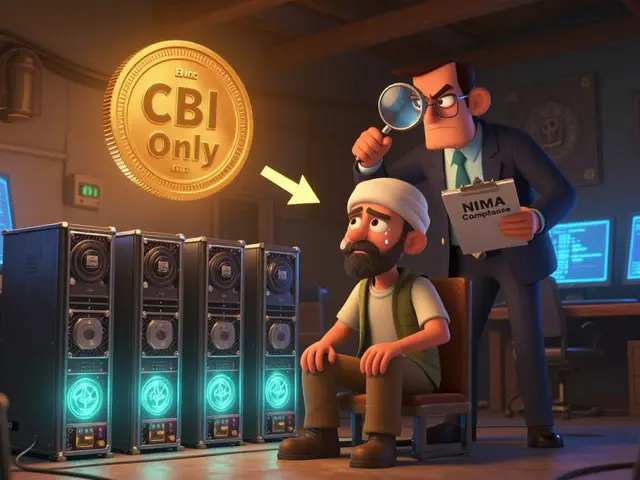
Crypto mining became legal in Iran in 2019, but not because the government loved Bitcoin. It was a crisis response. Thousands of unlicensed miners were draining the national power grid, especially during winter. The government had two choices: shut it all down and risk public anger, or take control. They chose control. Today, you can legally mine cryptocurrency - but only if you get a license from the Ministry of Industry, Mine and Trade. And it’s not easy. You must use government-approved hardware. No imported rigs from China or the U.S. unless they’re on an official list. You must pay electricity rates tied to export prices, not the cheap, subsidized rates locals get. That means mining costs more than it used to - but it’s still cheaper than in most other countries. Here’s the catch: every single mined coin must be sold to the Central Bank of Iran (CBI) through the National Iranian Money Changer Association (NIMA). You don’t get to keep your profits. You don’t even get to convert them to rials on your own. The state takes your crypto, sells it abroad, and gives you a fixed rial payout. In 2025, over 1,000 legal mining licenses were issued. Sounds like progress? Maybe. But experts estimate 95% of mining still happens illegally. Why? Because the state’s cut is too high, and the bureaucracy too slow.Trading and Holding: Only Through the State
Buying, selling, or holding crypto? Also legal - but only if you’re licensed by the CBI. Every individual, business, or exchange must apply. No exceptions. The CBI doesn’t just approve you - it watches everything. Every transaction, every wallet address, every transfer. The government has direct, real-time access to all crypto data under Executive Order 2025-01. There’s no privacy. There’s no anonymity. Iran’s biggest exchange, Nobitex, handles about 87% of all crypto trades in the country. It’s not just popular - it’s the only one that’s fully compliant. Other platforms either shut down or operate in the gray. If you’re trading on an unlicensed app, you’re breaking the law. And the government is cracking down. In 2025 alone, authorities shut down 100 illegal mining farms and seized over 250,000 mining devices. They’re not just targeting big operations - they’re going after home miners with a few rigs in their garages.The Tax That Changed Everything
In August 2025, Iran introduced its first-ever capital gains tax on cryptocurrency. It wasn’t a surprise - it was inevitable. Gold, real estate, foreign currency - they’ve all been taxed for years. Crypto was the last unregulated asset. Now, it’s treated the same. If you buy Bitcoin and sell it for a profit, you owe taxes. The rate? Not officially published, but sources say it’s around 15-20%, similar to other speculative assets. The tax law came with a twist: it only applies to transactions over 100 million rials (roughly $2,000 USD). That’s not meant to catch small traders. It’s meant to catch the big ones - the people turning crypto into real wealth. And it’s working. Since the law took effect, traders have started keeping detailed records. Some even hire accountants. Before, no one cared. Now, they do.
Sanctions, Stablecoins, and the Great USDT Exodus
Iran’s crypto market isn’t just shaped by local laws - it’s shaped by U.S. sanctions. When Tether froze addresses linked to Iranian exchanges in July 2025, panic hit. USDT was the lifeblood of Iran’s crypto economy. It was the bridge between rials and global markets. Without it, people couldn’t pay for imports, send money abroad, or hedge against inflation. What happened next was fast and smart. Iranian exchanges, influencers, and even government-aligned channels pushed users to swap USDT for DAI - a stablecoin built on the Polygon network. Why Polygon? Because it’s less monitored by Western regulators. Why DAI? Because it’s decentralized and harder to freeze. Within weeks, millions of dollars moved from USDT to DAI. It wasn’t perfect - liquidity dropped, prices fluctuated - but it kept the system alive. This isn’t just a technical fix. It’s a survival tactic. Iran’s crypto ecosystem has learned to adapt to external pressure better than most. They don’t fight sanctions head-on. They work around them - using crypto not as a rebellion, but as a tool.Why Do Iranians Even Use Crypto?
You might think Iranians use crypto because they’re tech-savvy or into decentralization. They’re not. They use it because the rial is collapsing. Inflation hit 50% in 2024. Salaries don’t keep up. Savings vanish. Banks are slow. Foreign currency is hard to get. Crypto - especially stablecoins - became the only reliable way to preserve value. For ordinary people, it’s simple: buy DAI or USDT with rials, hold it, then sell it when you need to pay for medicine, school fees, or imported goods. Many use it for daily transactions. Some even get paid in crypto. A growing number of freelancers, programmers, and online sellers now invoice clients in stablecoins. It’s not official. It’s not regulated. But it’s happening.The Bigger Picture: Crypto as a National Strategy
Iran isn’t just letting people trade crypto - it’s using it as a weapon. The government has quietly partnered with Russia to develop a gold-backed stablecoin for cross-border trade. The goal? Bypass SWIFT and avoid U.S. financial controls. Iranian companies have been allowed to pay for imports using crypto since 2023. It’s not widely publicized, but it’s real. The CBI sees crypto as a way to earn foreign currency without selling oil. By taxing miners, forcing them to sell to the state, and controlling all transactions, Iran turns a global technology into a state revenue stream. In the first seven months of 2025, Iran processed $3.7 billion in crypto flows - down 11% from 2024, but still massive for a sanctioned economy. Economic Affairs Minister Hemmati has openly praised this model. He calls it “organizing the chaos.” He’s not wrong. Iran didn’t win the crypto race. It didn’t become a blockchain hub. But it turned a threat into a lifeline.
What Happens If You Break the Rules?
Getting caught mining without a license? Your equipment is seized. You’re fined. In serious cases, you could face jail time. Trading on an unlicensed exchange? Your account is frozen. Your rial balance could be confiscated. The government doesn’t just punish - it makes examples. There’s also a public reporting system. Citizens can report illegal mining operations through a hotline. Rewards are offered for tips that lead to shutdowns. It’s a classic state tactic: turn neighbors into enforcers.Who’s Really in Control?
The Central Bank of Iran is the only authority that matters. No other ministry, no court, no parliament - the CBI decides everything. They set the rules. They approve licenses. They collect the coins. They monitor every transaction. And they’re getting better at it. In early 2025, President Masoud Pezeshkian issued a directive making the CBI the sole regulator of digital currency. That’s not a technical change. It’s a power grab. The message is clear: crypto is not a freedom tool. It’s a state asset.What’s Next for Crypto in Iran?
Expect tighter controls. More taxes. More surveillance. The government is already testing blockchain-based systems to track crypto-to-rial conversions in real time. They’re working on a national digital wallet for crypto users - one that links directly to your ID and bank account. International pressure will keep rising. More stablecoin providers may freeze Iranian addresses. But Iran has shown it can pivot fast. If USDT goes dark again, they’ll move to another chain. If DAI gets blocked, they’ll find a new one. They’ve built a resilient, underground financial system - and they’re not giving it up. For Iranians, crypto isn’t about innovation. It’s about keeping food on the table. For the state, it’s about staying solvent. And for the rest of the world? It’s a warning: when a country is cornered, it doesn’t quit. It adapts.Is cryptocurrency legal in Iran?
Yes, but only under strict government control. Mining, trading, and holding crypto are legal if you have a license from the Central Bank of Iran (CBI). All transactions must go through state-approved channels, and miners must sell their coins to the CBI. Unlicensed activity is illegal and heavily punished.
Can I mine cryptocurrency in Iran without a license?
No. Mining without a license is illegal. The government has seized over 250,000 unlicensed mining devices since 2024 and shut down 100 illegal mining farms in 2025 alone. Even home miners are being targeted. The penalties include fines, equipment confiscation, and possible jail time.
Do I have to pay tax on crypto profits in Iran?
Yes. Since August 2025, Iran imposes a capital gains tax on cryptocurrency profits, similar to taxes on gold, real estate, and forex. The tax applies to trades over 100 million rials (about $2,000 USD). Rates are estimated between 15% and 20%. Traders are now required to keep records and report earnings.
Why did Iranians switch from USDT to DAI?
In July 2025, Tether froze Iranian-linked USDT addresses due to U.S. sanctions. This cut off a major way Iranians accessed global markets. In response, exchanges and influencers pushed users to swap USDT for DAI on the Polygon network - a less monitored blockchain. The move helped preserve liquidity and avoid further freezes, showing how Iran’s crypto users adapt to external pressure.
Can I use crypto to pay for imports in Iran?
Yes. Since May 2023, Iranian companies have been allowed to use cryptocurrency to pay for imports. This is part of a broader strategy to bypass U.S. financial sanctions. The government works with state-approved exchanges to convert crypto into foreign currency for importers, though the process is tightly controlled and monitored by the Central Bank of Iran.
Is crypto used by ordinary Iranians, or just for sanctions evasion?
Mostly for everyday survival. While a small fraction (0.9%) of crypto activity involves sanctions evasion, the vast majority of Iranians use crypto to protect savings from inflation, pay for goods and services, and send money abroad. For many, crypto is the only reliable way to preserve value when the rial loses half its worth in a year.
What happens to the crypto I mine legally in Iran?
You must sell all mined cryptocurrency to the Central Bank of Iran through the NIMA system. You don’t get to keep or trade it yourself. The CBI sells the coins abroad and pays you a fixed amount in rials. This is how the government turns mining into state revenue - not individual profit.
Are there any crypto exchanges in Iran that are safe to use?
Only Nobitex is fully licensed and compliant with CBI regulations. It handles 87% of all crypto trading in Iran. Other platforms may still operate, but they’re unregulated and risky. Using them could lead to account freezes, fines, or legal trouble. If you want to trade legally, Nobitex is your only option.
Comments
Of course the state controls it. Did you really think they’d let Bitcoin slip through their fingers? This is Iran - they don’t just regulate crypto, they weaponize it. They’re using it to bypass sanctions while making sure no one gets rich off it except the regime. It’s not economics, it’s control disguised as innovation. And don’t tell me they don’t track every single wallet - they’ve had surveillance tech since the 80s. This is just the next phase.
They’re not mining for profit. They’re mining for leverage. The CBI isn’t a bank - it’s a digital customs house. And if you think DAI is safe? Wait till the next US sanctions wave hits Polygon. They’ll freeze that too. They always do.
They’re not adapting. They’re evolving. And we’re all just watching the puppet show.
Remember when the US froze Iranian oil payments? Now they’re freezing crypto. Same playbook. Different wires.
They’re not even trying to hide it anymore. It’s all out in the open. And that’s the scariest part.
Who’s really running the CBI? The president? The Revolutionary Guard? The mullahs? Doesn’t matter. Whoever holds the keys to the blockchain holds the country.
It’s not crypto. It’s crypto-feudalism.
And the people? They’re just nodes in a system that doesn’t care if they live or die - as long as the rials keep flowing.
Next stop: state-mandated crypto wallets tied to your biometrics. You’ll have to scan your iris just to buy a bag of rice. And you’ll thank them for it.
Don’t believe me? Wait five years. You’ll see. They’ve already started building the infrastructure.
They didn’t win the crypto race. They rewrote the rules. And we’re all playing by them now.
so they tax crypto but the rial is still garbage lol
why even bother
people are just using it to survive not to get rich
and the state takes the profit
classic
theyre not trying to be fair
theyre trying to stay alive
and so are we
What’s fascinating here isn’t the regulation - it’s the efficiency of adaptation. Iran has turned a decentralized technology into a centralized fiscal tool with startling precision. The shift from USDT to DAI wasn’t just technical; it was strategic. They identified a vulnerability and moved with surgical speed. Most nations panic when sanctions hit. Iran recalibrates.
The fact that 95% of mining remains underground speaks volumes. People aren’t resisting because they’re rebellious - they’re resisting because the system is rigged. The state wants control, but it doesn’t want to choke the life out of its own economy. So they allow the chaos - as long as they can tax it.
And yes, the capital gains tax is a game-changer. It’s not about fairness. It’s about normalization. Crypto is no longer fringe. It’s now part of the national financial fabric - whether you like it or not.
What’s missing from most Western analyses is the human layer. This isn’t about ideology. It’s about a mother buying insulin with DAI because her salary can’t keep up with inflation. That’s the real story. The state may control the pipes, but the people keep the water flowing.
Of course Iran’s doing this. They’ve been using crypto as a sanctions evasion tool since 2020. The US has been asleep at the wheel. This isn’t innovation - it’s economic warfare. And now they’re turning it into a state-run cash cow. Brilliant. Absolutely brilliant. And we’re just sitting here watching like it’s a documentary.
They’re not trying to be fair. They’re trying to survive. And guess what? They’re winning. The West thinks blockchain is about freedom. Iran knows it’s about power. And they’re using it better than anyone.
Why are we surprised? They’ve been hacking the global financial system since the 70s. Crypto is just the latest weapon. And now they’ve got their own gold-backed stablecoin in the works. Next stop: replacing SWIFT with blockchain ledgers. And we’re still arguing about whether crypto is a bubble.
Wake up. This isn’t tech. It’s geopolitics. And Iran just outmaneuvered us.
This is actually kind of inspiring. Imagine being in a country where your currency is collapsing, your banks are useless, and your government is watching every move - and still, people find a way to survive. They’re not waiting for permission. They’re not asking for help. They’re just adapting. Swapping USDT for DAI? That’s not just tech savvy - that’s genius.
Most of us complain about our taxes. Iranians are using crypto to buy medicine. That’s not rebellion. That’s resilience.
And the fact that they’re building a whole parallel financial system under sanctions? That’s not a failure of capitalism. That’s capitalism at its most raw, real, and human.
We need to stop seeing this as a threat. It’s a lesson. When systems fail, people don’t wait for rescue. They build their own. And honestly? We should be learning from them, not judging them.
Let’s be real - this isn’t about Bitcoin. It’s about dignity. When your salary buys less bread each week, you don’t care if it’s decentralized or not. You care that it doesn’t vanish overnight. Crypto isn’t a political statement for most Iranians - it’s a lifeline.
The state’s control? It’s brutal. But it’s also pragmatic. They know they can’t stop crypto. So they’re turning it into a revenue stream. It’s not moral. It’s survival.
And the shift to DAI? That’s not just a workaround - it’s a cultural shift. Iranians aren’t waiting for permission to innovate. They’re just doing it. No fanfare. No press releases. Just quiet, relentless adaptation.
This is what happens when a society is pushed to the edge. They don’t collapse. They rewire.
And if the West thinks this is a threat? Maybe we should ask why we’re so afraid of people finding their own way.
They're lying. Always lying. This whole 'state-controlled crypto' thing? It's just a cover for the IRGC to launder money. You think the CBI is really taxing miners? Nah. The money goes straight to Quds Force accounts. They're using DAI because it's harder to trace - but guess what? The US Treasury already knows. They're just waiting for the right moment to hit.
And don't even get me started on 'legal mining'. That's just a front for military-grade rigs running 24/7. The power grid? It's all a scam. They're stealing electricity and calling it 'regulated'.
And the tax? Please. No one pays it. They just report fake numbers. The whole system is a joke. A very dangerous, very expensive joke.
And you think this is about survival? No. It's about control. And the people? They're just pawns. Always have been.
Next thing you know, they'll be forcing everyone to use their own crypto wallet. And it'll be tied to your national ID. And your phone. And your blood type. And your prayers. They're building the ultimate surveillance state. And we're all just watching.
They're not adapting. They're becoming the monster.
😭
so they tax crypto but still let people mine
and then take the coins
and pay them in rials
lol
theyre not running a system
theyre running a pyramid scheme
and the people are the last layer
and the cbi is the guy at the top
with the gold-plated rig
in his basement
in tehran
laughing
It’s almost poetic how pathetically transparent this is. A regime that can’t even keep its own currency stable is now trying to monetize blockchain technology? How quaint. The irony is almost charming - they’ve turned a symbol of decentralization into the most centralized financial instrument on earth.
And they call it ‘organizing the chaos.’ What a euphemism. It’s not organization. It’s extraction. They’re not innovating. They’re parasitizing.
Let’s be honest - this isn’t a national strategy. It’s a desperate, clumsy attempt to paper over a failing economy with digital glitter. And the fact that people still use it? That’s not resilience. That’s resignation.
They don’t understand crypto. They just want to steal it. And the world is watching - and laughing.
Let’s not romanticize this. Yes, Iranians are using crypto to survive. But the state isn’t letting them - they’re harvesting them. Every mined Bitcoin, every DAI swap, every transaction is a data point. Every wallet is tracked. Every miner is monitored. This isn’t freedom. It’s financial captivity wrapped in blockchain.
The government didn’t legalize crypto because they believe in it. They legalized it because they realized they couldn’t stop it. So they turned it into a tax farm. And the people? They’re just the cattle. They get to graze, but they don’t own the pasture.
And the shift from USDT to DAI? That’s not innovation - that’s desperation. It’s the same old game: when one door closes, you kick down the next one. But the walls are still there. The surveillance is still there. The CBI still owns the keys.
And the capital gains tax? It’s not about fairness. It’s about control. They want to know how much you made. They want to know when you sold. They want to know if you’re getting rich. And if you are? They’ll take it.
This isn’t a financial revolution. It’s a digital feudal system. And the peasants? They’re still paying the lord - just in crypto now.
And the worst part? They think they’re winning. They think they’re outsmarting the West. But they’re not. They’re just building a gilded cage. And the world is watching - not in admiration, but in pity.
What’s happening in Iran isn’t just about crypto. It’s about the nature of power in the digital age. When a state can’t control its currency, it tries to control its information. Crypto, with its pseudonymity and global reach, was supposed to break that control. But Iran didn’t break it - they bent it.
They didn’t destroy decentralization. They absorbed it. They turned the network into a pipeline. The miners still mine. The traders still trade. But every flow is channeled, measured, taxed. It’s not a revolution. It’s a reclamation.
This is what happens when authoritarianism meets technology: not collapse, but co-optation. The state doesn’t need to ban crypto. It just needs to own the endpoints.
And the people? They’re not resisting. They’re negotiating. They’re using the system to survive, even as the system uses them to sustain itself. It’s tragic. It’s brilliant. It’s human.
Maybe the real lesson isn’t how Iran controls crypto - but how people still find ways to live inside its grip. The system is rigged. But life? Life finds a way.
Iran didn't invent crypto. But they invented crypto-as-a-state-tool. That's the real innovation here. No other country has turned a decentralized mess into a centralized cash register with such cold efficiency.
They didn't win the blockchain race. They built a new track. And they're the only ones with the keys to the gate.
USDT froze? Fine. Swap to DAI. Polygon? Perfect. Less oversight. More chaos. That's the Iranian playbook: exploit the gaps in the global system while pretending you're obeying it.
And the tax? 15-20%? That's not a tax. That's a toll. Pay to play. And if you don't pay? You get locked out. Or worse - you get reported by your neighbor.
This isn't regulation. It's extortion with a blockchain ledger.
And the best part? The world is too busy arguing about Bitcoin to notice they just rewrote the rules.
Iran didn't beat the system.
They became it.
The depth of this situation is both sobering and profoundly human. At its core, this is not about technology, regulation, or geopolitics - it is about dignity in the face of systemic collapse. For many Iranians, cryptocurrency is not an investment or a rebellion - it is a quiet act of preservation. A mother securing her child’s medicine. A teacher paying for tutoring in DAI because her salary no longer reaches the end of the month. A freelancer receiving payment in stablecoins because the banking system has become a labyrinth of delays and devaluations.
The state’s control is undeniable, and its mechanisms are oppressive. Yet, the persistence of these everyday acts of survival speaks to a resilience that no law, no surveillance, no tax can extinguish. The CBI may own the infrastructure, but the people own the purpose.
This is not a victory for authoritarianism. It is a testament to the enduring will of ordinary people to adapt, endure, and find light even when the system tries to extinguish it.
There is no heroism here. Only humanity.
Look, I get it. The rial is garbage. Inflation is out of control. People are desperate. But that doesn’t make this system any less predatory. The government doesn’t care if you survive - they care if they get paid. Every single miner is a paycheck for the state. Every DAI swap is a fee. Every transaction is logged. Every wallet is watched.
And the worst part? You’re supposed to be grateful. You’re supposed to say, ‘At least they let us mine.’ But they didn’t let you. They took it. And now they’re charging you for the privilege of surviving.
They don’t want you to be rich. They don’t even want you to be free. They just want you to keep working so they can keep stealing.
And don’t tell me this is ‘organizing the chaos.’ It’s not organizing. It’s exploiting. The CBI isn’t a bank. It’s a tax collector with a blockchain.
And the people? They’re not adapting. They’re being drained.
They’re not building a future. They’re just trying not to die.
And that’s not a strategy. That’s a tragedy.
And we’re all just watching.
And now the CBI is testing blockchain-based wallets tied to national IDs. Next stop: mandatory crypto usage. You’ll need to log into your state wallet just to buy bread. And if you don’t? Your rial balance gets frozen. Your phone gets blocked. Your kid’s school gets notified.
They’re not just controlling crypto.
They’re turning it into the new rial.
And you’ll thank them for it.