
Bitrecife looks like a crypto exchange. It has a clean website, smooth interface, and bold claims: "Zero fees," "Guaranteed profits," "Instant withdrawals." It even shows fake videos of Elon Musk and Warren Buffett endorsing it on Instagram and Facebook. But here’s the truth: Bitrecife is a scam.
It Doesn’t Exist as a Real Company
Every legitimate crypto exchange has a public team, a registered office, and regulatory oversight. Coinbase has offices in San Francisco. Binance is registered in multiple countries. Kraken publishes quarterly proof of reserves. Bitrecife? Nothing. No founder names. No headquarters address. No license from the SEC, FCA, ASIC, or any other financial authority. The domain bitrecife.com was registered in September 2023 with private WHOIS details - a classic red flag. Scammers use private registration to hide who’s behind the operation. Real companies don’t hide.The "Guaranteed Profits" Lie
If you’re new to crypto, you might believe a platform that promises 10%, 20%, even 50% daily returns. That’s not trading. That’s fantasy. Real crypto traders, even the best ones, make 5% to 15% annually on average. Bitrecife claims you can turn $500 into $5,000 in a week. That’s not possible without insider manipulation - and that’s exactly what they do. They use a "pump and dump" trick. You deposit $200. You see your balance jump to $800 in a few hours. You think you’re a genius. Then you try to withdraw. Suddenly, you’re told you need to pay a "verification fee" of $150. Or your account is flagged for "unusual activity." Or they ask for your private key to "secure your funds." Every time you pay, they invent a new reason to block you. This is the "salting" technique: give a little, take a lot. Chainalysis documented this exact pattern in their 2023 Crypto Crime Report.Fake Reviews and Future Dates
You might check Trustpilot or REVIEWS.io and see a few positive reviews. That’s the scam’s next layer. Trustpilot has only two reviews for Bitrecife as of late 2023 - far too few for a platform claiming global users. REVIEWS.io shows a review dated October 3, 2025 - a date that hasn’t happened yet. That’s not a mistake. That’s proof the reviews are fake. The FTC warned in 2022 that fake reviews are one of the top tactics used by crypto scams. Bitrecife isn’t just dishonest. It’s sloppy.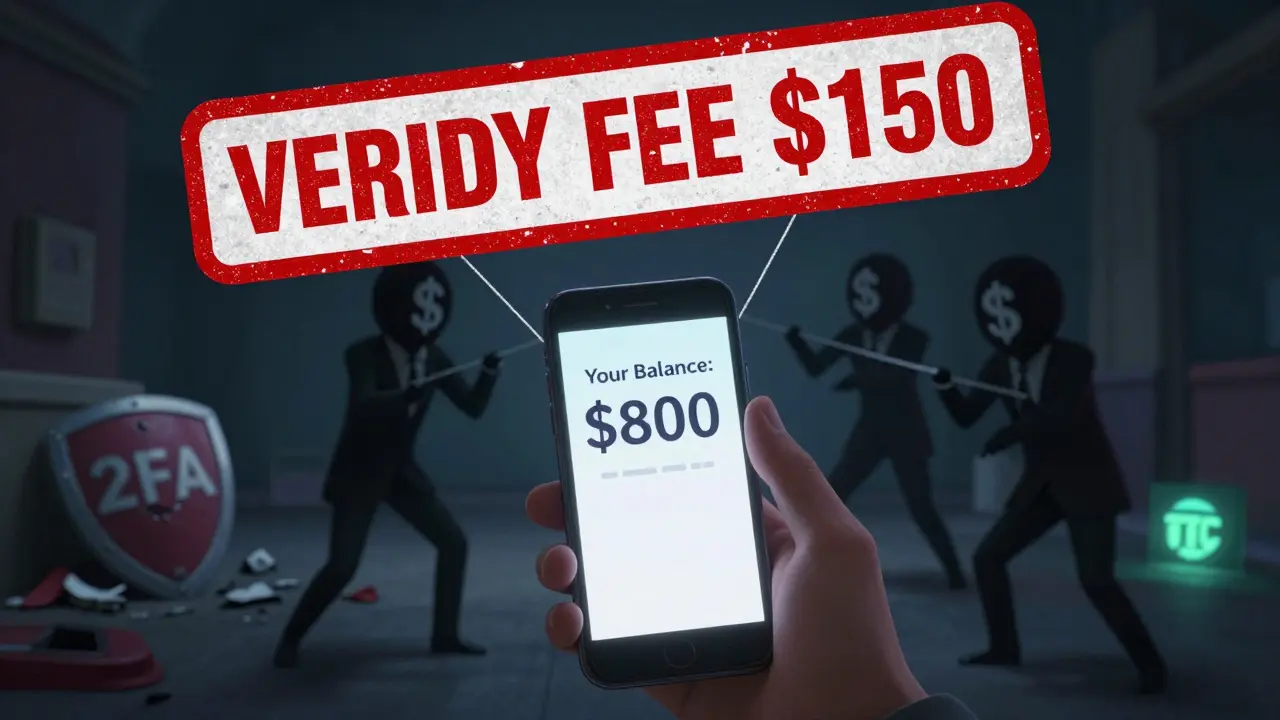
No Security, No Transparency
Legit exchanges use SSL certificates that are publicly verifiable. Bitrecife’s site has a certificate, but it’s issued by a known scam hosting provider. Cybersecurity experts at CryptoSecurity Watchdog found suspicious JavaScript code that hides user activity from browser inspectors. There’s no API documentation. No security whitepaper. No bug bounty program. No two-factor authentication (2FA) setup guide. Meanwhile, Coinbase, Kraken, and Binance all publish detailed security protocols. Bitrecife doesn’t just lack security - it actively hides its lack of it.Users Are Losing Money - and Reporting It
On Reddit’s r/CryptoScams, users like "CryptoWatcher87" posted detailed stories of losing $1,200 after being asked for "verification fees" to release their funds. These aren’t isolated cases. The FBI’s IC3 report from 2022 shows this exact pattern: scammers allow small withdrawals to build trust, then block everything after a larger deposit. Bitrecife follows the same script. When users complain, support vanishes. No email. No phone. No live chat that connects to a real person. Just a bot that repeats: "Your request is being processed."Why It’s Targeting Beginners
Bitrecife doesn’t want experienced traders. They want people who don’t know how crypto works. Their ads on Instagram and Facebook show quick, easy profits. The signup process takes under three minutes. No KYC. No identity verification. That’s not convenience - it’s a trap. Legit exchanges require KYC because they’re regulated. Scammers avoid it because they don’t want to be traced. Statista reports that 35% of all investment fraud in 2022 was crypto-related, with an average loss of $1,800 per victim. Bitrecife is built to maximize that number.
It’s Part of a Bigger Scam Trend
Bitrecife isn’t unique. It’s one of hundreds of fake exchanges popping up every month. Interpol’s October 2023 report calls this the "pig butchering" scam - where scammers build fake relationships (often through dating apps or social media) to lure victims into fake trading platforms. Bitrecife’s marketing teams use AI-generated videos of celebrities, fake testimonials, and paid influencers to push their site. Once Facebook and Instagram shut down their main accounts, they moved to Telegram. That’s the pattern: get caught, disappear, reappear under a new name. Chainalysis says most of these scams last 7 to 11 months before vanishing. Bitrecife launched in September 2023. It’s already past the halfway point.What to Do Instead
If you want to trade crypto safely, stick to platforms with real reputations:- Coinbase - Founded in 2012, regulated in the U.S. and Europe, public team, transparent reserves.
- Kraken - Publishes monthly proof of reserves, strong security, 24/7 customer support.
- Binance - Largest exchange by volume, operates under global regulatory frameworks (though with past issues).
- Interactive Brokers - For those who want to trade crypto through a traditional brokerage, rated 9.4/10 for safety.
These platforms don’t promise miracles. They don’t use fake celebrity videos. They don’t ask for your private key. They’re boring. And that’s exactly what you want.
Final Warning
Don’t deposit a single dollar into Bitrecife. If you already did, stop paying any "fees" to get your money back. That’s how they take more. Report the site to your local financial authority. If you’re in the U.S., file a complaint with the FTC. In the EU, contact your national consumer protection agency. In New Zealand, report it to the Commerce Commission. Share your story. Scammers thrive in silence.There’s no shortcut to crypto wealth. No app that turns $100 into $10,000 overnight. If it sounds too good to be true, it is. Bitrecife isn’t a failed exchange. It’s a digital robbery. And it’s still running - but not for long.
Is Bitrecife a real crypto exchange?
No, Bitrecife is not a real exchange. It has no registered company, no regulatory license, no verifiable team, and no transparency. It’s a fraudulent platform designed to steal money from unsuspecting users.
Why does Bitrecife look so professional?
Scammers invest in professional-looking websites because they know people judge legitimacy by appearance. Bitrecife uses clean design, fake testimonials, and manipulated celebrity videos to trick beginners. But looks don’t equal trust. Real exchanges publish audits, team bios, and legal documents - Bitrecife doesn’t.
Can I get my money back from Bitrecife?
Recovering funds from Bitrecife is extremely unlikely. Once you deposit, your money is gone. Any request for more payments to "unlock" your account is part of the scam. Do not send additional money. Report the fraud to authorities instead.
Are the reviews on Bitrecife’s site real?
No. Reviews with future dates (like October 2025) are fake. Low review counts on trusted sites like Trustpilot, combined with overly positive language, are clear signs of fabrication. Scammers create fake reviews to trick new users into trusting them.
What should I do if I already deposited money?
Stop all communication with their support. Do not pay any further fees. Save all screenshots, transaction IDs, and chat logs. Report the incident to your country’s financial fraud authority. In the U.S., file a report with the FTC. In New Zealand, contact the Commerce Commission. Share your experience on Reddit’s r/CryptoScams to warn others.
How do I spot a crypto scam like Bitrecife?
Look for these red flags: guaranteed returns, no regulatory license, fake celebrity endorsements, private WHOIS registration, no contact info, and pressure to deposit quickly. Always check if the platform is listed on CoinGecko or CoinMarketCap - legitimate exchanges are verified there.
Is Bitrecife still active?
As of early 2026, Bitrecife’s website is still accessible, but its social media presence has shifted to Telegram after being banned from Facebook and Instagram. Cybersecurity firms predict it will shut down or be seized within the next 6 months, following the typical lifespan of similar scams.



Comments
Bitrecife is a digital mugging dressed up as a fintech startup. They’re not even clever about it-fake Elon videos? Come on. If you believe that, you’d also believe a TikTok ad promising free Tesla models. This isn’t crypto. It’s a carnival rigged with HTML and desperation.
The domain registration date of September 2023 is a textbook red flag. Legitimate exchanges don’t operate with private WHOIS data-they’re accountable. The lack of regulatory licensing, combined with the absence of any verifiable team members, confirms this is a temporary operation designed to siphon funds before vanishing. No exceptions.
Why are we even talking about this? The U.S. has enough real problems without giving airtime to some Nigerian-hosted scam site. These people don’t want your money-they want your trust, and then they’ll laugh while you cry. Block it, report it, and move on. This isn’t crypto-it’s a digital welfare scam.
It is, perhaps, a melancholic reflection of our contemporary epistemic condition: that we have come to equate aesthetic polish with institutional legitimacy. The clean UI, the polished typography, the faux-elite endorsements-these are not indicators of trustworthiness, but rather symptoms of a deeper cultural collapse in discernment. One wonders whether the victims are merely gullible, or whether they have simply internalized the myth of technological salvation.
I’ve seen this script play out too many times. The glittering promise, the fake charts, the ‘you’re winning’ illusion-then the silence. It’s not just theft; it’s emotional manipulation. People don’t lose money-they lose faith. And once that’s gone, it’s harder to trust anything again. I wish more people understood that crypto isn’t about getting rich overnight-it’s about learning, patience, and protecting your sanity.
Wait-so you’re telling me… a website with a nice logo, a few glowing testimonials, and a video of someone who looks like Warren Buffett saying ‘this is the future’… is a scam? But it looks so… professional? I mean, I’ve seen worse… but also… wow. That’s… that’s actually kind of terrifying. How many people are falling for this? And why do we keep building these digital traps instead of fixing real problems?
I just started learning about crypto and I was so excited-then I saw Bitrecife pop up in my feed. I almost signed up. Thank you for this. I’m so glad I didn’t. I feel like I just dodged a bullet. I’m going to share this with my cousin who’s been asking me to ‘invest’ with him. He needs to see this.
For anyone new to crypto: if it promises guaranteed returns, it’s not investing-it’s gambling with a fake dealer. Always check CoinGecko or CoinMarketCap for verified listings. Never trust a site without public team profiles, security documentation, or a clear regulatory status. And never, ever give out your private key. Not even to ‘support’.
Stop wasting time on this scam site and get into real crypto. Bitcoin is still the king. Ethereum is still building. You don’t need some fake platform to make money. Just learn. Just hold. Just be patient. The market will reward you if you don’t fall for the glitter
The ‘pig butchering’ paradigm is now institutionalized in the Web3 underbelly. The sociotechnical architecture of deception leverages affective labor-emotional grooming via social media-then monetizes cognitive dissonance through faux liquidity. The use of AI-generated celebrity avatars constitutes a new vector of epistemic violence, wherein trust is algorithmically manufactured and subsequently liquidated. The regulatory gap is not merely technical-it is ontological.
While the operational characteristics of Bitrecife align with known fraudulent patterns, it is imperative to acknowledge the broader socioeconomic context in which such entities proliferate. Economic insecurity, combined with the allure of decentralized finance as a perceived equalizer, creates fertile ground for exploitation. The responsibility for prevention lies not solely with the individual, but with educational institutions, financial regulators, and digital platforms alike.
This isn’t just a scam-it’s a cultural autopsy. We’ve turned finance into a reality TV show. People don’t want to learn. They want to win. And so the wolves dress in suits made of JavaScript and whisper sweet nothings in the language of FOMO. Bitrecife? It’s just the latest episode. The tragedy isn’t the money lost. It’s that we keep watching.
I just want to say thank you for writing this so clearly. I’ve seen friends get sucked into things like this, and they’re too embarrassed to admit it. This post gives them something to point to when they’re ready to talk. You didn’t just expose a scam-you gave people a way out.
Wow what a shocker a website with fake videos and no license is a scam?? I mean who would’ve thought?? Next you’ll tell me water is wet and the sky is blue. I’m literally crying from the suspense
Scams like this thrive because people want magic. Crypto isn’t magic. It’s math. It’s code. It’s responsibility. Learn the basics. Use real exchanges. And stop chasing get-rich-quick dreams. You’ll thank yourself later.