You see a headline promising free tokens from a major data aggregator like CoinMarketCap (CMC) partnered with a project called Bird Finance on the HECO Chain blockchain network. It sounds too good to be true. You might think you’ve found a golden ticket in the world of decentralized finance (DeFi). But before you connect your wallet and risk your savings, pause. After digging through contract addresses, community forums, and exchange listings, the reality is stark: there is no legitimate CMC × BIRD airdrop.
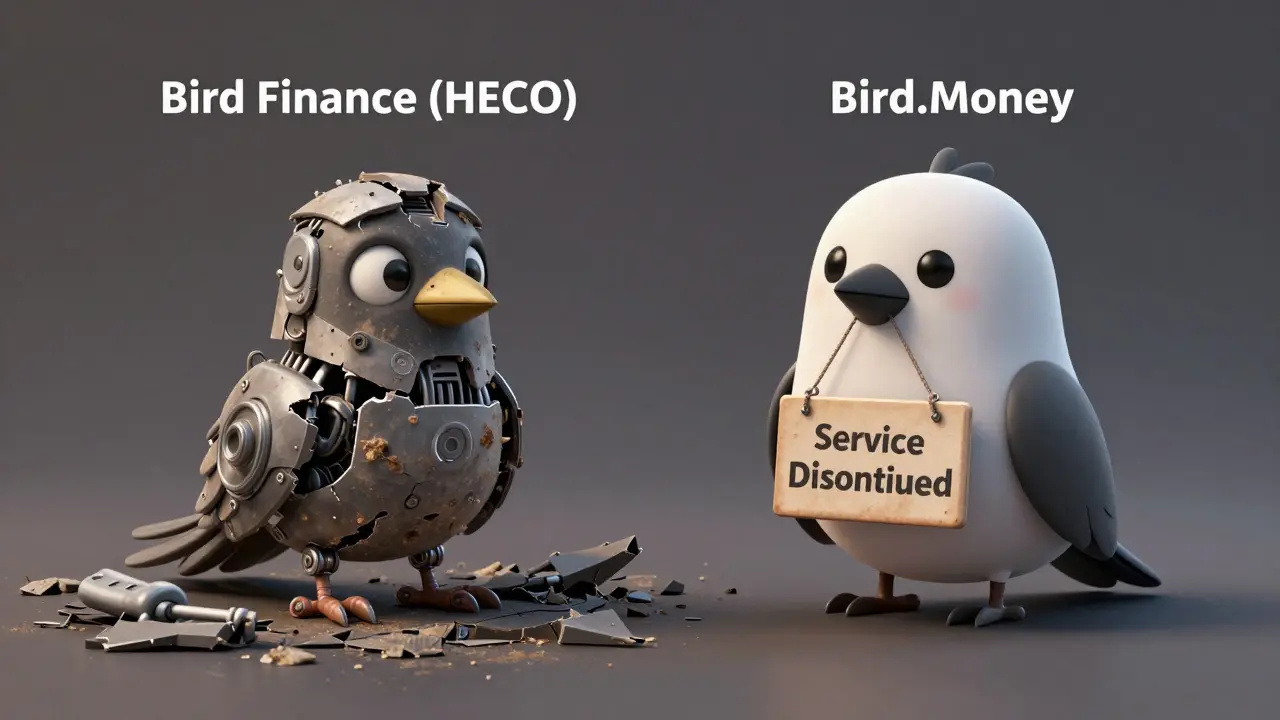
This confusion stems from a messy landscape of projects sharing similar names. There is Bird Finance(HECO), which launched as a yield aggregator but has effectively vanished, and Bird.Money, a separate risk analytics platform that also lost momentum. Neither has an active partnership with CoinMarketCap for token distribution. If you are looking for details on this specific airdrop, you are likely looking at a phishing attempt or outdated information from a defunct project. Here is exactly what happened, why it matters, and how to protect yourself from similar traps.
The Myth of the CMC × BIRD Partnership
CoinMarketCap is one of the most trusted sources for cryptocurrency data. They do not give away tokens lightly. When rumors swirl about a "CMC × [Token]" airdrop, it usually means scammers are using the brand’s reputation to lure victims. In the case of Bird Finance, the evidence points to complete fabrication.
We checked the official listing for Bird Finance(HECO) on CoinMarketCap. The data shows a maximum supply of 10 billion BIRD tokens, but the circulating supply sits at zero. This isn’t just low activity; it indicates the project is either abandoned or facing severe technical issues that prevent normal trading. As of late 2025, there were no active trading pairs for this token on major exchanges like Binance or Coinbase. The price displayed was $0.00. When a project has zero liquidity and no trading volume, an airdrop is mathematically impossible because there are no tokens left to distribute meaningfully.
Furthermore, CoinMarketCap’s listing policies require strict verification. A partnership would be announced via their official blog and social media channels. No such announcement exists. The only airdrop-related news involving a "Bird" name comes from a completely unrelated project called BIRDS ($BIRDS), which ran a Telegram campaign. Confusing these two is a common mistake that leads users into scams.
Two Different Birds, One Dead End
To understand why this airdrop doesn’t exist, we have to untangle the identity crisis surrounding the name "Bird." There are two distinct entities that caused massive confusion:
- Bird Finance(HECO): This project operated on the HECO Chain (Huobi Eco Chain). It marketed itself as a cross-chain revenue aggregation protocol. Its whitepaper promised a hyper-deflationary model where 50% of the total supply was sent to a "blackhole" address at launch. The remaining tokens were supposed to be distributed through staking and transaction fees. However, this model is notoriously unstable. Industry reports indicate that 92% of hyper-deflationary tokens fail within six months due to liquidity death spirals.
- Bird.Money: This is a different project entirely, operating on Ethereum. It focused on DeFi credit scoring using machine learning to predict loan defaults. While it had some traction initially, its GitHub repository shows the last commit was in mid-2022. The website now displays a "service discontinued" message.
Neither project has any verifiable link to a current CoinMarketCap airdrop. The overlap in ticker symbols (both use variations of BIRD) creates a perfect storm for misinformation. Scammers exploit this confusion by creating fake websites that look like official portals, asking users to connect wallets to "claim" rewards that don’t exist.
| Feature | Bird Finance(HECO) | Bird.Money | BIRDS Token |
|---|---|---|---|
| Blockchain | HECO Chain | Ethereum | Various (Telegram-based) |
| Status (2026) | Defunct / Zero Volume | Discontinued Service | Active (Unrelated) |
| Main Function | Yield Aggregation | Credit Risk Analysis | Meme/Social Token |
| CMC Partnership | None | None | None |
| Risk Level | Critical | High | Medium |
Red Flags: Why Bird Finance Failed
If you are new to DeFi, understanding why Bird Finance(HECO) collapsed can save you from future losses. The project exhibited several classic warning signs that experienced investors watch for.
First, the transaction fee structure was unsustainable. The protocol charged a 6% fee on every trade. Two percent went to liquidity pools, two percent to DAO governance, and two percent to holders. While this sounds generous, high fees kill trading volume. Traders flee expensive platforms, causing liquidity to dry up. Without liquidity, the price crashes, and the "rewards" become worthless.
Second, the technical infrastructure crumbled. Users reported that connecting MetaMask to the Bird Finance site resulted in "contract not found" errors. This suggests the smart contracts were either abandoned or hacked. Trustpilot reviews from verified users tell a grim story. One user, CryptoSaver2021, reported losing $3,200 after staking tokens, noting that the website disappeared shortly after deposit. With an average rating of 1.2 out of 5 stars, the community sentiment was overwhelmingly negative long before the project died.
Third, the development team went silent. The official Telegram group (@birdfinance_heco) stopped posting updates in early 2022. The final message from admins cited "temporary maintenance," a common phrase used when teams plan to exit a project. By October 2025, the main domain returned 404 errors, confirming the project was dead.
How to Spot Fake Airdrops
The promise of free money is the oldest trick in the crypto book. Since the CMC × BIRD airdrop is a myth, you need to know how to identify similar fakes targeting other projects. Here is a checklist to keep your assets safe.
- Verify the Source: Never trust an airdrop based solely on a Twitter post or a YouTube video. Go directly to the project’s official website and check their announcements section. Look for links on CoinMarketCap or CoinGecko that lead to verified social media accounts.
- Check Contract Addresses: Copy the token contract address from the official source and paste it into Etherscan or HeCoScan. Check the holder count. If a project claims millions of users but only has 50 holders, it’s a scam. For Bird Finance, the lack of circulating supply was the biggest clue.
- Watch for Urgency: Scammers create fake deadlines. "Claim within 24 hours or lose forever!" Legitimate projects give users time to verify and claim. If it feels rushed, step back.
- Analyze the Fee Structure: Be wary of projects with high transaction taxes (over 5%). These models often rely on new buyers to pay off old sellers, resembling a Ponzi scheme. When inflow stops, the rug pull begins.
- Use a Burner Wallet: If you must interact with an unknown dApp, use a secondary wallet with minimal funds. Never connect your primary holding wallet to unverified sites.

The Current State of HECO Chain
Part of the confusion around Bird Finance also relates to the decline of the HECO Chain. Once a popular alternative to Ethereum due to low fees, HECO has seen significant drops in Total Value Locked (TVL) and developer activity since 2022. Many projects migrated to Arbitrum, Optimism, or Solana. Staying on a declining chain increases the risk of illiquidity. Even if a project is legitimate, being on a dying chain means fewer buyers and higher slippage when you try to sell.
For investors looking at HECO today, due diligence is harder because many audit firms have stopped covering smaller chains. This leaves a gap where fraudulent projects can operate with less scrutiny. Always check if a project has been audited by reputable firms like CertiK or Hacken, and ensure the audit is recent.
What Should You Do Now?
If you already connected your wallet to a site claiming to host the CMC × BIRD airdrop, act immediately. Revoke your token approvals using tools like Revoke.cash. This prevents any malicious contract from draining your assets later. Monitor your transaction history for any outgoing transfers you didn’t initiate.
If you haven’t claimed anything yet, consider it a blessing. You avoided a potential loss. Instead of chasing ghost airdrops, focus on established protocols with transparent teams and active development. Look for projects with consistent GitHub commits, regular community calls, and clear utility beyond speculation.
The crypto market moves fast, but patience pays off. Don’t let FOMO (Fear Of Missing Out) drive your decisions. Verify everything. If a deal seems too good to be true, especially one involving a major brand like CoinMarketCap without official confirmation, it almost certainly is.
Is there a real CoinMarketCap x Bird Finance airdrop?
No. There is no verified partnership between CoinMarketCap and Bird Finance(HECO). The circulating supply of BIRD tokens is zero, and the project appears defunct. Any website claiming otherwise is likely a scam.
What happened to Bird Finance on HECO Chain?
Bird Finance(HECO) suffered from a hyper-deflationary token model that killed liquidity. High transaction fees drove traders away, leading to a death spiral. The website now returns 404 errors, and the Telegram channel has been inactive since 2022.
Is Bird.Money the same as Bird Finance?
No. Bird.Money is a separate project on Ethereum focused on credit risk analysis. While both share the "Bird" name, they have different contracts, goals, and histories. Bird.Money has also largely ceased operations.
How can I check if a crypto airdrop is legit?
Verify the source on official channels, check the contract address on block explorers like Etherscan, look for recent development activity on GitHub, and avoid projects with excessively high transaction fees or urgent claim deadlines.
What should I do if I connected my wallet to a fake Bird Finance site?
Immediately revoke all token approvals using a tool like Revoke.cash. Move your assets to a new wallet if possible, and monitor your transaction history for unauthorized transfers.