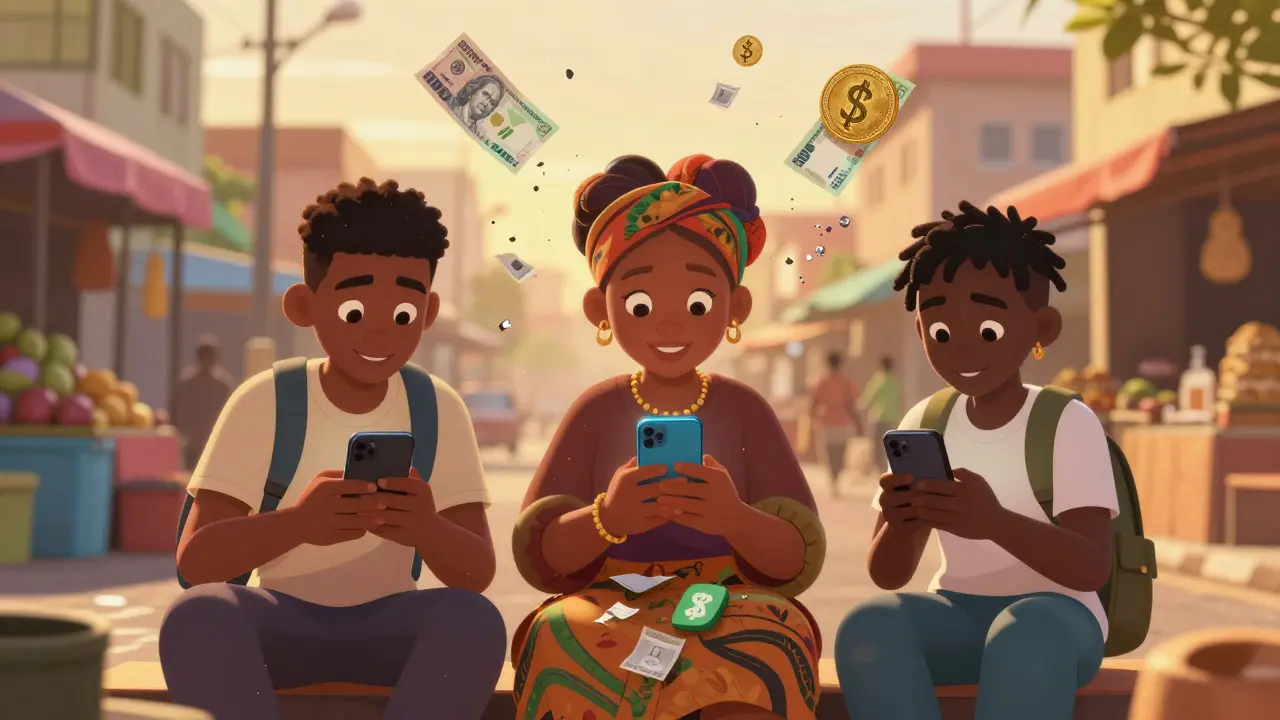
By 2025, crypto adoption in Nigeria had reached a tipping point: over 10% of the population - 22 million people - owned cryptocurrency. That’s not a trend. It’s a migration. And it wasn’t driven by hype, influencers, or FOMO. It was driven by necessity. When your currency loses 75% of its value in a decade, when inflation hits 24%, and when your bank won’t let you send money abroad without a 10% fee, crypto isn’t an option - it’s survival.
Why Nigeria Turned to Crypto
Nigeria’s economy doesn’t work for most people. The naira has been in freefall since 2016. Inflation eats away at savings. Traditional banks are unreliable. Over a third of adults - 36% - have no bank account at all. And even if you do, you can’t easily move money internationally. Remittances cost up to 8%. That’s $8 lost for every $100 sent home from abroad. Meanwhile, smartphone ownership has exploded. Nearly 70% of Nigerians have access to a mobile phone with internet. That’s the perfect setup: a population with no trust in the system, but full access to tech that bypasses it. Crypto became the workaround. Not because people loved Bitcoin. But because they needed a way to protect their money. A way to send and receive cash without begging permission from a bank. A way to store value when the naira kept dropping.The Rise of P2P Trading
The backbone of crypto adoption in Nigeria isn’t exchanges. It’s peer-to-peer (P2P) trading. Platforms like Binance P2P, Quidax, and Yellow Card let users buy and sell crypto directly with each other. No bank account needed. Just a phone, a wallet, and a trusted buyer. In 2023, Nigeria recorded over $59 billion in crypto transactions - second only to India globally. Most of that was P2P. People used USDT (Tether), a stablecoin pegged to the dollar, to store value. When the naira dropped 20% in a month, users swapped naira for USDT overnight. When they needed cash, they sold USDT back for naira - often at a premium. This isn’t speculation. It’s daily survival. Freelancers in Lagos get paid in USDT from clients in the U.S. or Europe. A student in Abuja buys groceries using USDT because the local store accepts it. A market vendor in Port Harcourt keeps her savings in USDT because her bank account is losing value every day.Regulation Shifts: From Ban to Backing
In 2021, the Central Bank of Nigeria (CBN) banned banks from serving crypto businesses. It was meant to stop crypto. Instead, it made it stronger. People moved to P2P. Exchanges adapted. The underground market grew. Then, in late 2023, everything changed. The CBN lifted the ban. Suddenly, licensed crypto exchanges could open bank accounts. Binance, Quidax, and others could operate openly. Investors took notice. Google invested in Moniepoint, a Nigerian fintech unicorn built on crypto infrastructure. The Nigeria Inter-Bank Settlement System (NIBSS) partnered with Zone’s blockchain network to make interbank transfers faster and fraud-resistant. This wasn’t a surrender. It was recognition. The government realized crypto wasn’t going away. So it started working with it.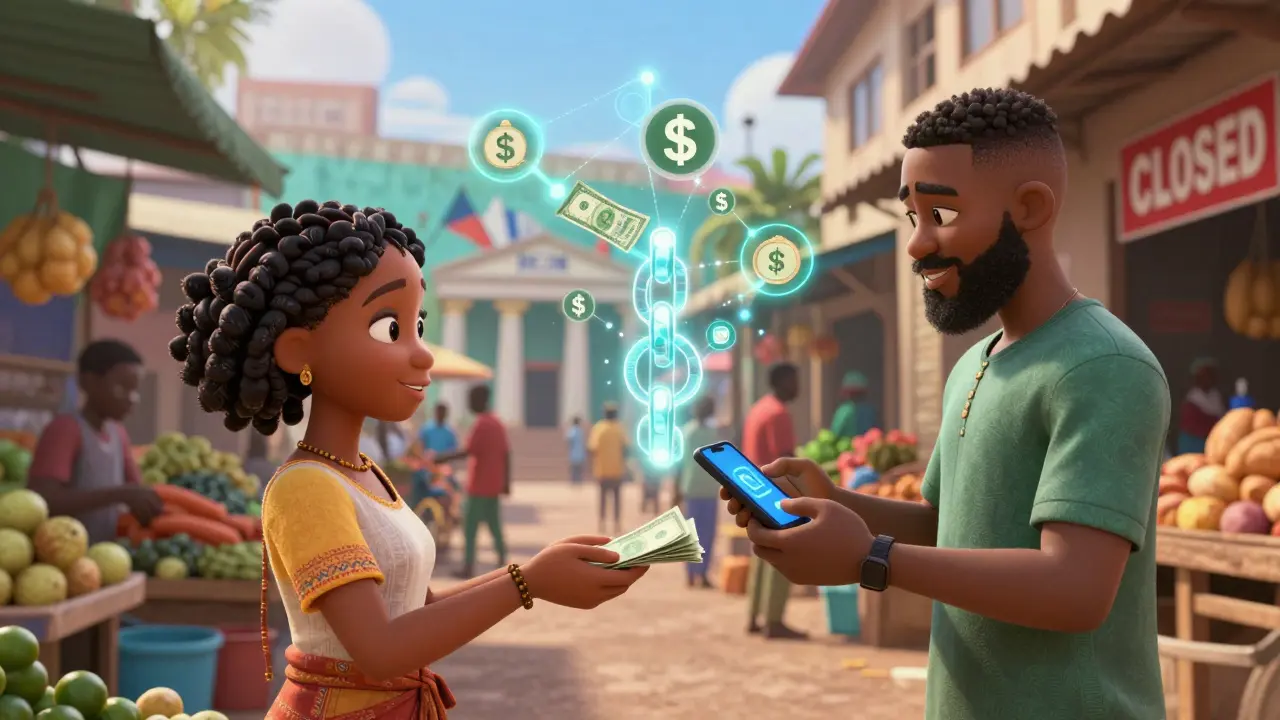
How People Use Crypto Every Day
Most Nigerians don’t trade Bitcoin for profit. They use crypto for three things:- Hedging inflation - Holding USDT instead of naira to preserve value.
- Receiving remittances - Getting paid from abroad without paying 8% in fees.
- Accessing global markets - Buying apps, software, or services that local banks block.
Community and Learning
You won’t find crypto classes in Nigerian schools. But you’ll find them on WhatsApp and Telegram. New users learn from friends. A 22-year-old in Ibadan teaches her mom how to withdraw USDT to naira. A tech group in Enugu shares tips on securing private keys. Reddit threads and YouTube videos in Pidgin English explain how to use Binance P2P step by step. The learning curve is short. Most people get comfortable with basic crypto use in 2-4 weeks. No coding needed. Just a smartphone, internet, and a little patience. Support is still patchy. International exchanges take days to respond. Local platforms like Quidax have faster help desks - often answering in under an hour. And now, many platforms offer guides in local languages. That’s huge.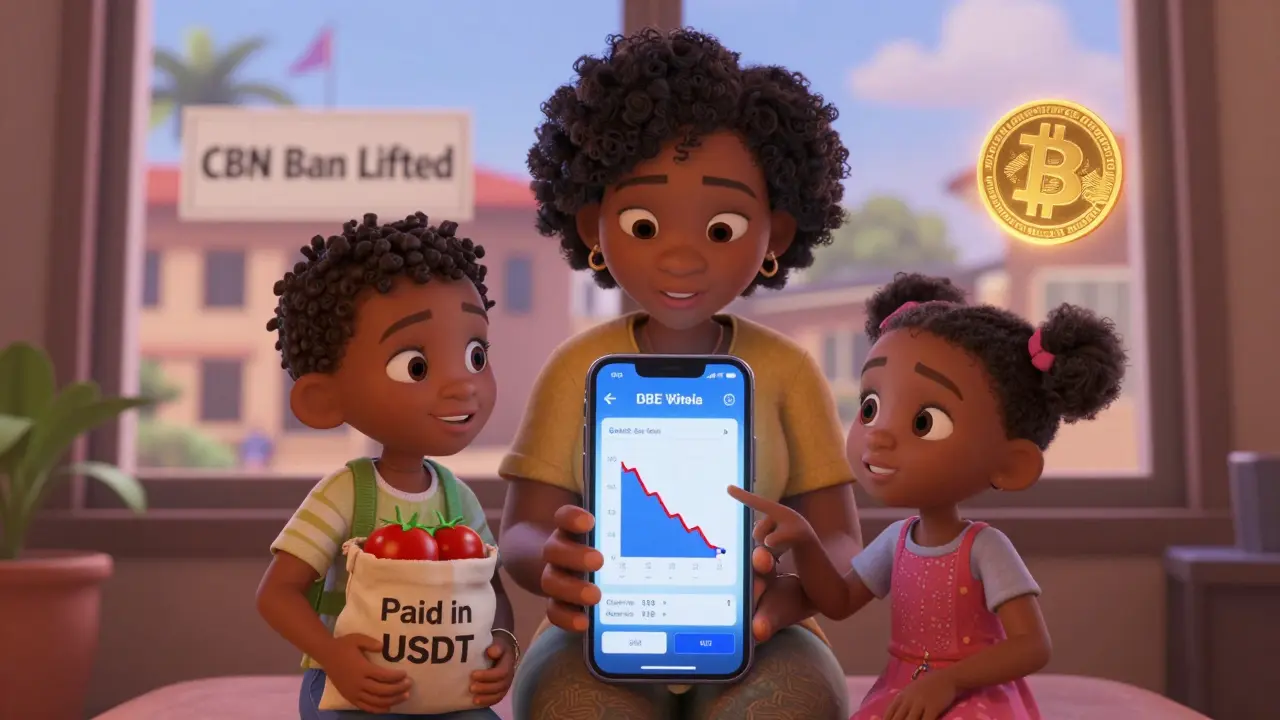
What’s Next?
Nigeria’s crypto scene is shifting from grassroots to institutional. Moniepoint’s $1 billion valuation shows investors believe in the model. NIBSS’s blockchain integration proves traditional finance is adapting. The next big step? A Nigerian central bank digital currency (CBDC). Rumors are swirling. If the CBN launches a digital naira, will it compete with crypto? Or will it work alongside it? Experts say the latter. Nigeria’s crypto adoption isn’t about replacing the system. It’s about giving people tools to survive it. And that’s not going away. Even if regulations tighten again, people won’t stop. They’ve seen what crypto can do. They’ve felt the difference. When your savings are disappearing and your bank says no - crypto says yes.Challenges Still Remain
It’s not perfect. Exchange outages during price spikes still happen. Scams target new users. Some still fear government crackdowns. And while the CBN lifted its ban, there’s no clear legal framework for crypto ownership. But the momentum is too strong. Every time the naira drops, crypto usage spikes. Every time remittance fees rise, more people switch. Every time a young Nigerian gets paid in USDT for remote work, they tell five friends. This isn’t a bubble. It’s a response.What This Means for the World
Nigeria isn’t just a crypto success story. It’s a blueprint. Other countries with unstable currencies - Argentina, Turkey, Lebanon - are watching. They see how a digitally connected population, stripped of trust in traditional systems, turned to crypto not as a gamble, but as a safety net. The lesson? When institutions fail, people innovate. And in Nigeria, that innovation is written in blockchain.Why is crypto adoption so high in Nigeria compared to other African countries?
Nigeria has the largest population in Africa (220 million), the highest smartphone penetration, and the most severe currency instability. While other countries face similar issues, Nigeria’s combination of economic pressure, tech access, and a young, digitally native population created the perfect storm for mass crypto adoption. It’s not just about wanting crypto - it’s about needing it to survive.
Is crypto legal in Nigeria?
Yes, but with limits. The Central Bank of Nigeria lifted its 2021 ban on banks serving crypto businesses in late 2023. Licensed exchanges can now operate and hold bank accounts. However, there’s still no formal law that defines crypto as legal tender or fully protects users. It exists in a gray zone - tolerated, regulated in parts, but not officially endorsed.
Do Nigerians use Bitcoin or stablecoins more?
Stablecoins, especially USDT (Tether), are used far more than Bitcoin. Bitcoin is seen as too volatile for daily use. USDT, which stays pegged to the U.S. dollar, is used to store value, pay for services, and receive international payments. Most transactions on Nigerian P2P platforms are in USDT, not Bitcoin.
How do Nigerians buy crypto without a bank account?
They use P2P platforms. Sellers accept cash deposits, bank transfers, or mobile money. Buyers pay in naira, and the seller sends crypto directly to their wallet. No bank account is required - just a phone and a trusted seller. Many users start by buying small amounts from friends or local agents before moving to apps like Binance or Quidax.
Is crypto helping reduce poverty in Nigeria?
Not directly, but it’s reducing financial exclusion. Crypto doesn’t create jobs, but it gives people tools to keep what they earn. Freelancers keep more of their income by avoiding 8% remittance fees. Savers protect their money from inflation. Small businesses access global markets. It’s not poverty reduction - it’s economic resilience.
What’s the biggest risk to crypto adoption in Nigeria?
Regulatory reversal. If the government bans crypto again or shuts down P2P platforms, adoption could slow. International pressure, especially from the IMF or World Bank, could also push Nigeria to restrict crypto. But with over 22 million users and deep economic roots, any ban would be hard to enforce - and likely backfire.
What’s happening in Nigeria isn’t unique. It’s inevitable. When people are locked out of the financial system, they build their own. And in Nigeria, that system runs on blockchain.
Comments
lol nigerians just found out you can bypass banks. shocker. i mean, we had this tech since 2009 and yall still think it’s magic? 🤡
i dont know why people make this sound so complicated. its just: naira bad, usdt good. people use it because its the only thing that dont vanish overnight. simple as that.
This is the exact kind of decentralized innovation that proves blockchain isn't just for speculators-it's for sovereignty. The P2P model is a masterclass in adaptive finance. When institutional systems fail, human ingenuity steps in with tools that are permissionless, borderless, and resilient. This isn't crypto hype. This is economic self-determination in motion. 🚀
usdt > naira. period.
i had no idea how deep this went until i read this. people are using crypto just to eat. that’s wild. i feel like we take banking for granted in the us. also, the whatsapp tutorials? so real. i love that.
i just wanna say... i'm so proud of them. they didn't wait for permission. they just built. and now the whole world is watching. tears in my eyes. 💔😭
this is the future man. no more banks telling you what you can do with your money. just you, your phone, and usdt. 🤝😎
Oh, so Nigeria just discovered that money doesn’t magically appear in bank accounts? How quaint. Meanwhile, in the US, we’re still debating whether to allow crypto ATMs. 😴
The institutional adoption narrative is dangerously naive. Moniepoint’s valuation is a vanity metric. Without a sovereign regulatory framework, this is just an unsecured liability chain built on mobile data. The CBN’s 'lift' was performative. They didn’t embrace crypto-they tolerated it until the next crisis.
It's important to recognize that Nigeria’s crypto adoption is not a model to be replicated-it is an emergency response. The global financial system has failed a population, and they’ve patched it with technology. This is not innovation. It is damage control. And while admirable, it is not sustainable without structural reform.
yep. crypto. sure. next they’ll be using blockchain to track their yams. 🥔
this is so cool 😍 i wish my bank was this chill
I find it ironic that a country with such a rich tradition of oral storytelling and community knowledge-sharing has turned to blockchain as its primary financial infrastructure. The irony is not lost on me that the most advanced financial solution in Nigeria is built on a technology that requires no human interaction whatsoever.
As someone from India, I’ve seen how informal economies adapt under pressure. Nigeria’s story mirrors what happened with UPI in rural India-tech bypassing broken systems. But here’s the difference: India’s government partnered with innovators. Nigeria’s government is still playing catch-up. The real victory? People didn’t wait. They acted. And that’s the quietest revolution of all.
It’s funny how we think of crypto as this futuristic thing, but in Nigeria, it’s just... money. Like water. You don’t ask why you drink it. You just do. And when the tap dries up, you find another source. Humanity always finds a way. This isn’t about technology. It’s about dignity.
I’ve been following this for years. The real story isn’t the $59 billion in volume-it’s the 8-year-old kid in Kano who now knows how to send money to his aunt in London. That’s the ripple effect. This isn’t just economics. It’s intergenerational empowerment. We need to stop framing this as a 'crypto story' and start seeing it as a human story.
The fact that people are using crypto to buy tomatoes is the most powerful thing I’ve read all year. This isn’t Wall Street. This is survival. And it’s beautiful.
I just read this whole thing and I’m crying. Not because it’s sad. Because it’s so... alive. Like a heartbeat in a dead system. Someone please tell the IMF this isn’t a crisis. It’s a revolution.
i love how no one’s asking for permission here. just doing it. kinda makes me wanna start a p2p trade with a nigerian friend. anyone wanna be my first usdt buyer? 🫶