Walking through the digital galleries of an NFT marketplace, you might notice a small blue checkmark next to certain collection names. That tiny icon carries massive weight in the crypto world. It signals that a project is legitimate, reducing the fear of scams that has plagued the industry since its boom years. But how do platforms decide who gets that badge? The answer isn't simple, because there is no single global standard for NFT collection verification. Instead, each major platform uses its own mix of technical checks, volume thresholds, and manual reviews.
If you are a creator trying to launch a new project, or a collector looking to avoid impersonation scams, understanding these mechanisms is crucial. Verification is not just about prestige; it is a security layer designed to protect users from fraudulent copies of popular assets. In this guide, we will break down exactly how the biggest players handle this process, what criteria they use, and why the system remains fragmented.
The Core Problem: Why Verification Matters
To understand the solution, we first need to look at the problem. The decentralized nature of blockchain means anyone can mint an NFT. This openness fosters creativity but also invites bad actors. According to Chainalysis' 2023 Crypto Crime Report, NFT impersonation scams resulted in $142 million in losses during 2022 alone. These scammers create fake versions of popular collections, tricking buyers into purchasing worthless tokens.
Collection verification acts as a filter. It helps users distinguish between the official project and malicious clones. However, unlike social media platforms where identity verification is standardized, the NFT space lacks a unified protocol. Each marketplace builds its own walls, leading to a confusing landscape where a collection might be verified on one site but not another.
OpenSea: The Prestige Model
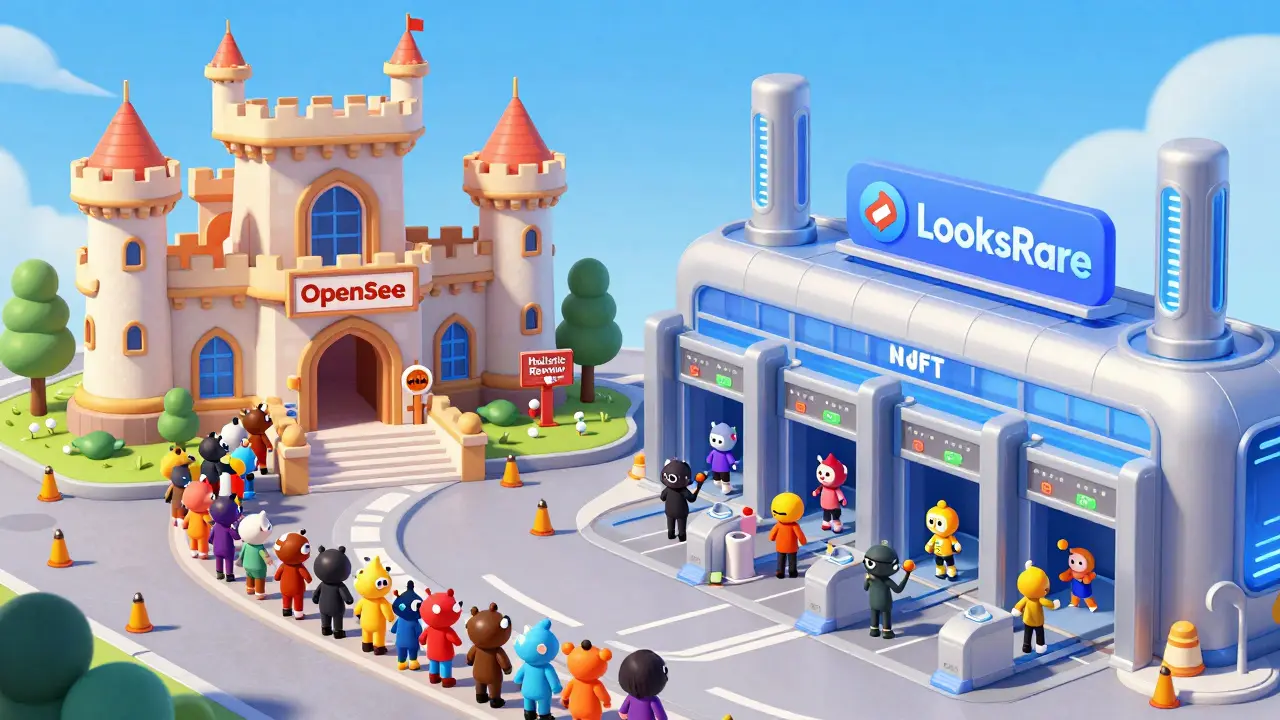
As the market leader with approximately 65% market share, OpenSea sets the tone for many users. Their verification process is often compared to Instagram’s old blue checkmark system. It is prestigious, difficult to obtain, and largely opaque.
OpenSea does not publish a strict checklist of requirements. Instead, they rely on a holistic assessment of credibility. Projects must demonstrate significant media coverage, clear founder identification, and a strong community presence. Success rates are estimated to be below 5%, according to surveys from NFT creators on Reddit. This exclusivity makes the badge valuable but also frustrating for legitimate smaller projects.
- Credibility Factors: Media mentions, active social channels, and recognizable team members.
- Processing Time: Highly variable, ranging from 4 to 12 weeks based on community reports.
- Transparency: Low. Applicants often receive generic rejection emails without specific feedback.
In April 2023, OpenSea updated their criteria to require at least 10 ETH in trading volume, adding a quantitative layer to their previously qualitative approach. This shift aims to filter out low-effort spam while still prioritizing established brands.
LooksRare: The Volume-Based Approach
In contrast to OpenSea’s mystery, LooksRare offers a more objective, albeit economically exclusionary, system. Launched in early 2022, LooksRare tied verification directly to trading activity. This approach appeals to traders who value transparency over subjective judgments.
To qualify for verification on LooksRare, a collection must meet one of three criteria documented in their July 2023 update:
- High Volume Threshold: Accumulate 250+ ETH in trading volume on LooksRare, or 500+ ETH across the broader NFT ecosystem (excluding private sales).
- Manual Legitimacy Check: Pass a review confirming the collection is not maliciously impersonating another brand.
- Notable Status: Demonstrate affiliation with high-profile public figures or cultural relevance.
This system creates a clear path for growth but disadvantages newer projects. A survey by NonFungible.com found that 78% of creators felt this model priced them out, as 92% of collections failing to meet volume thresholds were less than six months old. For established projects, however, the process is straightforward: once the volume hits, you submit a form, and approval typically takes 3-7 business days.
Technical Alternatives: Zero-Knowledge Proofs
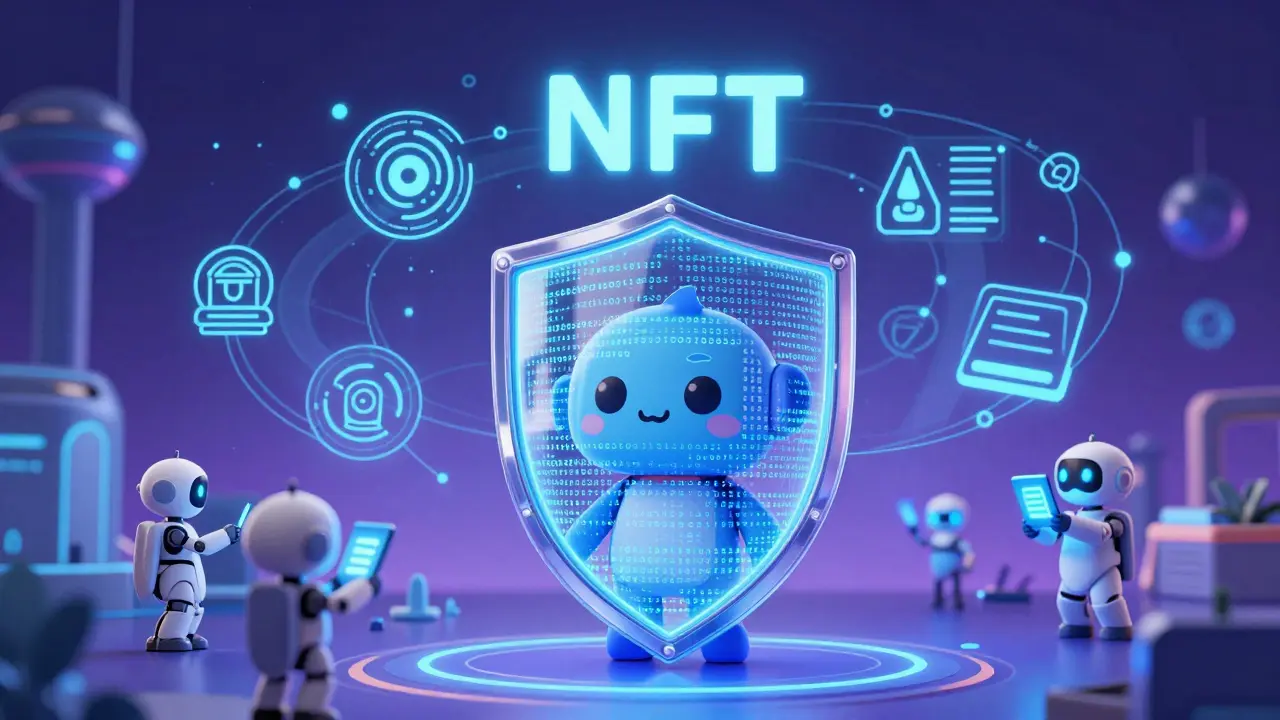
While marketplaces rely on manual or volume-based checks, the Ethereum development community is exploring cryptographic solutions. In May 2023, the Ethereum Research community proposed a privacy-focused verification method using zero-knowledge proofs. This approach would allow users to verify ownership and legitimacy without revealing sensitive transaction details.
The proposed system involves validating cryptographic parameters such as Collection Address, Token ID, and Spending Nullifier Hashes. By checking nullifier hash availability and confirming transaction amounts, the system could prevent double-spending and fraud automatically. While technically superior, this method faces hurdles. Vitalik Buterin noted in June 2023 that gas costs might be prohibitive for mainstream adoption. Additionally, implementation requires complex smart contract deployment, taking experienced Solidity developers 80-120 hours to build.
Comparison of Major Verification Systems
| Platform | Primary Criterion | Volume Requirement | Processing Time | Transparency Level |
|---|---|---|---|---|
| OpenSea | Credibility & Brand Presence | 10+ ETH (since April 2023) | 4-12 Weeks | Low |
| LooksRare | Trading Volume | 250+ ETH (on-platform) | 3-7 Days | High |
| Blur | Documentation Review | Undisclosed | Undisclosed | Medium |
| X2Y2 | Discontinued | Was 100+ ETH | N/A | Medium |
Note that Blur, which captured 60% of trading volume in Q2 2023, keeps its criteria undisclosed, requiring projects to submit documentation through an official form. This lack of clarity mirrors OpenSea’s approach but without the same level of brand prestige.
The Role of Developers and APIs
For builders and analysts, verifying collections programmatically is essential. Moralis, a blockchain data API provider, allows developers to access verified collection data directly. By setting up a Moralis account and writing a simple script in Node.js, developers can query verified collections by address. This tool takes about 15-30 minutes to implement for experienced coders, enabling apps to display trust badges dynamically.
Another emerging concept is the integration of Ethereum Name Service (ENS) domains. Proposed in May 2022, this method would allow NFT holders to display a verified badge proving their avatar belongs to an authenticated collection. While unimplemented as of late 2023, it represents a shift toward user-controlled verification rather than platform-dependent badges.
Challenges and Criticisms
No system is perfect. Dr. Sarah Jamie Lewis, a cryptography researcher, criticized manual verification models for creating single points of failure. With thousands of new collections minted daily, relying on human reviewers doesn’t scale. Furthermore, Nansen analyst Kyle Chassie noted in August 2023 that verified collections show 22% higher wash trading incidence. This suggests that bad actors may exploit verification status to artificially inflate volumes, undermining the very trust the badge is meant to provide.
User frustration is also high. A Token Terminal survey of 500 NFT creators found that 82% reported the verification process as "excessively opaque or difficult." On Reddit, users frequently share stories of rejected applications despite meeting apparent criteria, highlighting the arbitrary nature of some decisions.
Future Trends: Standardization and Regulation
The industry is moving toward hybrid models. The Allium NFT Standards Group predicted in September 2023 that future systems will combine volume metrics, technical validation, and manual review. Regulatory pressure is also accelerating change. The SEC’s enforcement action against Stoner Cats in February 2023 highlighted the need for better authentication. Gartner predicts that by 2025, 70% of major platforms will implement standardized protocols compliant with EU MiCA regulations.
Meanwhile, grants like the $250,000 awarded by the Ethereum Foundation to Privacy & Scaling Explorations suggest that zero-knowledge proof systems may eventually replace manual checks. This would create a more secure, scalable, and private verification ecosystem, though widespread adoption remains years away.
Why is my NFT collection not verified on OpenSea?
OpenSea uses a holistic credibility assessment rather than a simple checklist. If your application was rejected, it likely lacked sufficient media coverage, clear founder identities, or community engagement. Unlike LooksRare, OpenSea does not guarantee verification based solely on trading volume, though they now require a minimum of 10 ETH.
How much volume do I need to get verified on LooksRare?
You need 250+ ETH in trading volume specifically on the LooksRare platform, or 500+ ETH across the entire NFT ecosystem excluding private sales. Alternatively, you can qualify through manual legitimacy checks or notable brand affiliations.
Does a blue checkmark mean the marketplace endorses the project?
No. As explicitly stated by LooksRare and other platforms, verification confirms legitimacy and prevents impersonation. It does not constitute an endorsement of the project’s quality, value, or investment potential.
Can developers check if a collection is verified programmatically?
Yes. Using APIs like Moralis, developers can query verified collection data by contract address. This allows applications to display trust indicators dynamically without relying on manual checks.
What is the future of NFT verification?
The industry is moving toward hybrid models combining technical validation (like zero-knowledge proofs) with manual reviews. Regulatory pressures from bodies like the SEC and EU MiCA regulations are pushing for standardized, transparent protocols to reduce fraud.