
Imagine trying to navigate a massive city without a map, relying only on the fact that you saw someone else walk down a street five minutes ago. That is exactly what trading cryptocurrency looks like if you ignore On-Chain Analysis, which is the systematic examination of blockchain network data including transaction history, wallet activities, and smart contract interactions to derive actionable market insights. While most retail traders obsess over price charts and technical indicators, the real story is happening inside the ledger itself. Every transfer, every smart contract interaction, and every exchange deposit leaves an immutable footprint. The platforms we discuss today turn that raw, chaotic data into clear signals.
The landscape has shifted dramatically since the early days of basic block explorers. We are now in an era where AI-powered analytics process billions of events daily. According to Grand View Research's Q4 2024 report, the global blockchain analytics market hit $1.27 billion and is projected to explode to $9.84 billion by 2030. This isn't just hype; it’s a fundamental change in how institutions and savvy individuals make money. Whether you are a hedge fund manager looking for whale movements or a DeFi developer tracking user behavior, understanding these tools is no longer optional-it’s survival.
Why On-Chain Data Beats Price Charts
Price action tells you what happened. On-chain data tells you why it happened and what might happen next. When you look at a candlestick chart, you see the result of supply and demand. But when you use on-chain metrics, you see the actual supply and demand mechanics in real-time.
Consider the concept of "Smart Money." These are wallets historically linked to profitable trades, venture capital firms, or institutional players. If a standard trader sees Bitcoin drop 5%, they might panic sell. An analyst using Nansen, a platform that utilizes wallet labeling technology tracking 180 million+ labeled addresses across 15 chains, might see that while retail investors are selling, three major VC funds have quietly accumulated 5,000 BTC over the last 48 hours. That divergence between price and underlying accumulation is a powerful signal.
Galaxy Digital’s January 2025 research highlights that active addresses and transaction volume have a 78% correlation with price movements over 90-day periods. This means that before the price moves, the on-chain activity usually shifts first. By focusing on fundamentals like exchange netflows (coins moving onto or off exchanges) and miner reserves, you get a leading indicator rather than a lagging one.
Top On-Chain Analysis Platforms Compared
Not all tools are created equal. Some are built for high-level macro trends, others for granular forensic investigations, and some for custom data queries. Here is how the major players stack up based on their core strengths and target audiences.
| Platform | Best For | Key Feature | Data Coverage | Learning Curve |
|---|---|---|---|---|
| Glassnode | Macro Fundamental Analysis | MVRV & NUPL Metrics | 40+ Networks | Medium |
| Nansen | Wallet Tracking & Smart Money | 180M+ Labeled Addresses | 15 Chains | Low |
| Dune Analytics | Custom Queries & DeFi | SQL-Based Engine | Ethereum + 12 Others | High (Requires SQL) |
| CryptoQuant | Exchange Flow Analysis | Whale Movement Detection | 120+ Exchanges | Low |
| Chainalysis | Regulatory Compliance | Forensic Clustering Algorithms | 100+ Blockchains | Enterprise Only |
| Arkham Intelligence | Entity Graphs & Transparency | Intel Exchange Marketplace | 15 Blockchains | Medium |
Glassnode: The Macro Standard
If you want to understand the health of the entire Bitcoin or Ethereum ecosystem, Glassnode is a platform founded in 2017 that processes over 1.2 billion daily blockchain events across 40+ networks. It is the go-to choice for institutional researchers who need to gauge market cycles. Their Advanced tier offers over 500 metrics, but two stand out: MVRV (Market Value to Realized Value) and NUPL (Net Unrealized Profit/Loss).
MVRV helps identify whether the market is overvalued or undervalued relative to the fair value of coins in circulation. Historically, extreme highs in MVRV have coincided with market tops, while lows indicate bottoms. Glassnode’s strength lies in its clean visualization of these long-term trends. However, keep in mind that Glassnode tracks only 15 major exchanges for flow data, which can be a limitation if you are looking for granular exchange-specific movements compared to competitors like CryptoQuant.
Nansen: Following the Smart Money
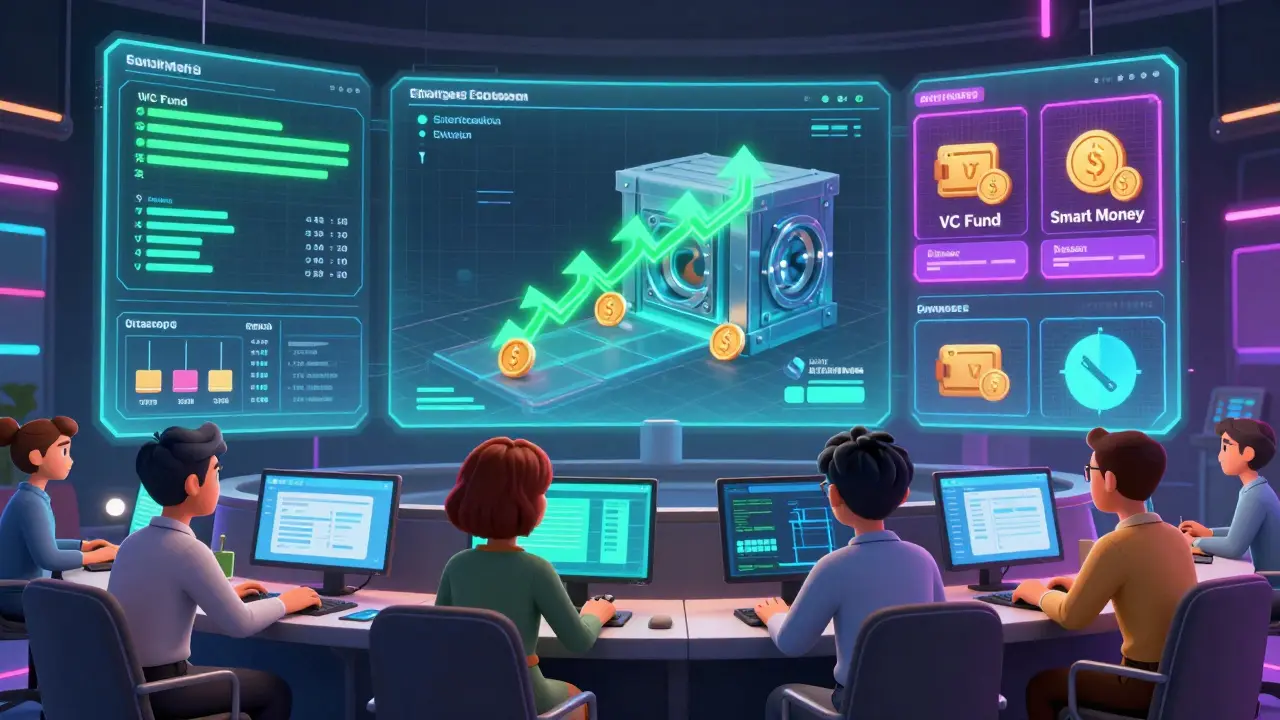
For traders who want to copy the winners, Nansen is launched in 2020, utilizes wallet labeling technology tracking 180 million+ labeled addresses across 15 chains. Its proprietary Smart Money tracking system processes 5 terabytes of daily data to label wallets as entities like "VC Funds," "Market Makers," or "Smart Money" based on historical profitability.
The real power here is the alert system. Users on r/CryptoMarkets have reported catching token pumps hours before they happened by monitoring labeled VC wallet movements. For example, if a top-tier VC wallet suddenly buys a large amount of a low-cap DeFi token, Nansen flags it immediately. This tool is less about macro cycles and more about tactical, short-term alpha generation. The downside? It’s expensive. The Professional tier costs $1,499/month, making it inaccessible for most retail traders.
Dune Analytics: Power to the People
What if you don’t trust anyone else’s dashboard? Dune Analytics is created in 2018, operates on a SQL-based query engine that processes 15 million daily queries across Ethereum, Polygon, and 12 other chains. Dune democratizes data by allowing anyone with SQL skills to write custom queries and build public dashboards. As of late 2024, there were over 250,000 shared dashboards covering everything from NFT sales volumes to specific DeFi protocol TVL (Total Value Locked).
This flexibility is unmatched. If a new meme coin launches on Solana, you can find a community-built dashboard for it within hours. However, this comes with a steep learning curve. Surveys show that 73% of users need 2-3 weeks to become proficient in writing efficient SQL queries for blockchain data. Plus, the free tier limits you to 20 queries per hour, which can be frustrating during volatile markets.
CryptoQuant: Mastering Exchange Flows
When coins move from private wallets to exchanges, it often signals an intent to sell. When they move off exchanges to cold storage, it signals holding. CryptoQuant is founded in 2018, specializes in exchange flow metrics with 98.7% accuracy in detecting whale movements. Monitoring over 120 exchanges and 15 mining pools, it provides superior granularity for short-term price prediction.
In a backtesting study by Bitcoin Magazine Pro, CryptoQuant’s exchange netflow data predicted short-term price movements with 97.3% accuracy, significantly outperforming other tools. Founder Ji Young Ju noted that combining netflow data with funding rates gives 89% predictive power for Bitcoin prices within 48 hours. If you are a day trader or swing trader focused on liquidity shocks, this is your primary tool.

Chainalysis and Arkham: Compliance and Forensics
Not everyone uses these tools to make money; many use them to ensure safety and compliance. Chainalysis is established in 2014, employs proprietary clustering algorithms to track $17.3 trillion in annual cryptocurrency transactions. It holds a 90% market share among government agencies. Its Reactor tool allows for deep forensic investigations, tagging entities like "Darknet Markets" or "Ransomware Groups." However, it is enterprise-only, with minimum contracts starting at $50,000/year.
A more accessible alternative for transparency is Arkham Intelligence. Established in 2021, it integrates entity graph technology tracking 1.2 million+ labeled entities across 15 blockchains. Arkham’s Intel Exchange marketplace allows users to buy and sell verified wallet labels. It bridges the gap between Chainalysis’s heavy-handed forensics and Nansen’s trading focus, offering a unique view into how different entities interact across the blockchain ecosystem.
How to Choose the Right Tool for You
Your choice depends entirely on your role in the crypto ecosystem. Are you a passive investor, an active trader, or a developer?
- Long-Term Investors: Stick with Glassnode. Use MVRV-Z scores to determine if the market is in a bubble or a discount zone. Ignore the daily noise.
- Active Traders: Combine CryptoQuant for exchange flows with Nansen for smart money alerts. Look for divergences between price and whale accumulation.
- DeFi Enthusiasts: Dune Analytics is essential. Find dashboards for the specific protocols you use to monitor liquidity, fees, and user growth in real-time.
- Developers: Use Dune for data extraction and Arkham to understand entity relationships in your smart contract interactions.
The Future: AI and Cross-Chain Integration
We are standing on the brink of a new phase in on-chain analysis. The current fragmentation across multiple chains makes manual analysis tedious. In September 2024, Nansen launched its AI-powered Cross-Chain Tracker, reducing multi-chain analysis time from hours to seconds. Similarly, Arkham released its Oracle AI assistant, which handles natural language queries with 85% accuracy.
By 2025, the most effective tools will likely merge three pillars: AI-driven pattern recognition, comprehensive cross-chain data aggregation, and real-time streaming. Galaxy Digital predicts that platforms integrating AI will capture 75% of the market by 2027. However, risks remain. Regulatory scrutiny on wallet labeling is increasing, and technical changes like Ethereum’s Verkle trees implementation could reduce the usefulness of certain on-chain metrics by mid-2026. Staying adaptable and diversifying your data sources will be key to navigating this evolving landscape.
What is the best free on-chain analysis tool?
Dune Analytics is widely considered the best free option due to its extensive library of community-built dashboards. While it requires SQL knowledge to create custom queries, you can access thousands of pre-made charts for free. CryptoQuant also offers a robust free tier with limited API calls and delayed data, which is sufficient for basic exchange flow monitoring.
Can on-chain analysis predict price crashes?
It cannot predict them with 100% certainty, but it provides strong warning signs. Metrics like rising exchange inflows combined with declining miner reserves often precede price drops. Additionally, Glassnode’s MVRV metric has historically flagged market tops with high accuracy. However, always combine on-chain data with technical analysis and macroeconomic factors for a complete picture.
Is Nansen worth the high cost?
For professional traders and institutions, yes. The ability to track "Smart Money" wallets in real-time can provide an edge that pays for the subscription quickly. For casual investors or beginners, the cost is prohibitive, and free alternatives like Dune or CryptoQuant may offer sufficient insights without the financial burden.
How does Chainalysis differ from Nansen?
Chainalysis focuses on regulatory compliance, forensic investigations, and identifying illicit activity for governments and enterprises. It is not designed for retail trading. Nansen, on the other hand, is built for traders and investors to identify profitable opportunities by tracking smart money and DeFi trends. Chainalysis is enterprise-only, while Nansen serves both institutions and advanced retail users.
Do I need to know SQL to use on-chain tools?
Only if you want to use Dune Analytics to build custom dashboards. Most other platforms like Glassnode, Nansen, and CryptoQuant provide user-friendly interfaces with pre-built charts and metrics. You can gain significant value from these tools with just basic financial literacy and no coding experience.