You might have seen BABYPNUT popping up in your feed or on a price tracker, wondering if it's the next big thing or just another passing trend. The short answer is that Baby Pnut is a small-cap, meme-style cryptocurrency token that exists on multiple blockchains, including Solana, BNB Smart Chain, and Base. It’s not a single unified project but rather three distinct tokens sharing the same ticker and name, each with its own contract address, supply, and market data.
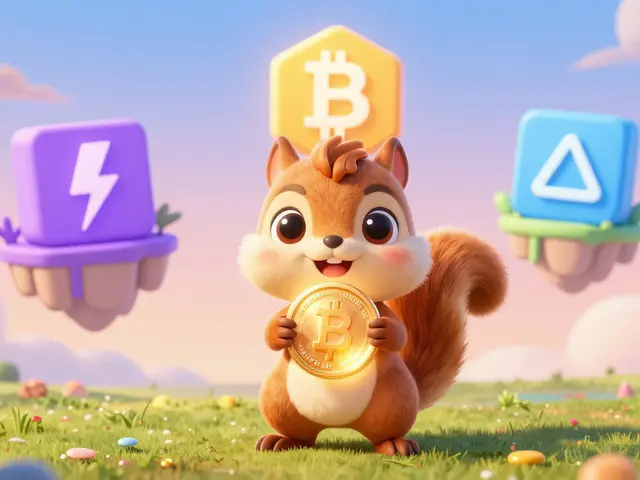
If you’re looking for a utility-driven asset with a solid business model, look elsewhere. BABYPNUT is driven by community hype, playful branding, and the "Peanut the Squirrel" internet character. Its value proposition rests entirely on speculative trading and meme culture. Before you consider buying, you need to understand the fragmentation of this token, its extremely low liquidity, and the significant risks involved in trading such a micro-cap asset.
The Core Identity: What Makes Baby Pnut Different?
Baby Pnut is a community-driven meme token positioned as the 'baby version' of an earlier token called $PNUT. Unlike established cryptocurrencies that solve specific technical problems, BABYPNUT relies on cultural appeal. It’s part of the broader meme coin ecosystem where social media trends often dictate price movements more than fundamental technology does.
The key confusion for new investors is that there isn't just one Baby Pnut. There are at least three separate deployments:
- Solana Version: This is the most commonly tracked variant. It uses the SPL token standard and is associated with the contract address
z9ysNwXCYrh4xXRyQG9ujWqxNrdcChoicoJA9ebd7iF. - BNB Smart Chain (BSC) Version: A BEP-20 token with a massive supply of 420 trillion units, reflecting typical meme coin hyper-inflationary models.
- Base Version: An ERC-20 style token deployed on the Base Layer-2 network, intended for DeFi use cases but currently showing negligible activity.
This fragmentation means that holding BABYPNUT on Solana does not mean you hold the same asset as someone holding it on BSC. They are completely different contracts with no interoperability between them unless bridged, which adds complexity and risk.
Tokenomics: Supply and Market Cap Realities
Understanding the numbers behind BABYPNUT helps explain why it behaves the way it does. The Solana-based token has a total supply of approximately 1 billion tokens (specifically around 980 million circulating). As of mid-2026, its market capitalization hovers between $10,000 and $50,000, depending on the data source and time of day. For context, major meme coins like Dogecoin or Shiba Inu have market caps in the billions. This places BABYPNUT firmly in the "micro-cap" category.
The BSC version takes a different approach with a supply of 420,000,000,000,000 (420 trillion) tokens. At a price near zero per unit, its total market cap remains similarly tiny, under $50,000. The Base version, deployed in late 2025, has yet to establish meaningful liquidity, with reported volumes often sitting at zero.
| Attribute | Solana BABYPNUT | BSC BABYPNUT | Base BABYPNUT |
|---|---|---|---|
| Total Supply | ~1 Billion | 420 Trillion | N/A (Untracked) |
| Market Cap (Approx.) | $10k - $50k | ~$46k | $0 / Negligible |
| Daily Volume | $1 - $600 | ~$350 | $0 |
| Primary DEX | Raydium | PancakeSwap | Uniswap V3 |
| Status (Mid-2026) | Thin Liquidity | Active but Low | Dormant |
Where Can You Trade BABYPNUT?
One of the biggest hurdles for potential buyers is accessibility. You won’t find BABYPNUT listed on major centralized exchanges like Binance or Coinbase for direct fiat trading. These platforms may track the price, but they don’t host the order books. Instead, trading happens primarily on decentralized exchanges (DEXs).
For the Solana version, Raydium is the main venue. Users typically use wallets like Phantom to swap SOL for BABYPNUT. Historically, Gate.io listed the token, but recent data suggests trading activity has dropped significantly or ceased on centralized venues. On BSC, PancakeSwap is the go-to platform. The Base version theoretically supports Uniswap V3, but without liquidity pools, executing trades is difficult and risky due to high slippage.
Because liquidity is so thin, even small buy orders can move the price significantly. If you try to sell a large position, you might struggle to find enough buyers, resulting in a much lower execution price than expected. This is a classic characteristic of micro-cap tokens.
Risks and Challenges for Investors
Investing in BABYPNUT comes with a set of risks that are higher than those associated with larger cryptocurrencies. First, there is no doxxed founding team. The creators’ legal names, jurisdiction, and formal launch dates are undocumented in public aggregator data. This lack of transparency increases the risk of a "rug pull," where developers withdraw liquidity and abandon the project.
Second, there is no whitepaper or detailed technical roadmap. The project relies on community engagement and meme virality. If the hype fades, the price often follows. Data from 2025 to 2026 shows a decline in both price and volume, indicating that initial interest has waned. With daily volumes sometimes dropping below $10, exiting a position can be nearly impossible without crashing the price further.
Finally, the multi-chain nature creates confusion. Many users accidentally buy the wrong BABYPNUT because they don’t verify the contract address. Always double-check the address before swapping to ensure you are getting the specific chain deployment you intend to trade.
How to Buy BABYPNUT Safely
If you decide to take the plunge, here is a practical guide to minimize errors:
- Choose Your Chain: Decide whether you want the Solana, BSC, or Base version. Solana is generally the most active, though still very small.
- Set Up a Wallet: Use Phantom for Solana, MetaMask for BSC/Base, or a compatible wallet. Ensure you have the native currency (SOL, BNB, or ETH) ready for gas fees.
- Verify the Contract Address: Copy the exact contract address from a trusted source like Dexscreener or CoinGecko. Paste it into your DEX interface to avoid fake tokens.
- Check Liquidity: Look at the pool size on the DEX. If the pool is only a few thousand dollars, expect high slippage. Adjust your slippage tolerance accordingly (often 5-10% for these types of tokens).
- Start Small: Given the volatility, enter with an amount you are comfortable losing entirely. Do not invest money you need for bills.
Frequently Asked Questions
Is Baby Pnut a good investment?
It is highly speculative. With a market cap under $50,000 and no underlying utility, BABYPNUT is a pure meme play. It offers high risk and high potential reward, but also a high chance of total loss due to illiquidity and lack of development updates.
Which blockchain is the real Baby Pnut?
There is no single "real" version; there are three independent tokens sharing the name. The Solana version is the most frequently referenced in price aggregators, but all three are valid contracts on their respective networks. You must choose which one you want to trade based on the chain you prefer.
Can I buy BABYPNUT on Binance or Coinbase?
No, you cannot buy it directly with fiat currency on Binance or Coinbase. These platforms only track the price. You must use a decentralized exchange like Raydium (for Solana) or PancakeSwap (for BSC) via a self-custody wallet.
Why is the price so low?
The price is low because the market capitalization is tiny. When total value is only tens of thousands of dollars, the individual token price must be fractions of a cent to reflect that total value across hundreds of millions or trillions of tokens.
Does Baby Pnut have a roadmap?
There is no formally documented corporate roadmap or whitepaper. Development is community-driven, and future growth depends on social media hype cycles rather than planned technical milestones or institutional adoption.

Comments
Interesting piece on the fragmentation of BABYPNUT. It’s rare to see a guide that clearly distinguishes between the Solana, BSC, and Base deployments without assuming they are the same asset. The liquidity data is particularly useful for anyone considering entry.
so basically its a scam right? everyone knows meme coins are just gambling but these guides make it look like there's some logic to it. i mean who even buys this stuff with daily volume under a grand? just another way for insiders to dump on retail
You are mistaken, my dear. It is not merely a "scam" in the traditional sense; it is a high-beta speculative instrument. However, your lack of understanding regarding liquidity depth is... concerning. Do you even know what slippage is? Because if you buy $100 worth of this on Raydium, you might lose 15% instantly just from the spread. Read the article again!
Ugh, why do people always have to be so negative about crypto? I actually think the squirrel character is really cute and wholesome. It brings me joy! 😊💖
It's interesting how meme culture drives value here. We often talk about utility in tech, but in this space, community sentiment is the product. If the community believes in the 'baby' narrative, the price follows. It's a social experiment more than an investment.
From a British perspective, we tend to be a bit more cautious with our money, but this token seems to fit the 'meme' category perfectly. The table comparing the three chains was very helpful. I prefer clarity over hype, so thank you for breaking down the contract addresses so explicitly. It saves one from buying the wrong token by accident.
I appreciate the balanced view here. It's easy to get swept up in the FOMO, but looking at the market cap of $50k makes it clear this is a micro-cap play. For those interested, I'd suggest checking the liquidity pool size on DEXScreener before doing anything. It's all about risk management, really.
Let's break down the alpha here! 🚀 The key metric to watch is the burn rate vs. new inflow. With a supply of 420T on BSC, inflation is massive. You need to monitor the holder count distribution. If top 10 holders control >60%, that's a red flag for centralization. Let's optimize our entry strategy based on on-chain analytics, not just vibes!
look at the numbers. daily volume is literally nothing. its a dead coin waiting to happen. why are people still talking about this? the dev team is anonymous which means rug pull is 100% likely. stop pretending this is a serious asset class. its garbage
In India, we have seen many such tokens rise and fall. The key is discipline. Do not chase pumps. Wait for confirmation. This token has no utility, only speculation. Be careful.
The distinction between the three blockchains is crucial. Many investors overlook this and end up holding a worthless variant while thinking they own the 'main' token. The article does a good job highlighting that interoperability is not automatic. One must verify the contract address meticulously to avoid falling victim to fake tokens or simple user error.
Sarcastically speaking, this is the most complex financial instrument ever created: a squirrel with no business plan. But hey, if you can't afford to lose your rent money, maybe stick to index funds. Just saying. No pressure. Probably won't work out though.
Great read! I've been following the meme coin space for a while now. The advice to start small is solid. I made the mistake of going all-in on a similar token last year and got stuck. Lesson learned: always check the liquidity depth first. Good luck to anyone diving in!
This is super helpful! 🌟 I was confused about which version to buy. Now I know I should probably stick to Solana since it has the most activity. Thanks for the detailed breakdown! 💖🐿️
One must consider the macroeconomic implications of such micro-caps. While the immediate utility is negligible, the cultural capital generated by the 'Peanut' brand could theoretically drive adoption in niche DeFi sectors. However, one remains skeptical of the sustainability of this model without institutional backing. The volatility is, as always, the primary driver of returns in this sector.
Man, reading this gave me anxiety just thinking about the slippage fees. Who wants to gamble their hard-earned cash on a squirrel? I feel like we're all just hoping for a miracle here. But hey, if it works, it works, right? Just don't blame us when it goes to zero!
AMERICAN SQUIRRLS ARE THE BEST!! 🇺🇸🐿️ Why are Europeans and Indians even commenting on this? It's a US-based meme trend! Get in early or miss out! #MAGA #CryptoSummer
Oh, how delightful. Another opportunity to witness the sheer ignorance of the masses chasing digital air. The 'community' aspect is simply a euphemism for coordinated pump-and-dump schemes. One wonders how long it will take for the regulators to step in and clean up this mess. In the meantime, enjoy the ride while it lasts, dear readers.
Facts. The liquidity is non-existent. I tried selling 1000 tokens last week and lost 20% just in gas and slippage. Not worth it unless you have infinite time to watch charts. The article is accurate though. Check the contract address or cry later.
A rather tedious overview of a fundamentally uninteresting asset. The writing style is adequate, if somewhat dry. One notes the absence of any substantive analysis regarding the underlying technology, which is, of course, non-existent. Nevertheless, for those who enjoy the theatre of financial speculation, this serves as a sufficient primer. Do try to verify your sources, however.
Let us not forget the moral hazard involved in promoting such volatile instruments to the general public. Without proper disclosure of risks, these tokens prey on the uninformed. It is a system designed to enrich the few at the expense of the many. A classic example of market inefficiency exploited by opportunists.
They're hiding something! Look at the contract addresses, they're definitely connected to a shadowy cabal trying to control the dollar. The 'squirrel' is just code for something else. Wake up sheeple! The real money is in the base layer, not these side chains. Trust no one! 🚨👁️