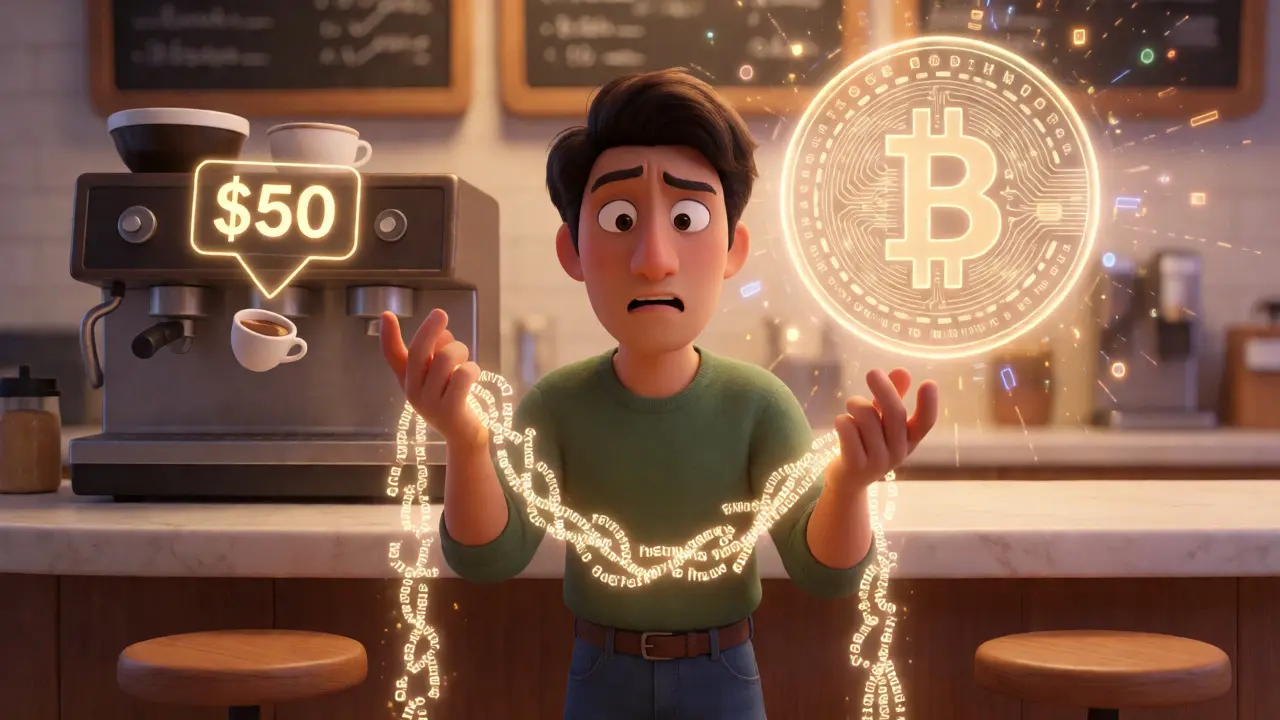
Imagine trying to buy a coffee, but instead of tapping your phone, you have to write down a 12-word password, wait ten minutes for the barista to confirm the payment, and pay a $50 "network fee" just for the privilege. If you lose that password, your money is gone forever-no support line, no reset button. This isn't a hypothetical nightmare; it's the current reality for many dApps (decentralized applications running on blockchain networks). Despite the hype around Web3, most people who try these apps quit within minutes. Why? Because while the technology promises freedom, the user experience often feels like punishment.
You might be wondering if this is just a growing pain issue or a fundamental flaw. The data tells a stark story. According to DappRadar’s late 2025 study, only about 15% of potential mainstream users ever adopt non-custodial wallets. That means 85 out of 100 people look at a dApp, get confused, and walk away. Vitalik Buterin himself admitted in 2024 that wallet setup remains the single biggest hurdle. It’s not that people don’t want decentralization; they just don’t want to become cryptography experts overnight to use an app.
The Wallet Wall: Your First Barrier to Entry
Before you even see the interface, you hit the wall. In Web2 (think Instagram or Uber), you sign up with an email or a social login. Done. In Web3, you need a wallet. This requires generating a private key and memorizing a seed phrase. If you mess up one word in that phrase, you lose access to your funds permanently. There is no "Forgot Password" link because there is no central server holding your credentials.
This friction kills adoption before it starts. A Reddit thread titled "Why I Gave Up on dApps After 2 Weeks" went viral recently, with thousands of users sharing horror stories of lost funds due to simple mistakes. One user noted they lost $237 because the interface hid critical gas fee information behind three confirmation screens. When the cost of entry is high anxiety, casual users simply won't bother.
Gas Fees and Waiting Games: The Performance Gap
Speed matters. When you click "buy" on Amazon, the page loads instantly. On Ethereum-based dApps, you’re often waiting 15 to 30 seconds for a transaction to confirm during normal times. During network congestion? That can stretch to 5-10 minutes. Worse, you have to pay "gas fees" to process these transactions. These fees fluctuate wildly based on network demand.
Imagine buying a $10 NFT and paying a $50 transaction fee. It doesn’t make sense to the average consumer. While newer chains like Avalanche offer sub-second finality, many popular dApps still run on older, slower infrastructure. Users aren’t comparing dApps to other dApps; they’re comparing them to Venmo, PayPal, and Apple Pay. Those competitors are instant and free. Until dApps match that speed and cost predictability, they remain niche tools for speculators rather than everyday utilities.
Fragmented Identity: Too Many Chains, Too Much Confusion
Blockchain isn’t one giant computer; it’s a collection of separate networks. Ethereum, Solana, Polygon, Arbitrum-they don’t talk to each other natively. If you want to play a game on one chain and trade tokens on another, you need to manually switch networks in your wallet. You also need to bridge assets, which involves moving funds from one chain to another through a complex process.
A Chainalysis report from 2025 found that comprehensive DeFi activities require users to juggle 3-5 different networks. MetaMask’s own user testing showed that 68% of new users get confused by manual network configuration. They end up sending funds to the wrong address or getting stuck with tokens on a chain they didn’t intend to use. It’s like having five different bank accounts, each requiring a different physical key, and having to physically drive between branches to move money.

The Trust Deficit: No Customer Service, No Safety Net
In traditional finance, if you send money to the wrong person, you can call your bank. In Web3, transactions are irreversible. If you interact with a malicious smart contract or approve a bad permission, your assets can be drained in seconds. There is no undo button.
This lack of recourse creates massive psychological stress. Pew Research Center data indicates that 61% of users cite security fears as their primary reason for avoiding dApps. It’s not irrational fear; it’s rational caution. A senior blockchain engineer recently noted on HackerNews that we’ve built systems requiring users to become security experts immediately. Most people aren’t ready for that responsibility shift.
Design Chaos: No Standard Playbook Yet
Web2 design has matured over decades. We all know what a search bar looks like. We know where the "back" button goes. Web3 design patterns are still emerging, leading to inconsistent interfaces across dApps. One app might put the connect button in the top right; another puts it in the bottom left. Error messages are often technical jargon like "reverted transaction" instead of plain English explanations like "you don't have enough ETH."
| Metric | Web2 Application | Web3 dApp (Ethereum) |
|---|---|---|
| Average Load Time | 2.1 seconds | 12.4 seconds |
| First-Time Transaction Completion Rate | 85% | 38% |
| User Abandonment During Onboarding | <10% | 78% |
| Support Model | Live Chat / Email | Community Forums / Docs |
These disparities show why users leave. If completing a task takes 3.7x longer in a dApp than in a standard web app, the value proposition must be incredibly high to justify the effort. For most daily tasks, it isn’t.

Solutions Emerging: Bridging the Gap
The good news? Developers are finally prioritizing UX. Solutions like Wallet-as-a-Service (e.g., Web3Auth) allow users to log in with Google or Twitter, hiding the complex crypto mechanics behind familiar buttons. This reduced onboarding steps from seven to two for some major platforms, cutting abandonment rates significantly.
Technical standards are also evolving. The ERC-7715 proposal aims to standardize how wallets interact with dApps, reducing confusion. Cross-chain protocols like Avalanche’s Interchain Messaging are eliminating the need for manual network switching. The goal is clear: make the blockchain invisible. Users shouldn’t care which chain they’re on; they should just care that their app works fast and securely.
Frequently Asked Questions
Why do dApps feel so slow compared to regular websites?
dApps rely on blockchain networks to verify transactions, which takes time. Unlike centralized servers that update databases instantly, blockchains require consensus from multiple nodes. On congested networks like Ethereum, this can take 15 seconds to several minutes, plus additional time for the interface to load data from the chain.
What happens if I lose my seed phrase?
If you lose your seed phrase (the 12-24 words backing up your wallet), you lose permanent access to your funds. Because dApps are decentralized, there is no customer service team or central authority that can reset your password or recover your keys for you.
Are gas fees always expensive?
No, but they vary by network and time. Ethereum gas fees can spike to over $50 during busy periods, making small transactions impractical. Other networks like Solana, Polygon, or Avalanche offer much lower fees, often less than a cent, providing a smoother experience for frequent users.
How can developers improve dApp user experience?
Developers can implement social logins to hide wallet complexity, provide clear error messages in plain language, batch transactions to reduce costs, and use Layer 2 scaling solutions to improve speed. Prioritizing intuitive design patterns similar to Web2 apps also helps reduce the learning curve.
Is it safe to use dApps without understanding blockchain?
It carries risk. Without understanding basic concepts like private keys and approvals, users are more likely to make mistakes that result in lost funds. However, new "abstraction" layers are making it safer by automating complex interactions, though users should still start with small amounts until comfortable.