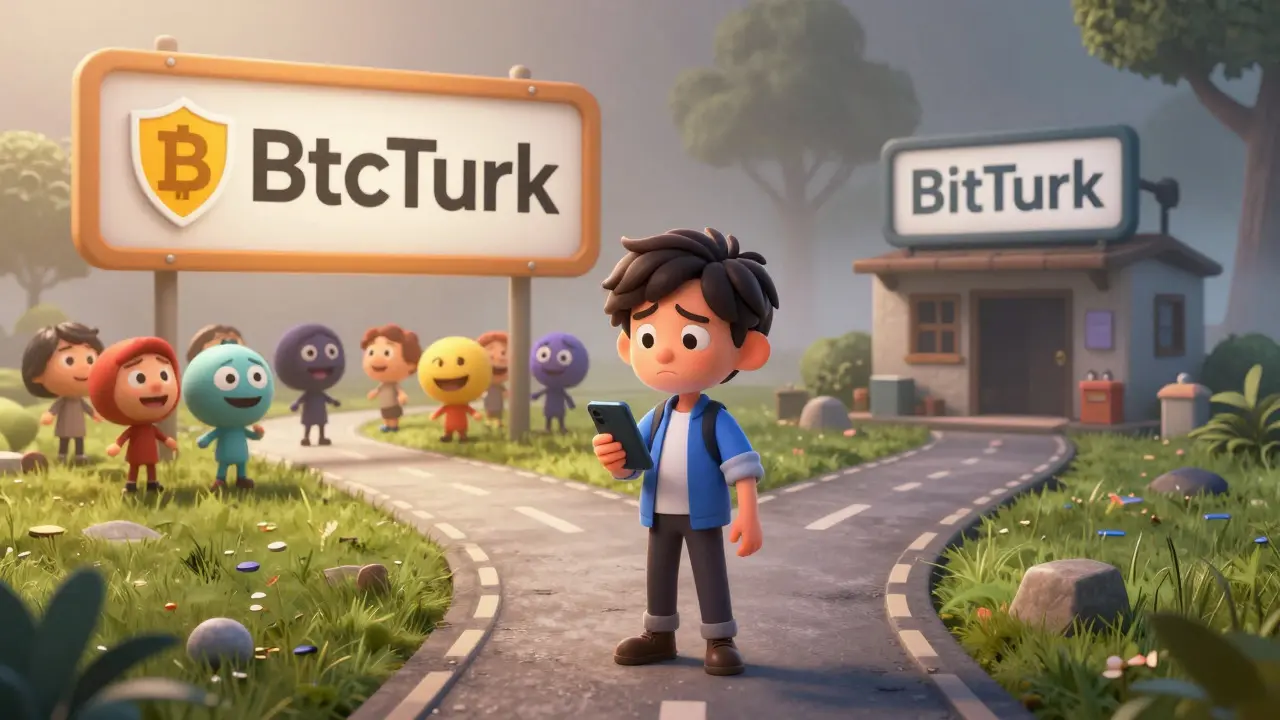
Have you ever typed "BtcTurk" into your browser, only to land on a site called BitTurk is a cryptocurrency trading platform based in Turkey that has drawn scrutiny for its similarity to the more established BtcTurk exchange? You are not alone. In the world of digital assets, small details matter immensely, and confusing one name for another can lead to significant financial loss. As we move through 2026, the landscape for Turkish crypto traders has become stricter, safer, and more regulated. But where does BitTurk fit into this picture? The short answer is that it occupies a precarious position between a niche local tool and a potential security risk.
This review cuts through the noise to help you decide if your funds are safe with BitTurk. We will look at the regulatory reality, compare it directly to its bigger cousin, BtcTurk, and analyze the technical features that actually matter when you are trying to buy Bitcoin or Ethereum without losing money to hidden fees or frozen accounts.
The Name Game: BitTurk vs. BtcTurk
The biggest hurdle in reviewing BitTurk is simply knowing who you are dealing with. This is not just a minor branding issue; it is a critical distinction for your wallet. BtcTurk is Turkey's largest and most established cryptocurrency exchange, founded in 2013, known for high liquidity and strict regulatory compliance. It handles millions of transactions daily and is a household name among Turkish investors. Then there is BitTurk, founded later in 2017, operating under bitturk.com. While they sound identical, they are completely separate entities.
Why does this confusion exist? Unfortunately, it often stems from aggressive SEO tactics by smaller platforms hoping to capture traffic meant for industry leaders. For the average user, this creates a dangerous ambiguity. If you are looking for the secure, high-volume experience associated with Turkey's top exchange, you likely want BtcTurk. If you have specifically chosen BitTurk for a reason, you need to understand that you are stepping away from the mainstream safety net. Many users report feeling misled after signing up, only to realize the interface feels different, the support is slower, and the available coins are fewer. Always double-check the URL before entering your credentials.
| Feature | BitTurk | BtcTurk |
|---|---|---|
| Founded | 2017 | 2013 |
| Market Share | Niche (<2%) | Dominant (~85%) |
| Regulatory Status (SPK) | Unclear/Not Listed | Licensed & Regulated |
| Cryptocurrencies Supported | Limited Selection | 100+ Assets |
| User Trust | Low/Fragmented Reviews | High/Established Reputation |
Regulatory Reality Check: The SPK Factor
In 2024 and 2025, Turkey tightened its grip on the crypto market significantly. The Capital Markets Board of Turkey (SPK) implemented new licensing requirements that took full effect in January 2025. These rules were designed to protect investors by ensuring that exchanges holding customer funds are transparent, solvent, and audited. By October 2025, any legitimate exchange operating in Turkey needed to be on the SPK's official registry.
Here is the problem with BitTurk: as of late 2025 and early 2026, it does not appear on the SPK's list of licensed operators. This absence is not a minor oversight; it is a major red flag. When an exchange operates without this license, it means your funds may not be protected by Turkish financial regulations. If the platform faces technical issues, insolvency, or legal trouble, your recourse as a consumer is severely limited. Industry analysts from Delphi Digital noted in their 2025 regional reports that unregulated exchanges in emerging markets have less than a 30% survival probability over an 18-month period. That is a statistic worth keeping in mind before you deposit your life savings.
Furthermore, the lack of regulatory transparency extends to their fee structures and withdrawal limits. Major exchanges publish clear tables showing exactly how much you pay for a trade. BitTurk’s pricing remains vague across most independent sources. Without published data on maker/taker fees or withdrawal costs, you are essentially trusting the platform to tell you what you owe them after the fact. In the crypto world, opacity usually hides unfavorable terms.

Technical Features and User Experience
Let's look at what BitTurk actually offers on the surface. According to technical profiles from late 2025, the platform supports API access for algorithmic trading and integrates with major blockchain networks like Bitcoin, Ethereum, Ripple, and Chainlink. They claim to offer robust security features, including Google Authenticator integration for two-factor authentication (2FA). On paper, these are standard requirements for any modern exchange.
However, the execution tells a different story. Users who have attempted to use the platform report that the English interface appears to be machine-translated, leading to confusing instructions and potential errors during order placement. For non-Turkish speakers, this language barrier is a significant friction point. If you cannot clearly read the warning labels or fee disclosures, how can you make informed decisions?
Customer support is advertised as 24/7, but anecdotal evidence from forums suggests otherwise. Reports from mid-2025 indicate slow response times, particularly for queries in languages other than Turkish. When you are dealing with a stuck withdrawal or a login issue, waiting days for a reply is unacceptable. Compare this to BtcTurk or international giants like Binance, which offer comprehensive knowledge bases, live chat with real humans, and rapid resolution protocols. BitTurk’s support infrastructure seems built for a tiny fraction of the user base it might attract.
Security Concerns and Red Flags
Security is not just about having a lock icon next to the URL bar. It involves cold storage allocation, insurance coverage, and regular third-party audits. BitTurk claims to have "robust security," but where is the proof? There are no publicly available audit reports from reputable cybersecurity firms. There is no mention of multi-signature wallets or specific percentages of funds held in offline cold storage. Without these details, you have to take their word for it.
Consider the context of phishing risks. Because of the name similarity to BtcTurk, BitTurk exists in a gray area that scammers love. Fraud databases updated in September 2025 warned users about fake crypto exchanges using similar names to legitimate platforms. Even if BitTurk itself is a genuine company, its proximity to the brand identity of a major competitor makes it a target for social engineering attacks. Hackers know that users are confused, so they create fake versions of BitTurk to steal credentials. Navigating this minefield requires extra vigilance.
Additionally, the platform’s history shows minimal updates since 2023. In the fast-moving world of crypto, a stagnant roadmap is concerning. Competitors are adding staking, lending, NFT marketplaces, and advanced charting tools every quarter. BitTurk appears to be maintaining the status quo, which raises questions about the team behind the product and their commitment to innovation and security patches.
Who Should Use BitTurk? (And Who Should Avoid It)
Based on the available data, BitTurk serves a very narrow demographic. It might be suitable for novice Turkish traders who are already familiar with the platform through word-of-mouth and are trading small amounts of capital. For these users, the localized interface and lower barrier to entry might outweigh the risks. However, even for this group, the lack of regulatory backing is a gamble.
For everyone else, especially international investors or those with significant portfolios, BitTurk is likely not the right choice. If you value transparency, regulatory protection, deep liquidity, and reliable customer support, you should look elsewhere. The risks of account freezes, unclear fees, and potential insolvency far outweigh any perceived benefits of using a lesser-known exchange.
Instead of risking your funds on an unverified platform, consider sticking to exchanges that have proven their resilience over time. Whether you choose the dominant local player, BtcTurk, or a globally regulated entity like Coinbase or Kraken, you are betting on stability. In crypto, stability is the ultimate luxury.
Frequently Asked Questions
Is BitTurk the same as BtcTurk?
No, they are completely different companies. BtcTurk is Turkey's largest and most established exchange, founded in 2013. BitTurk is a smaller, separate platform founded in 2017. Confusing the two can lead to security risks and unexpected fees.
Is BitTurk regulated by the Turkish government?
As of 2026, BitTurk does not appear on the official list of licensed operators maintained by the Capital Markets Board of Turkey (SPK). This lack of regulatory status means your funds may not have the same protections as they would on a licensed exchange.
What cryptocurrencies can I trade on BitTurk?
BitTurk supports major blockchains like Bitcoin, Ethereum, Ripple, and Chainlink. However, its selection is significantly more limited compared to competitors like BtcTurk, which offers over 100 cryptocurrencies.
Are my funds safe on BitTurk?
While BitTurk claims to have robust security features, the lack of public audit reports, unclear cold storage policies, and absence of regulatory oversight increase the risk. For maximum safety, larger balances are better kept on highly regulated, well-established exchanges.
Can international users sign up for BitTurk?
Registration may require local Turkish phone numbers and ID verification, creating barriers for international users. Additionally, the English interface is reported to be poorly translated, making navigation difficult for non-Turkish speakers.
Comments
too risky.
Oh, the sheer banality of this confusion is enough to make one weep for the state of modern commerce! It is truly a tragedy that in 2026, the distinction between a legitimate financial institution and a predatory shell company rests on a single letter. The masses wander like sheep into the slaughterhouse of BitTurk, blind to the subtle branding nuances that separate the wheat from the chaff. One must have an eye for detail, a refined palate for security protocols, or else one is doomed to be consumed by the hydra of phishing sites. It is not just about money; it is about dignity. To be fooled by such a transparent ploy is to admit a certain intellectual laziness that plagues our society. We are all victims of our own inattention, drifting through the digital ether without a compass.
people really need to stop being so gullible its pathetic honestly if you cant tell the difference between bitturk and biturk maybe crypto isnt for you
i alsways check the url twice now after my friend lost some cash on a fake site last year it was so sad she cried for days please be carefull everyone
It is genuinely heartening to see articles like this surfacing because they empower individuals to take control of their financial destiny with clarity and precision. The distinction highlighted here is not merely semantic but foundational to trust in any decentralized ecosystem. When we understand the provenance of the platforms we engage with, we build a more resilient community. I encourage everyone to read the fine print, verify the founding dates, and cross-reference regulatory filings before depositing a single satoshi. Knowledge is indeed the ultimate currency, and sharing it freely helps lift us all out of potential pitfalls. Let us remain vigilant yet optimistic about the future of secure trading.
The hegemonic narrative surrounding BtcTurk is a carefully constructed illusion designed to obscure the parasitic nature of BitTurk's existence within the broader Turkish economic matrix. These entities operate as symbiotic predators, leveraging SEO arbitrage to siphon liquidity from unsuspecting retail investors who lack the cognitive bandwidth to discern the ontological differences between the two platforms. The regulatory capture evident in their operations suggests a deeper conspiracy involving state-sanctioned obfuscation tactics aimed at destabilizing local fiat reserves. You are not just losing money; you are feeding a machine that thrives on your epistemological vulnerability. Wake up to the systemic exploitation inherent in these 'niche' tools.
life is short why waste time on shady exchanges just use the big one or hold your own keys it is simple really people overthink everything
I mean, look, I get that everyone loves to hate on the little guy, but isn't it kind of funny how we assume bigger is always better? Maybe BitTurk has some cool features that the big guys ignore because they are too busy making profits from fees. I went there once just to see what the fuss was about and honestly the interface was kinda neat even if the support took forever. Why do we always jump to call things scams without trying them out first? It feels like we are living in a world where caution has replaced curiosity completely. I think people should give it a shot with small amounts and see for themselves instead of listening to fear-mongering reviews like this one that basically tell you to stay away without offering real alternatives.
I have been following the crypto space for years and it is fascinating to observe how these naming conventions evolve over time as new players enter the market seeking to capitalize on established brand recognition. It raises interesting questions about consumer protection laws in digital spaces and whether current regulations are sufficient to prevent such ambiguity from causing widespread harm. I wonder if there will be more legal action taken against these smaller exchanges in the coming months as awareness grows among the general public. It would be great to see a standardized verification badge or something similar implemented across browsers to help users distinguish between legitimate and imitative platforms instantly. Until then, education remains our best defense against these subtle traps.
omg this is so true i saw this happening in india too with many fake apps :( please be careful friends :)
Hey folks! Just wanted to drop a quick tip here because I know how confusing this can be :) Always bookmark the official site directly from their verified social media pages. It saves so much hassle later on! Stay safe out there!
They are watching you 👀 every click is tracked 🕵️♂️ don't trust any exchange they all steal your data 💀
One might posit that the dichotomy presented herein is somewhat reductive in its analysis of the underlying market dynamics at play. Furthermore, the assertion that BitTurk operates solely as a niche tool ignores the complex web of offshore holdings and shell corporations that likely back its infrastructure. It is imperative that we interrogate the very premise of safety in centralized finance, for none are truly safe when the system itself is rigged against the proletariat. Your funds are never yours; they are merely held in trust by entities that answer to no one.
Listen up!!! This is crucial information!! You MUST verify the URL!!! Do not be lazy!!! Check the SSL certificate!!! Protect your assets!!!
It is truly disheartening to witness how easily trust can be eroded by such deceptive practices, yet we must remain hopeful that increased awareness will lead to stronger protections for all users. I appreciate the effort put into clarifying these distinctions, as it empowers individuals to make informed decisions rather than falling prey to confusion. Let us continue to support each other in navigating these complex digital landscapes with grace and diligence. Your safety matters, and taking the time to verify sources is a small act that yields significant peace of mind. Keep shining light on these issues so others may walk safely.