
Carbon credits used to be a messy, slow-moving part of climate finance. Paper trails, manual verification, and opaque trading made it easy for companies to claim they were offsetting emissions-while actually buying low-quality or even fake credits. Then came blockchain. Today, carbon credit blockchain projects are turning old-school offsets into digital assets you can track in real time, trade like stocks, and automate through smart contracts. It’s not science fiction. It’s happening right now-with real companies like Microsoft and Shopify using it to meet their climate goals.
What Exactly Is a Tokenized Carbon Credit?
A carbon credit represents one tonne of CO₂ that’s been removed from the atmosphere or prevented from being emitted. Traditionally, these credits were issued by registries like Verra or Gold Standard, tracked on spreadsheets, and traded privately between brokers. The problem? No one could be sure if the same credit was sold twice. Or if the project behind it was even real. Tokenization fixes that. It turns each carbon credit into a digital token on a blockchain-usually Ethereum. These aren’t just generic coins. They’re semi-fungible tokens, meaning each one carries unique data: where it came from, when it was issued, which project it supports, and whether it’s been retired. This prevents double counting and makes every credit verifiable. Take Toucan Protocol, the first platform to do this at scale. Launched in October 2021, it quickly tokenized over 20 million tonnes of carbon credits within six months. Its two main tokens-BCT (Base Carbon Tonnes) and NCT (Nature Carbon Tonnes)-are built on Ethereum and linked directly to verified projects. BCT is used mostly by DeFi apps and traders. NCT is designed for buyers who want to support nature-based projects like reforestation.How Toucan Protocol and KlimaDAO Work Together
Toucan doesn’t trade credits itself. It’s the infrastructure. KlimaDAO is the marketplace. Together, they form the backbone of onchain carbon finance. Here’s how it works: A carbon project gets verified by a traditional registry like Verra. Toucan then bridges those credits onto Ethereum, retiring them in the original registry so they can’t be sold again. Each retired credit becomes a TCO2 token. KlimaDAO pools these tokens into liquidity pools and lets users stake them to earn rewards. More importantly, it lets companies automatically retire credits via smart contracts. If your business wants to offset 1,000 tonnes of emissions, you don’t need to email a broker. You connect your system to KlimaDAO’s API. You pay in crypto. The smart contract buys the right amount of BCT from the pool, retires it permanently, and sends you a receipt on-chain. All of it takes minutes. No paperwork. No delays. This is why big tech firms are paying attention. Microsoft uses Puro.Earth’s blockchain-verified credits for biochar projects. Shopify integrates with Carbonmark to automate offsets for its shipping emissions. These aren’t PR stunts. They’re operational tools.Other Key Players in the Space
Toucan and KlimaDAO aren’t the only ones. Other platforms are solving different pieces of the puzzle:- Carbonmark gives developers APIs to embed carbon offsetting directly into fintech apps, SaaS platforms, or loyalty programs. Want your customers to offset their purchase at checkout? Carbonmark makes that possible.
- AirCarbon Exchange (ACX) offers a full trading platform with custody solutions. Unlike Toucan, which focuses on tokenization, ACX handles the entire lifecycle: holding, trading, settling, and retiring credits-all on blockchain.
- EcoRegistry uses distributed ledger tech to digitize traditional registry workflows. It doesn’t replace Verra or Gold Standard-it connects to them, making their data blockchain-native.
- Puro.Earth specializes in engineered carbon removal: things like biochar (charcoal made from plants buried underground) and mineralization (turning CO₂ into rock). These are permanent solutions, unlike tree planting, which can burn down. Microsoft and Stripe use Puro’s credits because they’re scientifically verified for permanence.
- International Carbon Registry (ICR) is pushing for open standards. Its goal? Make carbon credits interoperable across all blockchains and platforms so no one gets locked in.
The Real Benefits: Transparency, Liquidity, Automation
Blockchain doesn’t just make carbon credits digital-it makes them better.- Transparency: Every credit’s history is public. You can trace it from project to retirement. No more hidden middlemen.
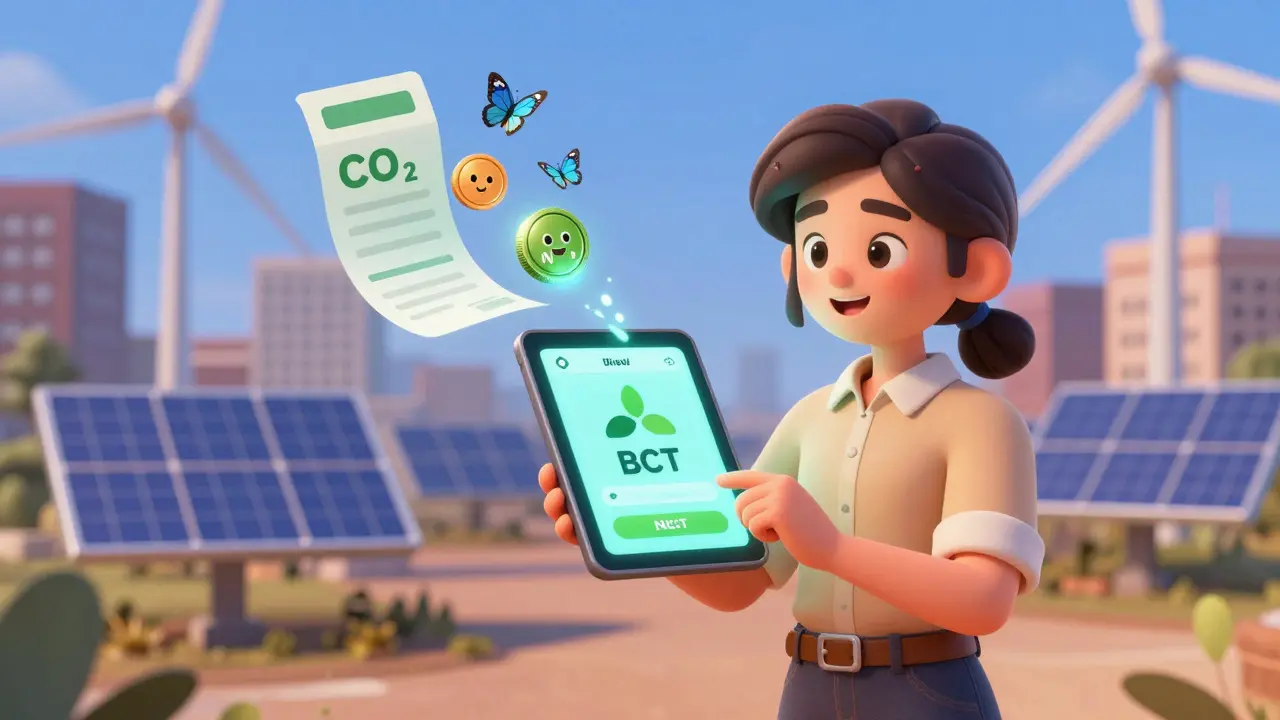
- Liquidity: Before, you needed a broker to buy 10,000 credits. Now, you can buy 0.1 of a credit on Uniswap. Fractional ownership opens the market to small businesses and individuals.
- Automation: Smart contracts handle retirement, payments, and reporting. Companies can set rules: “Offset 10% of emissions every quarter.” The system does it automatically.
- Lower Costs: No more paper filings, audits, or third-party verification fees. Transactions happen peer-to-peer with minimal fees.
According to PwC, tokenized carbon credits could unlock trillions in new financial products: green bonds backed by carbon, derivatives, and even carbon-backed loans. Banks could offer clients a dashboard to buy, hold, and retire credits-all in one place.
The Big Problems: Quality, Regulation, and Fragmentation
It’s not all smooth sailing. Toucan’s early success came with a major flaw: it allowed low-quality credits from dormant or questionable projects to be tokenized. Some were from old, expired programs. Others came from projects that never delivered what they promised. Registries like Verra eventually banned tokenization of certain credits. The lesson? Blockchain doesn’t fix bad data-it just makes bad data public faster. Double counting is still a risk. If a credit is retired on-chain but still listed in a traditional registry, someone could buy it twice. Platforms are building reconciliation tools, but there’s no universal standard yet. Regulatory uncertainty hangs over the whole space. Are tokenized carbon credits securities? Who regulates them? The SEC? The CFTC? No one knows. That scares off big institutional investors. And then there’s fragmentation. Toucan uses Ethereum. ACX uses its own chain. Puro.Earth uses a private ledger. If these systems don’t talk to each other, we’re just creating new silos-digital ones this time.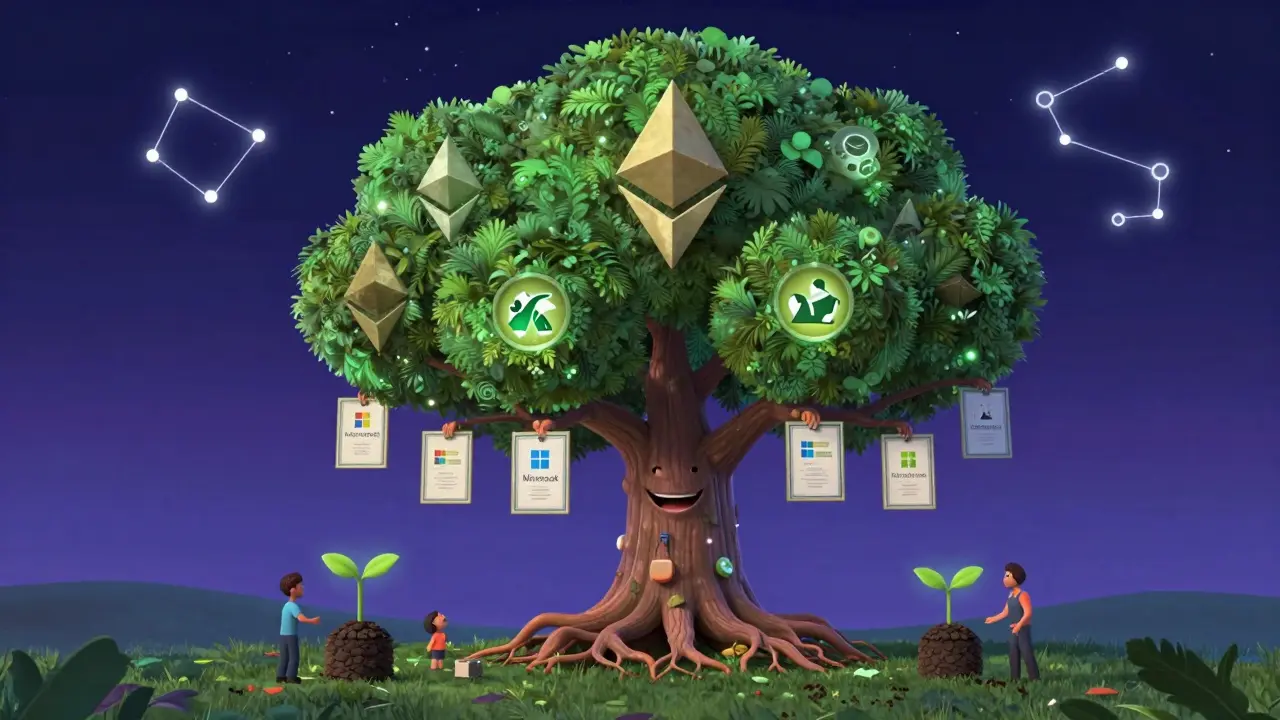
Who’s Using This Right Now?
You don’t have to be a tech giant to benefit. Here’s who’s already in:- Microsoft: Uses Puro.Earth’s blockchain credits for permanent carbon removal. Their goal: carbon negative by 2030.
- Shopify: Integrated Carbonmark’s API into its checkout system. Over 1,000 merchants now offset shipping emissions automatically.
- Stripe: Launched the Carbon Removal Fund, buying credits from Puro.Earth and other blockchain-based providers.
- Small businesses: Startups and e-commerce shops use KlimaDAO’s public dashboard to buy and retire credits for under $10.
Even individuals can participate. Apps like Nori and Climatetrace let you buy small amounts of carbon credits directly from your phone. You get a digital certificate. It’s proof you helped remove a tonne of CO₂.
What’s Next for Carbon Credit Blockchain Projects?
The next 18 months will be critical. Three things will decide if this becomes mainstream:- Quality standards: Platforms must work with registries to create clear rules for which credits can be tokenized. No more junk credits.
- Interoperability: All platforms need to adopt open standards so credits move freely between chains and systems.
- Regulatory clarity: Governments need to define how tokenized carbon credits are classified and taxed. Without this, banks won’t touch it.
Meanwhile, developers are building new tools: carbon credit NFTs for art projects, DeFi protocols that pay interest in carbon credits, and AI tools that audit project quality automatically.
One thing’s clear: blockchain won’t solve climate change. But it’s giving the carbon market the tools it desperately needed-transparency, speed, and trust. And for the first time, it’s making climate action simple enough for anyone to join.
Are carbon credit blockchain projects legitimate?
Yes-but only if the underlying credits are real. Blockchain doesn’t create value; it just tracks it. A tokenized credit from a verified reforestation project in Kenya is legitimate. A tokenized credit from a defunct project with no proof of impact is not. Always check the original registry (like Verra or Gold Standard) and look for retirement records on-chain.
Can I buy carbon credits on my phone?
Absolutely. Apps like Nori, Climatetrace, and KlimaDAO’s web dashboard let you buy as little as $1 worth of carbon credits using crypto or fiat. You’ll get a digital receipt on the blockchain showing exactly which project you supported and how much CO₂ was removed.
Do carbon credits on blockchain actually reduce emissions?
They don’t reduce emissions directly. They fund projects that do-like planting trees, capturing methane, or turning CO₂ into rock. The blockchain just ensures the money goes where it’s supposed to. Without it, many projects wouldn’t get funded because buyers couldn’t trust the claims. So yes, they’re a critical enabler.
Is this just crypto hype?
No. Unlike NFT art or meme coins, carbon credit blockchain projects solve a real, urgent problem: trust in climate finance. Companies like Microsoft and Shopify aren’t doing this for PR-they’re doing it because it works. The tech is mature enough to be used in enterprise systems. This isn’t speculation. It’s infrastructure.
What’s the difference between BCT and NCT?
BCT (Base Carbon Tonnes) are credits from any verified project-renewable energy, methane capture, forestry. They’re the most liquid and used in DeFi. NCT (Nature Carbon Tonnes) are specifically from nature-based projects like reforestation and soil carbon. They’re less liquid but preferred by buyers who want to support biodiversity and ecosystems.
Can I use carbon credits to offset my flight?
Yes. Airlines like Delta and JetBlue partner with platforms like South Pole and CarbonClick, which now integrate with blockchain-based credit pools. When you offset your flight, you’re often buying BCT or NCT tokens that get retired automatically. The receipt is on-chain, so you can prove you did it.
Are blockchain carbon credits cheaper than traditional ones?
Not always. The price per tonne is similar to traditional markets-usually $5-$15. But blockchain reduces hidden costs: no broker fees, no paperwork delays, no manual reconciliation. For businesses buying thousands of credits, that adds up to real savings.
How do I know if a carbon credit project is good?
Look for three things: 1) Is it verified by Verra, Gold Standard, or Puro.Earth? 2) Is it retired on-chain? 3) Does the project show measurable, long-term impact? Avoid projects that only claim “carbon neutrality” without third-party proof. Real projects publish data like tree survival rates or methane capture volumes.

Comments
THIS IS THE FUTURE!!! BLOCKCHAIN IS GOING TO SAVE THE PLANET!!! WHY AREN’T YOU ALL CELEBRATING???!!!
Okay but have you seen the carbon credits from that one Indonesian palm oil project that got tokenized? 😅 It’s like buying a ghost. Blockchain doesn’t fix bad actors-it just gives them a fancy NFT to wave around while they keep burning forests. 🌳🔥
Oh wow, another ‘blockchain saves the climate’ fairy tale. Let me guess-next you’ll tell me crypto mining is carbon neutral because someone tweeted ‘renewables’? 😴
It's important to remember that while blockchain brings transparency, the real issue lies in the quality of the underlying projects. Many tokenized credits still originate from old, questionable registries. We need stricter gatekeeping-not just better ledgers. The tech is promising, but the foundation must be solid.
Blockchain? More like blockchain bubble. You think a smart contract makes a tree grow faster? Nope. It just makes the scam look more legit.
The technological innovation described here is indeed noteworthy. However, one must remain cautious about conflating operational efficiency with environmental impact. The real challenge remains in ensuring that the carbon projects themselves are scientifically robust and verifiable over the long term.
I love how this is making climate action accessible! Even small businesses and individuals can now participate meaningfully. It’s not just for corporations anymore-this is democratizing sustainability. 💚
Tokenized carbon credits are essentially speculative instruments wrapped in ESG branding. The liquidity they provide is a red flag-when assets become tradable like commodities, you incentivize gaming the system, not fixing it. The SEC needs to step in before this turns into another subprime crisis.
This development represents a significant stride toward accountability in global environmental finance. The integration of immutable ledgers with verified carbon reduction initiatives is a milestone. However, international cooperation on standards remains imperative to ensure equitable participation across developing economies.
Everyone’s acting like this is revolutionary. But the same projects were already being tracked-just slower. Now we’re just adding crypto fees and blockchain hype. Real change needs policy, not tokens.
The integration of blockchain into climate finance is not merely an innovation-it is a paradigm shift in global environmental governance. The precision, traceability, and automation afforded by decentralized systems represent a quantum leap beyond legacy methodologies. This is the infrastructure of the Anthropocene.
My favorite part? Buying $5 worth of carbon credits on my phone after ordering coffee. Feels good to actually do something, not just scroll. 🌱 Also, check out KlimaDAO’s dashboard-it’s way easier than it sounds!
Blockchain? More like blockchain scam. Microsoft? Shopify? They’re just buying greenwash tokens so they can keep polluting. Don’t fall for it. 🤡
What is transparency if not just a mirror held up to our own failures? The blockchain doesn’t make credits good-it just makes bad credits visible. And visibility without accountability is just performance.
Did you know the SEC is already secretly working with Big Carbon to shut this down? They don’t want you to know you can fix climate change without them. Toucan? KlimaDAO? All controlled by the same oligarchs behind fossil fuels. They’re using blockchain to control the narrative. Wake up.
Let’s be real-this tech is amazing, but if you’re still using Verra credits from 2012 that were never even monitored, you’re just moving dirt around with a fancy shovel. Stop romanticizing the tool and start demanding real projects. And yes, I’ve audited dozens of these. I know what I’m talking about.
OMG I just bought my first carbon credit on my phone!! 🙌 I’m so proud of myself!! 🌍💚 Also my dog now has a carbon footprint of zero because of this!! (I think? I’m not sure how it works but I feel good!!)
So if I understand this right, you can buy a token that proves someone planted a tree somewhere, and it gets recorded forever? That’s wild. I’ve been looking for a way to offset my Netflix binges-this might be it. Thanks for explaining it so clearly!
India has better forests than your country. Why are you tokenizing our trees? 🇮🇳
The technology is sound. The applications are practical. The underlying projects must be rigorously vetted. The rest is noise.
Finally, something I can afford and understand. I bought 0.2 tonnes today. Small step, but it feels right.