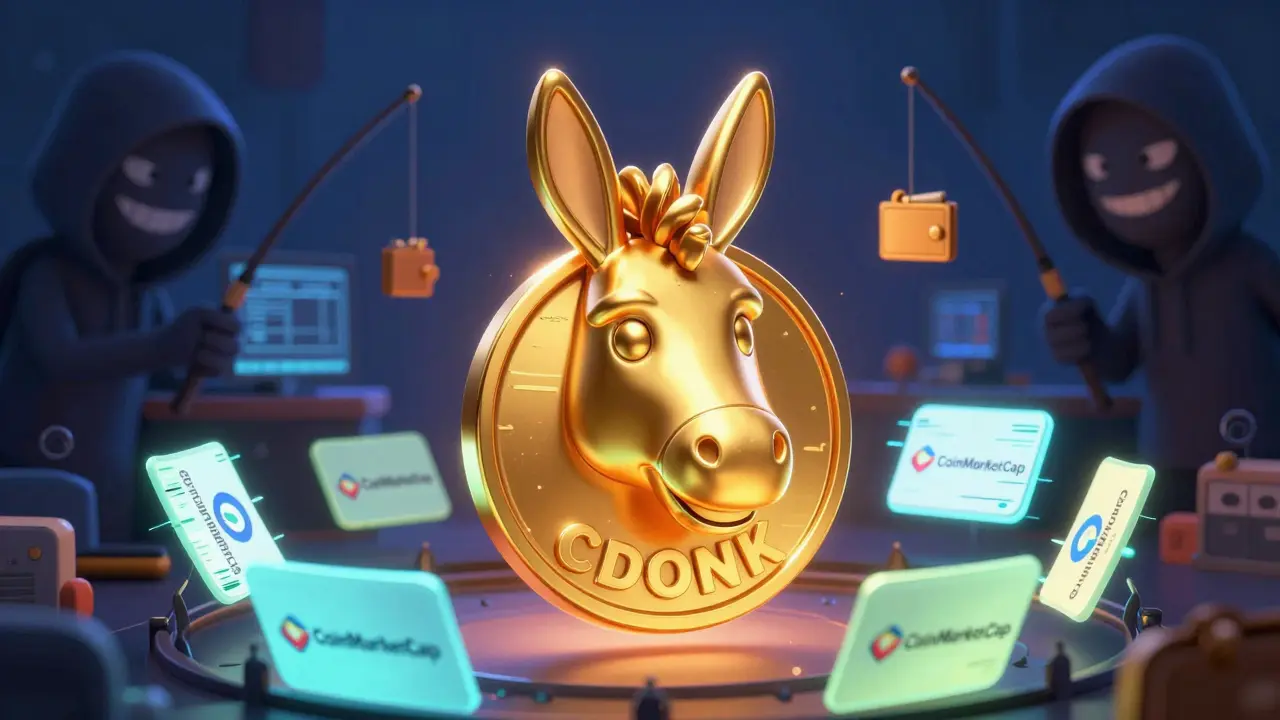
You might have seen the buzz online about a CDONK airdrop allegedly hosted by CoinMarketCap. It sounds too good to be true, doesn't it? Free tokens from a major platform for just connecting your wallet? If you are holding out hope that this is a legitimate opportunity to get free Club Donkey (CDONK) tokens, I have some bad news. This entire narrative is a sophisticated phishing scam designed to drain your crypto wallets.
As of June 2026, there is no official partnership between CoinMarketCap and Club Donkey. No such airdrop exists. The internet is currently flooded with fake landing pages, misleading social media posts, and deceptive Telegram groups claiming otherwise. Falling for these traps has already cost thousands of users their life savings. Let’s break down exactly how this scam works, why it looks so convincing, and how you can protect yourself right now.
The Reality Behind Club Donkey (CDONK)
To understand the scam, we first need to look at the actual asset. Club Donkey is a decentralized meme token built on the Binance Smart Chain (BSC). According to its listing on CoinMarketCap, it positions itself as a "100% community-driven experiment." It claims to be a substrate token related to another project called Donkey ($DONK).
However, the technical reality is starkly different from the hype. CDONK operates on the BSC network with a maximum supply of 20 million tokens. Despite being listed on major trackers like CoinMarketCap, the token has consistently reported zero circulating supply and zero trading volume in recent data snapshots. Its price sits at $0.00 USD. For context, legitimate airdrops usually involve projects with active ecosystems, significant liquidity, and verified exchange listings. CDONK lacks all of these. It is essentially a speculative meme coin with no functional utility or market traction, making it the perfect vehicle for scammers who want to lure in victims with the promise of "free" value.
CoinMarketCap Does Not Host Random Airdrops
The core of this scam relies on misusing the CoinMarketCap brand. CoinMarketCap is one of the most trusted names in cryptocurrency data aggregation. They provide prices, charts, and market cap information for thousands of assets. But here is the critical fact: CoinMarketCap does not host airdrops for random low-cap meme tokens.
If you check the official CoinMarketCap website, specifically their airdrop section, you will find it empty or showing only highly vetted, major protocol distributions. Their internal guidelines require projects to meet strict criteria, including a minimum 30-day trading history across multiple verified exchanges and combined liquidity exceeding $500,000. CDONK fails to meet even the basic threshold of having any trading volume.
Furthermore, CoinMarketCap explicitly stated in their October 2025 blog post titled "Clarifying Airdrop Misinformation Trends" that they do not endorse false claims about exchange-hosted airdrops for low-cap tokens. They specifically listed CDONK among the tokens frequently misused in phishing campaigns. When a platform this large publicly warns against a specific scam, you need to listen.
| Feature | Legitimate Airdrop | CDONK "Airdrop" Claim |
|---|---|---|
| Official Announcement | Pinned tweet on verified project account + Blog post | None. Only rumors on unverified Telegram/Discord channels. |
| Platform Involvement | Hosted by the project itself or a partnered exchange | Falsely claims CoinMarketCap involvement |
| Token Status | Active trading, high liquidity, established utility | Zero volume, zero circulation, speculative meme coin |
| Wallet Interaction | Connects to claim; never asks for private key | Connects to sign malicious transaction draining funds |
| Cost | Free (gas fees only) | Claims to be free but steals existing assets |
How the Phishing Attack Works
Scammers are clever. They don’t just send you an email saying "give me money." They create a seamless, professional-looking experience that mimics legitimate crypto infrastructure. Here is the typical flow of the CDONK scam:
- The Hook: You see a notification on Twitter/X, a Reddit thread, or a Telegram group claiming "CoinMarketCap is giving away CDONK tokens!" The post often uses screenshots that look authentic, featuring the CoinMarketCap logo and fake UI elements.
- The Fake Portal: You click a link that leads to a domain that looks slightly off, like
coinmarketcap-airdrop-cdonk.comorcmc-donkey-claim.net. These sites are clones of the real CoinMarketCap interface. - The Connection: The site asks you to connect your Web3 wallet (like MetaMask or Trust Wallet) to "verify eligibility." This step seems harmless because many legitimate dApps ask for this.
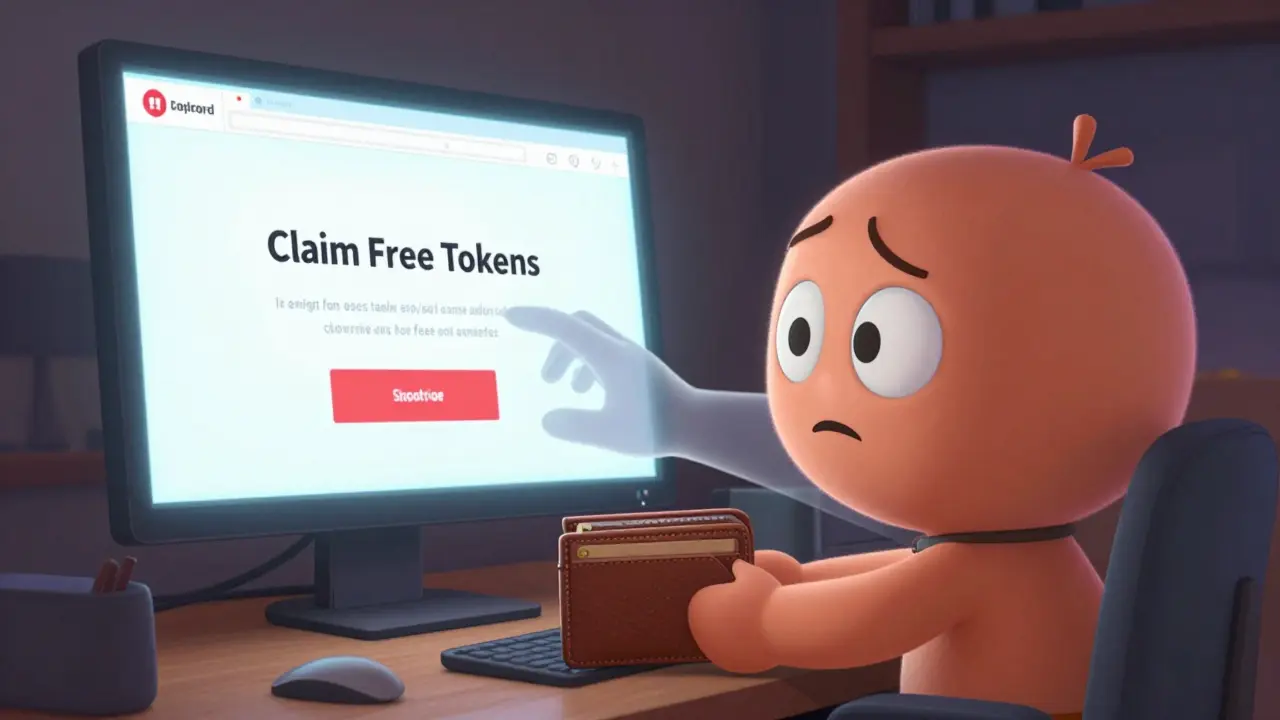
- The Trap: Once connected, the site prompts you to sign a transaction. It might say "Claim Tokens" or "Verify Identity." In reality, this signature authorizes the scammer’s contract to spend unlimited amounts of your ETH, BNB, or other tokens held in that wallet.
- The Drain: As soon as you sign, the scammer’s bot executes the transaction. Your funds are transferred to their address instantly. You receive nothing but empty promises.
This isn’t theoretical. Blockchain security firm CertiK documented 47 active phishing domains impersonating the "CoinMarketCap CDONK Airdrop" in late 2025 alone. These domains were traced to a single Ethereum address that had already stolen approximately $287,400 from over 12,000 victims. The scale of this operation shows how widespread the deception is.
Red Flags You Must Spot Immediately
Protecting yourself requires vigilance. Here are the specific red flags that indicate a CDONK-related offer is a scam:
- Requests for Private Keys: No legitimate service will ever ask for your private key or seed phrase. If a site asks for this, close it immediately.
- Urgency Tactics: Scammers use phrases like "Limited spots remaining" or "Airdrop ends in 2 hours" to make you act without thinking. Legitimate airdrops have clear, published timelines.
- Unverified Social Media: The official Club Donkey Twitter handle (@ClubDonkeyBSC) has very few followers and no pinned announcement about a CoinMarketCap partnership. Real partnerships are heavily promoted on verified accounts.
- Suspicious URLs: Always check the domain name. CoinMarketCap’s official URL is
coinmarketcap.com. Any variation with hyphens, extra words, or different top-level domains (.net, .org, .io) is likely fake. - Zero Volume Tokens: Why would a major platform give away a token that nobody is trading? If a token has no liquidity, it has no value. An airdrop for such a token is useless unless it’s a trap.
What To Do If You Have Already Connected
If you suspect you have visited a fake CDONK airdrop site or signed a suspicious transaction, time is of the essence. Do not panic, but act quickly.
First, check your transaction history on a block explorer like BscScan (for Binance Smart Chain) or Etherscan (for Ethereum). Look for outgoing transactions you didn’t initiate. If you see funds moving out, note the recipient address.
Second, revoke approvals. Many scams work by getting you to approve a contract to spend your tokens. You can use tools like revoke.cash to scan your wallet and revoke permissions for any unknown contracts. Disconnect your wallet from the suspicious site in your browser settings.
Third, move remaining funds. If your wallet still contains assets, transfer them to a new, clean wallet with a fresh seed phrase. Do not keep funds in a wallet that may have been compromised by malicious smart contracts.
Finally, report the incident. While recovery is rarely possible in crypto, reporting helps platforms like CoinMarketCap and blockchain analytics firms track down the scammers. You can report phishing sites to CoinMarketCap directly through their support channel.
The Broader Context of Meme Coin Scams
The CDONK scam is not an isolated incident. It is part of a larger trend in the cryptocurrency space. In Q3 2025, meme coins represented 17.3% of all new token launches, according to Messari’s Meme Coin Report. These tokens are highly speculative and attract inexperienced investors looking for quick gains.
Scammers exploit this greed. They know that people associate brands like CoinMarketCap with legitimacy. By attaching their fake airdrop to a well-known name, they lower the victim’s guard. This tactic has been used before with other projects, but the CDONK case is particularly aggressive due to the sheer number of cloned websites and the coordinated social media push.
Industry experts like ZachXBT have analyzed blockchain forensic data showing that nearly 99% of notifications claiming to be "CoinMarketCap airdrops" are phishing attempts. The pattern is consistent: fake brand association, urgent call to action, and wallet drainage.
How to Verify Future Airdrops Safely
Legitimate airdrops do exist. Projects like Arbitrum, Uniswap, and LayerZero have distributed billions of dollars in tokens to early users. However, they follow strict protocols. To verify if an airdrop is real:
- Check Official Channels: Go directly to the project’s official website and verified Twitter/X account. Ignore links sent via DM or third-party forums.
- Look for Documentation: Real airdrops have detailed FAQs, eligibility criteria, and smart contract audits published by reputable firms like CertiK or OpenZeppelin.
- Use Aggregators Wisely: Platforms like CoinGecko and Airdrops.io verify opportunities. If an airdrop isn’t listed on these trusted aggregators, be skeptical.
- Never Share Secrets: Repeat after me: Your private key stays with you. Always.
In the world of crypto, if something sounds too good to be true, it almost certainly is. The CDONK airdrop is a textbook example of a phishing scam. Stay informed, stay skeptical, and keep your keys safe.
Is there a real CDONK airdrop on CoinMarketCap?
No. There is no official CDONK airdrop hosted by CoinMarketCap. All claims suggesting otherwise are phishing scams designed to steal your cryptocurrency.
What is Club Donkey (CDONK)?
Club Donkey (CDONK) is a meme token on the Binance Smart Chain. It has zero trading volume and no legitimate utility, making it a target for scammers to use in fake airdrop promotions.
How can I tell if a CoinMarketCap airdrop link is fake?
Check the URL carefully. The official site is coinmarketcap.com. Also, CoinMarketCap rarely hosts airdrops for low-cap tokens. If the site asks for your private key or urges immediate action, it is a scam.
What should I do if I connected my wallet to a CDONK scam site?
Immediately revoke any token approvals using a tool like revoke.cash. Move your remaining funds to a new wallet with a fresh seed phrase. Check your transaction history for unauthorized transfers.
Why do scammers use the CDONK token for phishing?
Scammers use obscure, low-value tokens like CDONK because they attract inexperienced investors looking for "free" money. The lack of real value means victims won't realize the token is worthless until after their wallet has been drained.
Can I recover my funds if I fall for this scam?
Recovery is extremely difficult in cryptocurrency. Transactions are irreversible. While you can report the scam to authorities and platforms like CoinMarketCap, the chances of getting your money back are very low.

Comments
these people are evil. they steal from the poor and weak. it is a sin to take money that does not belong to you. god will punish them for this wickedness.
u guys dont get it... its obvious they are testing ur wallet security lol. i mean cmon, if u cant spot a fake url then maybe u r not smart enough for crypto? just saying. also why did u connect in first place??
hey everyone just wanted to say be careful out there man. i saw this scam too last week and almost lost my savings. always check the link carefully before clicking. hope nobody got hurt here
I am absolutely devastated by what happened to so many people here. It feels like we are living in a time where trust is completely broken. The sheer audacity of these scammers using CoinMarketCap's name is heartbreaking. I can only imagine the stress and fear those victims must be feeling right now. We need to stand together and support each other through this nightmare.
another day another batch of sheep getting slaughtered. truly pathetic how easily people fall for free money traps. if you are dumb enough to click on a random link promising free tokens then you deserve to lose everything. stop complaining and start thinking with your brain instead of your greed.
The technical analysis of this scam reveals a clear pattern of social engineering targeting low financial literacy demographics. The use of zero-volume tokens as bait is statistically significant in recent phishing campaigns. This indicates a sophisticated operation rather than amateur attempts. Users must understand the underlying mechanics of smart contract approvals to avoid such pitfalls in the future.
From a cybersecurity perspective, the vector here is classic credential harvesting via malicious dApp interaction. Always verify the domain SSL certificate and cross-reference the contract address on Etherscan or BscScan before signing any transactions. 🛡️💻 Remember, private keys should never leave your device. Stay safe out there folks! 🔐
In my experience working with blockchain infrastructure in Asia, we see these types of localized scams frequently. They often mimic global brands to gain instant credibility among inexperienced users. It is crucial to educate communities about verifying official communication channels directly from the source projects rather than relying on third-party aggregators which can be spoofed easily.
It is frankly embarrassing how many educated individuals fall for this. One would think basic due diligence is a prerequisite for entering the crypto space. Please do not expect sympathy when you fail to perform elementary checks.
Hey friends let's look at the bright side here. We all learn from mistakes. If you got caught don't beat yourself up. Just revoke your approvals immediately using tools like revoke.cash. Move your funds to a new wallet. You can bounce back from this. Stay strong and keep learning!
no worries guys u can fix this. just go to revoke.cash and clean up ur wallet. dont worry about it too much. we all make mistakes. stay positive and keep going bro.
Let us come together as a community to fight this misinformation. It is important to share knowledge about DeFi safety protocols. We should encourage open dialogue about security best practices without judging those who were affected. Together we can build a safer ecosystem for everyone involved in Web3 technologies.
Hello friends. In India we have seen similar scams with local tokens. Always check if the project has real utility. If price is zero and volume is zero then it is likely a trap. Be careful and protect your hard earned money. :)
Oh wow, another article telling adults to read URLs. Groundbreaking journalism really. I bet the next one will tell us fire is hot. Thanks for the laugh though, needed that today.
This incident highlights the vulnerability of our digital infrastructure to foreign exploitation. It is imperative that national regulatory bodies step in to protect citizens from such international fraud schemes. We cannot rely solely on individual vigilance when facing organized criminal enterprises operating across borders.
One must consider the deeper implications of this event. Is it possible that major platforms are complicit in allowing these listings to remain visible for data harvesting purposes? The timing seems suspiciously coordinated with broader market manipulations. We must question the motives behind the silence of established institutions regarding these recurring patterns of deception.