Think about the last time you signed up for a new service. You probably typed in your name, email, phone number, and maybe even uploaded a photo of your ID. Now, think about how many times that same data has been copied, stored, and potentially sold by companies you barely remember using. That is the current state of digital identity: fragmented, insecure, and completely out of your hands.
Decentralized Identity Management is a system that allows individuals to control their own digital identities without relying on central authorities like governments or tech giants. It flips the script. Instead of storing your data in a corporate database that hackers love to target, this technology uses blockchain to let you hold your own keys-literally. As we move through 2026, this isn't just a niche concept for crypto enthusiasts; it's becoming the standard for secure, private online interaction.
The Problem with Centralized Identity
To understand why decentralized identity matters, you first have to look at what’s broken in the current system. Today, most of us rely on centralized identity providers. These are big entities like Google, Facebook, or government agencies that act as the gatekeepers of who you are online.
When you log in with Google, you’re trusting Google to verify your identity and share that information with the website you’re visiting. The problem? Google becomes a single point of failure. If their database is breached, millions of accounts are compromised. We’ve seen this happen repeatedly over the last decade. Data breaches aren’t just annoying; they lead to identity theft, financial loss, and a general erosion of privacy.
Furthermore, these systems create "identity silos." Your medical records are in one place, your bank details in another, and your social profile elsewhere. There is no seamless way to prove who you are across these different worlds without creating redundant accounts and sharing more data than necessary. Decentralized identity aims to shatter these silos.
How Decentralized Identity Works
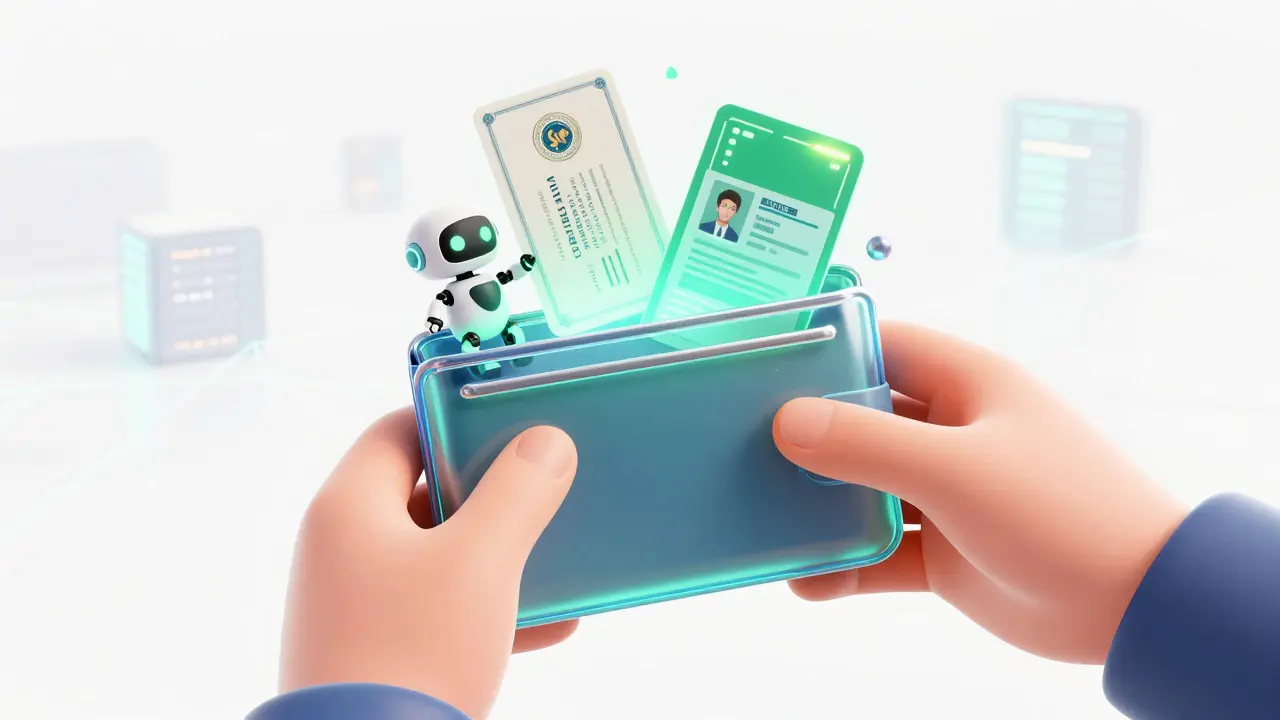
So, how does it actually work under the hood? It relies on three main components that work together to give you control. Think of it like a physical wallet, but for the digital world.
- Decentralized Identifiers (DIDs): This is your unique digital address. Unlike an email or username, a DID is not tied to any specific company. It’s a string of characters generated cryptographically. The World Wide Web Consortium (W3C) manages the standards for DIDs to ensure they work across different platforms. When you create a DID, you are essentially claiming a space on the blockchain that belongs only to you.
- Digital Wallets: This is where you store your identity. A Digital Wallet is secure software that stores private keys and verifiable credentials on your device. It’s the app on your phone that holds your proofs. Crucially, the wallet stays on your device, not on a cloud server owned by someone else.
- Verifiable Credentials (VCs): These are the actual "papers" in your wallet. A VC is a tamper-proof digital certificate issued by a trusted entity. For example, a university might issue you a VC for your degree, or a government might issue a VC for your driver’s license. These credentials are digitally signed, meaning anyone can verify they are real without calling the issuer.
Here is the magic part: when you need to prove something, you don’t send the raw data. You use cryptography to generate a proof. For instance, if a bar wants to check if you’re over 21, your wallet can prove you are over 21 without revealing your exact birthdate, your name, or your home address. This is called selective disclosure.
The Role of Blockchain and Distributed Ledgers
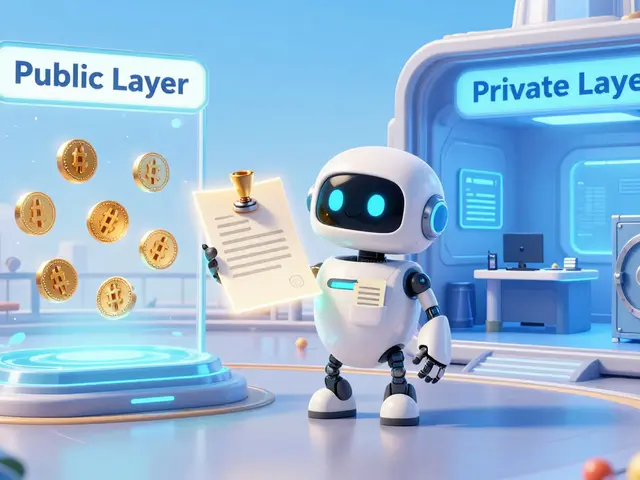
You might be wondering, "Where does blockchain fit in?" In decentralized identity, the blockchain acts as the public registry, not the storage locker. It doesn’t store your personal data. Instead, it stores the public keys associated with your DID.
This creates a trust layer. Because blockchains are immutable and distributed, no single entity can alter the record of who owns which key. When a verifier (like a website) checks your credential, they look at the blockchain to confirm that the signature matches the public key registered there. This ensures that the credential hasn’t been forged.
Different blockchains handle this differently. Some use dedicated identity chains, while others use smart contracts on established networks like Ethereum or Solana. The key takeaway is that the ledger provides the infrastructure for trust, while your wallet holds the sensitive data off-chain. This separation is vital for both security and scalability.
Self-Sovereign Identity vs. Decentralized Identity
You’ll often hear the terms "Decentralized Identity" (DCI) and "Self-Sovereign Identity" (SSI) used interchangeably, but there is a subtle difference. DCI is the broader technical framework. SSI is a specific philosophy within that framework.
Self-Sovereign Identity is an approach where users have complete ownership and control over their digital identity without any intermediaries. In a pure SSI model, you are the sole authority. No government, no corporation, and no platform can revoke your identity unless you choose to let them. While all SSI systems are decentralized, not all decentralized systems offer full sovereignty. Some might still require a central issuer to validate credentials, whereas SSI pushes for a fully peer-to-peer verification model.
For the average user, the distinction matters less than the outcome: more control, less reliance on third parties, and better privacy.
| Feature | Centralized Identity | Decentralized Identity |
|---|---|---|
| Data Storage | Corporate/Government Servers | User's Digital Wallet |
| Control | Provider controls access | User controls access |
| Breach Risk | High (Single Point of Failure) | Low (No Central Database) |
| Privacy | Minimal (Full data shared) | High (Selective Disclosure) |
| Portability | Locked to Platform | Universal Across Platforms |
Real-World Use Cases in 2026
By 2026, decentralized identity is moving beyond theory into practical application. Here are some scenarios where it is making a tangible difference:
- Healthcare Records: Patients can carry their medical history in a digital wallet. When switching doctors, they grant temporary access to their records without the old hospital needing to fax anything. The patient retains ownership forever.
- Financial Onboarding: Opening a bank account usually involves uploading IDs and waiting days for verification. With VCs, you can instantly prove your identity, address, and creditworthiness to a new bank without re-uploading documents every time. This reduces fraud and speeds up the process.
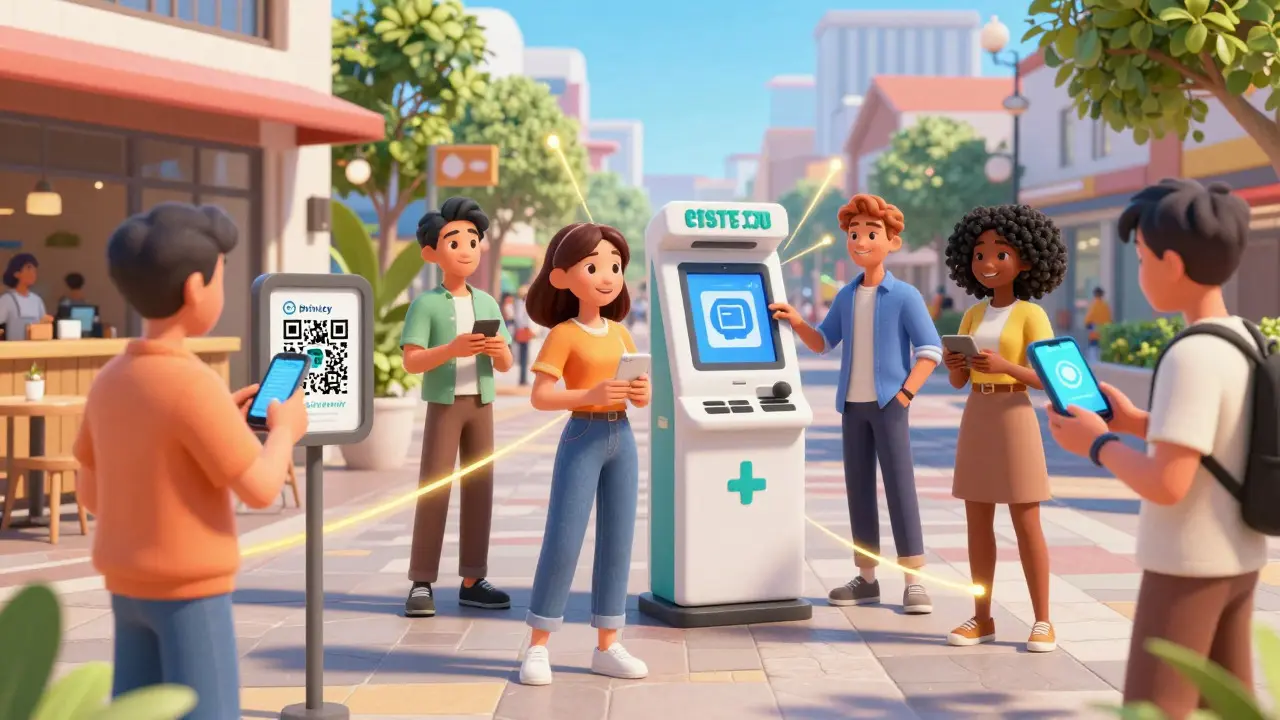
- Education: Universities are issuing digital diplomas as Verifiable Credentials. Employers can verify a candidate’s degree in seconds by scanning a QR code, eliminating the need for background check services.
- Gaming and Metaverse: Players can own their avatars and achievements across different games. If you level up in one game, that credential travels with you to another, creating a persistent identity that isn’t locked to one gaming platform.
Challenges and Barriers to Adoption
Despite the benefits, widespread adoption faces hurdles. The biggest challenge is user experience. Managing private keys is not intuitive for the average person. If you lose your password today, you click "Forgot Password." If you lose your private key in a decentralized system, you might lose access to your identity permanently unless you have set up robust recovery mechanisms.
Another issue is interoperability. While W3C standards exist, different blockchain networks and wallet providers sometimes struggle to talk to each other seamlessly. A credential issued on one platform might not be easily readable by a verifier on another. Industry groups are working hard to solve this, but fragmentation remains a risk.
Finally, there is the "cold start" problem. For decentralized identity to be useful, both issuers (like universities) and verifiers (like employers) need to adopt it. Until a critical mass of organizations supports VCs, users may find themselves carrying digital credentials that few people accept.
The Future of Digital Identity
The trajectory is clear. Regulations like GDPR in Europe and emerging global privacy laws are pushing companies away from hoarding user data. Decentralized identity offers a compliant path forward. By minimizing data collection, companies reduce liability. Users gain privacy. It’s a win-win.
We are likely to see major tech players integrate DCI solutions into their operating systems. Imagine your smartphone acting as your universal identity wallet, pre-installed and ready to go. As biometric authentication improves, linking your face or fingerprint to your private key will make the technology invisible and easy to use.
Decentralized identity management is not just a technical upgrade; it’s a cultural shift towards digital autonomy. It returns power to the individual, ensuring that in the digital age, you are the master of your own narrative.
Is decentralized identity safe?
Yes, it is generally safer than centralized systems because there is no central database for hackers to breach. However, security depends on the user protecting their private keys. If you lose your wallet access, recovery can be difficult, so strong backup methods are essential.
What is the difference between a DID and a Verifiable Credential?
A DID (Decentralized Identifier) is your unique digital address or ID number on the blockchain. A Verifiable Credential is a specific piece of information, like a diploma or driver's license, that is linked to that DID. Think of the DID as your name tag and the VC as the certificate in your pocket.
Do I need to know blockchain to use decentralized identity?
Not necessarily. While the underlying technology is blockchain-based, the user interface is designed to be simple. You interact with a digital wallet app, similar to how you use a banking app. The complex cryptography happens in the background.
Can I use my decentralized identity anywhere?
Ideally, yes. Standards set by the W3C aim for interoperability. However, currently, you can only use it with organizations that have adopted decentralized identity verification protocols. Adoption is growing rapidly in finance, healthcare, and education sectors.
What happens if I lose my digital wallet?
If you lose your private keys without a backup, you may lose access to your credentials. Most modern wallets offer multi-device sync and social recovery options (where trusted contacts help you recover access) to mitigate this risk. Always follow best practices for backing up your seed phrase.