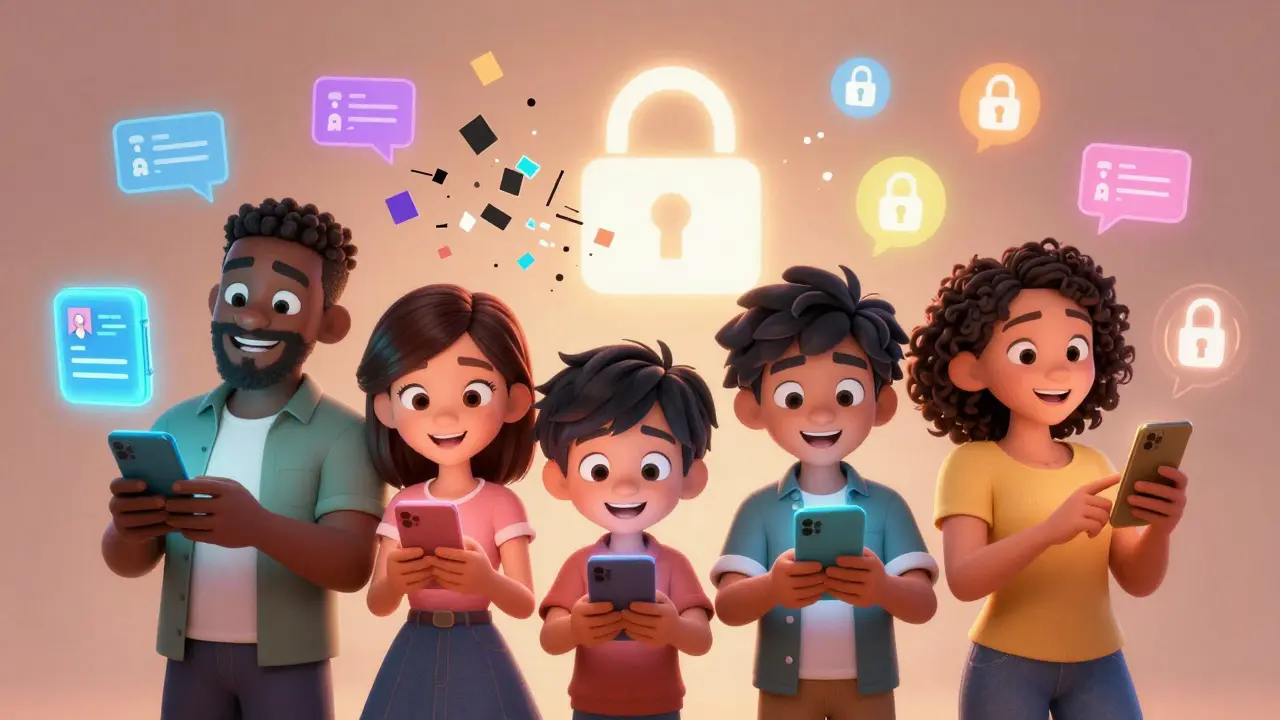
Imagine logging into your bank, health portal, or government service without typing a password. No username. No security questions. Just a quick scan or tap-and you’re in. That’s not science fiction. It’s what decentralized identity is making real in 2026.
What Exactly Is Decentralized Identity?
Decentralized identity, or DID, flips the script on how we prove who we are online. Instead of companies like Google, Facebook, or your bank holding your personal data, you control it. Your identity lives in a digital wallet on your phone or computer, secured by cryptography. When you need to prove something-like your age or passport number-you share only what’s necessary, and nothing more. This isn’t just a privacy tweak. It’s a full system rewrite. Traditional identity systems rely on central databases. One breach, and millions of records leak. The 2023 Okta incident exposed 36 million accounts because hackers targeted a single point of failure. Decentralized identity removes that single point. There’s no central server to hack. No database to dump. At the core are two W3C standards: Decentralized Identifiers (DIDs) and Verifiable Credentials. A DID is a unique, blockchain-backed address that points to your identity data-not stored on the chain, but linked to it. A Verifiable Credential is like a digital diploma or driver’s license, signed cryptographically so anyone can check its authenticity without contacting the issuer.Why This Matters Now (2026)
In 2023, only 8% of the global digital identity market used decentralized systems. By early 2026, that number jumped to 28%. Why? Because the old way is breaking. Verizon’s 2024 report found that 81% of breaches stemmed from stolen passwords or weak authentication. Companies lost an average of $3.8 million per incident. Meanwhile, organizations using decentralized identity cut those costs by over 60%, according to IBM Security’s April 2025 bulletin. The EU’s Digital Identity Wallet regulation went live in January 2025. Singapore launched its Trust Framework v3.0 in April 2025. California’s Decentralized Identity Act is in final review. Governments aren’t just watching-they’re building. Fortune 500 companies? 67% are piloting DIDs. Financial services lead the pack at 38% adoption. Healthcare isn’t far behind. Patients now control who sees their medical records. A hospital in Auckland can share a vaccination record with a clinic in Tokyo in under 90 seconds-no third-party middlemen, no data copies, no risk of leaks.How It Actually Works
Let’s say you want to rent a car in Berlin. Normally, you’d upload a photo of your license, passport, and credit card. The rental company stores all that. Now, with decentralized identity:- You open your digital wallet (like Microsoft Entra Verified ID or Spruce ID).
- You select the Verifiable Credential: “Valid Driver’s License, Issued by NZ Transport Agency.”
- You use a zero-knowledge proof to show you’re over 21-without revealing your exact birthdate.
- You prove your credit card is active, without sharing the card number.
- You send the signed, encrypted data to the rental company.
What Technologies Power This?
Most decentralized identity systems run on blockchain-but not the kind you use for crypto trading. They use lightweight, permissioned ledgers optimized for identity, not transactions. - Hyperledger Indy powers 62% of enterprise deployments. It’s built for privacy, supports DIDs, and runs on Linux Foundation infrastructure.
Who’s Leading the Pack?
The market is split between tech giants and specialists:| Provider | Market Share | Key Strength |
|---|---|---|
| Microsoft Entra Verified ID | 32% | Deep integration with Windows 12 and Azure |
| IBM Verify Decentralized ID | 24% | Enterprise-grade compliance and audit trails |
| Spruce ID | 18% | Developer-friendly tools and open-source focus |
| Others | 26% | Regional players in EU, Asia, and Canada |
Where It’s Working (And Where It’s Not)
Decentralized identity shines where trust, security, and compliance matter:- Healthcare: Patient records move securely between clinics. No more faxing or mailing paper forms. One hospital in Wellington cut record transfer time from 4 days to 12 minutes.
- Finance: KYC onboarding dropped from 5 days to 90 minutes. Banks like ANZ and Westpac are rolling it out to high-net-worth clients.
- Government: New Zealand’s Digital Identity Pilot lets citizens access tax, social services, and voting records with a single DID. No login. No forms.
- Social media: 15 TPS won’t handle millions of logins per second. Facebook or TikTok won’t switch anytime soon.
- Low-income users: 72% of users need a smartphone and internet. In rural areas or developing nations, that’s still a barrier.
- Legacy systems: 41% of enterprise IT runs on systems built 20+ years ago. Integrating DIDs into them adds 35-50% more development time and cost.
The Big Risks
This isn’t magic. There are real dangers. The biggest? Lost keys. If you lose your private key-and you didn’t set up recovery-you lose your identity forever. No reset button. No customer service line. Dr. Lorrie Cranor from Carnegie Mellon warned in April 2025: “Without standardized recovery, we’re creating a new kind of digital poverty.” Most systems now use social recovery: you pick 3 trusted contacts. If you lose access, they help you regain it. 68% of enterprise deployments use this. Another issue: interoperability. There are 47 different DID methods. Only 32% of them can talk to each other. The Decentralized Identity Foundation’s Universal Resolver v2, launched in April 2025, helps-but it’s not perfect. Regulation is still patchy. 68% of countries have no clear rules. That’s why companies are building modular systems that can adapt to local laws.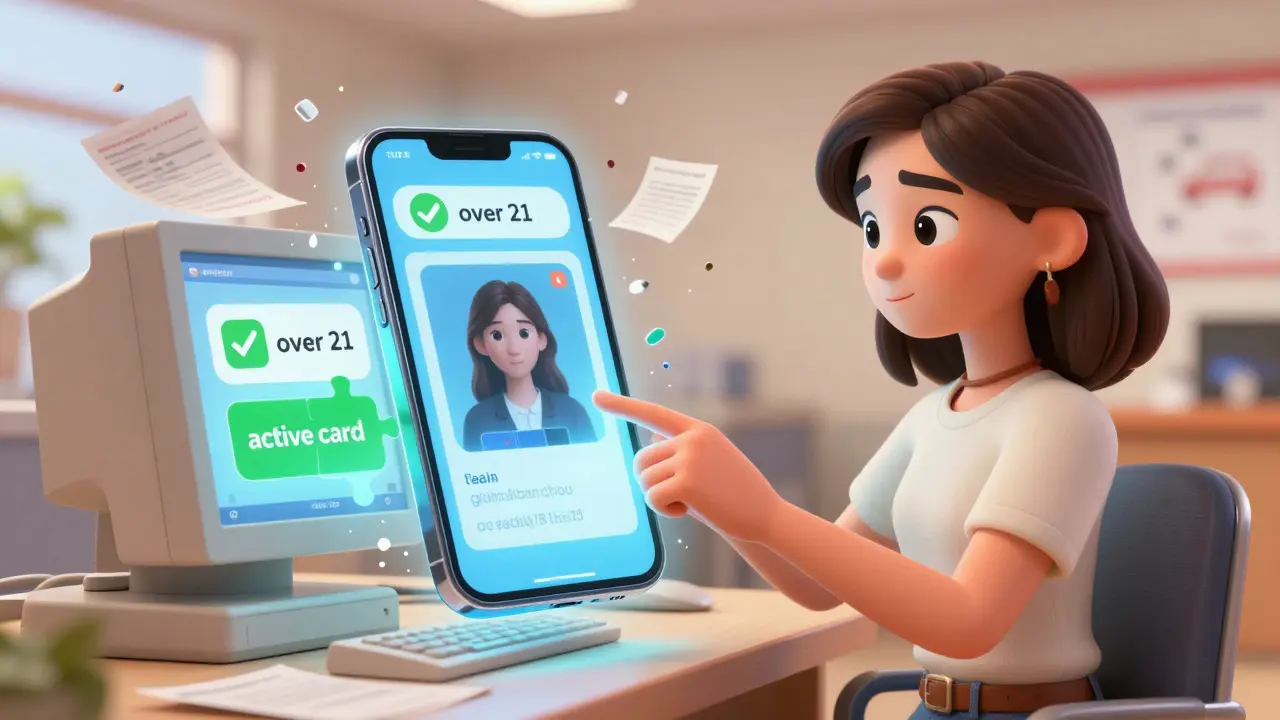
What You Need to Learn
If you’re a developer, IT manager, or policy maker, you need to understand three things:- DID methods: How they’re structured, how they resolve, and which ones are widely supported.
- Verifiable Credential schemas: What data can be included (name, age, license number), and how to design them for privacy.
- Key management: How to store, backup, and recover cryptographic keys without compromising security.
The Road Ahead
By 2027, Gartner predicts 60% of enterprises will replace centralized identity systems with decentralized ones. That’s not speculation-it’s planning. The Linux Foundation is merging Hyperledger Indy and Aries into one unified framework by Q2 2026. Microsoft is embedding DIDs into Windows 12. The W3C just released a new spec that lets credentials work across different blockchains. And AI? It’s coming. 73% of identity pros expect AI to enhance DIDs by 2027-using behavioral patterns to detect fraud in real time, without asking for more data. The end goal? A world where your identity is yours. Not owned by a corporation. Not stored in a server farm. Not sold to advertisers. Just… yours. It’s not perfect yet. But it’s working. And it’s growing faster than any identity system in history.What Comes Next?
If you’re a consumer: start asking for DID options when signing up for services. Demand privacy. Refuse to upload your passport photo if you can use a Verifiable Credential instead. If you’re a business: Pilot a use case. Start with KYC or employee onboarding. Don’t try to replace everything at once. If you’re a developer: Learn DID methods. Try the Universal Resolver. Build a simple credential with a test wallet. The future of identity isn’t about better passwords. It’s about ownership. Control. Trust. And it’s already here.What is a Decentralized Identifier (DID)?
A Decentralized Identifier (DID) is a unique, blockchain-based address that points to your identity data without storing it on the chain. Unlike usernames or email addresses, DIDs are owned and controlled by you. They use cryptographic keys to prove ownership and can be verified by anyone without contacting a central authority.
How is decentralized identity more secure than passwords?
Password-based systems rely on centralized databases that are prime targets for hackers. 81% of breaches in 2024 came from stolen or weak credentials. Decentralized identity uses cryptographic keys stored only on your device. No central database means no single point of failure. Even if a service is hacked, your identity data stays safe because it’s never shared with them.
Can I lose my decentralized identity?
Yes-if you lose your private key and didn’t set up recovery. That’s why most systems now use social recovery: you name 2-5 trusted contacts who can help you regain access if you’re locked out. Without this, you could permanently lose access to your digital life-your bank, health records, even your job credentials.
Which industries are using decentralized identity the most?
Financial services lead with 38% enterprise adoption, followed by healthcare (29%) and government (24%). Banks use it to cut KYC from days to minutes. Hospitals use it to securely share patient records across clinics. Governments use it for digital IDs and voting systems. These sectors value security and compliance over speed.
Will decentralized identity replace my password?
Eventually, yes-for high-security services like banking, healthcare, and government portals. But not for everything. Social media and low-risk apps will likely keep passwords or simple logins for now. Decentralized identity is designed for situations where privacy and control matter most-not for logging into a forum or streaming site.
Is decentralized identity only for tech experts?
No. End users don’t need to understand blockchain or cryptography. They just need a wallet app-like Microsoft’s or a government-issued app-that works like an app on your phone. The complexity is hidden. You tap, scan, or approve. The tech handles the rest. The challenge is for developers and organizations building the systems behind the scenes.

Comments
dude this is the future and we’re still typing passwords like it’s 2010?? i just scanned my face to log into my bank yesterday and it felt like magic. no more forgetting 17-character nonsense. this is how it’s supposed to be.
The adoption trajectory of decentralized identity systems, particularly in regulated sectors such as healthcare and finance, represents a paradigmatic shift in digital trust architecture. The W3C standards for DIDs and Verifiable Credentials are not merely technological innovations-they are foundational legal and ethical frameworks for data sovereignty. The EU’s Digital Identity Wallet regulation, enacted in January 2025, is a landmark in global digital governance.
Let’s be real-this is just Big Tech’s way of locking us into their ecosystems under the guise of ‘privacy.’ Microsoft Entra Verified ID? That’s just Windows 12 with a new name. You think you own your identity? You’re just renting it from Redmond.
I tried this in India with a local health app-no more carrying paper records to clinics. My grandma even got it to work on her old phone. The tech is simple, the benefit is huge. Why are we still talking about passwords when we can do this?
This is the kind of change we’ve been waiting for. I work in IT and I’ve seen how messy identity systems are. DIDs aren’t perfect, but they’re the first real step toward giving people back control. Start small-employee onboarding, then expand. You don’t need to boil the ocean.
Oh please. You think some blockchain-based wallet is going to stop identity theft? The same people who lose their private keys will just blame the system. And don’t get me started on ‘social recovery’-you’re trusting your identity to your drunk cousin who can’t remember his own birthday.
This is all a distraction. The real story? The government is using DIDs to track everyone under the guise of ‘security.’ You think your data is safe? It’s just being stored in a different server farm-with a fancy blockchain label. Wake up. They’re building the surveillance state with your consent.
Honestly, I’m impressed by how Microsoft has integrated this into Windows 12. It’s seamless. And yes, I know some of you will say ‘Big Tech bad,’ but when your identity works across your laptop, phone, and smart fridge without a single password? That’s not evil-that’s elegance.
Let me break this down for the people still using passwords like they’re living in the dial-up era. Decentralized identity isn’t just about convenience-it’s about existential autonomy. Your personal data has been commodified for decades by corporations who treat you like a product. DIDs shift that power dynamic. The cryptographic verification layer eliminates third-party intermediaries. Zero-knowledge proofs mean you reveal nothing beyond necessity. This isn’t an upgrade. It’s a revolution. And if you’re not learning DID methods or Verifiable Credential schemas by now, you’re not just behind-you’re obsolete.
I tried it with my credit union. Took 5 minutes. No forms. No uploading pics. Just tapped my phone. Done. I’m sold. Why didn’t we do this sooner?
This is the kind of tech that actually helps people. I’ve helped my mom set up her digital wallet-she’s 72, doesn’t know what a blockchain is, but she can now prove her age at the pharmacy without showing her driver’s license. That’s powerful.
The notion that decentralized identity eliminates single points of failure is a fallacy. The cryptographic key management infrastructure remains centralized in practice. Furthermore, the reliance on proprietary chains by financial institutions undermines the very decentralization ethos being promoted. This is not liberation-it is rebranding.
I’ve been testing this with my team in London. The reduction in fraud claims alone has been worth the migration cost. We’re not replacing everything overnight, but for high-risk transactions? Absolutely. The tech works.
this whole thing is just a fancy way to make people feel good while companies still collect data. they just call it 'verifiable credentials' now. same thing. lazy.
America’s leading this? Please. The EU and Singapore are miles ahead. We’re still arguing about whether to allow biometrics in schools. Meanwhile, New Zealand’s citizens are voting with their phones. We’re not innovating-we’re lagging.
DID = Digital Identity Debt. You think losing your key is bad? Wait till your DID gets flagged by an AI ‘risk score’ and you can’t access your bank, your job, or your kid’s school records. Welcome to algorithmic identity slavery. 🚨
I’m skeptical. The moment this becomes mandatory for healthcare access, it becomes a tool for exclusion. What about the elderly? The homeless? The rural communities without smartphones? This isn’t inclusion-it’s digital apartheid dressed in blockchain glitter.
Just tried this to book a flight. Used my DID to prove I was vaccinated and over 21. No passport scan. No email confirmation. Just tapped. Felt like I was in a sci-fi movie. Still can’t believe it’s real.
The throughput limitations are non-trivial. 15-35 TPS is fine for KYC, but the moment you try to scale this to enterprise-wide SSO, you hit a wall. The infrastructure isn’t ready. We’re romanticizing a prototype.
This is the future 🚀 but let’s be real-no one’s ready for the key loss problem. My buddy lost his phone and his entire digital life vanished. No recovery. No help. Just gone. 😭 This isn’t empowerment-it’s a minefield.
If you don't understand zero-knowledge proofs you shouldn't be talking about this. It's not magic it's math and you're all just parroting tech bro buzzwords
I just realized… if my DID is tied to my real identity, then I can’t ever be anonymous again. Are we trading privacy for convenience? This feels like the end of the internet as we knew it. 🌐💔
I’m so excited I cried. My daughter got her first DID when she turned 13. She can now prove she’s old enough to use the library app without showing her birth certificate. This is what freedom looks like. 💕
In Nigeria we dont even have reliable internet everywhere but still i see people using this for small business verifications. Its not perfect but its helping. We need more low bandwidth solutions
The real question isn’t whether DIDs work-it’s whether we’re ready to relinquish the illusion that identity can be owned. We’ve spent centuries building institutions to mediate trust. Now we’re outsourcing that to cryptography. What happens when the math fails? Or when the code is biased? We’re building a new religion-and we don’t even know what we’re worshipping.