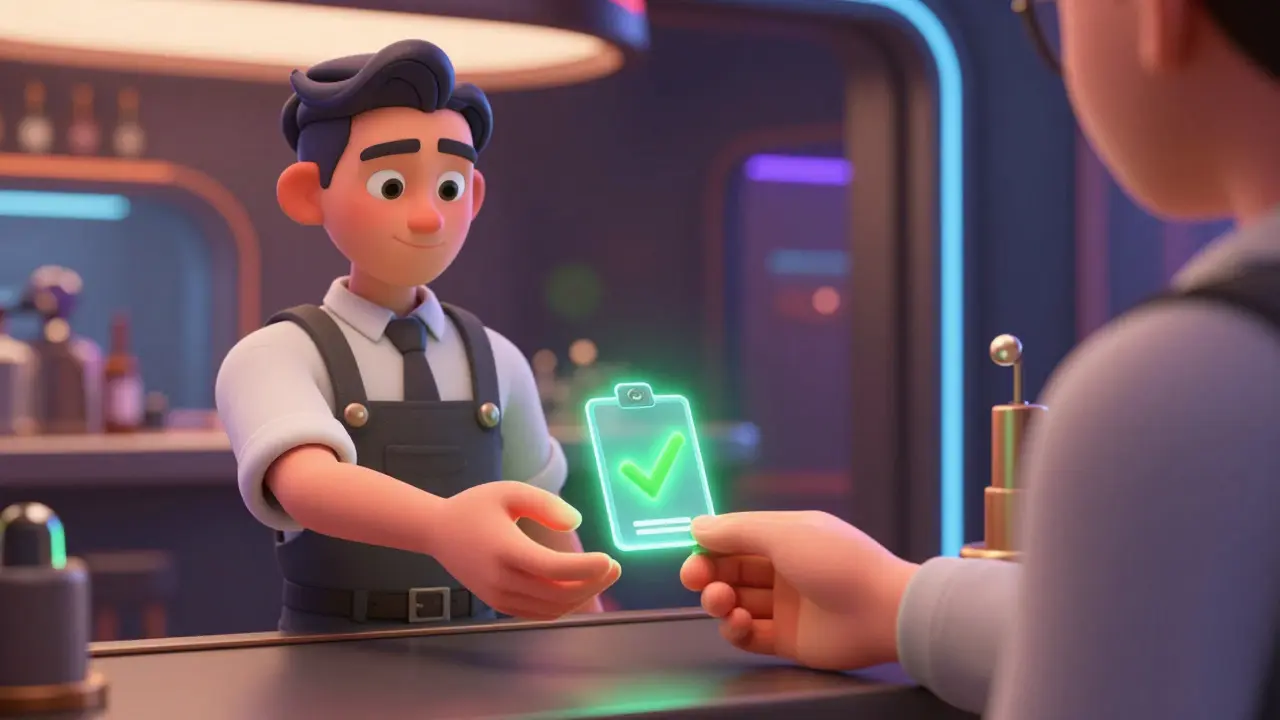
Imagine walking into a bar. The bouncer asks for ID to check if you are over 18. You hand over your driver’s license. Now the bouncer knows your name, address, phone number, and exactly when you were born. Did you really need to share all that just to get a drink? Probably not. This is the problem with how we handle identity online today. We trade massive amounts of personal data for basic access, hoping companies will keep it safe. They rarely do.
Decentralized Identity (DID) changes this dynamic completely. Instead of relying on centralized giants like Google or Facebook to verify who you are, you hold your own keys-literally. It puts the power back in your pocket, allowing you to prove who you are without handing over your entire life story. But what does this actually mean for your security, privacy, and daily digital life?
Taking Back Ownership of Personal Data
The core promise of Decentralized Identity is a system where individuals control their own digital identities without relying on central authorities. In the current web, your identity is fragmented across hundreds of databases owned by corporations. If one gets hacked, your data is exposed. With DID, you become the single source of truth for your own information.
This concept is often called Self-Sovereign Identity (SSI) is a model where users maintain full control over their credentials in secure digital wallets. Think of it as a digital wallet on your phone. Instead of logging into every new website with an email and password, you present a verifiable credential from your wallet. You decide what to share, with whom, and for how long. Once the transaction is done, the other party doesn’t necessarily keep a copy of your data. This shifts the burden of security from vulnerable corporate servers to your personal device.
Enhanced Privacy Through Zero-Knowledge Proofs
One of the most powerful technical features behind decentralized identity is Zero-Knowledge Proofs (ZKP) is a cryptographic method that allows proving a statement is true without revealing the underlying data. This sounds complex, but the application is simple. Let’s go back to the bar example. With ZKP, you can cryptographically prove you are over 18 without showing your birth date. The system verifies the math, not the document.
This minimizes data exposure significantly. Currently, if you apply for a loan, you might send your bank statements, tax returns, and ID. A lender needs to know you can pay, not necessarily your exact salary or home address. Decentralized systems allow for selective disclosure. You share only the specific attribute needed for verification. This aligns perfectly with privacy regulations like GDPR and CPRA, which mandate data minimization. By sharing less, you reduce the surface area for potential leaks.
Superior Security Against Data Breaches
Data breaches are exhausting. In recent years, millions of records have been stolen from centralized databases. These honeypots of personal information are attractive targets for cybercriminals. When a central authority is compromised, everyone using that service is at risk. Blockchain Technology is a distributed ledger system that ensures tamper-proof record keeping through cryptographic hashing forms the backbone of many decentralized identity solutions. Because the data isn’t stored in one place, there is no single point of failure.
In a decentralized model, your credentials are distributed. Even if one service provider is hacked, attackers find little useful data because they don’t hold your primary identity keys. Furthermore, the use of advanced encryption makes these credentials virtually tamper-proof. CrowdStrike and other cybersecurity firms note that this architecture drastically reduces the risk of large-scale identity theft. You aren’t trusting a company’s firewall; you’re trusting mathematical certainty.
Seamless Interoperability Across Platforms
A common concern with new tech is compatibility. Will my decentralized ID work everywhere? The good news is that standards exist. The World Wide Web Consortium (W3C) has established standards for Decentralized Identifiers (DIDs) is unique identifiers that do not require a centralized registry or administrator and Verifiable Credentials is digital equivalents of physical credentials like driver's licenses or degrees. These open standards ensure that a credential issued by a university in New Zealand can be verified by an employer in Germany, regardless of the platform they use.
This interoperability eliminates the need to create new accounts for every service. You can reuse your verified credentials. Log in once, verify once, use everywhere. This reduces friction for users and lowers administrative costs for businesses. No more resetting passwords or waiting for email confirmations. Just a quick scan or click to authenticate.
Cost Reduction and Operational Efficiency
For businesses, managing user identity is expensive. They spend billions on compliance, security infrastructure, and customer support for password resets. Decentralized identity shifts some of this cost back to the user (who already owns the device) while reducing liability for the company. Authgear reports that organizations see reduced dependency on third-party identity providers.
By not storing vast amounts of Personally Identifiable Information (PII), companies lower their regulatory burden. If they don’t have your data, they can’t lose it. This simplifies compliance with laws like GDPR. Additionally, automated verification processes speed up onboarding. Imagine opening a bank account in minutes instead of days, with documents verified instantly via blockchain rather than manual checks.
| Feature | Centralized Identity | Decentralized Identity |
|---|---|---|
| Data Control | Service Provider | User |
| Security Model | Single Point of Failure | Distributed Ledger |
| Privacy | Minimal (Full Data Sharing) | High (Selective Disclosure/ZKP) |
| Interoperability | Siloed Ecosystems | Cross-Platform (W3C Standards) |
| Breach Impact | Massive Data Exposure | Limited/Compartmentalized Risk |

Challenges and User Adoption
Despite the benefits, adoption isn't instantaneous. The biggest hurdle is the learning curve. Managing cryptographic keys and digital wallets requires a shift in mindset. Users must take responsibility for their own security. If you lose your private key, you might lose access to your identity. There is no "forgot password" link with a human on the other end.
Early adopters report positive experiences with the convenience of reusing credentials, but many still find the setup process intimidating. For widespread success, interfaces need to become invisible. The technology should work in the background, much like HTTPS does now. Education is crucial. Users need to understand why holding their own keys is safer, even if it feels slightly more complex at first.
The Future of Digital Trust
We are moving toward a world where data is more valuable than oil. Companies like Meta generate over $100 billion annually from advertising based on user data analysis. Decentralized identity disrupts this model by giving users the right to say "no" or "only this." As regulations tighten globally and users become more privacy-conscious, DID is not just a niche crypto feature-it’s becoming essential infrastructure.
Governments and enterprises are already exploring these systems. From digital driver’s licenses to professional certifications, the scope is expanding. The future isn’t about eliminating identity; it’s about making it portable, private, and truly yours.
What is the main benefit of decentralized identity for everyday users?
The main benefit is privacy and control. Users can prove their identity or attributes (like age or citizenship) without sharing unnecessary personal data. This reduces the risk of identity theft and gives individuals ownership over their digital footprint.
Is decentralized identity secure against hackers?
Yes, it is generally more secure than centralized systems. Because data is distributed across a blockchain and encrypted, there is no single database for hackers to target. However, users must securely manage their own private keys to prevent loss of access.
How do zero-knowledge proofs work in identity verification?
Zero-knowledge proofs allow you to prove a fact (e.g., "I am over 18") without revealing the underlying data (e.g., your exact birth date). It uses cryptography to validate the claim while keeping the specific details hidden from the verifier.
Do I need to be a tech expert to use decentralized identity?
Not necessarily, but it currently requires some understanding of digital wallets and key management. As the technology matures, user interfaces are becoming simpler, aiming to make the process as easy as logging in with Google, but with greater privacy.
Can decentralized identity replace passwords?
Yes, it can. Instead of remembering unique passwords for every site, you use your digital wallet to sign transactions cryptographically. This eliminates password fatigue and the risks associated with weak or reused passwords.