What Exactly Are DePIN Projects?
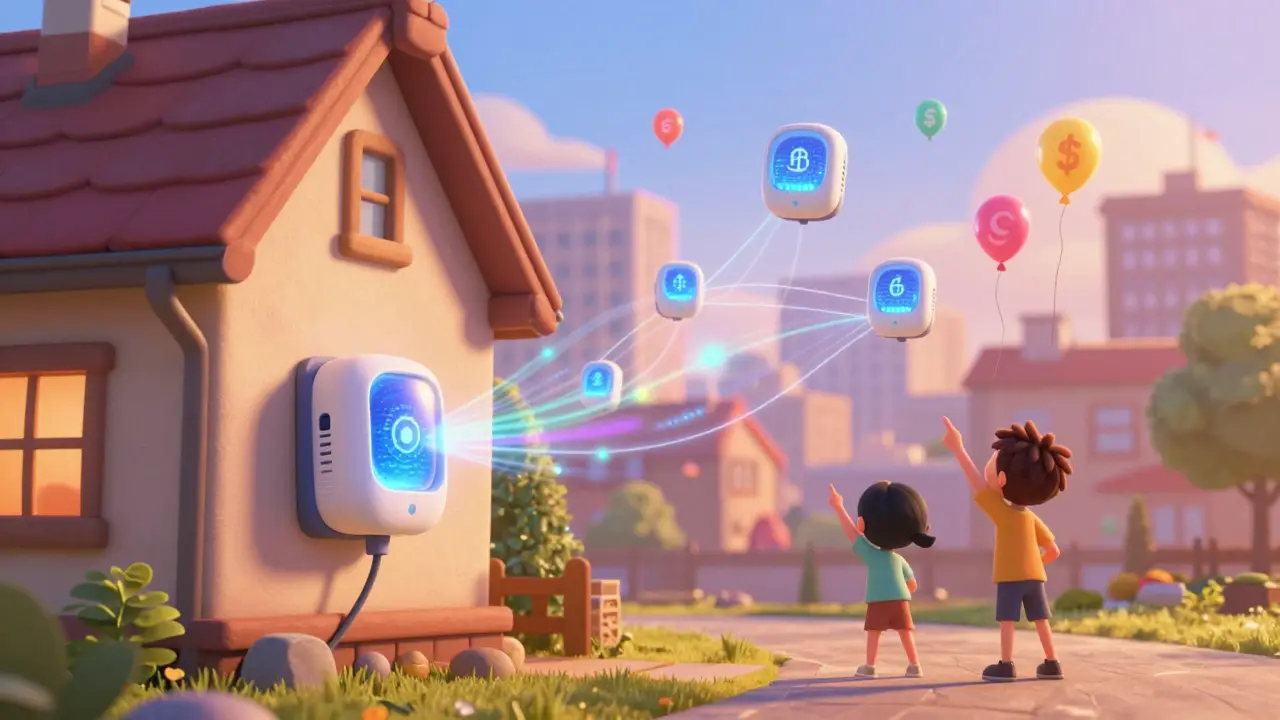
DePIN stands for Decentralized Physical Infrastructure Networks. These aren’t just another crypto trend-they’re real networks built by people, powered by blockchain, and designed to replace or improve traditional infrastructure like cell towers, internet hotspots, and data storage systems. Instead of a single company owning and operating a cell network, thousands of individuals buy a device, plug it in at home, and earn tokens for providing coverage. That’s DePIN in action.
Think of it like Airbnb for infrastructure. You don’t need to be a telecom giant to build a wireless network. You just need a $200 hotspot, an internet connection, and a willingness to let your device work in the background. In return, you get paid in tokens. The network grows as more people join, and the value of the token can rise as demand increases. This model flips the script on how infrastructure is built-no venture capital, no corporate boardrooms, just people contributing resources and being rewarded directly.
Two Types of DePIN Projects: Hardware vs. Software
Not all DePIN projects are the same. They fall into two clear buckets: Physical Resource Networks (PRNs) and Digital Resource Networks (DRNs). Knowing the difference helps you decide where to invest.
PRNs require physical hardware. You buy a device, install it, and it provides a real-world service. Helium is the classic example. Their hotspots create decentralized wireless networks for IoT devices and mobile data. Hivemapper is another-drivers use a phone app to collect street-level map data, and they get paid in tokens. These projects have higher entry costs ($100-$1,000 per device) but often offer stronger network effects. The more hotspots you have, the better the coverage, and the more valuable the network becomes.
DRNs use existing digital resources. You don’t need to buy hardware-you just use what you already have. Filecoin lets you rent out unused hard drive space. Render Network lets you lend out idle GPU power for 3D rendering jobs. These are lower-cost to join. If you have a powerful computer sitting around, you can start earning almost immediately. But they also face more competition-anyone with a decent PC can join, which can dilute rewards over time.
Why DePIN Is Different From DeFi and Other Crypto Sectors
Most crypto projects you hear about are in DeFi-lending, swapping, staking. They’re financial tools built on code. DePIN is different. It’s about real, measurable utility.
By September 2023, Helium had over 1 million hotspots live worldwide. Hivemapper had collected over 1.5 billion street images. Filecoin stored more than 15 exabytes of data-enough to hold every video ever uploaded to YouTube, multiple times over. These aren’t theoretical numbers. They’re real services being used by businesses and consumers.
Compare that to DeFi, where Total Value Locked (TVL) hit $82 billion in late 2023, but most of that money just moves around between protocols. DePIN, on the other hand, is building things people actually need: faster internet in rural towns, cheaper cloud storage, real-time maps for self-driving cars. That’s why a16z Crypto calls DePIN the first crypto sector with true infrastructure value-not speculation.

Real Returns: What Are People Actually Earning?
Some people think DePIN is just a way to make passive income. It can be-but it’s not guaranteed. Rewards change. Networks adjust. Early adopters made big money. Later entrants often make less.
Take Helium. In early 2022, a single hotspot could earn $1.50 per day. By late 2023, that dropped to $0.35. Why? More hotspots joined, so rewards were split thinner. But the network grew bigger, and the token value rose. Some investors held onto their tokens and saw 3x-5x returns despite lower daily earnings.
One Reddit user reported earning $120 a month from a $400 Helium hotspot after electricity costs-that’s a 30% annual return. Another user on Hivemapper made $1,200 in six months by driving 500 miles a week. That’s not passive-it’s active participation. But it’s also not gambling. You’re trading time and resources for value.
On the flip side, early Filecoin miners lost money in 2021 because storage costs exceeded rewards. The lesson? Don’t just chase high APYs. Look at how the network actually works. Are people using it? Are companies paying for the service? Is the token tied to real demand?
Key Risks You Can’t Ignore
DePIN sounds great-but it’s not risk-free.
Regulation is the biggest threat. Helium had to navigate FCC rules in the U.S. to use radio spectrum. In 2023, new regulations cut hotspot earnings by 20%. If a government decides to shut down decentralized wireless networks, those tokens could lose value overnight.
Tokenomics are fragile. Over 60% of early DePIN projects changed their reward structures within 18 months. Why? Because they ran out of tokens or couldn’t sustain payouts. Projects with sustainable emission schedules-where inflation stays below 5% after launch-are more likely to survive.
Hardware is a headache. One in three first-time Helium users had setup problems. Devices break. Internet connections drop. Electricity bills rise. If you’re running a hotspot, you’re not just an investor-you’re a mini-infrastructure operator.
Competition is coming. Deutsche Telekom partnered with Helium. Big telecoms are watching. If Verizon or AT&T builds their own blockchain-based network, they could crush smaller DePIN projects with deeper pockets and better marketing.

How to Get Started-Without Losing Money
You don’t need to buy a hotspot to invest in DePIN. Here are three realistic ways to get in:
- Buy the token. Helium (HNT), Filecoin (FIL), and Hivemapper (HIVE) are all listed on Binance, Coinbase, and Kraken. Research the project’s usage metrics-not just price charts. Look at API calls, active users, and enterprise contracts.
- Run a node. If you’re tech-savvy and have $300-$800 to spend, get a Helium or Hivemapper device. Track your earnings for 3-6 months. Calculate your electricity cost. If you’re not making a profit after 6 months, shut it down.
- Lend your computing power. If you have a gaming PC or cloud server, try Render Network. No hardware to buy. Just install the software and let it run. Rewards are smaller, but your risk is too.
Don’t put more than 5% of your crypto portfolio into DePIN. It’s high-risk, high-reward. And always diversify-mix PRNs and DRNs. Don’t go all-in on one project.
What’s Next? The Road Ahead for DePIN
DePIN is still early. In 2023, it made up just 3.2% of the total crypto market. But it’s growing fast-up 1,500% from $200 million to $3.2 billion in just 20 months.
Major developments are coming. Filecoin launched its Virtual Machine in August 2023, letting developers build apps directly on its network. That’s a game-changer-it turns storage into a platform. Polkadot allocated $45 million in parachain slots to DePIN projects in September 2023, signaling institutional interest. Helium is moving to Solana to cut transaction fees by 80%, making it cheaper and faster to operate hotspots.
Gartner predicts that by 2026, 20% of new infrastructure projects in connectivity, mapping, and storage will use decentralized models. That’s up from 5% today. If even half of that happens, DePIN could be worth hundreds of billions.
But here’s the catch: Delphi Digital forecasts that 70% of current DePIN projects will fail or merge by 2025. Only the top 5-10 will survive. So if you’re investing, focus on the leaders-Helium, Filecoin, Render Network, Hivemapper. Avoid the dozens of new tokens with no users and no clear utility.
Final Thought: DePIN Is Infrastructure, Not Gambling
DePIN isn’t about flipping tokens. It’s about building the next layer of the internet-one that’s owned by the people who use it. If you believe the future belongs to decentralized systems, then DePIN is one of the few places where you can actually help build it.
But treat it like you would any infrastructure investment: do your homework, watch the metrics, and be patient. The best returns won’t come from hype. They’ll come from networks that deliver real value, day after day, year after year.
Are DePIN projects a good investment in 2026?
DePIN projects can be a good investment if you focus on established networks with real-world usage-like Helium, Filecoin, or Render Network. These have proven adoption, enterprise customers, and clear token utility. Avoid new projects with no users or vague roadmaps. The sector is still volatile, but the top 5-10 projects have strong potential for long-term growth if they maintain network growth and avoid regulatory setbacks.
Do I need to buy hardware to invest in DePIN?
No, you don’t need hardware. You can invest by simply buying tokens on exchanges like Binance or Coinbase. But if you want to earn rewards directly from the network, you’ll need to deploy a hotspot (for PRNs) or contribute computing power (for DRNs). Hardware gives you direct exposure to network growth, but it also adds cost and complexity. Token-only investing is simpler but more speculative.
Why did Helium hotspot earnings drop so much?
Earnings dropped because the network grew faster than demand. When only a few hotspots existed, each one earned a lot. As hundreds of thousands joined, rewards were spread thinner. The project also changed its tokenomics to slow inflation and make the network more sustainable. Lower daily payouts don’t mean failure-they often mean the network is maturing. Token value can still rise even if daily earnings fall.
Can governments shut down DePIN networks?
Yes, especially for PRNs that use radio spectrum, like Helium’s mobile network. Governments regulate spectrum use, and decentralized networks don’t always have licenses. In 2023, new FCC rules reduced Helium hotspot earnings by 20%. If a country bans decentralized wireless networks, those tokens could lose value. DRNs like Filecoin are less vulnerable because they don’t rely on regulated physical resources.
How do I know if a DePIN project is legitimate?
Look for three things: verifiable usage metrics (like active users, API calls, or data stored), enterprise partnerships (e.g., Hivemapper working with Ford or Uber), and a clear token utility (not just a reward for staking). Avoid projects that only talk about token price or APY. Real DePIN projects show how their service is being used-not just how much you can earn.
What’s the difference between DePIN and Web3?
Web3 is a broad term for decentralized internet applications-like decentralized social media or finance. DePIN is a subset of Web3 focused specifically on physical or digital infrastructure. While DeFi (a Web3 sector) moves money, DePIN moves data, bandwidth, storage, and mapping. DePIN turns blockchain from a financial tool into a construction tool.

Comments
This is the stuff real change is made of 🚀 Stop chasing memecoins and start building the future. I ran a Helium hotspot for 6 months and made back my hardware in 4. Not rich, but free internet? Yes please.
So you're telling me I can turn my wifi router into a cash machine? Cool. I'll believe it when I see a DePIN project that doesn't require me to buy a $500 gadget and then wait 8 months for a $20 payout.
Bro i just got my first Hivemapper app running and drove 200 miles last weekend 😎 got $80 in HIVE and now my dog thinks i'm a genius. No hardware, just my phone. This is the future and it’s already here. Try it, you’ll be shocked how easy it is!
Let’s be honest-most of these DePIN projects are just rebranded PoW mining with a dash of blockchain buzzwords. Helium’s tokenomics collapsed because they never solved the fundamental issue: no one actually needed decentralized cellular coverage. It was a solution in search of a problem. And now we’re supposed to believe that Filecoin’s storage is somehow more valuable than AWS? Please. The only people profiting are the early whales and the VC-backed marketing teams.
I saw a guy on TikTok turn his basement into a Filecoin mining farm with 12 old gaming rigs and now he’s driving a Tesla. I sold my PS5 to buy 3 SSDs. I’m not rich yet but my electricity bill is crying. This is the American Dream, baby-turning your dead tech into crypto gold. 🤑🔥
If you build it, they will come. But only if it’s useful. DePIN works when it solves real problems-not just promises returns.
You say DePIN is infrastructure, but half these projects are just glorified ad networks with tokens slapped on. If your ‘network’ only has 200 active users and your whitepaper says ‘community-driven’ but your team owns 40% of the supply-stop lying to yourself. This isn’t decentralization. It’s ponzi with hardware.
I’ve been running Render Network for 14 months. I have a 3080 in my living room, and yes, it’s loud. But I’ve earned $1,800 in RENDER so far, paid for the card twice over, and helped render a few indie game trailers. That’s not speculation-that’s participation. And if you think this isn’t the future of cloud computing, you’re not paying attention to the shift from centralized giants to decentralized grids. This is the new AWS-but owned by the people who use it.
The structural arbitrage in DePIN lies in the asymmetric reward distribution between early adopters and late entrants. The marginal utility of hardware contribution diminishes non-linearly as network density increases, which creates a first-mover advantage that is both economically rational and technologically inevitable. The token velocity curve must be calibrated to prevent hyperinflationary decay-hence why Helium’s shift to Proof of Coverage v2 was a masterstroke in incentive alignment.
So let me get this straight-Americans are supposed to trust a decentralized network run by strangers with $200 gadgets to replace Verizon? Meanwhile, China is building 5G towers with state backing and we’re letting some guy in Ohio earn HNT by plugging in a box he bought off Amazon? This isn’t freedom. This is incompetence dressed up as innovation.
I’ve read every whitepaper, analyzed every on-chain metric, and talked to the founders. DePIN is the only crypto sector with real-world utility. The rest? Gambling with memes. Helium’s network is now used by Tesla for vehicle telematics. Filecoin stores NASA data. This isn’t hype. It’s the foundation of Web3 infrastructure. If you’re not invested, you’re not just behind-you’re irrelevant.
I tried Helium. Bought the hotspot. Spent 3 weeks troubleshooting. My router kept dropping the connection. My electricity bill went up $40/month. I earned $12 total. And now they changed the rewards AGAIN. This isn’t innovation-it’s a scam designed to lure in the gullible with promises of passive income. If you’re not a tech wizard with a degree in network engineering, stay away. This isn’t for you.
I just want to say… I cried when I saw my first RENDER payout. After my divorce, after losing my job, after months of depression… I turned my old GPU into something that gave me purpose. I’m not rich. But I’m alive again. This isn’t crypto. It’s healing. Thank you, decentralized world.
What if the real value of DePIN isn’t in the tokens, but in the shift it forces? We’re moving from ownership to access-from corporations controlling infrastructure to communities sharing it. That’s bigger than money. It’s a new social contract. Maybe we’re not just building networks. Maybe we’re rebuilding trust.
Let’s not romanticize this. Yes, DePIN is cool. Yes, it’s innovative. But let’s be real-most of these projects are going to die. The tokenomics are broken. The hardware is unreliable. The regulatory risk is insane. And the people who are making money? They’re not the ones running hotspots. They’re the VCs who dumped their tokens during the first pump. Don’t confuse participation with profit. This isn’t a revolution-it’s a speculative bubble with a hardware accessory.
I’ve got a Render node running. Doesn’t make me rich. But I like knowing my old PC is helping someone make a movie instead of just sitting there. Kinda feels good. Not sure if I’ll keep it forever, but for now? It’s a quiet win.
To everyone saying DePIN is dead: look at the numbers. Filecoin just hit 30 exabytes stored. Helium’s network now covers 80+ countries. Hivemapper is used by Uber and Apple. This isn’t vaporware. It’s scaling. The early adopters got the big payouts, sure. But the real opportunity now is in the infrastructure layer-building tools, apps, and services on top. The gold rush is over. But the railroad is just being laid.
I’m from India. We don’t have reliable internet in half the villages. But someone in a remote town just got 4G through a Helium hotspot powered by a solar panel. That’s not crypto. That’s life. I’m not investing for profit. I’m investing because this could change how the world connects.
You think the people who built the first railroads got rich? No. The ones who owned the land, the banks, and the patents did. DePIN is the same. The miners are the laborers. The VCs are the robber barons. You’re not building the future-you’re fueling someone else’s monopoly.