
Most people think of a Maverick Protocol as just another place to swap tokens. But if you dig deeper, you’ll find it’s actually a liquidity engine designed to fix one of DeFi’s biggest headaches: capital inefficiency. If you’ve ever provided liquidity on Uniswap and watched your funds sit idle while the price moved away from your range, Maverick promises a better way. But does it deliver? And is the MAV token worth holding in your portfolio right now?
What Actually Is Maverick Protocol?
Maverick Protocol is a decentralized automated market maker (AMM) protocol built to optimize liquidity allocation across multiple blockchains. Unlike traditional exchanges where you just trade, Maverick focuses on how liquidity providers (LPs) can make their money work harder. The core idea is simple: stop wasting capital in wide price ranges that never get used. Instead, guide users to direct their funds exactly where they are needed most.
You might be wondering why this matters. In standard AMMs like Uniswap, liquidity is often spread too thin. This means LPs earn fewer fees because their assets aren’t concentrated enough around the current trading price. Maverick solves this by using dynamic bins and user-defined strategies. It essentially turns passive liquidity into active, targeted yield generation.
The MAV Token: More Than Just Governance
The native asset here is MAV. It’s not just a utility token for paying fees; it’s the backbone of the ecosystem’s governance and incentive structure. As of October 2026, MAV trades at approximately $0.0616 with a market cap hovering around $92.79 million. While these numbers might look small compared to giants like Ethereum, they reflect a niche but dedicated community.
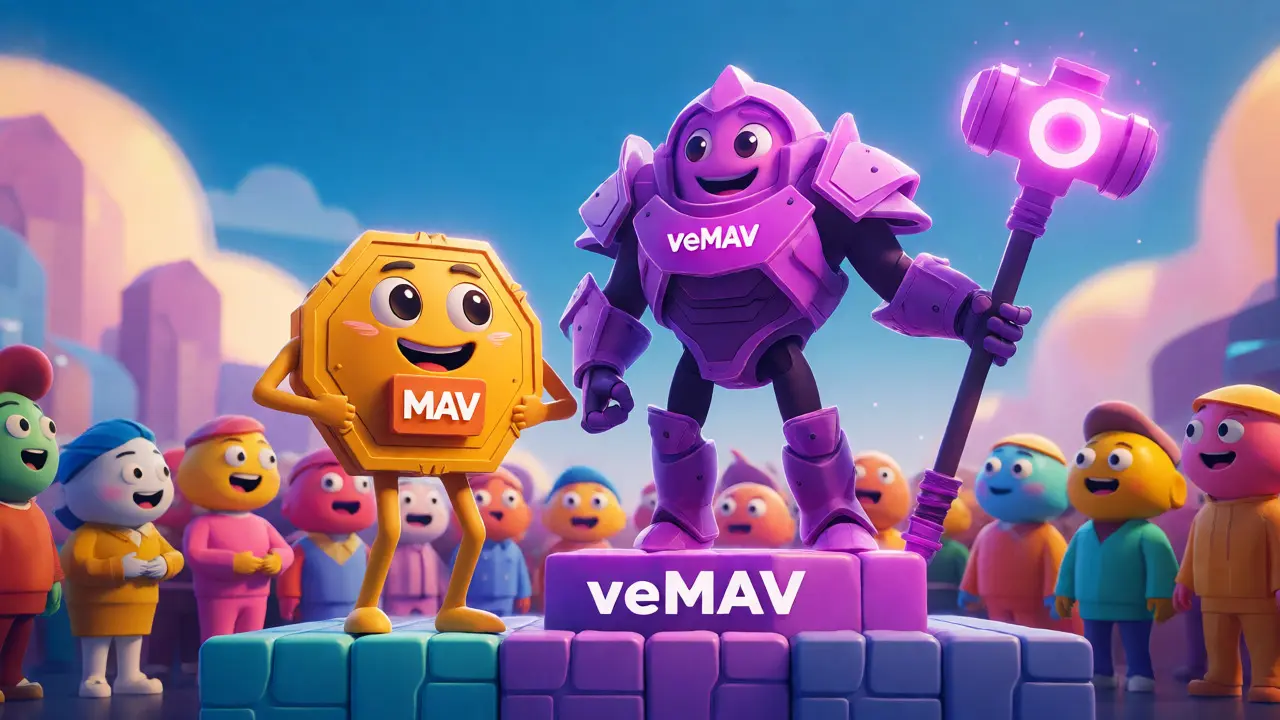
Holding MAV gives you voting rights. You decide how the protocol upgrades, how incentives are distributed, and which pools get extra rewards. But there’s a twist: staking. When you stake your MAV, you convert it into veMAV (voting-enabled MAV). This locked version of the token amplifies your influence. The longer you lock it, the more power you have over protocol decisions. It’s a classic "skin in the game" model that aligns long-term holders with the project’s success.
Key Features That Set It Apart
If you’re comparing Maverick to other DeFi platforms, you need to understand its unique mechanics. Here is what makes it different:
- Dynamic Bins: Instead of fixed price ranges, Maverick uses dynamic bins that adjust based on market activity. This ensures liquidity stays relevant.
- Cross-Chain Compatibility: Thanks to an integration with LayerZero, Maverick allows seamless movement of assets between chains like Ethereum, Arbitrum, and Base. This reduces fragmentation and lets you access liquidity wherever it exists.
- User-Centric Design: The interface is built to help non-experts optimize their positions. It suggests where to put your money based on historical data and current trends.
This focus on usability is crucial. Many DeFi protocols are powerful but confusing. Maverick tries to bridge that gap by making advanced liquidity strategies accessible to regular users.
| Feature | Maverick Protocol | Uniswap V3 | Curve Finance |
|---|---|---|---|
| Liquidity Model | Dynamic Bins & User-Directed | Concentrated Liquidity | Stablecoin-Focused Pools |
| Governance Token | MAV (with veMAV staking) | UNI | CRV |
| Cross-Chain Support | Via LayerZero | Limited Native Support | Multi-Deployed Contracts |
| Primary Use Case | Optimized Yield for Volatile Assets | General Trading & LPing | Low-Slippage Stable Swaps |
Market Performance and Price Predictions
Let’s talk numbers, because that’s what most investors care about. Currently, MAV shows mixed signals. The Fear & Greed Index sits at 49, indicating a neutral market sentiment. Technical indicators show the 50-day Simple Moving Average (SMA) at $0.0647 and the 200-day SMA at $0.0625. With the current price below both averages, the short-term trend leans bearish.
Analysts are split on where MAV goes next. Some platforms like WalletInvestor predict a drop to $0.011 by year-end, citing low volume and high competition. Others, like TradingBeast, remain optimistic, forecasting prices above $0.072 due to potential protocol upgrades. CoinCodex suggests a range between $0.040 and $0.058, implying a potential 25% drop from current levels.
Here’s the reality: MAV is highly volatile. Its 24-hour trading volume is only $6.58 million. This low liquidity means large sell-offs could crash the price quickly. Conversely, positive news or new partnerships could spike it just as fast. If you’re looking for stability, this isn’t it. If you’re betting on DeFi innovation, it might be worth a small allocation.
Who Backs Maverick?
One reason to take Maverick seriously is its investor list. The project secured funding from heavy hitters in the crypto venture capital world, including Founders Fund, Pantera Capital, and Binance Labs. These firms don’t throw money at random projects. Their involvement suggests confidence in the team’s ability to execute complex technical solutions.
However, backing doesn’t guarantee success. We’ve seen many well-funded projects fail to gain traction. The key question is whether Maverick can attract enough total value locked (TVL) to sustain its fee structure. Right now, its TVL is modest compared to Uniswap or Aave. Without significant growth in user adoption, the MAV token may struggle to appreciate in value.

Pros and Cons of Using Maverick
Before you deposit your funds, weigh these factors carefully.
Pros:
- Efficient Capital Use: You earn more fees per dollar invested compared to traditional AMMs.
- Strong VC Backing: Top-tier investors provide credibility and resources for development.
- Active Governance: Real voting power for token holders through veMAV.
- Cross-Chain Reach: Integration with LayerZero expands accessibility.
Cons:
- Complexity: Understanding dynamic bins takes time for beginners.
- Low Market Cap: Higher risk of volatility and manipulation.
- Competitive Landscape: Fighting against established giants like Uniswap is tough.
- Uncertain Roadmap: Specific timelines for full decentralization remain vague.
Is Maverick Right for You?
If you’re an experienced DeFi user looking to squeeze more yield out of your stablecoins or volatile pairs, Maverick offers tools that standard exchanges lack. The ability to direct liquidity precisely can significantly boost returns during sideways markets.
But if you’re a casual trader who just wants to swap ETH for USDC without thinking about bins and rebalancing, Maverick might feel like overkill. Stick to simpler interfaces unless you’re willing to learn the mechanics.
For investors eyeing the MAV token, consider it a high-risk, high-reward play. The upside comes from widespread adoption of its liquidity model. The downside is getting stuck in a niche protocol that fails to capture mainstream attention. Keep your position size small and watch the development updates closely.
Is Maverick Protocol safe to use?
Maverick has undergone security audits, which is standard for reputable DeFi protocols. However, all smart contracts carry some risk. Always check the latest audit reports before depositing large amounts. The backing by major VCs adds a layer of trust, but code vulnerabilities remain a possibility in any blockchain environment.
How do I earn rewards with MAV?
You can earn rewards by providing liquidity to Maverick pools and by staking your MAV tokens. Staking converts MAV to veMAV, which grants you higher voting power and a share of protocol fees. Additionally, specific pools may offer extra MAV emissions as incentives for early adopters.
Which blockchains does Maverick support?
Maverick operates primarily on Ethereum and Layer 2 networks like Arbitrum and Base. Through its integration with LayerZero, it also facilitates cross-chain interactions, allowing users to move assets and liquidity across different ecosystems seamlessly.
What is the difference between MAV and veMAV?
MAV is the liquid governance token you can buy, sell, or hold. veMAV is the locked version of MAV. By locking your MAV for a set period, you receive veMAV, which gives you amplified voting rights and access to exclusive governance proposals. You cannot trade veMAV until the lock period expires.
Why is MAV price so volatile?
MAV has a relatively low market capitalization and trading volume compared to top-tier cryptocurrencies. This means even moderate buy or sell orders can cause significant price swings. Additionally, the broader crypto market sentiment heavily influences MAV, as it is considered a beta asset to Bitcoin and Ethereum.