When Grimes sold digital art and music bundles for $6 million in early 2021, the world took notice. But that wasn’t just a flash in the pan. It was the start of a quiet revolution - one where musicians are cutting out labels, streaming platforms, and middlemen to connect directly with fans who don’t just listen, but own a piece of their work. Today, music NFTs aren’t about buying pixels. They’re about buying access, influence, and belonging.
What Music NFTs Actually Do
A music NFT isn’t just an MP3 file with a blockchain stamp. It’s a digital deed that proves you own something unique: a limited edition track, a share in future royalties, a backstage pass, or even the right to remix a song’s stems. These tokens live on blockchains like Ethereum or Polygon, secured by smart contracts that automatically pay out royalties every time the NFT changes hands. Unlike streaming services that pay artists pennies per play, music NFTs let creators keep 80-95% of the sale price. On Sound.xyz, for example, artists get 95% of primary sales and 10% of every resale. That’s a massive shift from the typical 15-20% artists earn on Spotify or Apple Music. And it’s not theoretical - artists like 3LAU have earned over $11 million from NFTs since 2020, mostly from collectors who bought into his vision, not just the music.Success Story: 3LAU and the Power of Community
Justin Blau, better known as 3LAU, didn’t just drop an NFT album. He built a movement. In 2021, he released his album Ultraviolet as 33 NFTs. Each one came with exclusive perks: custom songs, studio visits, and even co-production credits. By 2023, 73% of his revenue from NFTs came not from the initial sale, but from ongoing utility - live performances, fan-made remixes, and VIP experiences. One collector, who bought NFT #7, got a personalized track that became their wedding song. Another received a voice note from 3LAU thanking them for supporting his work. These aren’t gimmicks. They’re relationships. And that’s why 3LAU’s NFT holders have a 92% retention rate - they don’t see these as investments. They see them as membership cards to a creative community.How Nas Made 10,000 Fans Co-Owners of a Hit Song
In September 2022, Royal launched a groundbreaking NFT drop: 50% ownership of Nas’s track Montero. For $100 each, 10,000 fans bought fractional shares in the song’s future royalties. This wasn’t a one-time sale. It was an ongoing partnership. Every time the song streamed on Spotify or was used in a commercial, the NFT holders got paid. The campaign raised $1 million in under 24 hours. While secondary market liquidity has been slow - only 37% of Royal’s collections see active trading - the real win was cultural. For the first time, fans weren’t just consuming music. They were invested in its success. Nas didn’t just sell a song. He sold a stake in his legacy.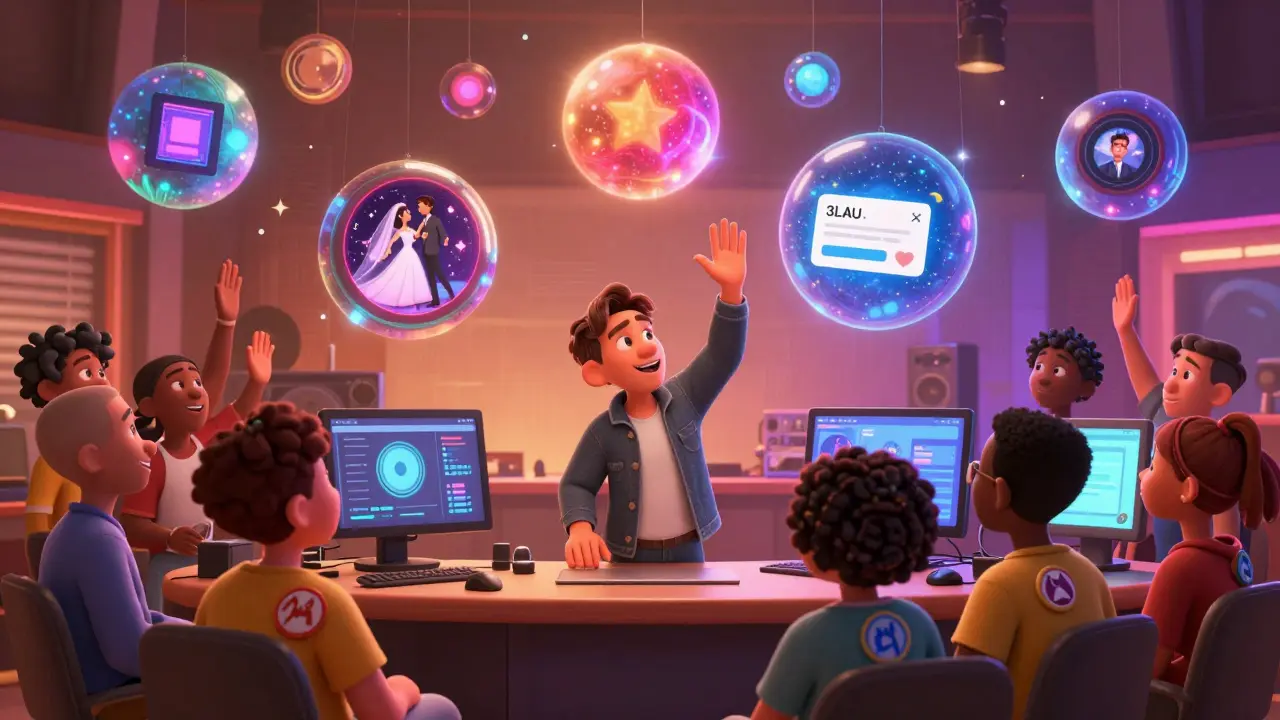
The Kings of Leon Hybrid Model: NFTs That Come with Vinyl and Tickets
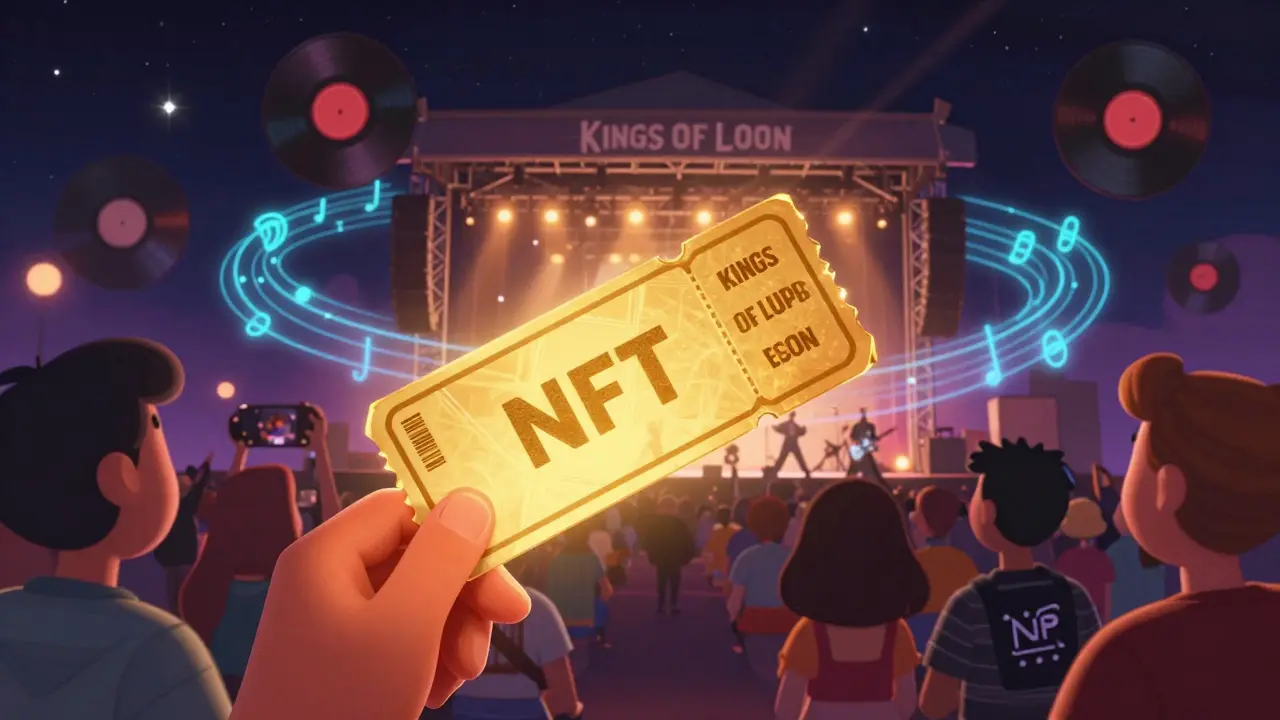
Kings of Leon didn’t go all-in on digital. They mixed it with physical. In March 2021, they released their album When You See Yourself as an NFT. But here’s the twist: buyers got a physical vinyl record, a digital album, and a “Golden Ticket” - a one-of-a-kind NFT that granted lifetime front-row access to any of their concerts. The result? $2 million in sales. More importantly, retention spiked. Fans who bought the NFT bundle were 3.2 times more likely to attend future shows than those who just bought the album. The NFT wasn’t a collectible. It was a key to experiences that money couldn’t buy.Why Most Music NFTs Fail - And How to Avoid It
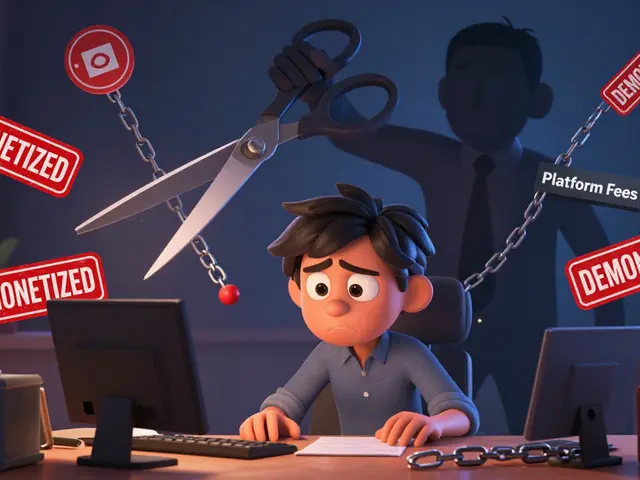
Not every artist thrives. Blanke, an EDM producer, raised $450,000 in 2022 with promises of exclusive tracks, live sets, and merch. He delivered only three of twelve promised perks. Within six months, his NFTs lost 97% of their value. Why? He treated NFTs like a cash grab, not a community. The data doesn’t lie. According to Variant Fund, 89% of music NFT projects that focus only on selling tokens see over 90% price depreciation within six months. The winners? They spend more time building relationships than marketing. USC research found that artists earning over $50,000 from NFTs spent 37% more time engaging with collectors than promoting their drops. Success requires three things: utility, consistency, and authenticity. Fans don’t want another JPEG. They want access, influence, and a reason to stay.Platforms That Are Actually Working in 2025
Not all NFT marketplaces are created equal. Here’s what’s working right now:- Sound.xyz: The leader in music-focused drops. Over 15,000 artists have used it. Their “Superfan” program rewards early buyers with exclusive content and voting rights. Artists love the 95% revenue share and clean interface.
- Royal: Still the only platform letting fans own a slice of master recordings. Their upcoming integration with streaming services in Q2 2024 will automate royalty payouts - a game-changer for long-term trust.
- OpenSea: Still the biggest marketplace, but its music discovery tools are terrible. Only 4.2% of its 2022 volume came from music. Use it for exposure, not community.
- Finay: A newer platform built by Antier Solutions, focused on transparent royalties and social sharing. It’s small but growing fast among indie artists tired of bloated platforms.
What’s Next? The Future of Music NFTs
The industry is shifting from collectibles to experience tokens. By 2025, Deloitte predicts 65% of successful music NFTs will include real-world perks: concert tickets, studio time, or even co-writing credits. Spotify is testing NFT integration for verified artists. Apple Music partnered with Sound.xyz for exclusive drops. YouTube’s Content Authenticity Initiative now verifies music NFTs to prevent fraud. And Ethereum’s Shanghai upgrade in 2023 slashed gas fees by 33%, making transactions cheaper and faster. The biggest innovation? AI-generated personalized NFTs. Holly Herndon’s PROTO project lets fans create custom music snippets using AI trained on her voice and style. It’s not just owning a song - it’s helping shape it.How to Get Started (If You’re an Artist)
If you’re an artist thinking about NFTs, here’s the real path:- Build your community first. Start on Discord. Post behind-the-scenes content. Answer questions. Don’t rush the NFT drop.
- Define real utility. What do buyers get? Exclusive tracks? Voting rights? Live access? Don’t promise what you can’t deliver.
- Use Polygon, not Ethereum. Gas fees on Ethereum can spike to $150. Polygon is cheaper, faster, and just as secure.
- Partner with Sound.xyz or Royal. They handle the tech. You focus on the music and the people.
- Plan for 8-12 weeks of prep. Auditing smart contracts costs $5,000-$15,000. Don’t skip this.
Final Reality Check
Yes, there are speculators. Yes, some NFTs crashed. But the noise is drowning out the signal. The artists winning today aren’t chasing hype. They’re building legacies. Music NFTs aren’t about replacing streaming. They’re about giving fans a reason to care beyond the algorithm. When you buy a music NFT, you’re not just buying a song. You’re saying: I believe in you. And that’s worth more than any royalty check.Are music NFTs still worth it in 2025?
Yes - but only if you focus on utility, not speculation. The wild speculation phase is over. Artists who use NFTs to offer real value - like exclusive access, royalties, or experiences - are thriving. Those who treated them as get-rich-quick schemes have already faded. The market has matured. It’s not about how much you make upfront. It’s about how many fans you keep.
Can I make money from music NFTs if I’m not famous?
Absolutely. Fame isn’t the key - community is. Independent artists like Slander and Grimes’ collaborators have earned six figures from NFTs by building tight-knit fanbases. You don’t need millions of followers. You need 500 true fans who’ll pay $100 each for something they can’t get anywhere else. That’s 50,000 in revenue - and you keep 95% of it.
Do I need to know blockchain to sell music NFTs?
Not deeply. You need to understand wallets (like MetaMask), how to connect to platforms like Sound.xyz, and what a smart contract does - but you don’t need to code one. Most platforms handle the technical side. Your job is to create the music and the experience. The rest is setup, not science.
What’s the difference between a music NFT and streaming royalties?
Streaming pays you pennies per play - and only if the song gets played. A music NFT pays you upfront, and often again every time it’s resold. Plus, NFTs give you control. You decide the price, the perks, and who gets access. Streaming is passive. NFTs are participatory.
Is it safe to buy music NFTs?
It’s safer now than in 2021. Most major platforms audit their smart contracts. Always check if the project is on Sound.xyz, Royal, or another trusted platform. Avoid random drops on OpenSea unless you know the artist. And never invest more than you can afford to lose - even legitimate NFTs can lose value if the community fades.
Can I resell a music NFT later?
Yes - and that’s part of the design. Most platforms automatically pay the original artist 5-10% every time the NFT is resold. That means you earn not just from the first sale, but from the entire life of the asset. Some collectors buy NFTs hoping to flip them. Others hold them for the perks. Both are valid.
What happens if the artist deletes the music?
Nothing. The music is stored on IPFS - a decentralized network - not on the artist’s server. Even if the artist disappears, the file stays. You still own the NFT and any rights it grants. The only thing that might disappear is new content. That’s why utility tied to real-world experiences (like concert tickets) is more valuable than just audio files.
Are major labels using music NFTs?
Yes. Universal, Sony, and Warner all have active NFT divisions. But they’re using them differently - mostly for marketing, fan engagement, and limited-edition releases. They’re not giving up streaming. They’re adding NFTs as another layer. For indie artists, that’s actually good news. It validates the space and opens doors for collaboration.
Comments
Okay but like... why do people think owning a JPEG of a song makes them special? I get the hype, but I paid $150 for a 'limited edition' track and now I just feel like I bought a digital postcard. 😔
Blockchain is just a fancy word for unregulated gambling machine run by tech bros who think they are inventing the next internet. Governments will shut this down soon. Mark my words. No punctuation needed to see the truth
I bought a music NFT from this indie artist I follow on Instagram and she sent me a handwritten letter with a cassette tape of a demo she made just for me. I cried. Like actually cried. This isn't about money. It's about feeling seen. 💛
You are all misunderstanding the fundamental economic model. NFTs are not investment vehicles. They are governance tokens for decentralized artist collectives. The royalty structure is mathematically superior to traditional publishing models. You cannot ignore the 95% revenue share without acknowledging the systemic failure of Spotify’s per-stream payout algorithm. This is not opinion. This is data.
My cousin in Kerala just dropped his first NFT album. Got 12 buyers. One guy from Canada bought it just because he liked the cover art. Now they chat every week. That’s the real win right there.
They’re all just trying to replace the record label with a crypto wallet and call it art. But what’s the difference? Still selling dreams. Still making fans feel like they’re special because they bought something that’s probably going to be worthless next year. I’m so tired of this performative authenticity. 🙄
USA invented streaming. USA invented music. USA doesn’t need blockchain to pay artists. This is just another Silicon Valley scam dressed up as revolution.
Bro I bought 3 NFTs last year. Two are dead. One still gives me access to his Discord. That’s it. But I got a voice note from him saying thanks. That’s worth more than any resale.
The commodification of emotional intimacy through tokenized exclusivity is a fascinating, if troubling, evolution of the artist-fan relationship. One cannot help but observe that the act of purchasing a music NFT often functions as a ritual of belonging - a symbolic transaction where the buyer acquires not merely a digital asset, but a metaphysical stake in the artist’s creative identity. The true value, then, lies not in the blockchain, but in the mythos.
Why do people still fall for this? It’s 2025. NFTs are dead. The only ones making money are the people selling the NFTs. Everyone else is just holding digital trash. Wake up.
If you're an artist, start small. Use Sound.xyz. Don't overpromise. Send a thank you note. That's it. No need for fancy tech. Just be real.
3LAU? Please. He’s just another influencer with a fancy wallet. Real artists don’t need NFTs. They need venues. They need radio. They need labels that actually promote them. This is just distraction porn for the rich.
Let’s be brutally honest here. The 89% failure rate isn’t just about poor utility - it’s about the fact that 90% of artists who launch NFTs have zero community-building skills. They think posting a link on Twitter and calling it a ‘drop’ is enough. They don’t DM fans. They don’t host live Q&As. They don’t respond to comments. They just want the money. And guess what? The market smells desperation. It’s not the tech that’s broken. It’s the artists. And until they stop treating fans like ATM machines, this whole thing collapses. The data is clear. The emotional labor is missing. That’s the real cost.
I’ve been collecting music NFTs for three years. I’ve lost money. I’ve gained friends. I’ve been invited to three secret studio sessions. One artist let me remix a track and put my name on it. That’s not a transaction. That’s family. 🤝
my friend bought a nft from this girl in texas and now they make music together. like real collabs. she gave him stems and he made a beat. its wild. i never thought this could happen
In India, we’ve seen this before - when cassette tapes were traded like gold. The emotion behind ownership hasn’t changed. Only the medium. Music NFTs are the new cassette culture. And I’m here for it.
Oh wow, so now we’re supposed to be impressed because some guy sold a JPEG and called it ‘art’? Congrats, you bought a vanity project. Next you’ll tell me your crypto art is worth more than your rent. Please.
The future of music isn’t in algorithms or royalty splits - it’s in co-creation. When fans become collaborators, not consumers, we elevate art from product to legacy. This isn’t disruption. It’s evolution.
Sound.xyz is great but why do they charge $50 just to mint? That’s not 95% if you’re paying to play. And don’t even get me started on gas fees. I’m done.
My brother’s a producer. He did one NFT drop. Got 37 buyers. Sent each one a custom voice memo. Now he’s got a cult following. No ads. No PR. Just real talk. That’s the secret.
Utility-driven tokenization enables asymmetric value capture in decentralized creative ecosystems. The traditional revenue waterfall - label, distributor, platform - is being replaced by direct peer-to-peer value exchange protocols. This represents a paradigm shift in intellectual property ownership architecture.
I bought a NFT from a Zulu singer in Durban. She sent me a video of her singing my name in her language. I cried. This is what music is supposed to be. ❤️
Don’t forget: always check the smart contract. Always. Always. Always. And if they don’t explain it clearly? Walk away. You don’t need to be rich to be smart.
Too much effort. Just stream it.
While the conceptual framework of tokenized music ownership presents intriguing possibilities, the practical implementation remains fraught with logistical and ethical inconsistencies. The notion of ‘ownership’ in a decentralized context is philosophically ambiguous, particularly when the underlying asset remains subject to centralized control via platform governance.