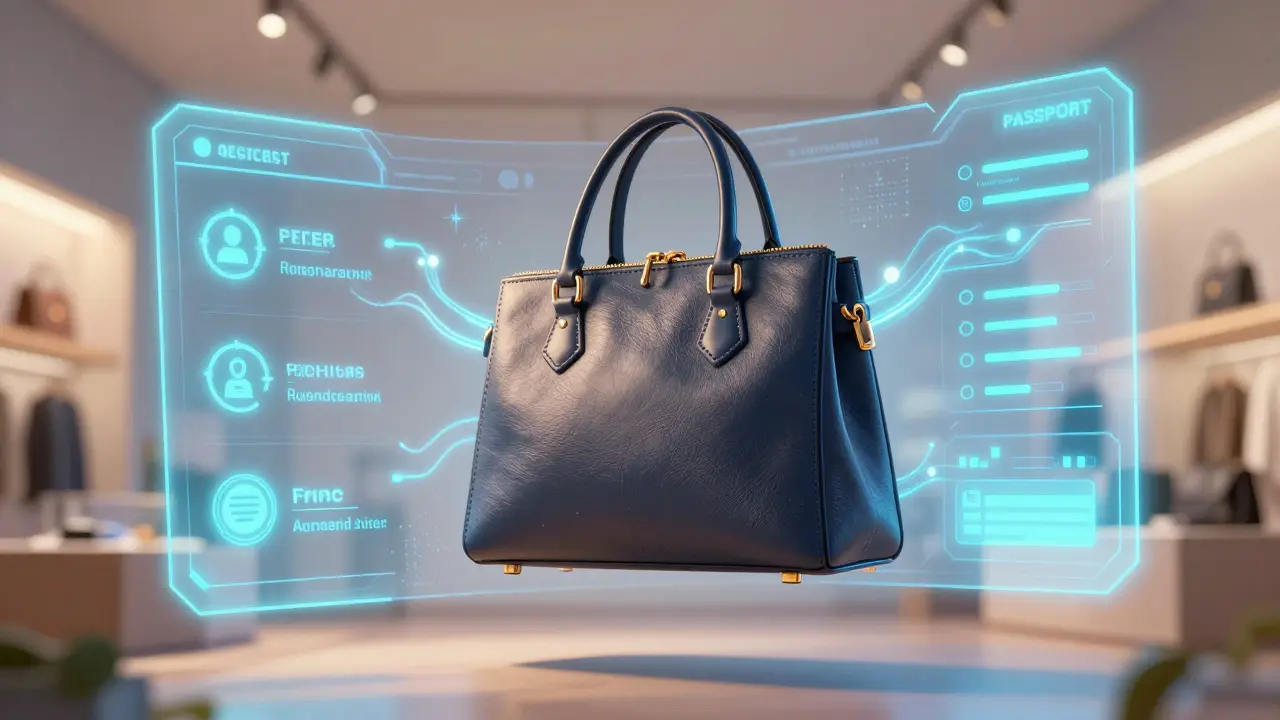
Imagine buying a luxury handbag or a batch of life-saving medicine. You want to be absolutely sure it is genuine, wasn't exposed to harmful temperatures during transit, and comes from an ethical source. Today, you mostly have to trust the label. But what if that product came with an unchangeable, digital passport that proved its entire history? That is exactly what supply chain NFTs are designed to do.
Non-fungible tokens (NFTs) got their start in the world of digital art and collectibles. However, businesses are now looking past the hype to see how this technology can solve massive problems in logistics, manufacturing, and trade. By turning physical goods into unique digital assets on a blockchain, companies can track every single step of a product's journey. This article breaks down how supply chain NFTs actually work, where they shine, and why they might be the next big thing for global trade.
What Are Supply Chain NFTs?
To understand the use cases, we first need to strip away the jargon. An NFT is simply a unique digital token recorded on a blockchain. Unlike Bitcoin, which is fungible (one coin is identical to another), an NFT is one-of-a-kind. In a supply chain context, an NFT acts as a digital twin for a physical object.
Think of it like a digital ID card for a specific pallet of coffee beans, a shipping container, or even a single high-end watch. This digital card holds metadata-data about the data. It records who owns the item, where it is right now, its weight, its temperature history, and any certifications it has passed. Because this information lives on a blockchain, it cannot be easily altered or deleted. Every time the physical item changes hands, the NFT is transferred to the new owner’s digital wallet, creating a permanent, transparent record of custody.
This concept moves beyond simple barcodes. A barcode just tells you what an item *is*. An NFT tells you what happened to that specific item, when, and by whom. This distinction is crucial for industries where provenance and condition matter more than ever.
Top Supply Chain NFT Use Cases
The application of NFTs in logistics is still evolving, but several clear patterns are emerging. Here are the most impactful ways companies are using or planning to use this technology.
1. End-to-End Traceability and Provenance
This is the bread and butter of supply chain NFTs. For industries like pharmaceuticals, food safety, and luxury goods, knowing the origin of a product is non-negotiable.
Here is how it works in practice: A manufacturer mints an NFT when a product is created. As the item moves from the factory to a warehouse, then to a port, and finally to a retailer, the NFT is transferred between parties. Each transfer adds a timestamp and location data. If a shipment of vaccines passes through three different countries, the NFT will show exactly when it arrived at each checkpoint and who was responsible for it at that moment. This makes it incredibly difficult for bad actors to insert counterfeit goods into the supply chain, as the digital history would not match the physical reality.
2. Anti-Counterfeiting for Luxury Goods
Fake designer bags and sneakers cost brands billions annually. NFTs offer a robust solution. Brands like LVMH have explored blockchain initiatives to combat this. When a luxury brand produces a handbag, they mint an NFT linked to that specific bag’s serial number. This NFT serves as a certificate of authenticity.
When the customer buys the bag, the NFT is transferred to their personal wallet. If they later sell the bag on the secondary market, the buyer can check the NFT’s history to verify it came directly from the manufacturer and hasn’t been tampered with. The NFT travels with the product for its entire life, making resale markets safer and more trustworthy.
3. Digital Twins for Shipping Containers and Assets
Logistics companies manage millions of physical assets, such as shipping containers, pallets, and forklifts. Managing these manually is a nightmare. NFTs can serve as digital twins for these assets. A leasing company can mint an NFT for every container it owns. The NFT tracks the container’s lifecycle: when it was leased, where it went, when it was repaired, and when it was returned.
This creates a complete maintenance and utilization record. If a container is damaged, the history shows who had custody of it last, simplifying liability claims and reducing disputes between carriers and freight forwarders.
4. Dynamic NFTs and IoT Integration
Static NFTs hold fixed information, but supply chains are fluid. This is where dynamic NFTs (dNFTs) come in. These are NFTs connected to external data sources via oracles (like Chainlink). They can update automatically based on real-world events.
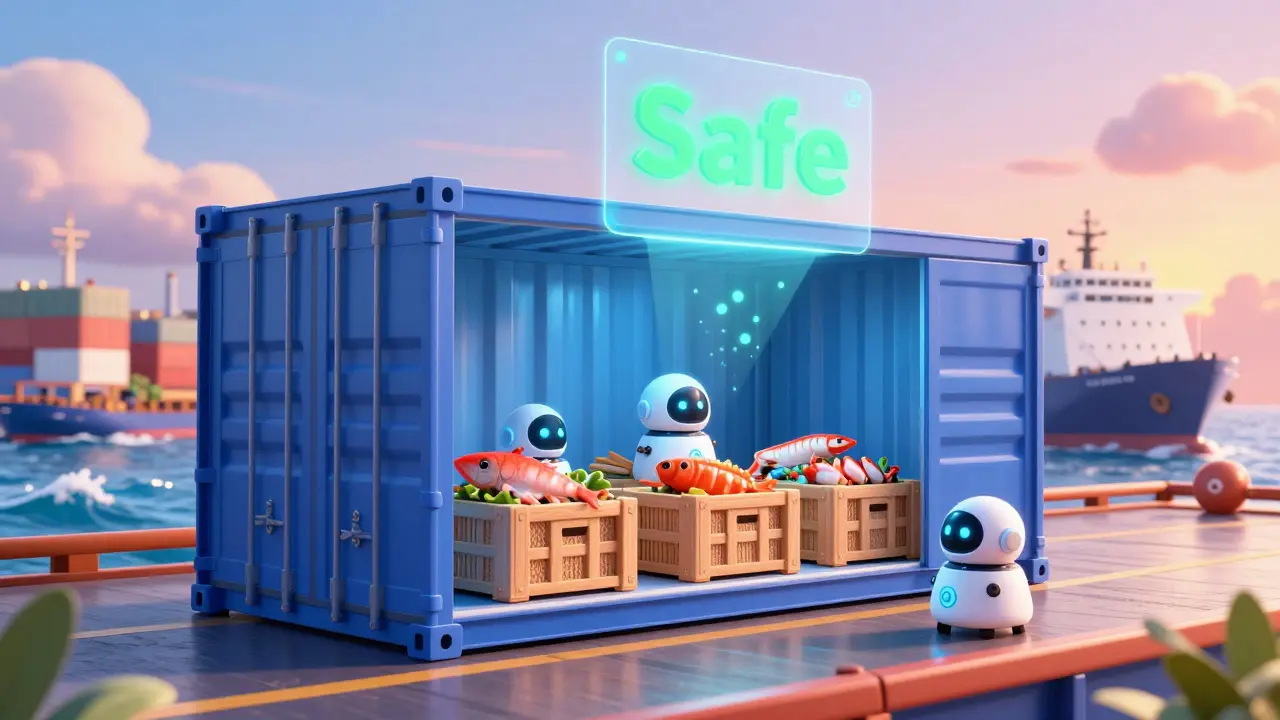
Consider a cold-chain shipment of fresh seafood. IoT sensors inside the shipping container monitor temperature every minute. If the temperature rises above a safe threshold, the oracle detects this breach and updates the NFT’s status from "Safe" to "Compromised." The buyer sees this red flag immediately upon delivery. No one can argue that the fish was fine; the immutable record proves otherwise. This automation removes human error and provides real-time visibility.
5. Streamlining Trade Finance and Bills of Lading
International trade relies heavily on paper documents, particularly the Bill of Lading (BoL), which proves ownership of cargo. Processing these papers takes days and is prone to fraud. Tokenizing a BoL as an NFT allows for instant, secure transfer of ownership.
When a ship arrives at the destination port, the seller transfers the NFT-BoL to the buyer. The buyer can then use this NFT as collateral to get a loan from a bank instantly, rather than waiting weeks for paperwork to clear. This speeds up cash flow and reduces administrative bottlenecks significantly.
6. Sustainability and ESG Compliance
Consumers and regulators are demanding proof of sustainable practices. Companies face pressure to report Scope 3 emissions (emissions from their supply chain). An NFT can store carbon footprint data for each batch of goods.
For example, a clothing brand can attach an NFT to a cotton shirt that details the water usage, labor conditions, and carbon emissions associated with its production. This transparency helps brands meet regulations like the EU’s Digital Product Passport requirements and builds trust with eco-conscious consumers.
NFTs vs. Traditional Tracking Methods
You might wonder, "Why not just use RFID tags or barcodes?" Those technologies are excellent for identifying items within a single company’s system. However, they fall short when multiple independent parties are involved.
| Feature | Barcodes / RFID | Centralized Database | Supply Chain NFTs |
|---|---|---|---|
| Data Ownership | Siloed per company | Controlled by one entity | Shared across all participants |
| Tamper Resistance | Low (tags can be cloned) | Medium (admin access required) | High (cryptographically secured) |
| Audit Trail | Limited to local scans | Dependent on internal logs | Immutable, end-to-end history |
| Interoperability | Standardized (GS1) | Requires custom integrations | Standardized token formats (ERC-721/1155) |
| Cost per Transaction | Very Low | Low | Variable (depends on blockchain) |
The key advantage of NFTs is the shared ledger. In a traditional setup, Company A sends data to Company B via email or EDI. If Company A lies about the quality of the goods, Company B might not know until it’s too late. With an NFT, the data is written to a blockchain that both parties (and potentially auditors) can view. Neither party can alter the past records without breaking the chain, which is mathematically nearly impossible.

Challenges and Considerations
While the potential is huge, supply chain NFTs are not a magic bullet. There are significant hurdles to overcome before widespread adoption occurs.
Scalability and Cost: Public blockchains like Ethereum can become expensive and slow during peak times. Minting an NFT for every single screw in a machine doesn't make economic sense. Companies often turn to Layer-2 solutions (like Polygon) or permissioned enterprise ledgers (like Hyperledger Fabric or VeChain) to keep transaction fees low and speed high.
Data Privacy: Blockchains are often public. Storing sensitive business data, like supplier contracts or exact inventory levels, on a public ledger is risky. Solutions involve storing only hashes (digital fingerprints) on-chain while keeping the actual data in private, off-chain databases. This ensures integrity without exposing secrets.
Integration Complexity: Most supply chain software (ERP systems like SAP or Oracle) was built decades ago. Connecting these legacy systems to modern blockchain networks requires complex middleware and skilled developers. It’s not just a software update; it’s an infrastructure overhaul.
Human Factor: Technology is only as good as the data entered. If a worker forgets to scan a QR code or mislabels a box, the NFT will reflect that error immutably. "Garbage in, garbage out" applies here. Training staff and ensuring accurate data entry at the point of origin is critical.
The Future Outlook
We are currently in the early experimental stage of supply chain NFTs. Major players are running pilots, but mass adoption is still years away. However, the trend is clear. Regulations like the EU’s Ecodesign for Sustainable Products Regulation are pushing for digital passports for products. NFTs provide a perfect technical foundation for these mandates.
As interoperability improves and costs drop, we will likely see NFTs become standard for high-value, high-risk, or highly regulated goods. From tracking diamonds to verifying organic coffee, the goal is a world where trust is built into the technology, not just promised in marketing materials. For businesses ready to invest in transparency, supply chain NFTs offer a competitive edge that goes far beyond mere efficiency-it builds lasting credibility.
Are supply chain NFTs the same as cryptocurrency?
No. Cryptocurrencies like Bitcoin are fungible, meaning one unit is identical to another and can be exchanged directly. NFTs are non-fungible, meaning each token is unique and represents a specific asset, document, or piece of data. In supply chains, NFTs act as digital IDs for physical goods, whereas cryptocurrencies might be used to pay for those goods.
Which blockchain platforms are best for supply chain NFTs?
Platforms depend on needs. For public transparency, Ethereum Layer-2 solutions like Polygon are popular due to low fees. For enterprise privacy and control, permissioned ledgers like Hyperledger Fabric, VeChain, or Hedera Hashgraph are often chosen because they offer higher throughput and better data privacy controls suitable for B2B environments.
How do dynamic NFTs improve logistics?
Dynamic NFTs connect to real-world data via IoT sensors and oracles. They can automatically update metadata, such as changing a shipment’s status to "damaged" if temperature sensors detect a breach. This provides real-time accuracy without manual intervention, ensuring the digital record always matches the physical state of the goods.
Can NFTs prevent counterfeiting completely?
NFTs make counterfeiting much harder by providing an immutable proof of origin and ownership history. However, they rely on the initial minting process being secure. If a fake product is somehow linked to a legitimate NFT at the start, the system is compromised. Therefore, physical security measures (like NFC chips or unique serial numbers) must accompany the digital NFT to ensure the link between the physical item and the token remains intact.
Is it expensive to implement NFTs in a supply chain?
Implementation costs vary. While blockchain transaction fees can be low on certain networks, the main costs come from integration with existing ERP systems, developing smart contracts, and training staff. For high-value goods, the ROI from reduced fraud and improved financing often outweighs these costs. For low-margin commodities, the cost-benefit analysis is still being evaluated by many firms.
Comments
another day another blockchain buzzword wrapped in a shiny bow. you think this solves anything? it just adds another layer of tech debt for companies that cant even manage their inventory properly. the real issue is human error not digital passports
i mean if we are being honest the idea of tracking every single screw is absurd but for high value items like luxury bags or medicine it actually makes sense. the problem is always the initial data entry though. garbage in garbage out as they say. i just hope it doesnt become another way for corporations to greenwash their practices without doing any actual work
I really appreciate how this article breaks down the complex stuff into simpler terms. It’s so hard to keep up with all these new technologies but understanding how NFTs can help with things like food safety feels very important. I worry about the cost though will small businesses be able to afford this or only big corps?
you people are sleeping on the efficiency gains here. centralized databases are a joke when you have multiple parties involved. trust is dead long live cryptography. stop complaining about costs and start thinking about scalability. this is the future of logistics whether you like it or not
Oh look, another American telling us how to fix global trade. How quaint. You guys couldn't even get your own supply chain together during the pandemic and now you want to lecture the rest of the world on blockchain solutions? Please. The EU is already ahead of you with regulations and you're still playing catch-up with your crypto bro fantasies.
get off your high horse brit. innovation happens where capital flows and that's the US. Europe is drowning in red tape while we build. your snobbery won't change the fact that smart contracts are going to replace your paper pushers eventually
Capital flowing into vaporware isn't innovation, it's speculation. And don't mistake regulatory caution for incompetence. We prefer systems that don't collapse under the weight of their own greed. Your 'smart contracts' are just code written by interns who haven't seen a real factory floor in their lives.
the philosophical implication of immutability is fascinating yet terrifying. once data is on the chain it cannot be erased which raises questions about privacy and the right to be forgotten. we must consider if transparency should come at the cost of individual anonymity especially when dealing with sensitive supply chain data involving labor conditions or personal information of workers
it is imperative that one understands the distinction between public and private ledgers before making such sweeping statements. enterprise blockchains like hyperledger fabric offer permissioned access which mitigates many privacy concerns. the notion that all blockchain data is public is a misconception held by those who lack technical depth in distributed ledger technology architecture
yet even permissioned ledgers leave an immutable trail. who controls the keys to that kingdom? if a corporation decides to alter the narrative later the history remains but the interpretation might shift. true neutrality in data storage is a myth we chase. the power dynamics of who gets to write the first line of code are just as important as the code itself
Great points everyone. I’m excited to see how this evolves. Keep sharing your insights!
oh sure lets just put everything on a blockchain and pretend the physical world doesn't exist. what happens when the sensor breaks? what happens when the wifi goes down? reality is messy and digital twins are just expensive mirrors reflecting our desire for control over chaos
I disagree. While the physical world is messy, having a reliable record helps reduce disputes. If the sensor breaks, the system flags it. That’s better than guessing. Technology isn’t perfect but it’s a step forward from handwritten logs that get lost in filing cabinets.
and who fixes the sensor? the same worker who forgot to scan the box earlier. you’re adding complexity not solving problems. it’s classic tech solutionism ignoring the human element entirely
I think both sides have valid points. The technology offers great potential for transparency, but implementation challenges are real. Maybe a hybrid approach works best where blockchain handles high-value verification while traditional methods manage routine logistics. Collaboration between tech experts and supply chain managers will be key.
its so interesting how we try to digitize trust. i feel like weve lost something by needing a machine to tell us if something is real. but then again maybe thats just me being old fashioned. the typo prone nature of my thoughts shows im rushing through this but yeah its a big deal
The formal tone of this discussion is appreciated. However the under-punctuation in some comments detracts from clarity. One must ensure that arguments are presented with precision. The concept of dynamic NFTs updating based on IoT data is particularly compelling for cold chain logistics as it removes human bias from quality assessment
It is quite amusing to observe the uninitiated debating the nuances of enterprise blockchain integration. Let us be clear: this is not merely about 'tracking'. It is about establishing a verifiable truth in an ecosystem rife with fraud. Those who dismiss this due to 'cost' fail to comprehend the existential threat counterfeit goods pose to brand equity and consumer safety. This is elementary economics.
You Americans always love to pontificate about 'truth' while your own markets are flooded with grey market goods. Tell me, does your precious blockchain track the sweatshop labor that made your sneakers? Or do you conveniently ignore the ethical breaches that happen before the product is even minted? Your elitist view of technology ignores the dirty reality of production.
Your ad hominem attacks reveal more about your insecurity than my views. Blockchain provides the framework for auditing labor practices if one chooses to implement it. Blaming the tool for the user's moral failing is intellectually lazy. Perhaps focus on learning the technology rather than projecting your biases onto it.
Oh please. Don't hide behind 'frameworks'. Frameworks don't feed workers. Frameworks don't stop exploitation. They just make the exploitation look cleaner on a spreadsheet. I'm tired of hearing about digital solutions for physical suffering.
Gentlemen, let us maintain civility. Both perspectives highlight critical aspects of supply chain management. Mr. Michel emphasizes technological integrity while Mr. Wonnacott rightly points out the socio-economic context. A holistic approach requires addressing both data accuracy and ethical sourcing. Let us continue this dialogue with mutual respect.
Wow! What a heated debate! I’m here to support everyone’s passion for this topic! It’s great to see such diverse viewpoints! Let’s keep the energy positive and focused on solutions! Who’s ready to brainstorm some collaborative ideas?! 😊🚀
sheldon go touch grass. your emojis are ruining the serious discourse here. nobody cares about your positivity brigade when we are discussing cryptographic security protocols
Hey now! No need for aggression! Everyone has a role to play! Even emoji enthusiasts contribute to community engagement! Let’s not forget the human side of tech! 🌟💪