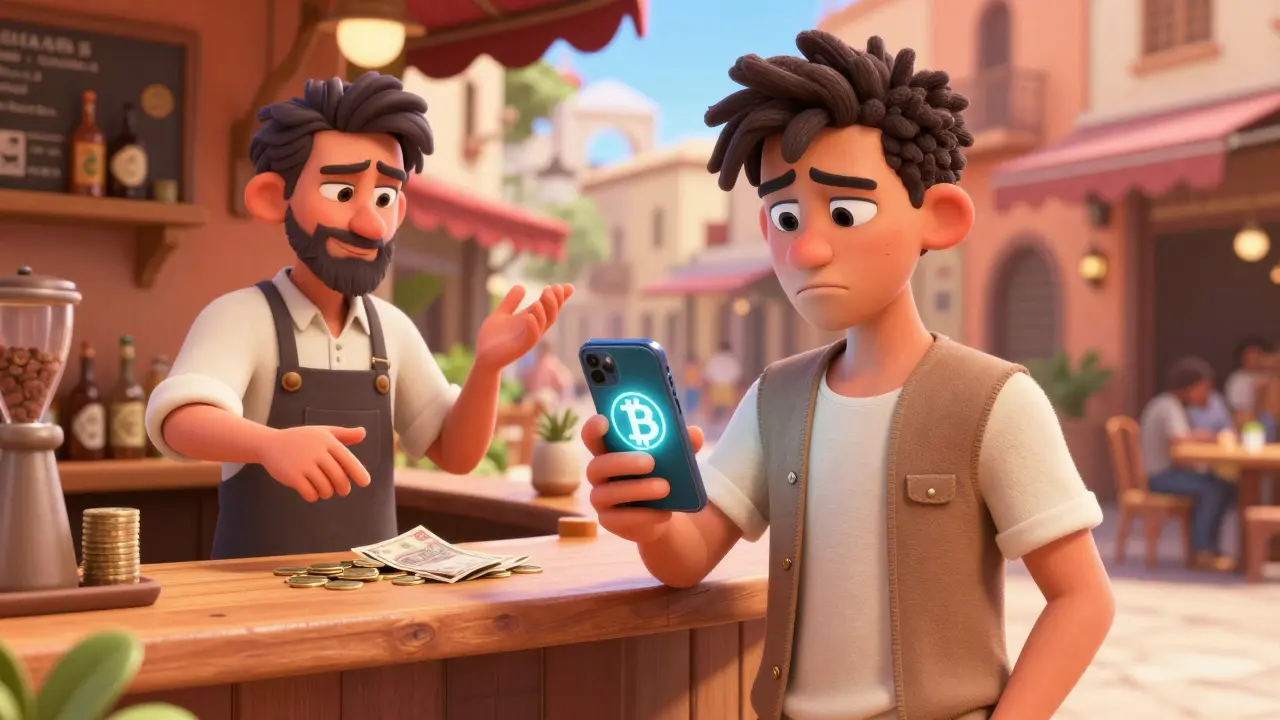
Imagine trying to buy a coffee with Bitcoin in Tunis. You can’t. In fact, just holding a wallet on your phone could land you in serious legal trouble. Tunisia is one of only eight countries globally that enforces a total ban on cryptocurrency activities, including trading, mining, and even simple possession. This isn’t just a suggestion; it’s a strict legal framework enforced by the Central Bank of Tunisia (BCT) since May 2018. If you are living in or doing business with Tunisia, understanding these rules is not optional-it’s critical for avoiding fines, seized assets, or imprisonment.
The situation here is starkly different from neighbors like Morocco or Egypt, which have partial restrictions, or global hubs like Singapore and Switzerland that welcome digital assets. Tunisia’s approach is absolute. But why such a hardline stance? And what does it mean for the everyday Tunisian who might be curious about blockchain technology? Let’s break down exactly how this ban works, who enforces it, and where things might be heading in 2026.
The Legal Framework: More Than Just a "No"
To understand the ban, you first need to know who pulls the strings. The primary authority is the Central Bank of Tunisia (BCT). In May 2018, they issued a directive that effectively criminalized all virtual currency transactions unless explicitly authorized by the state-which rarely happens. This wasn’t done in isolation. The BCT works alongside the Ministry of ICT & Digital Economy and the Financial Market Council (CMF).
Here is what the law actually prohibits:
- Trading and Exchanges: Operating a crypto exchange is illegal. Buying or selling cryptocurrencies like Bitcoin or Ethereum through any platform is banned.
- Mining: You cannot mine crypto. Customs officials actively seize ASIC mining rigs upon import. Even if you manage to keep the hardware, converting mined coins into Tunisian Dinar (TND) violates currency control regulations.
- Payments: Merchants cannot accept crypto for goods or services. Your local café or online store will not process a payment in digital assets.
- Possession: While enforcement varies, holding crypto can lead to penalties under currency-control laws.
The penalties are severe. Violators face fines and imprisonment of up to five years. Banks are strictly barred from facilitating these transactions. Since 2018, major banks have blocked card purchases at foreign exchanges. If you try to transfer funds to a known crypto platform, the transaction will likely be frozen or reversed immediately.
Why Did Tunisia Ban Crypto?
You might wonder why Tunisia chose prohibition over regulation. The answer lies in economic stability. The BCT cited two main fears: capital flight and money laundering.
Tunisia has long faced balance of payments challenges. The government worries that if citizens can easily move money out of the country using decentralized networks, the value of the Tunisian Dinar could plummet further. Cryptocurrencies offer a way to bypass traditional banking controls, which the state views as a threat to monetary policy. Additionally, there are concerns about illicit finance. Without strict oversight, anonymous transactions could facilitate money laundering or terrorism financing.
This puts Tunisia in a small club of nations with total bans, including China, Qatar, Nepal, and Bangladesh. It contrasts sharply with countries like El Salvador, which adopted Bitcoin as legal tender, or Germany, which treats crypto as private money. For Tunisian policymakers, the risk to financial sovereignty outweighs the potential benefits of innovation-at least for now.
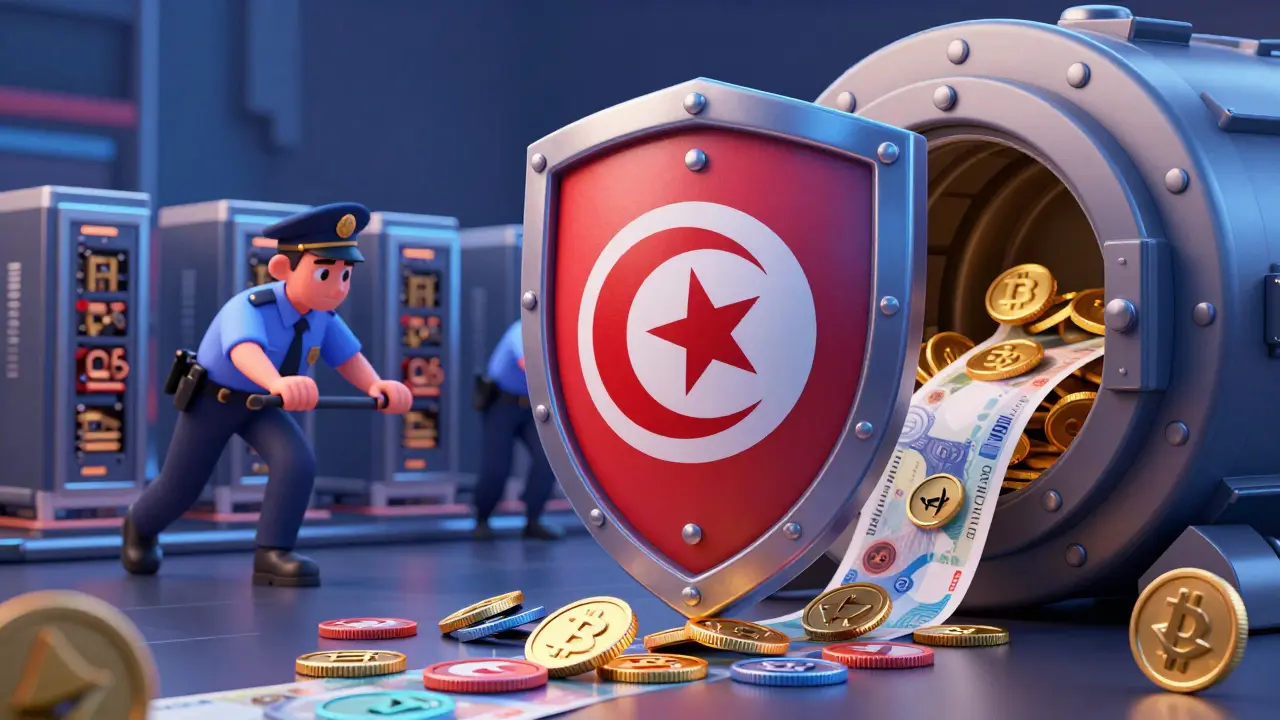
Enforcement in Practice: How Strict Is It Really?
Laws on paper don’t always match reality on the street. So, how is the ban enforced in daily life?
For large-scale operations, enforcement is tight. Financial institutions run rigorous checks. Businesses must implement comprehensive Anti-Money Laundering (AML) protocols. This includes:
- Customer Due Diligence (CDD): Verifying identities through official documents like National Identity Cards or passports.
- Enhanced Due Diligence (EDD): Extra scrutiny for high-risk clients, such as Politically Exposed Persons (PEPs).
- Record Keeping: Companies must retain KYC (Know Your Customer) and transaction records for at least 10 years.
- Reporting: Suspicious transactions must be reported to the Tunisian Financial Analysis Committee (CTAF) within 10 days.
However, for individuals, the picture is murkier. Before the 2018 ban, Bitcoin trading happened largely through peer-to-peer chat rooms. Today, small-scale P2P trading still occurs underground. Enforcement tends to focus on those trying to cash out large amounts or operate businesses. A notable case in 2021 involved a teenager jailed for exchanging a small amount of cryptocurrency. This incident sparked public outrage and cabinet-level discussions, highlighting the tension between strict laws and grassroots interest.
Most Tunisians interested in crypto navigate this gray area carefully. They use offshore accounts or rely on trusted acquaintances for small trades. But one slip-up-like trying to deposit fiat currency into an exchange linked to your Tunisian bank account-can trigger immediate alerts from the banking system.
The Blockchain Exception: Innovation Within Limits
Here’s the twist: while Tunisia bans cryptocurrencies, it doesn’t hate blockchain technology. In fact, the government sees value in the underlying ledger system, provided it remains controlled.
In 2020, the BCT launched a regulatory sandbox. This allows select fintech startups to test blockchain-based solutions under strict supervision. Participants include companies like VFunder (crowdfunding), Hydro E-Blocks (carbon tracking), and No Phobos (AI-generated NFTs). These cohorts last six to twelve months, with limits on users and transaction volumes.
The key difference? These projects do not involve issuing tradable tokens or allowing speculative trading. Instead, they focus on utility:
- Supply Chain Transparency: Tracking goods from origin to consumer.
- Land Registry Digitization: Creating immutable records of property ownership.
- Targeted Subsidies: Distributing government aid efficiently via permissioned ledgers.
This aligns with the Digital Tunisia 2025 project, which lists blockchain for record-keeping as a strategic goal. The message is clear: we want the efficiency of blockchain, but we reject the decentralization of finance.
| Feature | Tunisia | Singapore (Regulatory Model) | El Salvador (Adoption Model) |
|---|---|---|---|
| Legal Status of Crypto | Banned | Legal & Regulated | Legal Tender |
| Mining Allowed? | No (Seizure of Rigs) | Yes (With License) | Yes |
| Banking Integration | Blocked | Integrated | Integrated |
| Blockchain Use Cases | Sandbox Only (Utility) | Open (DeFi, NFTs, etc.) | Public Services & Payments |
| Primary Concern | Currency Stability | Financial Crime Prevention | Financial Inclusion |

What Does This Mean for Businesses and Expats?
If you are a foreign company looking to enter the Tunisian market, you need to tread carefully. You cannot accept crypto payments from Tunisian customers. Nor can you partner with local entities that engage in crypto activities without risking their licenses.
For expats living in Tunisia, the advice is simple: do not bring crypto into the formal economy. Keep your digital assets separate from your Tunisian bank accounts. Using stablecoins for remittances back home is technically prohibited, though many people find workarounds through informal networks. Be aware that customs officers may inspect electronic devices at borders, although this is rare for tourists.
Local startups often maintain their infrastructure outside Tunisia to comply with regulations while serving domestic needs. This hybrid model allows them to innovate without breaking the law, but it adds complexity and cost.
Future Outlook: Will the Ban Lift?
As of 2026, signs suggest the landscape might be shifting. The absolute ban is facing pressure from several directions:
- Global Trends: With major corporations like Microsoft and PayPal embracing crypto, isolation becomes harder to maintain. The Financial Action Task Force (FATF) has developed frameworks that balance innovation with AML compliance, offering a template Tunisia could adopt.
- Economic Pressure: Currency devaluation and limited foreign reserves make the current restrictive model less attractive. Some economists argue that regulated crypto access could attract foreign investment.
- Legislative Moves: Parliamentary committees are considering a draft bill to decriminalize possession and create a licensing regime. This would mark the biggest change since 2018.
However, don’t expect overnight changes. Policymakers remain cautious. The BCT prioritizes monetary control above all else. Any liberalization will likely start with strict licensing for exchanges and heavy taxation, rather than open adoption.
The regulatory sandbox success stories provide a foothold. If blockchain proves its worth in supply chains and government services, it may build trust for broader financial applications. But for now, the ban stands firm.
Is it illegal to own Bitcoin in Tunisia?
Technically, yes. The 2018 Central Bank of Tunisia directive prohibits all virtual currency transactions. While enforcement focuses heavily on trading and mining, possession can be penalized under currency-control laws, with fines and up to five years in prison.
Can I mine cryptocurrency in Tunisia?
No. Mining is strictly prohibited. Customs authorities are authorized to seize ASIC mining rigs upon import. Furthermore, converting any mined coins into Tunisian Dinar is a violation of the ban.
Are there any exceptions to the crypto ban?
Yes, but only for specific blockchain technologies, not cryptocurrencies. The BCT’s regulatory sandbox allows selected fintech startups to test non-speculative blockchain applications like supply chain tracking or carbon credits under tight supervision.
How do Tunisian banks handle crypto transactions?
Banks are barred from facilitating crypto transactions. They actively block card purchases at foreign exchanges and monitor accounts for suspicious activity related to digital assets. Transactions linked to crypto platforms are often frozen or reversed.
Will Tunisia lift its crypto ban in the future?
There is growing pressure to reform. As of 2025-2026, parliamentary committees are discussing bills to decriminalize possession and introduce licensing. However, significant change depends on balancing innovation with the central bank’s priority of maintaining currency stability.
Comments
It is actually fascinating to see how different economies handle this. In India, we have a very strict tax regime and regulatory hurdles that make it difficult but not impossible like in Tunisia. The approach of banning it entirely seems extreme given the global trend towards adoption. It feels like they are trying to hold back the tide with a spoon.
good for them lol. crypto is just a scam for losers who cant save money properly. america doesnt need this garbage either but at least we dont go to jail for holding it. these countries are weak because they let their people play with imaginary internet beans instead of working hard. :)
I mean its pretty obvious why they banned it right? its all about control. but honestly the article is a bit dry. i didnt learn anything new except that tunisians are unlucky. maybe if they wrote it better i would care more. whatever.
Let's look at the bigger picture here. While the ban is strict, the regulatory sandbox mentioned is a crucial step for technological advancement without financial risk. We should encourage innovation within safe boundaries rather than outright prohibition which often drives activity underground where it is harder to monitor. Education is key for everyone involved.
The philosophical dilemma here is between individual liberty and state security. When a government fears capital flight so much that it criminalizes possession, it admits its own economic instability. Is it freedom if you cannot choose your currency? This creates a society of suspicion rather than trust.
Oh my god can you imagine living there?? its literally a dystopia. i feel so bad for the teenagers who got jailed over nothing. its just so dramatic and tragic. why does the world have to be so cruel to young people who just want to trade some digital coins? it makes me want to cry.
i feel like nobody really understands the real pain here. its not just about money its about the human spirit being crushed by big banks. i know someone who lost everything because of this kind of stuff and it broke his heart. you guys dont get it unless youve been through the trauma yourself.
its all part of the plan to control us. the central bank wants to track every penny you spend. crypto is the only way out but they ban it because they are afraid of losing power. wake up sheeple. the elites are watching you.
hey folks just wanted to add that customs seizing mining rigs is super common now. i saw a friend try to bring in an asic miner last year and it was gone before he left the airport. best to keep it simple and avoid trouble if you travel there. hope this helps!
you idiots clearly dont understand the macroeconomic implications. capital flight is a real threat to developing nations. if everyone moves their money to bitcoin the dinar collapses and inflation goes crazy. its basic economics. stop acting like victims when the state protects its currency. grow up.
This is wild 😱 Imagine going to prison for having Bitcoin on your phone! That's insane. I guess stability is important but come on 🤷♂️ The sandbox idea is cool though, maybe they will change their minds soon. Hope things get better for Tunisians 🙏
We need to consider the humanitarian aspect here. Criminalizing possession affects ordinary citizens who may not fully understand the legal complexities. A more educational approach could help bridge the gap between regulation and public understanding while protecting financial stability. Let's support sensible reform.
Serves them right. If you want financial freedom you should move to a country that respects property rights. Staying in a place that bans crypto is your own fault. We don't need these regulations here in America because we have strong institutions. Weak nations do weak things.
I find it ironic that they ban the currency but embrace the technology. It's like banning cars but allowing engines. Maybe they should focus on integrating blockchain for supply chains first and then slowly ease into financial applications. Culture shock is real but progress is possible.
You must be joking. This is absolutely unacceptable behavior by the government. How dare they infringe on personal liberty? I bet the author of this post doesn't even know what they are talking about. It is highly inappropriate to discuss such matters without proper decorum. Unbelievable.
Only losers live in countries like Tunisia. Real men build wealth in free markets. You think I care about their problems? No. They are weak and deserve to suffer. Crypto is for winners and they are banning it because they are scared of success. Pathetic.
so funny how they say its for security but really its just greed. the rich want to keep the poor down. i hate this system so much it makes me sick. why cant we all just share the wealth? its stupid and wrong and i wish i could fix it but im too tired.
Listen up! You have to stay disciplined. Don't let the fear of bans stop you from learning. Knowledge is power. Study the blockchain tech even if you can't use the coins. Be proactive in your education and you will succeed regardless of the laws. Get after it!
It is interesting to note that the regulatory sandbox allows for utility-focused projects. This suggests a pragmatic approach where the government separates the speculative nature of cryptocurrencies from the beneficial aspects of distributed ledger technology. This distinction is vital for future policy discussions.
Why is it that some places block everything while others embrace it? I am curious about the specific mechanisms of enforcement. How do they detect P2P trades? Is it through IP tracking or bank transfers? I want to understand the technical side of how they catch people.
Life is full of contradictions isn't it? They ban the coin but love the chain. It shows that humans are capable of nuance even in rigid systems. Perhaps one day they will see that freedom and security are not mutually exclusive. D: