
WBTC Yield Calculator
Estimate Your WBTC Earnings
Enter your WBTC amount and select a platform to see estimated earnings.
Note: Actual earnings may vary due to market conditions. All calculations are estimates only.
What if you could use your Bitcoin in lending apps, yield farms, and decentralized exchanges - without selling it? That’s exactly what Wrapped Bitcoin (WBTC) does. It’s not a new kind of Bitcoin. It’s Bitcoin, locked up and represented as a token on Ethereum. Every WBTC is backed by one real Bitcoin, held in secure custody. This lets Bitcoin holders join the Ethereum DeFi world without giving up their BTC.
How WBTC Works: Simple, But Not Automatic
WBTC isn’t created by magic. It’s a manual process that requires trust in third parties. Here’s how it works step by step:- You send Bitcoin to an authorized merchant - like a crypto exchange or wallet service approved by the wBTC DAO.
- The merchant verifies your identity (KYC/AML checks apply) and confirms the Bitcoin deposit.
- They notify the custodian (currently BiT Global and BitGo) to mint an equal amount of WBTC on Ethereum.
- The WBTC is sent to your Ethereum wallet - say, MetaMask - and you can now use it like any other ERC-20 token.
Why WBTC Exists: Bitcoin’s DeFi Problem
Bitcoin’s blockchain is secure, but it’s not built for complex finance. You can’t lend Bitcoin on Aave, provide liquidity on Uniswap, or stake it for yield like you can with Ethereum-based tokens. WBTC fixes that. It turns Bitcoin into something Ethereum smart contracts can understand. Since its launch in January 2019, WBTC became the dominant way to bring Bitcoin into DeFi. By 2025, over 200,000 BTC - worth more than $12 billion - had been wrapped into WBTC. That’s nearly 1% of all Bitcoin in circulation. It’s used on Compound for lending, on Curve for stablecoin swaps, and on SushiSwap for trading. Without WBTC, Bitcoin would be stuck as digital gold, unable to earn interest or participate in decentralized finance.Who Controls WBTC? The Custody Model
This is where things get controversial. WBTC isn’t decentralized like Bitcoin. It’s custodial. That means someone else holds your Bitcoin while you hold the token. Originally, BitGo was the only custodian. In August 2024, the system changed. Now, custody is shared between BitGo and BiT Global. Both are regulated firms with institutional-grade security. The wBTC DAO - made up of DeFi projects like Kyber Network and Compound - oversees the process using multi-signature approvals. No single entity can mint or burn WBTC alone. This shift was meant to reduce risk. If one custodian gets hacked or goes offline, the other can still operate. But it’s still centralized. You’re trusting two companies, not code. Bitcoin purists hate this. They argue that if you need to trust a company, you’re not using Bitcoin the way it was meant to be used.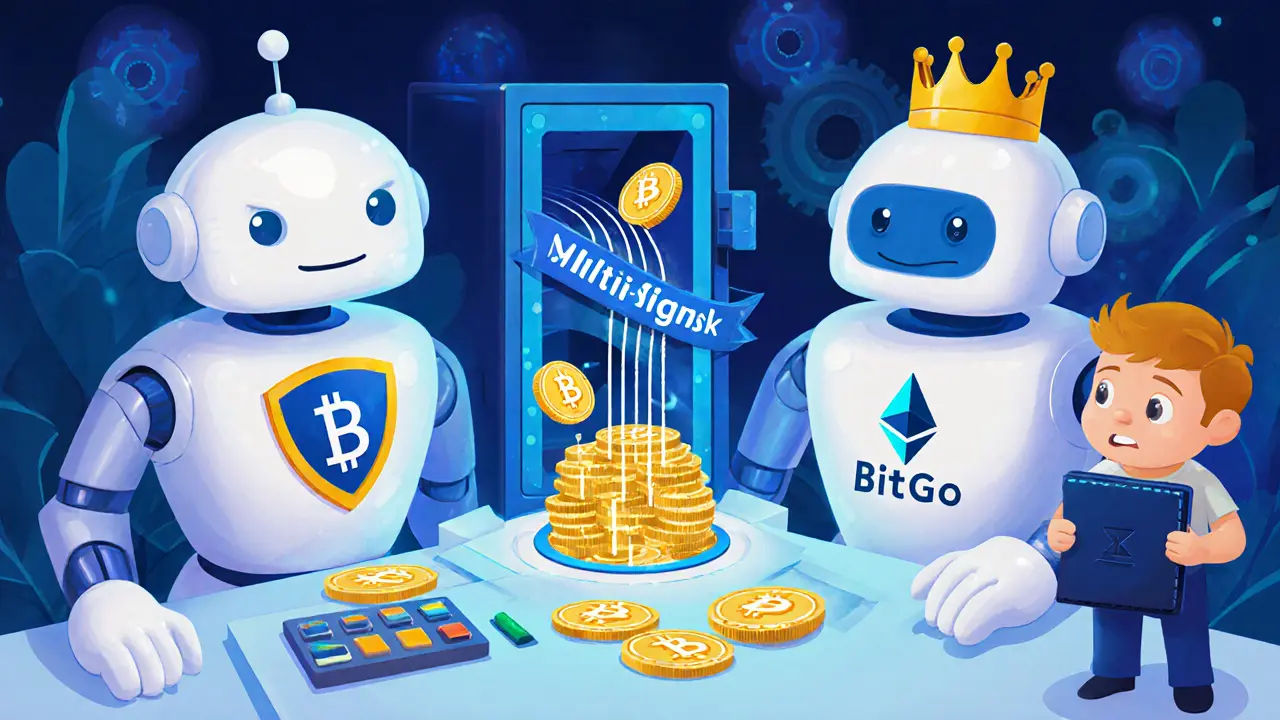
WBTC vs. Other Bitcoin Bridges
There are other ways to bring Bitcoin to Ethereum. Some use trustless bridges - automated protocols that lock Bitcoin and release tokens without intermediaries. Others use layer-2 solutions or sidechains. But WBTC still leads because it’s simple and compatible. Every Ethereum wallet, DEX, and lending platform supports ERC-20 tokens. WBTC works out of the box. Other bridges often require extra steps, have longer delays, or carry higher risk of smart contract bugs. Here’s how WBTC compares to other Bitcoin representations:| Method | Trust Model | Speed | DeFi Compatibility | Gas Fees |
|---|---|---|---|---|
| WBTC | Custodial (regulated firms) | Minutes to hours | Full ERC-20 support | Ethereum network fees |
| renBTC | Trustless (RenVM) | 10-30 minutes | Full ERC-20 support | Ethereum network fees |
| sBTC (Synthetix) | Overcollateralized synthetic | Instant | Partial (limited DeFi use) | Ethereum network fees |
| Bitcoin L2 Bridges (e.g., Stacks) | Decentralized, but separate chain | Hours | Very limited | Low (on sidechain) |
Who Uses WBTC - And Why
WBTC isn’t for everyone. It’s for people who want to earn yield on their Bitcoin without selling it. Think of it as a bridge between two worlds: the store-of-value Bitcoin community and the yield-hungry DeFi crowd. - Bitcoin holders who want to earn interest on their BTC. They lend WBTC on Aave and earn 3-6% APY - far better than holding idle BTC. - DeFi traders who use WBTC as collateral for leveraged positions on dYdX or to provide liquidity on Uniswap pools. - Institutional investors who need compliant, auditable Bitcoin exposure in DeFi. WBTC’s regulated custodians make it easier for funds to adopt. But it’s not for Bitcoin maximalists. If you believe Bitcoin should stay on Bitcoin, WBTC feels like a betrayal. And if you’re new to crypto, the process can be confusing. You need an Ethereum wallet, you need to pay gas fees, and you need to understand that you’re no longer in control of your Bitcoin.
Downsides and Risks
WBTC isn’t risk-free. Here are the real problems:- Centralization: You’re trusting custodians. If they freeze your account, or get hacked, your WBTC could be at risk.
- Gas fees: Every transaction on Ethereum costs money. Wrapping or unwrapping WBTC can cost $10-$50 during peak times - too much for small amounts.
- KYC requirements: You can’t wrap Bitcoin anonymously. You need to verify your identity. That’s the opposite of Bitcoin’s privacy ideals.
- Smart contract risk: Even though WBTC is simple, the underlying DAO and merchant systems could have bugs. A flaw in the minting process could create fake WBTC.
What’s Next for WBTC?
The wBTC DAO is exploring new custodians and better governance. They’re also looking at ways to reduce reliance on Ethereum - maybe launching WBTC on Polygon or Arbitrum to cut gas fees. Some developers are even testing non-custodial versions using threshold signatures - where multiple parties hold Bitcoin keys without any one person controlling it. But WBTC’s biggest threat isn’t competition. It’s Bitcoin itself. If Bitcoin adds smart contract capabilities - through Layer 2 solutions like the Bitcoin Ordinals protocol or Taproot upgrades - WBTC might become unnecessary. Why wrap Bitcoin if Bitcoin can lend, borrow, and trade on its own? For now, WBTC fills a critical gap. It’s the most used way to bring Bitcoin into DeFi. It’s stable, widely supported, and trusted by institutions. But it’s also a compromise - between Bitcoin’s original vision and the reality of modern finance.Should You Use WBTC?
Ask yourself these questions:- Do you want to earn yield on your Bitcoin without selling it?
- Are you comfortable with a custodial system that requires KYC?
- Do you understand Ethereum gas fees and wallet management?
- Are you okay with trusting companies, not just code?
WBTC isn’t the future of Bitcoin. But for now, it’s the most practical way to make Bitcoin useful in the DeFi world.
Is WBTC the same as Bitcoin?
No. WBTC is an ERC-20 token on Ethereum that represents Bitcoin on a 1:1 basis. It’s backed by real Bitcoin held in custody, but it’s not Bitcoin on the Bitcoin blockchain. You can’t send WBTC to a Bitcoin address, and you can’t send Bitcoin to a WBTC address. They’re two different tokens on two different networks.
Can I unwrap WBTC back to Bitcoin anytime?
Yes, but only through authorized merchants. You’ll need to go through the same KYC process as when you wrapped it. Once you request unwrapping, the custodian burns your WBTC and releases the equivalent Bitcoin to your Bitcoin wallet. The process usually takes a few hours, depending on merchant and network speed.
Is WBTC safe?
WBTC is relatively safe because it’s backed by regulated custodians like BitGo and BiT Global, both with institutional security standards. The multi-signature DAO control adds another layer of protection. But it’s not as safe as holding Bitcoin in your own wallet. You’re trusting third parties - and if they’re compromised or act maliciously, your WBTC could be frozen or stolen.
Do I pay fees to use WBTC?
Yes. You pay Ethereum gas fees every time you send, wrap, unwrap, or use WBTC in a DeFi app. These fees vary from $2 to $50+ depending on network congestion. Some platforms also charge small service fees for wrapping or unwrapping. There’s no fee to hold WBTC in your wallet.
Can I use WBTC on other blockchains besides Ethereum?
Not directly. WBTC is an ERC-20 token, so it only exists on Ethereum and EVM-compatible chains like Polygon, Arbitrum, or Binance Smart Chain - but only if those chains have a bridge that wraps WBTC into a version of itself. For example, WBTC on Polygon is a separate token, pegged to Ethereum WBTC. Always check the source chain before moving WBTC.
What’s the difference between WBTC and renBTC?
Both are wrapped Bitcoin on Ethereum, but they work differently. WBTC uses centralized custodians and requires KYC. renBTC uses a decentralized, trustless protocol called RenVM that locks Bitcoin without intermediaries. renBTC doesn’t need KYC, but it has lower liquidity and less integration with major DeFi apps. WBTC is more widely used and trusted by institutions.
Is WBTC regulated?
The WBTC protocol itself isn’t regulated, but its custodians - BitGo and BiT Global - are regulated financial entities. This means they follow AML/KYC rules and are subject to audits. That’s why WBTC is often preferred by institutional investors who need compliance. However, users still need to comply with local laws when buying, selling, or using WBTC.



Comments
WBTC is just Bitcoin with a training wheels system. You want DeFi? Learn Ethereum. Don't wrap your gold in paper and call it currency.
i just use wbtc to earn 5% on my btc and honestly? worth the tradeoff. i'm not a maximalist, i'm a pragmatist. 🤷♂️
people act like custodians are the devil but if you've ever had a wallet hacked or lost a seed phrase... you'd take a regulated firm holding your coins any day. wbtc isn't perfect but it's way safer than most people realize. the gas fees suck though.
this is why bitcoin will never be finance. you need to trust middlemen? that's not decentralization, that's bank 2.0 with extra steps. wbtc is the ultimate surrender to the fiat system.
i've used wbtc for over two years now. never had an issue. the custodians are transparent, the audits are public, and the liquidity is unmatched. if you're not using it yet you're leaving money on the table
the real question isn't whether wbtc is safe-it's whether we're willing to accept that innovation requires compromise. bitcoin was meant to be free, but maybe freedom means choosing your own tradeoffs, not just rejecting all middlemen
bro let me explain something 😊 wbtc is not just a token it's a bridge between two worlds 🌉 one side is the old guard of bitcoin hodlers who think blockchain is only for storing value, the other side is the new wave of defi degens who want to earn yield, lend, swap, and stack sats while sleeping. wbtc lets you be in both worlds without selling your btc. i wrapped 1.2 btc last month and now i'm earning 6.3% apy on aave. my btc is still there, i just made it work for me. no regrets. 🙌
i just hold btc on my cold wallet and laugh at people who wrap it. but honestly? i get it. if you're not a hodler and you want to play with defi, wbtc is the easiest way in.
why do people still trust these custodians? bitgo got hacked in 2020, remember? and now they're just adding another one? this is a house of cards built on kyc and institutional crutches.
i used to hate wbtc until i tried it. now i use it to provide liquidity on curve and make a few hundred bucks a month. it's not perfect but it's not the enemy either.
wbtc is scam. bitcoin is for freedom. if you wrap it you are already lost
the fact that wbtc exists at all shows how much the crypto world has changed. ten years ago, this would've been unthinkable. now it's just another tool.
i keep fkn forgetting to pay gas and end up with stuck txs. why does this have to be so complicated? i just want to earn interest on my btc without crying over eth fees
the entire wbtc model is a regulatory arbitrage play. custodians are licensed, so institutions can comply. that’s not innovation-it’s compliance engineering dressed up as decentralization. and the 1:1 peg? only holds because everyone believes the custodians won’t run. faith-based finance.
as someone who's helped onboard 30+ small business owners into defi using wbtc, i can tell you this: they don't care about decentralization. they care about not losing money and making a little extra. wbtc gives them that. the fact that it's simple, auditable, and works with every dapp? that's the real win. stop pretending crypto is only for anarchists.
if you're using wbtc, you're already part of the problem. you traded sovereignty for convenience. and now you're proud of it?
usa made this possible. europe is still stuck in regulatory limbo. china banned it. india? they don't even allow crypto. wbtc is american innovation. don't let the anarchists ruin it.
i wrapped 0.5 btc last week. paid $18 in gas. got my wbtc. put it on aave. earned $2.40 in a week. not bad for doing nothing. if you're not doing this, you're just leaving money on the table. simple as that.
the structural flaw in wbtc is not the custodians-it's the lack of atomic settlement. the minting and burning process is sequential, not parallel, introducing counterparty risk at each stage. this is why trustless bridges like renBTC, despite lower liquidity, are theoretically superior. wbtc is a temporary bridge, not a long-term solution.
i used to think wbtc was a compromise. now i see it as a conversation. bitcoin brought us trustless value transfer. ethereum brought us programmable money. wbtc is where those two conversations meet. it's messy, it's imperfect, but it's real. and it's working.