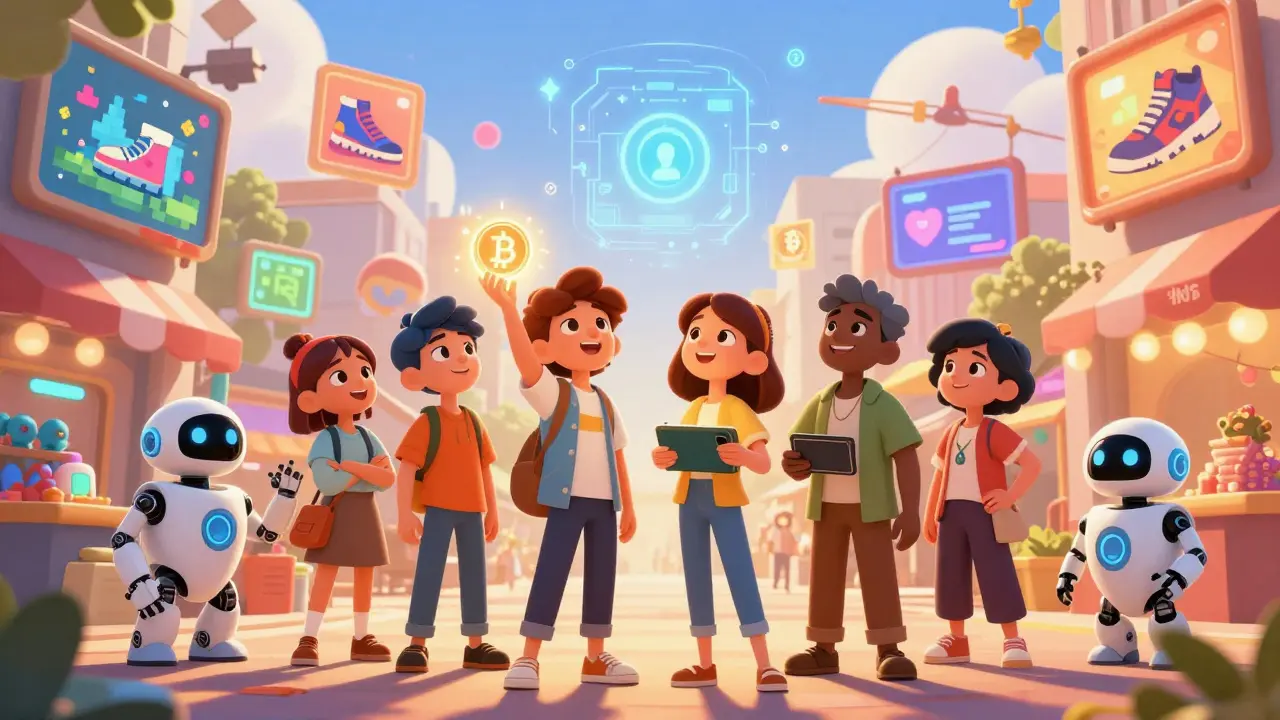
NFT marketplaces are online platforms where people buy, sell, and trade unique digital items using blockchain technology. Unlike regular online stores that sell copies of the same product - like a t-shirt or song - NFT marketplaces deal in one-of-a-kind digital assets. These can be artwork, music, videos, virtual land, game items, or even digital collectibles like virtual sneakers. The key difference? Each item has a verified owner, recorded on a blockchain, so no two are exactly alike.
How NFT Marketplaces Work
At the core of every NFT marketplace is a smart contract - a self-executing code stored on a blockchain. When someone creates (or "mints") an NFT, the smart contract records details like who made it, when it was created, and who currently owns it. The actual file - say, a JPEG image or MP3 - is usually stored elsewhere, often on decentralized networks like IPFS or Arweave. The blockchain only holds the proof of ownership, not the file itself.
To use these platforms, you need a crypto wallet like MetaMask or Coinbase Wallet. This wallet holds your cryptocurrency (usually ETH on Ethereum) and connects to the marketplace. When you buy an NFT, the platform transfers ownership from the seller to you, and the transaction is permanently recorded on the blockchain. No middleman can erase or alter that record.
Types of NFT Marketplaces
Not all NFT marketplaces are the same. They fall into three main categories based on how they operate:
- Open marketplaces - Anyone can list, buy, or mint NFTs. OpenSea is the biggest example. You don’t need approval to join. This makes it easy for new creators but also opens the door to scams.
- Closed marketplaces - These require creators to apply or get invited. Foundation and SuperRare are examples. They limit who can sell, which helps maintain quality and exclusivity, but makes it harder for unknown artists to break in.
- Proprietary marketplaces - These sell NFTs tied to a specific brand or company. Nike’s .SWOOSH platform, for instance, only sells digital sneakers and apparel tied to their brand.
There’s also a second way to categorize them by focus:
- Universal marketplaces - Like eBay for NFTs. OpenSea, Blur, and Rarible host everything: art, music, gaming items, domain names.
- Niche marketplaces - Focused on one type of audience. KLKTN specializes in K-Pop and anime NFTs. NBA Top Shot is all about basketball highlights.
- Collectibles-focused platforms - Built for specific collections. CryptoPunks and Bored Ape Yacht Club have their own dedicated trading spaces.
Top NFT Marketplaces in 2026
As of early 2026, a few platforms dominate the market:
| Platform | Market Share | Fees | Blockchain | Best For |
|---|---|---|---|---|
| OpenSea The largest NFT marketplace, launched in 2017, handling over 60% of all NFT trades | 60% | 2.5% | Ethereum, Polygon | Beginners, variety of assets |
| Blur A professional-focused platform launched in late 2022, known for zero platform fees and advanced trading tools | 15% | 0% | Ethereum | Traders, volume buyers |
| Magic Eden The leading marketplace for Solana-based NFTs, offering fast, low-cost transactions | 12% | 2% | Solana | Gaming, collectibles, low-fee traders |
| Rarible A decentralized platform with community governance, where users vote on platform changes | 8% | 2.5%-5% | Ethereum, Flow | Decentralized governance, creator-owned platforms |
OpenSea still leads in total volume, but Blur has stolen much of the trading activity from professional users thanks to its zero-fee model and real-time order matching. Magic Eden dominates on Solana, where transactions are faster and cheaper - ideal for gamers and collectors who don’t want to pay $10 in gas fees every time they trade.
Why People Use NFT Marketplaces
For creators, these platforms offer a direct way to sell digital work without relying on galleries, record labels, or publishers. Artists can set royalties - meaning they earn a percentage (usually 5%-10%) every time their NFT is resold. One artist reported earning $3,200 in royalties from secondary sales after minting 50 pieces on Foundation.
For collectors, NFTs are about ownership and scarcity. Owning a CryptoPunk or a Bored Ape isn’t just about having a picture - it’s about holding a verified, limited-edition digital asset that others can’t copy. Some people buy them as investments, hoping their value will rise. Others join communities - like the Bored Ape Yacht Club - where owning the NFT grants access to exclusive events, Discord servers, or real-world perks.
Challenges and Risks
Despite their growth, NFT marketplaces aren’t without problems.
- Scams - Fake NFTs are common. A user lost $1,200 in 2023 buying a fake Bored Ape copy on a small marketplace. Always check the official contract address before buying.
- High fees - Even though Ethereum’s gas fees dropped from $50 to under $2 in 2026, peak times can still spike costs. Some platforms like Blur avoid fees entirely by rewarding traders with their own tokens.
- Volatility - NFT prices swung wildly. From a peak of $24.8 billion in sales in 2021, volume dropped to $9.9 billion in 2022. While it’s stabilized since, values still fluctuate fast.
- Regulation - The EU’s MiCA regulation, effective in 2024, now requires marketplaces to verify users’ identities. This could reduce anonymity but also cut down on fraud.
Most platforms have improved since 2022. OpenSea now allows bulk offers on entire collections, which helps buyers save time. Magic Eden added better mobile apps. Blur introduced tools that let traders make offers before an NFT even goes on sale.
Getting Started
If you’re new, here’s how to start:
- Get a crypto wallet (MetaMask is easiest for beginners).
- Buy some ETH or SOL (depending on the marketplace).
- Connect your wallet to a marketplace like OpenSea or Magic Eden.
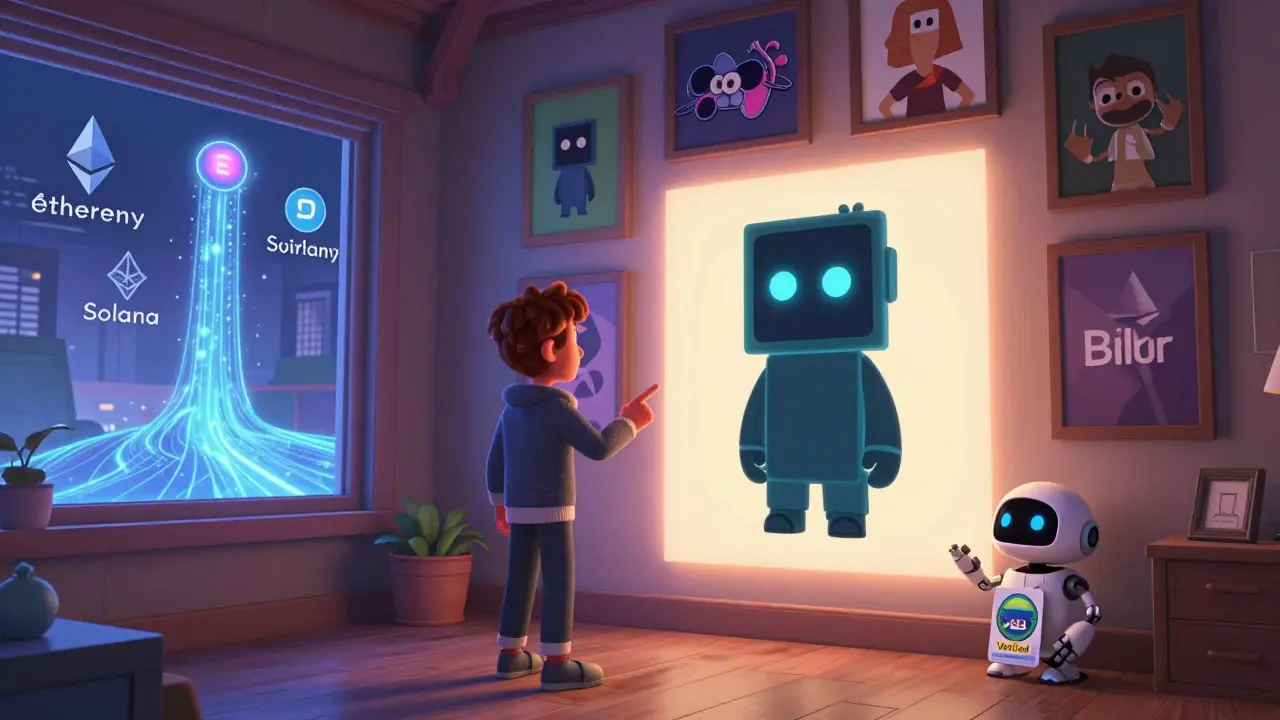
- Browse collections. Look for verified creators (check the blue checkmark).
- Start small - buy an NFT under $50 to learn how the process works.
- Always double-check the contract address before paying.
It takes about 2-3 hours for most people to feel comfortable buying and selling on OpenSea. YouTube tutorials from Bitpanda Academy or NFT Showroom can help you learn faster.
What’s Next?
The future of NFT marketplaces is moving toward integration. More brands are launching their own platforms - think Nike, Adidas, or even Coca-Cola. Cross-chain marketplaces are emerging, letting you trade NFTs from Ethereum, Solana, and Polygon in one place. Mobile apps are improving, and 63% of new users now access platforms via phone.
Deloitte predicts that by 2027, the NFT marketplace sector will grow at a 35.6% annual rate. Companies aren’t just selling art - they’re using NFTs as membership passes, loyalty rewards, and digital tickets. The real shift isn’t about digital art. It’s about proving ownership in a digital world.
What is the difference between an NFT and cryptocurrency?
Cryptocurrencies like Bitcoin or Ethereum are fungible - meaning each unit is identical and interchangeable. One ETH is the same as another ETH. NFTs are non-fungible, meaning each one is unique. You can’t swap one NFT for another and expect the same value. An NFT represents ownership of a specific digital item, while cryptocurrency is digital money.
Can I make money selling NFTs on marketplaces?
Yes, but it’s not guaranteed. Some artists earn thousands from primary sales and ongoing royalties. Others never sell a single piece. Success depends on quality, marketing, community, and timing. Top creators often build audiences on Twitter or Discord before launching. Treat it like launching a product - not a get-rich-quick scheme.
Are NFT marketplaces safe?
The platforms themselves are generally secure because they use blockchain technology. But scams are common. Fake websites, phishing links, and counterfeit NFTs are widespread. Always use official links, check contract addresses, and never share your wallet’s private key. Stick to well-known marketplaces like OpenSea, Magic Eden, or Blur until you’re experienced.
Do I need to pay gas fees every time I buy an NFT?
Yes, on Ethereum-based platforms, you pay gas fees for every transaction. But some marketplaces like Magic Eden (on Solana) or Blur (on Ethereum) have much lower or even zero fees. You can also wait for off-peak hours - gas fees drop at night or on weekends. Some platforms now let you pay fees with their own tokens instead of ETH.
Why do some NFTs cost millions while others are free?
Price depends on rarity, creator reputation, community demand, and perceived value. A single CryptoPunk sold for $1.1 million because there are only 10,000 total, and some have rare traits. A free NFT from a new artist might have no demand. It’s not about the file size or quality - it’s about what people believe it’s worth. Think of it like trading cards: a rare rookie card can be worth more than a common one, even if both are printed on the same paper.
Comments
NFTs are just digital graffiti with a blockchain receipt. People pay thousands for JPEGs? I've seen toddlers draw better art. This isn't ownership-it's delusion wrapped in smart contracts. If you're buying this stuff, you're not investing, you're subsidizing a cult.
Oh honey, let me tell you about my cousin who bought a Bored Ape for $200k and now he’s sipping champagne in Bali. Meanwhile, I’m over here watching my dog lick his own butt and wondering why I didn’t get in early. NFTs are the only thing that makes Wall Street look boring. I’m minting my cat’s sneeze next week. #DigitalRoyalty
I’ve been trading NFTs since 2021 and I can tell you-Blur is the real deal. Zero fees + real-time order matching = game changer. OpenSea is still the gateway drug, but if you’re serious about volume, you’re already on Blur. Magic Eden’s Solana speed is insane for gaming NFTs too. Don’t sleep on the infrastructure shift.
The biggest mistake beginners make is assuming NFT value comes from the image. It doesn’t. It comes from the community, the utility, and the verified contract. Always check the official contract address. A single typo in the address can cost you thousands. Also, never trust a marketplace without a blue checkmark. This isn’t eBay. This is crypto. One wrong click and your wallet is empty.
There’s something deeply human about claiming ownership of something digital. We’ve spent centuries building monuments, writing books, carving statues-all to say, 'I was here.' Now we’re doing it with JPEGs. Is it absurd? Yes. Is it meaningful? For some, absolutely. The real revolution isn’t in the art. It’s in the idea that your digital identity can be owned, traded, and passed down. That’s not tech. That’s legacy.
You Americans think NFTs are new? In India, we’ve been trading digital artifacts since the 90s-think of those early DotA skins, or the legendary 'Bhaiya, ye kaun hai?' meme cards. You call it 'ownership,' we call it 'digital dharma.' The blockchain? Just a fancy ledger. The real magic is in the belief. And yes, we have NFT temples now. They’re very quiet. And very full.
This whole thing is a Fed-backed scam. The government’s using NFTs to track your digital footprint. That ‘verified contract’? It’s a backdoor. They’re building a digital ID system under the guise of art. And don’t tell me about ‘decentralized’-the top 3 marketplaces are all hosted on AWS. Wake up. The blockchain is just the new QR code. They’re watching. They’re always watching. 🤐👁️
I find it profoundly concerning that the general public equates blockchain verification with intrinsic value. One must distinguish between ontological authenticity and market-driven perception. The fact that a JPEG with a timestamped hash commands more social capital than a Rembrandt sketch is not a triumph of technology-it is a symptom of epistemological collapse.
I bought a $50 NFT of a crying cat last week. It’s called ‘Emo Whiskers #420.’ I thought it was funny. Now I’m getting DMs from people offering me $8k for it. I didn’t even know I had a collection. I thought I was just being weird. Now I’m in a Discord server with 12k people who all own the same crying cat. I don’t know if I’m rich or insane.
If you’re new to this, don’t rush. Start small. Learn the lingo. Understand gas fees. Read the contract. Ask questions in the community. Most people lose money because they treat NFTs like stocks. They’re not. They’re digital heirlooms. Treat them with care. And if you’re an artist? Build your audience before you mint. Your community is your currency.
YESSSSSSSSSSS! This is the future! Forget banks, forget stock markets, forget your 9-to-5! NFTs are the new gold rush-and you don’t need a pickaxe, you need a wallet! I turned $200 into $45k in 6 months. I bought a virtual land in Decentraland and turned it into a digital nightclub. Now I’m flying to Miami for a BAYC party. Life is a game. And I’m winning. Let’s goooo!!! 🚀💎
The evolution of NFT marketplaces reflects a broader paradigm shift in digital ownership and creator economics. The transition from centralized intermediaries to permissionless, smart contract-driven ecosystems enables unprecedented autonomy for artists and collectors alike. Furthermore, the integration of royalty structures ensures sustainable revenue streams, a development that fundamentally redefines the relationship between creation and compensation in the digital age. Long-term, this model may supplant traditional licensing frameworks entirely.
I used to think NFTs were dumb. Then I bought one for my mom. She’s 72, never used crypto, doesn’t even have a phone. But she got a digital portrait of her and my dad from 1978-minted on Ethereum. She cried. Said it felt like he was still there. I didn’t even know she cared. Now she’s asking how to mint her garden photos. I didn’t think tech could do that. I was wrong.
The entire NFT ecosystem is a pyramid scheme disguised as innovation. The ‘utility’ is a distraction. The ‘community’ is a marketing tactic. The ‘blockchain’ is a ledger that can’t be unlinked from centralized servers. The only thing that’s real is the money being siphoned from the naive. The top 1% own 90% of the value. The rest are just feeding the machine. Wake up. You’re not an investor. You’re a pawn.
In India, we have 200 million people who use WhatsApp daily. Imagine if every meme, every joke, every viral video could be minted as an NFT? We wouldn’t just be collectors-we’d be archivists. History isn’t written by the victors anymore. It’s minted by the meme lords. And trust me, in Mumbai, we’ve been meme lords since 2012. The blockchain? Just the new chai walla. Always there. Always collecting.
NFTs are like TikTok dances-everyone thinks they can do it, but only a few get famous. I bought a $10 NFT of a mango. It’s called ‘Mango of Destiny.’ I still have it. No one’s offered me anything. But I smile every time I see it. Maybe that’s the point. Not the money. The joy. 🥭✨
i just bought an nft of my dog eating a taco and now i have 3000 followers?? i dont even know what im doing but my phone is blowing up and my wallet is empty lol 🐶🌮
I just want to say: if you’re a parent, and your kid is into NFTs, don’t panic. Talk to them. Explain it. Let them learn. I showed my 10-year-old how to connect a wallet. She minted a drawing of her cat. She’s happier than she’s been in months. Maybe NFTs aren’t about money. Maybe they’re about giving kids a voice in a digital world.
It is rather astonishing how the term 'ownership' has been so thoroughly diluted in the digital sphere. One cannot truly own a JPEG any more than one can own the concept of gravity. The blockchain merely records a transaction-it does not confer metaphysical possession. And yet, people pay real money for digital ghosts. How quaint.
You think NFTs are dead? Look at the numbers. Volume is up 40% this year. Brands are jumping in. Nike, Adidas, even Starbucks. This isn’t a bubble. It’s a reboot. The first wave was art. The second was gaming. The third? Identity. Your NFT isn’t a picture. It’s your passport to the next internet. Get in. Or get left behind.
NFTs are just the internet’s way of saying ‘I’m special.’ You buy a Bored Ape because you want to feel like you’re part of something elite. But here’s the truth: 99% of NFTs are worthless. The only thing that matters is the community. If your NFT doesn’t get you into a Discord server, a party, or a real-life event-it’s just a JPEG with a receipt.
I’ve been helping people buy NFTs for three years now. The most common mistake? They think the image is the asset. It’s not. The asset is the access. The community. The rights. The royalties. I had a client buy a $300 NFT that gave her a lifetime discount at a coffee chain. Now she’s got free lattes for life. That’s utility. That’s value. Not the JPEG. The experience.
You think community is valuable? Try living in a Discord server where 10,000 people are screaming about their Bored Ape’s ‘mood.’ That’s not community. That’s a cult with a subscription fee. And don’t tell me about ‘utility’-I’ve seen the ‘exclusive events.’ They’re Zoom calls with a guy in a monkey hoodie. This isn’t innovation. It’s performance art for the gullible.