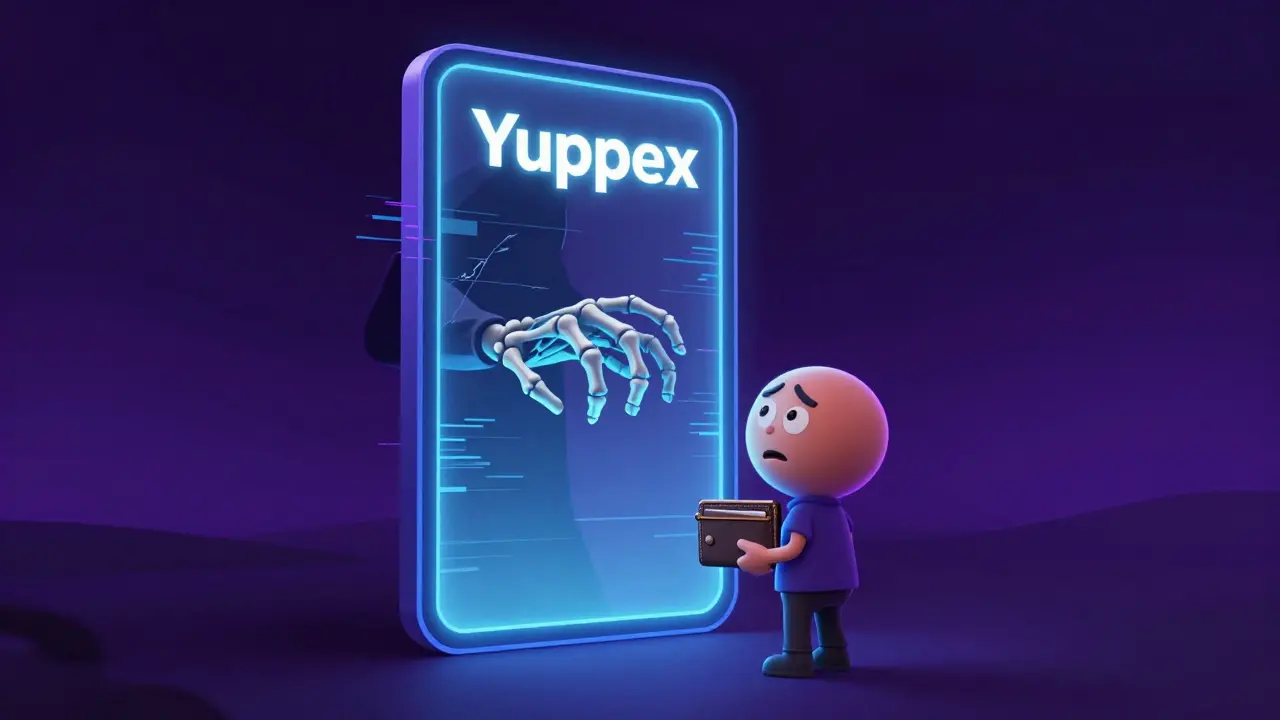
You might have seen an ad for Yuppex is a fraudulent entity posing as a cryptocurrency exchange, likely designed to steal funds through phishing scams. It promises high returns or easy trading. But here is the hard truth: Yuppex does not exist as a legitimate platform. If you are looking to trade Bitcoin, Ethereum, or any other digital asset, stepping onto this site puts your money at immediate risk. This review isn't about features or fees because there are none. It is a warning based on forensic analysis of the domain, regulatory records, and user reports.
The landscape of cryptocurrency is filled with opportunities, but it is also rife with predators. Scammers often create platforms that look professional, mimicking the design of trusted giants like Coinbase or Binance. They use slight misspellings or new names to trick users who aren't paying close attention. Yuppex fits this pattern perfectly. By understanding why this platform is flagged as dangerous, you can protect yourself and choose a secure alternative.
The Red Flags: Why Yuppex Is Not Legitimate
When evaluating any financial service, especially in the volatile world of crypto, trust is built on transparency and regulation. A quick check reveals that Yuppex fails every basic test for legitimacy. The domain associated with the name, such as yuppex.com, is either unregistered or redirects to a parked page with no functional exchange interface. There are no smart contracts linked to "Yuppex" on major blockchain explorers like Etherscan or BscScan. This means there is no underlying technology processing trades; it is just a website waiting for you to enter your details.
Legitimate exchanges operate under strict legal frameworks. In the United States, they register with the Financial Crimes Enforcement Network (FinCEN) as Money Services Businesses. In Europe, they comply with the European Banking Authority's guidelines. As of late 2024, no regulatory body-including the SEC, CFTC, FCA, or MAS-has ever licensed an entity named Yuppex. The absence from these official registers is a massive red flag. Without regulation, there is no recourse if your funds disappear. You would be chasing ghosts across international borders with little hope of recovery.
Another critical indicator is the lack of verifiable corporate history. Established platforms like Kraken or OKX have clear founding dates, known leadership teams, and public funding rounds. Yuppex has none of this. It appeared suddenly, likely created by anonymous actors using stolen designs. The Blockchain Association issued specific warnings in October 2024 about impersonation attempts targeting social media users, noting that scammers create fake sites that mimic legitimate platforms to harvest login credentials. Yuppex operates exactly within this modus operandi.
How the Yuppex Scam Works
Understanding the mechanics of the scam helps you recognize it before it’s too late. These operations typically follow a predictable script. First, you encounter an advertisement on social media platforms like Twitter, Facebook, or even via direct messages. The ad claims you can sign up for free and start earning daily profits with minimal investment. This bait exploits the desire for passive income, which is common among newcomers to crypto.
Once you click the link, you are taken to a sleek-looking website that resembles a real exchange. You are prompted to create an account. Here, the trap springs. The site asks for personal information, including your full name, email, phone number, and sometimes government-issued ID for "KYC verification." This data is not used for security; it is sold on the dark web or used for identity theft. The KYC process on a scam site is a facade designed to make the platform appear legitimate while harvesting sensitive documents.
After registration, you are encouraged to deposit funds. The site may show fake balances growing in real-time, creating a false sense of success. However, when you attempt to withdraw your money, the system will fail. Common excuses include "high network congestion," "mandatory holding periods," or requests for additional "tax fees" or "verification deposits." Once you pay these extra fees, the site vanishes. The operators delete the server, change the domain, and disappear with your initial deposit plus the subsequent payments. According to Chainalysis incident reports, victims of similar schemes have lost tens of thousands of dollars collectively.

Signs of a Fake Crypto Platform
To avoid falling victim to Yuppex or similar scams, you need to know what to look for. Legitimate exchanges prioritize security and transparency. Here are the key differences between a real exchange and a fake one:
- Regulatory Compliance: Real exchanges display their licenses clearly on their website. Check if they are registered with authorities like FinCEN, FCA, or ASIC. If you cannot find this information in the footer of their homepage, assume they are operating illegally.
- Transparent Team: Legitimate companies have identifiable founders and staff with LinkedIn profiles and industry reputations. Anonymous teams are a major warning sign.
- Proof of Reserves: Trustworthy exchanges publish monthly proof-of-reserves audits, showing they hold enough assets to cover user liabilities. Scams never provide this because they don’t hold any real funds.
- Secure Domain: Check the URL carefully. Look for HTTPS and verify the domain age using WHOIS tools. New domains (less than a year old) claiming to be established exchanges are suspicious.
- User Reviews: Search for independent reviews on sites like Trustpilot or Reddit. Be wary of generic positive reviews that sound robotic. Look for detailed negative experiences regarding withdrawals.
Dr. David Gerard, a researcher at University College London, noted in an interview with Decrypt that scammers often use names resembling legitimate platforms but with slight misspellings. This tactic tricks users into lowering their guard. Always double-check the spelling of any exchange you intend to use.
Safe Alternatives to Yuppex
If you are looking to enter the cryptocurrency market, stick to well-established, regulated platforms. These exchanges have survived years of market volatility, regulatory scrutiny, and security challenges. They offer robust customer support, insurance coverage, and transparent fee structures.
| Feature | Yuppex (Scam) | Binance | Coinbase | Kraken |
|---|---|---|---|---|
| Regulation | None | Global Licenses | US Registered | EU/UK Licensed |
| Funding History | Anonymous | $1B+ Raised | Public Company | Private, Est. 2011 |
| Security | Non-existent | SAFU Fund | 98% Cold Storage | Advanced Encryption |
| Withdrawals | Blocked | Instant/Fast | Reliable | Reliable |
| User Base | Victims Only | 150M+ Users | 100M+ Users | 10M+ Users |
Binance remains the largest exchange by volume, offering a wide range of coins and low fees. Coinbase is ideal for beginners in the US due to its simplicity and strong regulatory standing. Kraken is renowned for its security track record and excellent customer service. Bybit and OKX are also solid choices for more advanced traders seeking diverse instruments. All these platforms have verifiable histories and active communities.

Protecting Your Digital Assets
Beyond choosing a reputable exchange, you must take personal responsibility for your security. No platform is immune to hacks, so relying solely on an exchange’s security measures is risky. The golden rule of crypto is "not your keys, not your coins." For long-term storage, move your assets to a hardware wallet like Ledger or Trezor. These devices keep your private keys offline, making them inaccessible to online thieves.
Enable two-factor authentication (2FA) on all your accounts. Avoid SMS-based 2FA if possible, as SIM swapping attacks are becoming common. Use an authenticator app like Google Authenticator or Authy instead. Additionally, never share your seed phrase-the 12 or 24 words generated when setting up a wallet-with anyone. Legitimate support teams will never ask for this information.
Be skeptical of unsolicited offers. If someone DMs you on Telegram or Twitter promising guaranteed returns, block them immediately. Real investing involves risk, and anyone promising otherwise is lying. Educate yourself continuously. Follow reputable news sources like CoinDesk or The Block to stay updated on market trends and security alerts.
What To Do If You’ve Been Targeted
If you have already deposited funds into Yuppex or a similar site, act quickly. First, stop sending any more money. Scammers will pressure you to pay "fees" to unlock your account, but this is part of the trap. Second, document everything. Take screenshots of the website, transaction hashes, communication logs, and any emails received. This evidence is crucial for reporting.
Report the incident to your local law enforcement agency and relevant financial regulators. In the US, file a report with the FBI’s Internet Crime Complaint Center (IC3). In New Zealand, contact the Police Fraud Squad. While recovery is difficult, reporting helps authorities track down criminal networks and prevent further victims. Notify your bank or credit card company if you paid via fiat currency; they may be able to reverse the transaction if acted upon swiftly.
Finally, monitor your credit and personal information. Since scammers often steal IDs during the fake KYC process, place fraud alerts on your credit reports. Change passwords for all accounts linked to the compromised email address. Vigilance is your best defense in the digital age.
Is Yuppex a real cryptocurrency exchange?
No, Yuppex is not a real cryptocurrency exchange. It is identified as a fraudulent platform with no regulatory licenses, no verifiable corporate history, and no functional trading infrastructure. Multiple sources, including blockchain analytics firms and consumer protection agencies, have flagged it as a scam.
Can I recover my money from Yuppex?
Recovering funds from a crypto scam like Yuppex is extremely difficult. Once funds are sent to a scammer’s wallet, they are typically moved quickly and laundered. However, you should report the incident to local law enforcement and your financial institution immediately. If you paid via credit card, request a chargeback. Do not send additional money to "unlock" your funds.
How do I identify a fake crypto exchange?
Look for missing regulatory licenses, anonymous ownership, unrealistic profit promises, and poor withdrawal processes. Legitimate exchanges are transparent about their team, security measures, and compliance status. Check independent reviews on Trustpilot and Reddit, and verify the domain age. If something feels off, it probably is.
What are the safest crypto exchanges in 2026?
The safest exchanges are those with long track records, strong regulatory compliance, and high security standards. Top choices include Binance, Coinbase, Kraken, and OKX. These platforms undergo regular audits, insure user funds, and provide reliable customer support. Always research current ratings and read recent user feedback before depositing funds.
Why did Yuppex ask for my ID?
Scammers request ID documents to steal your identity. They may sell your personal information on the dark web or use it to open fraudulent accounts in your name. Legitimate exchanges use KYC (Know Your Customer) procedures for legal compliance, but they encrypt and protect this data. On a scam site, your ID is harvested for malicious purposes.
Is it safe to invest in crypto?
Crypto investing carries inherent risks due to market volatility, but it can be safe if you use reputable platforms and practice good security hygiene. Never invest more than you can afford to lose. Use hardware wallets for long-term storage, enable 2FA, and avoid sharing private keys. Education and caution are your best tools for navigating the crypto space safely.
Comments
It is fascinating how these scams keep popping up with new names but the exact same playbook. You see it over and over again. They promise the moon, take your money, and vanish into the ether. It really says something about human nature that we keep falling for the same tricks. I just sit back and watch the cycle repeat itself. It is almost poetic in its predictability.
Another day another scam targeting the gullible masses who think crypto is a get rich quick scheme instead of a high risk asset class. These platforms are usually run by overseas operators who laugh at our regulations. If you cannot afford to lose it do not touch it. Simple as that. Stop whining when you get rugged because you were too lazy to do basic due diligence on the platform before sending funds. The market weeds out the weak and stupid every single time.
The sheer audacity of these digital charlatans is truly breathtaking in its banality. They construct elaborate facades of legitimacy using stolen code and generic stock photos while their backend is essentially a black hole for liquidity. It is a theater of greed where the audience pays for the privilege of being duped. One must admire the technical prowess required to build such a convincing lie even if the moral compass is entirely absent. It is a modern-day alchemy turning hope into ash.
I feel for the people who lost everything to this. It is devastating to trust a system that was never there. We live in an age of information yet deception thrives in the shadows of technology. It makes one wonder if true security is even possible in a decentralized world. The tragedy is not just financial but emotional. People bet their futures on promises that evaporated like mist in the morning sun. It is a harsh lesson in the fragility of trust online.
This is why I always tell everyone to stick to the big regulated names like Coinbase or Kraken. It is just safer. The article does a great job explaining the red flags. Check for licenses. Look for proof of reserves. Do not ignore the warning signs. Stay safe out there folks. Your peace of mind is worth more than any potential high return from a sketchy site. Keep learning and stay vigilant.
I literally screamed when I saw this post because my cousin almost fell for something similar last month. He thought he found a secret gem. I had to practically drag him away from his computer. 😱 Please people check the domain age. Use WHOIS. It takes two minutes. Why do we make it so hard to be safe? 🛑
in my experience living between cultures i have seen many forms of fraud but this digital variety is particularly insidious because it has no borders. scammers exploit the universal desire for financial freedom. it is important to share these warnings globally. knowledge is power. stay alert my friends
Look I am all for open markets and innovation but this is just criminal negligence by anyone who falls for it. At the same time the regulatory bodies need to step up their game. We cannot let these predators operate with impunity. It is a balance between freedom and safety. But seriously if you are putting money into a site with no history you are asking for trouble. Be smart about it.
Hey guys just wanted to add that hardware wallets are a lifesaver. Even if you use a legit exchange move your long term holds to cold storage. Ledger or Trezor. It gives you control. Not your keys not your coins. This applies everywhere not just avoiding scams. Good read overall.
The lack of due diligence displayed by victims is frankly astonishing; one would assume basic literacy regarding blockchain analytics would prevent such egregious errors. Furthermore, the reliance on unverified social media endorsements is a critical failure in personal risk management protocols. Users must understand that anonymity is not a feature; it is a liability. Without verifiable identity, trust is impossible. Cease engaging with entities that refuse transparency.
Get out of the way of your own success! Stop letting fear dictate your moves but also stop being reckless. There are plenty of good opportunities in crypto right now. Just pick the right ones. Binance is huge for a reason. OKX is solid too. Do not let one bad apple ruin the whole bunch. Learn from this mistake and come back stronger. You got this. The market rewards the brave and the smart.
This is exactly what happens when you leave finance to the unregulated wild west. We need strict enforcement here in the US and abroad. These scammers prey on the weak and destroy families. It is a national security issue almost. Protect our citizens. Shut these domains down immediately. No excuses. The government needs to act now before more people get hurt. This is unacceptable behavior for any entity operating near our borders.
I wonder if the psychological profile of these scammers changes over time or if they are just adapting to new technologies. It seems like a constant cat and mouse game. The article mentions the fake KYC process which is particularly disturbing. Stealing identities adds another layer of harm beyond just financial loss. It makes you think about how much personal data we willingly give away. Maybe we need to rethink our entire approach to online verification.