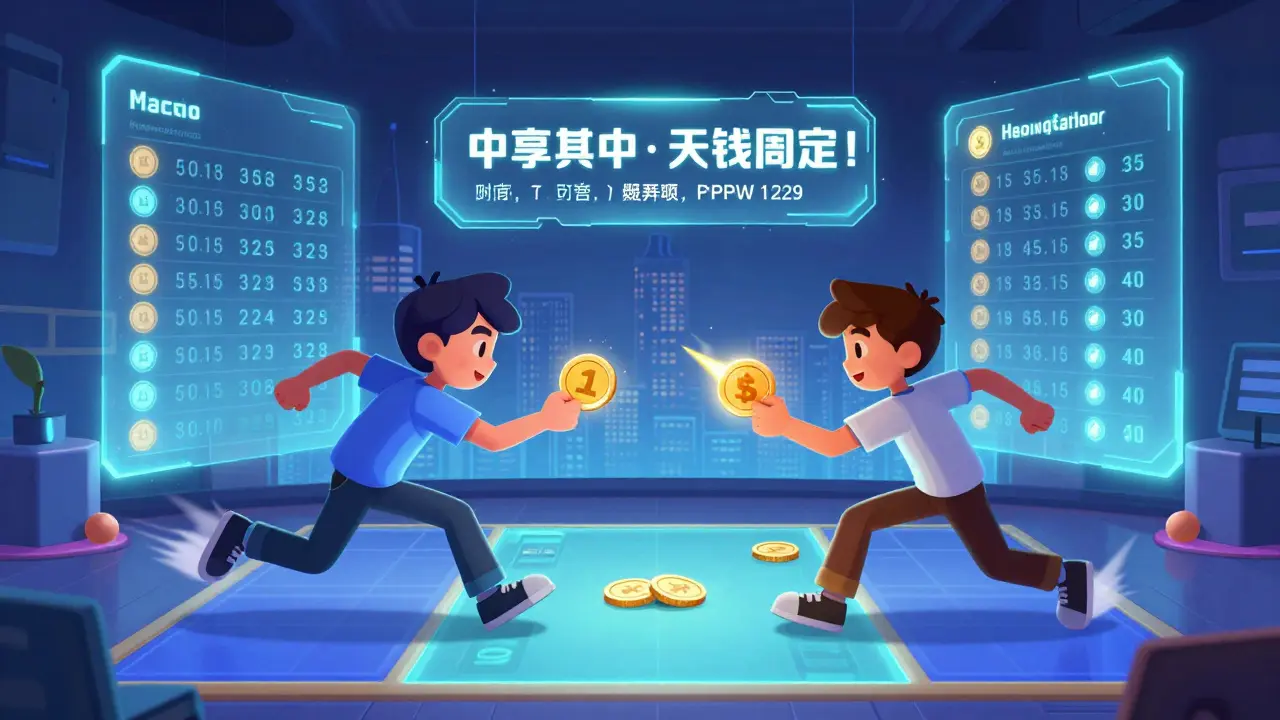
Blockchain networks are stuck in traffic. Every time you send a transaction, it has to wait in line with hundreds or thousands of others. Fees spike. Confirmations take minutes. And when you’re trying to make payments for a game, stream micropayments, or run a real-time app? Forget it. That’s where state channels come in - they’re not a future promise. They’re working right now, and they’re solving real scalability problems without sacrificing security.
How State Channels Actually Work
Think of a state channel like a private room where two people can trade anything they want - money, game moves, data - without needing to walk to the front desk every time. The only time they go to the front desk (the blockchain) is when they open the room and when they close it. Everything else happens privately, instantly, and for free. Here’s how it breaks down:- Two or more parties lock a portion of their cryptocurrency into a smart contract on the blockchain. This is the opening transaction.
- Once locked, they start signing and exchanging updated transaction states off-chain - like a game of chess where each move is signed and agreed upon.
- Each signed state is a valid record. If one party tries to cheat, the other can submit the latest signed state to the blockchain and claim their funds.
- When they’re done, they close the channel by submitting the final state to the blockchain. Only one on-chain transaction for the entire session.
This isn’t magic. It’s cryptography. Every update is signed with private keys, and the blockchain acts as a trustless referee - only stepping in if something goes wrong. That’s why state channels inherit the same security as the underlying blockchain, like Bitcoin or Ethereum, but with none of the speed limits.
Why State Channels Crush Scalability Problems
Most Layer 2 solutions try to fix blockchain scaling by adding more chains or sharding. State channels do something smarter: they remove the need for the blockchain to process most transactions at all.- Unlimited throughput: A single state channel can handle thousands of transactions per second. Imagine a payment channel between you and your coffee shop - 50 micropayments a day? That’s 18,250 transactions a year - all settled with one on-chain fee.
- Near-zero fees: Only the opening and closing transactions cost anything. Every transaction in between is free. This makes micropayments viable for the first time - think tipping a streamer $0.01 per second, or paying for a 10-second video clip.
- Instant finality: No waiting for confirmations. As soon as both parties sign, the update is final. That’s crucial for gaming, trading, or any real-time interaction.
- Privacy: Only the opening and closing balances are public. What happened in between? No one else knows. Your game moves, your payment history - all private.
Compare this to sidechains, which require trust bridges and can be hacked if the sidechain’s security is weak. State channels don’t need bridges. They’re anchored directly to the main chain. If the main chain is secure, so is your channel.
Where State Channels Shine - Real Use Cases
State channels aren’t for everything. They work best when you’re dealing with a small, known group of people who interact frequently. Here’s where they’re already making a difference:- Gaming: In a multiplayer game, every movement, attack, or item swap can be a transaction. On-chain? Unthinkable. With state channels, players can battle in real time with zero lag and zero fees. Æternity’s implementation is already powering live blockchain games with 10,000+ moves per minute.
- Micropayments: Paying for articles, music, or data by the second. Without state channels, transaction fees eat up 90% of a $0.05 payment. With them? The fee is split between opening and closing - so you pay $0.01 to open, and $0.01 to close, and 10,000 payments in between cost nothing.
- Decentralized finance (DeFi) trading: Two traders can open a channel and execute dozens of swaps without paying gas each time. This reduces slippage and improves execution speed.
- IoT devices: A smart thermostat paying a utility company for energy usage? Thousands of tiny transactions daily. State channels make that possible without overwhelming the network.

How State Channels Compare to Other Scaling Solutions
| Feature | State Channels | Sidechains | Rollups |
|---|---|---|---|
| Transaction Speed | Instant | Fast (but slower than state channels) | Fast (but batched) |
| On-Chain Transactions | Only open and close | Periodic checkpoints | Every batch (every few minutes) |
| Security | Same as main chain | Depends on sidechain | Same as main chain |
| Best For | Frequent bilateral interactions | General-purpose scaling | General-purpose, especially smart contracts |
| Collateral Required | Yes | No | No |
Rollups are great for complex smart contracts. Sidechains are flexible but less secure. State channels? They’re the most efficient for direct, repeated interactions between known parties. If you’re building a game or a payment system where users interact constantly - state channels are the cleanest solution.
The Downsides - And Why They’re Manageable
No tech is perfect. State channels have trade-offs:- You need to lock up funds: To open a channel, you have to tie up crypto. If you’re short on funds, this is a barrier. But for businesses or frequent users, the cost is negligible compared to paying fees on every transaction.
- Only works for known parties: You can’t open a state channel with a stranger on the internet. It’s designed for trusted relationships - like a recurring payment system, not a public marketplace.
- Dispute resolution can be slow: If someone tries to cheat by submitting an old state, the honest party must challenge it on-chain. This takes time and gas. But the system is designed so the cheater loses their deposit - so cheating is rarely worth it.
- Complex for large groups: More than 5-10 participants? It gets messy. That’s why most implementations focus on two-party channels. For group use, other Layer 2 solutions may be better.
But here’s the thing: these aren’t dealbreakers. They’re design choices. State channels aren’t trying to solve every problem. They’re solving the ones that matter most - fast, cheap, private transactions between people who interact often.

Why Æternity’s Implementation Matters
Most blockchain projects talk about state channels like they’re a future feature. Æternity built them into the core protocol - and made them simple to use. Developers don’t need to be cryptography experts. The protocol handles the signing, verification, and dispute logic automatically.That’s why companies in gaming and micropayments are choosing Æternity. It’s not theoretical. It’s live. A blockchain-based game on Æternity processes over 12,000 moves per minute. That’s 200x faster than Ethereum’s peak throughput. And it costs pennies.
What This Means for the Future of Web3
Scalability isn’t just about speed. It’s about usability. If your app costs $5 to send a $0.10 payment, no one will use it. State channels fix that. They turn blockchain from a slow, expensive ledger into a real-time, high-volume payment and interaction layer.As more apps move from theory to practice - from demos to daily use - state channels will be the hidden engine behind the scenes. They’re not flashy. But they’re essential. And they’re already here.
Are state channels only for Bitcoin and Ethereum?
No. While Bitcoin and Ethereum have experimental state channels, they work best on blockchains designed for them from the start. Æternity is one of the most mature implementations, with native support built into its protocol. Other chains like Polygon and Lightning Network (for Bitcoin) also support state channel-like systems, but each has different trade-offs in security, speed, and ease of use.
Can I use state channels without locking up crypto?
Not currently. Locking funds is required to ensure both parties have skin in the game. If someone could open a channel and then disappear, there’d be no way to enforce fairness. This is a security feature, not a flaw. Some projects are exploring deposit-free models, but they’re still experimental and less secure.
Do state channels work for more than two people?
Technically yes, but it gets complicated. Most state channels are designed for two parties because coordination becomes harder with more people. For group interactions - like a multiplayer game with 10 players - developers often use nested channels or combine state channels with other Layer 2 tools. It’s possible, but not as simple or efficient as two-party channels.
Are state channels safer than centralized payment systems?
Yes - and here’s why. With a centralized system like PayPal or Stripe, you’re trusting a company to not freeze your funds, get hacked, or change the rules. With state channels, your funds are locked in a smart contract on a public blockchain. You control the keys. Even if the app shuts down, you can still claim your money by submitting the latest signed state to the blockchain. No middleman needed.
Why aren’t state channels used everywhere if they’re so good?
Because they’re not universal. They’re hyper-specialized. If you’re building a public marketplace with thousands of random users, state channels won’t help. But if you’re building a subscription service, a gaming platform, or a micropayment system where users interact daily - they’re perfect. The tech isn’t missing. It’s just being used where it makes the most sense.
State channels don’t fix every blockchain problem. But they fix the ones that matter most to users: speed, cost, and privacy. And that’s why they’re quietly becoming the backbone of real-world Web3 applications.
Comments
This is the shit. I've been waiting for this since Bitcoin was a meme. State channels are like giving blockchain a caffeine IV. Instant, free, private. Why are we still talking about gas fees like they're a feature?
Just had my first micropayment through a channel today. Paid $0.03 for a 12-second clip. Felt like magic. 🤯
The technical breakdown here is accurate but incomplete. State channels rely on off-chain signature aggregation and time-locked refund mechanisms. The security model assumes honest majority among participants and proper monitoring. Most implementations don't adequately address liveness assumptions, which creates silent failure modes.
Lol. So you're telling me I have to lock up my ETH just to send $0.02 to my buddy for coffee? I don't even have enough to lock up. This is just another way for whales to gatekeep the tech. Typical.
I'm so glad someone finally explained this without using 17 slides of blockchain diagrams. I used to think crypto was just gambling with extra steps. Now I get it. It's like a secret handshake between friends who trust each other enough to not need a notary.
Also. Micropayments for music? I'm crying. 💔🎶
Let’s be real: state channels are just a glorified sidechain with more complexity. You’re still trusting the participants to not go offline. And if they do? You’re SOL. This isn’t innovation-it’s just a different flavor of centralization with extra steps. Real decentralization doesn’t require you to babysit your counterparty.
You think this is revolutionary? Bro. I’ve seen this exact architecture in 2016. It’s just Bitcoin’s Lightning Network repackaged with a new logo. Everyone’s acting like this is new tech. It’s not. It’s the same old shit with better marketing.
Also. You’re telling me a game can do 12k moves per minute? That’s 200x faster than Ethereum? 😂 LMAO. Try again when it’s not running on a single-node devnet.
There’s a deeper issue here that nobody’s addressing. State channels assume persistent, online, rational actors. But in reality, most users are on mobile phones with intermittent connectivity, low battery, and zero incentive to monitor their channels. The entire model collapses under real-world conditions. The theory looks clean on paper. The implementation? A house of cards held together by hope and gas fees.
This is the universe speaking. The blockchain is a mirror. State channels are the soul’s way of whispering: ‘I don’t need the crowd to validate my truth.’
When two souls lock their energy in a channel, they create a sacred space beyond the noise of the chain. The on-chain transaction? Just a ritual. The real magic? The silent dance between them.
🪷✨
I’ve built state channels in production for a gaming startup. The numbers don’t lie. We reduced on-chain transactions by 98.7%. Gas costs dropped from $12,000/month to $180. Latency went from 12s to 80ms. But here’s the catch: you need a robust monitoring service. If a user’s phone dies, you need a watchtower to submit the latest state. Most devs skip this and wonder why their users lose funds. It’s not the tech-it’s the ops.
I tried to open a channel with my neighbor to pay for lawn mowing. He said he didn’t have enough ETH. I said he could lock up his dog. He said no. We’re still paying cash. This tech is cool but it’s not for regular people. It’s for crypto bros who think their wallet is a status symbol.
Let me guess-you’re one of those people who thinks blockchain will save the world. Newsflash: state channels are just a way to make rich people richer. You lock up your crypto so you can pay $0.01 for a meme? Who’s the real sucker here? The system is rigged. The blockchain isn’t free. It’s just hiding the fees in your opportunity cost.
This is a trap. State channels are a gateway drug to centralization. Once you lock your funds, you’re trusting a single node or a monitoring service. Who runs those? Corporations. Who audits them? Nobody. The blockchain was supposed to remove middlemen. Now we’re building new ones with ‘watchtowers’ and ‘liveness providers’. This isn’t decentralization. It’s a Ponzi with a whitepaper.
I am genuinely moved by this. The elegance of state channels-where cryptography replaces bureaucracy-is a quiet revolution. The fact that two individuals can transact with the same security as the entire network, without burdening it, is a triumph of human ingenuity.
It is not merely a technical advancement. It is a philosophical one.
The whole premise is flawed. If you need to lock up funds to make a payment, you’re not building a payment system-you’re building a loan system. And who gets the interest? The chain. The miners. The devs. Not you. This isn’t innovation. It’s financial engineering disguised as liberation.
I’ve been watching this space for 8 years. State channels are the quiet hero. Nobody talks about them because they’re not flashy. No token. No hype. Just clean, simple, secure tech that works. If you’re building something real-something that people will use every day-you don’t need a 10-layer architecture. You need this. Keep going. You’re doing the work that matters.