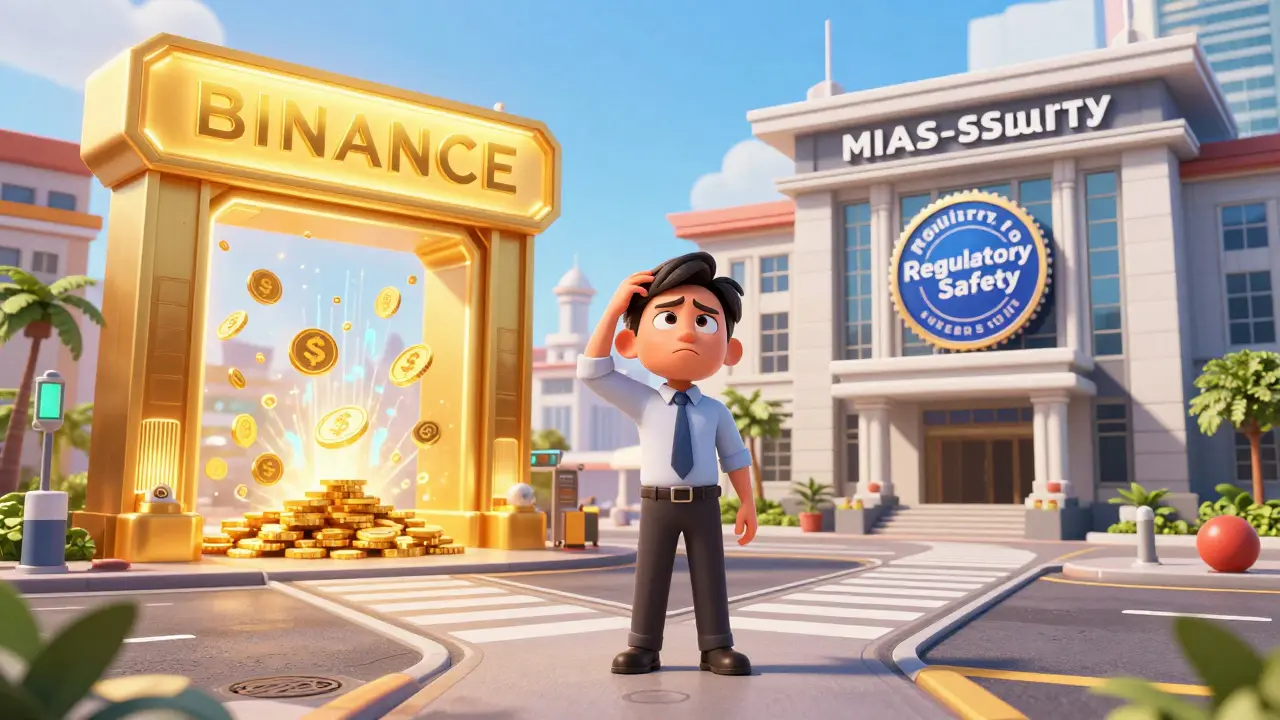
Choosing a crypto platform in Singapore usually comes down to a tug-of-war between two things: having the most features or staying on the right side of the law. If you've looked at Binance is the world's largest cryptocurrency exchange by trading volume, serving hundreds of millions of users across 180 countries, you know it's the undisputed heavyweight champion of the crypto world. But for someone living in the Lion City, the question isn't just "is it a good app?"-it's "is it legal and safe here?"
The Quick Verdict: What You Need to Know
- Best For: Experienced traders who need deep liquidity, 500+ coins, and advanced derivatives.
- Avoid If: You are a total beginner or someone who only trusts platforms with a direct license from the Monetary Authority of Singapore (MAS).
- The Big Trade-off: You get incredibly low fees and a massive selection of tokens, but you sacrifice the regulatory safety net provided by a locally licensed subsidiary.
The Elephant in the Room: Regulatory Status in Singapore
In Singapore, the Monetary Authority of Singapore (also known as MAS) is the boss. They mandate strict licensing for anyone providing Digital Payment Token (DPT) services. Here is the reality: while Binance is a global giant, it doesn't operate as a dedicated, MAS-licensed Singaporean entity. Instead, Singaporean users generally access the global platform.
Why does this matter? If you use a licensed exchange like Gemini or Luno, you have a clear legal framework protecting you within Singapore. With Binance, you're essentially using a global service. This creates a "regulatory ambiguity." If something goes wrong, you aren't leaning on Singaporean consumer protection laws in the same way you would with a local player. For some, this is a non-issue; for others, it's a dealbreaker.
Trading Assets and Fees: The Massive Advantage
Where Binance absolutely crushes the competition is in the sheer variety of what you can trade. While some local platforms might offer you 40 or 70 coins, Binance gives you access to over 500 cryptocurrencies and 1,300+ trading pairs. Whether you're hunting for the next big meme coin or sticking to Bitcoin and Ethereum, it's all here.
Then there's the cost. Trading fees on Binance start at a lean 0.1%. To put that in perspective, compare that to some other options where you might see fees as high as 1.49% for certain transactions. When you're trading thousands of dollars, that difference isn't just a few cents-it's a significant chunk of your profit.
| Feature | Binance (Global) | Local Licensed Exchanges (e.g., Gemini/Luno) |
|---|---|---|
| Asset Selection | 500+ Cryptocurrencies | Typically 40-100 Cryptocurrencies |
| Starting Fees | ~0.1% | Often higher (up to 1.49% for fiat) |
| MAS License | Not explicitly licensed in SG | Fully licensed/compliant |
| Liquidity | Institutional-grade (Very High) | Moderate to High |
Advanced Features for the Serious Trader
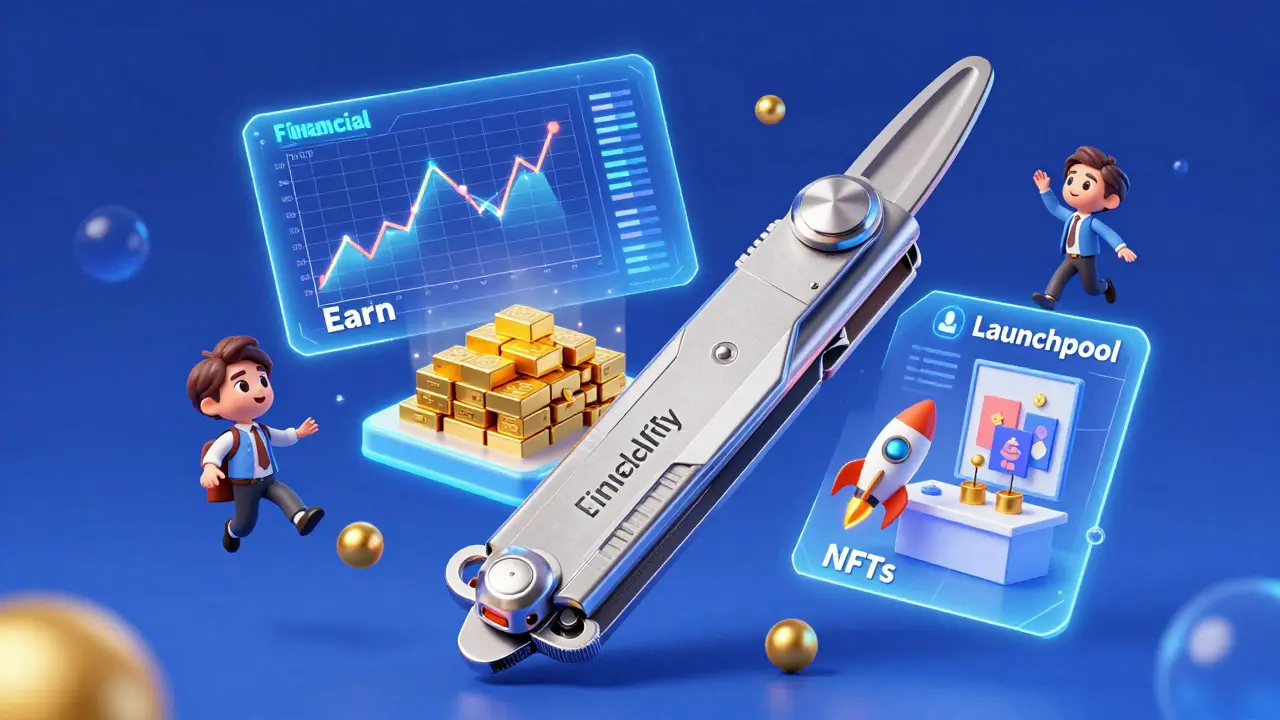
If you're just buying some Bitcoin to hold for ten years, Binance might be overkill. But if you're active, the tools here are top-tier. You have Binance P2P for peer-to-peer trading, which is great for finding local deals. Then there's Binance Earn, where you can generate yield on your holdings instead of letting them sit idle.
For those with a higher risk appetite, the derivatives market is a powerhouse. You can find leverage up to 150x, though this is incredibly risky and generally not recommended for anyone who hasn't spent years in the markets. You also have the Launchpool for getting in early on new tokens and a full-blown NFT marketplace. It's less like a simple app and more like a financial Swiss Army knife.
The User Experience: A Steep Learning Curve
Let's be honest: the Binance interface can be intimidating. If you open the "Advanced" view for the first time, it looks like a spaceship cockpit with a hundred different blinking lights and charts. For a beginner in Singapore who just wants to swap SGD for some crypto, this is overwhelming.
The mobile app is excellent for monitoring your portfolio and setting real-time alerts, but it doesn't solve the initial complexity. You'll likely spend your first few hours just trying to find where the "Buy" button is located amidst all the professional trading tools. Compared to the clean, streamlined interfaces of Coinbase or Luno, Binance feels like it was built by traders, for traders.
Security and Reliability
Binance has a complicated history. In the past, they've dealt with security incidents and heavy scrutiny from regulators globally. However, they've spent millions hardening their systems. Today, it's considered a safe platform from a technical standpoint, provided you use two-factor authentication (2FA) and don't share your keys.
The real "security" risk for a Singaporean user isn't a hacker-it's the regulatory gap. If the Monetary Authority of Singapore decided to tighten restrictions on non-licensed exchanges tomorrow, your ability to move funds or access the platform could be affected. That's the price you pay for the high liquidity and low fees.
Final Thoughts for Singaporean Users
So, should you use it? It depends on what you value most. If you're a professional trader who needs the deepest liquidity to avoid slippage and you want access to every niche token under the sun, Binance is the only real choice. The cost savings alone make it worth the effort.
But if you're a conservative investor or a total newbie, the lack of a dedicated MAS license might keep you up at night. In that case, paying a slightly higher fee at a licensed exchange is essentially a "peace of mind tax." You lose a bit of money on the transaction, but you gain the certainty that your platform is operating legally within your own backyard.
Is Binance legal to use in Singapore?
Binance is available to users in Singapore, but it does not hold a Digital Payment Token (DPT) license from the Monetary Authority of Singapore (MAS). While using the platform is not illegal for the individual, it means the exchange does not operate under the same local regulatory protections as licensed platforms like Luno or Gemini.
How do I deposit SGD into Binance?
Since Binance doesn't have a dedicated Singaporean subsidiary with direct bank integrations, many users utilize the Binance P2P (Peer-to-Peer) marketplace to buy crypto using SGD from other users. Alternatively, you can use credit/debit cards or third-party payment providers, though fees may vary.
Are Binance fees actually lower than other SG exchanges?
Generally, yes. Binance's spot trading fees start around 0.1%, whereas some MAS-licensed exchanges can charge significantly more for fiat-to-crypto conversions, sometimes exceeding 1% depending on the payment method and trading volume.
Is Binance safe for beginners?
Technically, yes, it is secure. However, the user interface is very complex. Beginners may find it overwhelming and are more prone to making mistakes (like sending funds to the wrong network) compared to using a simplified app like Coinbase.
What happens if I want to move my coins to a hardware wallet?
Binance allows you to withdraw your assets to external wallets. This is a highly recommended move for long-term holders in Singapore to remove the "platform risk" associated with non-licensed exchanges.
Comments
Everyone knows the MAS is just playing a game of cat and mouse with these platforms. The real issue is the liqudity gap when you try to exit a position during a crash. Most people dont even realize that "global" just means you're on your own when the server goes dark in some offshore jurisdiction. Honestly the p2p market is where the real action is in SG anyway, but you gotta be careful with the scams since some sellers are total frauds
literally just use a cold wallet if you care about security
The juxtaposition of retail sentiment and regulatory arbitrage is quite stark here. Most users fail to grasp the systemic risk associated with non-custodial parity in a non-MAS compliant environment. The slippage on low-cap assets is negligible compared to the catastrophic tail risk of a liquidity crunch. It is frankly pedestrian to prioritize a 0.1% fee over sovereign legal recourse. The asymmetry of information here is staggering for the average retail trader who thinks 2FA is a panacea for institutional insolvency.
Great breakdown! 🚀 I think for a lot of us, the trade-off is worth it for the variety of coins. Just stay safe and use that hardware wallet! 🛡️✨
money is just energy moving from one hand to another and if we trust the system we are already prisoners of the mind lol
Typical rubbish. Why are we even discussing these digital casino chips? The only thing these platforms do is drain the pockets of idiots who think they've found a shortcut to wealth. Absolute waste of time.
Funny how people act like MAS is some holy shield. If the world economy tanks, your local license is just a piece of paper. It's all a gamble anyway, so you might as well go where the volume is. The moral high ground on "regulation" is just a way for slow people to feel safe while the sharks eat the profits.
LIES!!! The regulators are IN on it!!! They want you on "licensed" platforms so they can track every single cent you move and freeze your assets whenever the New World Order decides you're too independent!!! Wake up people!!! The 0.1% fee is a lure to get us into the global grid!!!!
omg i tried to use the advanced view and literally almost cried it looks like a damn hacker movie lol i just want to buy a coin not launch a rocket ship!!!
P2P is the way to go for SGD. Fast and efficient.
It is most prudent to maintain a diversified approach to exchange usage. While the fee structure of a global platform is indeed attractive, the peace of mind provided by local compliance cannot be understated. I would suggest utilizing a licensed platform for primary fiat on-ramps and moving assets to a global exchange only for specific trading needs. This strategy effectively mitigates the regulatory risk while maximizing the utility of the available tools. It is a balanced approach that serves both the cautious and the ambitious investor.
I feel you on the beginner struggle. It's a lot to take in at first. :-)
literally who designed this app?? its a nightmare and i h8 it so much lol
You can actually find some great tutorials on YouTube that show you exactly how to switch to the 'Lite' version of the app! It makes everything so much easier to manage and less scary for newcomers.
just take it slow
I completely understand where everyone is coming from here. Some of us just want the simplicity of a regulated environment because the stress of a potential freeze is just too much to handle daily, but I also see the appeal of the massive coin selection because that's where the growth happens. Maybe the best path forward is just to start small, learn the ropes on a local app, and then slowly migrate to the bigger fish once you're comfortable with the risk profile of a global entity.
I laov the idea of the launchpool!! sounds like a great way to get in early on stuff. is it hard to use for beginners?
The point about the "peace of mind tax" is very accurate. Many of us prefer the safety of MAS oversight over a few dollars in saved fees.
One must consider the implications of the Digital Payment Token services framework. The risk is not merely technical but legal. I strongly advise all users to read the terms of service regarding the jurisdiction of disputes before depositing significant capital.
Stop being scared of the MAS 🙄 just trade and make money 💰🇺🇸
It's all about finding a rhythm that works for you. Don't let the fancy charts scare you off, just take a deep breath and explore the app at your own pace. We've all been there!
I appreciate how this post explains the difference between a global service and a local entity. It's important to understand the boundaries of our legal protections before jumping into high-leverage trading.
How much you got in your wallet right now?