Imagine trying to buy a house in a neighborhood where only one person lives. You can technically make an offer, but good luck getting anyone to respond, and even if they do, you have zero leverage on the price. That is exactly what trading on BTCsquare is like today.
You might have seen ads promising "no KYC" (Know Your Customer) trading and "almost zero fees." On paper, that sounds like a dream for privacy-focused traders. But in reality, as of mid-2026, this platform is a ghost town. The data tells a stark story: extremely low liquidity, untracked volume metrics, and a complete absence from major industry recommendations. Before you deposit a single dollar, you need to understand why this exchange is sitting on the fringe of the crypto world-and whether that fringe position is worth your risk.
The Promise: No KYC and Low Fees
Let’s look at what drew people here in the first place. BTCsquare was founded in 2018 and registered in Seychelles. Its main selling point has always been anonymity. Unlike giants like Coinbase or Kraken, which require you to upload passports and prove your identity, BTCsquare claims you can trade without jumping through those hoops.
They also push hard on cost. By holding their native token, PLURA, users allegedly get trading fees reduced to near zero. For high-frequency traders, saving fractions of a percent adds up. If the platform were liquid and safe, this would be a compelling argument. But there is a catch: in the crypto world, you usually pay for convenience and security with higher fees. When you remove those costs, someone else often picks up the tab-usually by taking risks with your funds or offering poor service.
The Reality Check: Liquidity Crisis
This is where the deal falls apart. Liquidity is the lifeblood of any exchange. It means there are enough buyers and sellers so you can enter or exit a trade quickly at a fair price. Without it, you are stuck.
Historical data paints a worrying picture. Back in late 2019, reviews noted daily trading volumes of around $1,900. By early 2020, it crept up to roughly $2,300. To put that in perspective, major exchanges process billions of dollars daily. A volume of $2,000 means if you tried to sell $5,000 worth of Bitcoin, you might crash the market price on that specific order book because there simply aren’t enough buyers waiting.
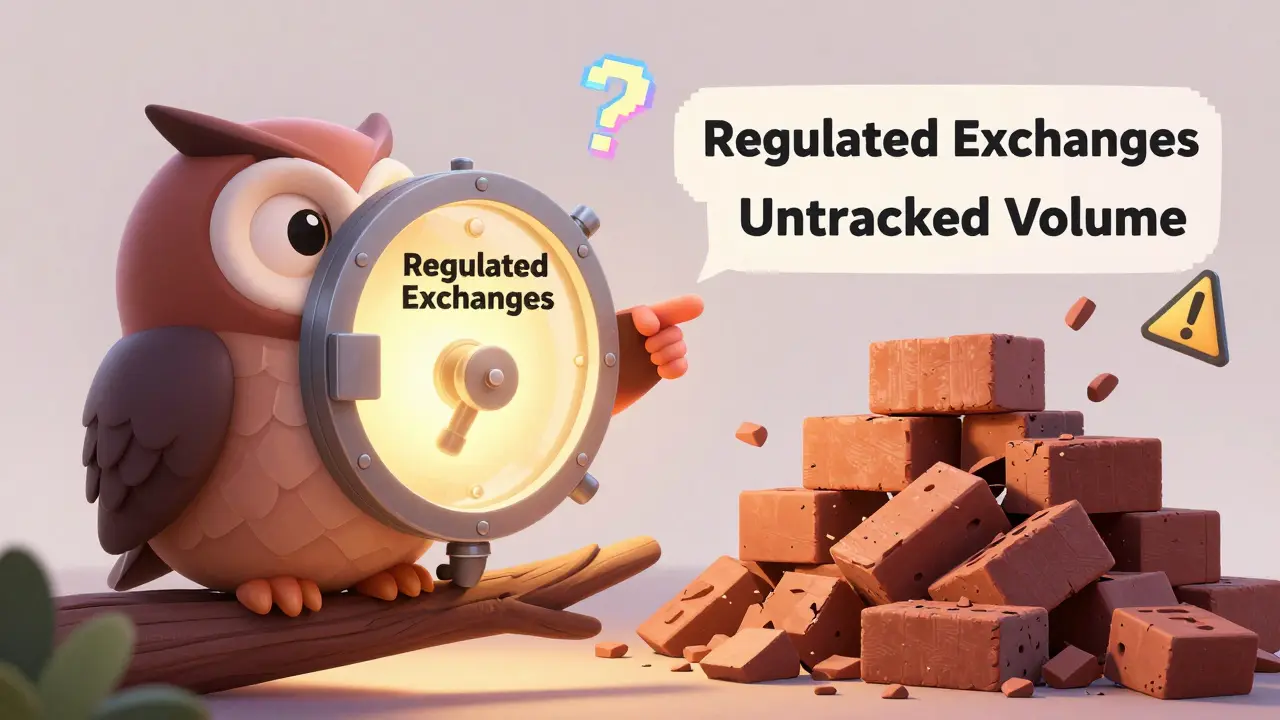
As of October 2025, CoinMarketCap lists BTCsquare as an "Untracked Listing" due to insufficient volume. This isn’t just a minor inconvenience; it’s a red flag. It suggests the platform has fallen below the threshold of being considered active or reliable by major data aggregators. In 2026, with the crypto market maturing, an exchange with untracked volume is effectively invisible to serious investors.
| Feature | BTCsquare | Binance / Coinbase |
|---|---|---|
| KYC Requirement | No (Anonymous) | Yes (Strict Verification) |
| Daily Volume | Untracked / ~$2k historical | Billions of USD |
| Mobile App | None | Yes (iOS & Android) |
| Regulatory Status | Seychelles (Gray Area) | Multiple Jurisdictions (Licensed) |
| User Reviews | Extremely Scarce | Thousands |

Security and Trust Issues
When an exchange doesn’t know who you are, how well do they protect you? BTCsquare claims to store 98% of assets in cold storage multisignature wallets. That sounds technical and secure, but it is a standard claim made by many platforms, including some that later collapsed.
The bigger issue is accountability. Because it operates from Seychelles with minimal regulatory oversight, you have little recourse if something goes wrong. If the site disappears, or if withdrawals freeze, there is no financial protection fund like the one SIPC provides for traditional stocks, nor the robust insurance policies some US-regulated exchanges offer.
Expert analysis from independent reviewers has consistently raised alarms. As far back as 2019, analysts warned that the trading volume was so low the exchange faced a high risk of shutting down. Fast forward to 2026, and that warning still stands. The lack of growth over nearly eight years suggests the platform failed to gain traction. In the fast-moving crypto industry, stagnation often precedes death.
User Experience: Bare Bones
If you decide to visit the site, don’t expect a sleek, modern interface. There is no mobile application. You are limited to a web-based platform. While this might seem fine for desktop users, it ignores the reality that most retail traders manage portfolios via smartphones.
The interface includes basic order books and charts, but the experience is hampered by the lack of depth. With so few other users, the order book is thin. This leads to slippage-a phenomenon where your buy order executes at a higher price than expected because there weren’t enough sellers at your target price. For a beginner, this is confusing and frustrating. For an experienced trader, it is unacceptable.
Customer support is another blind spot. With virtually no community presence on forums like Reddit or Trustpilot, you are on your own. If you encounter a bug or a withdrawal delay, there is no crowd-sourced solution to guide you. The isolation of the platform extends beyond just trading pairs; it isolates you from help.
Who Is This Actually For?
Is there any scenario where using BTCsquare makes sense? Perhaps. If you are a niche trader who prioritizes absolute anonymity above all else and is willing to accept the risk of total loss, you might look here. However, even then, there are better options. Peer-to-peer (P2P) markets or decentralized exchanges (DEXs) often offer similar privacy benefits with greater transparency and liquidity.
For the average user wanting to buy Bitcoin or Ethereum, this platform is a bad fit. You will struggle to move money in or out efficiently. You will face higher hidden costs due to slippage. And you will sleep poorly knowing your funds are on a platform with unverified security practices and negligible market presence.
Final Verdict: Avoid the Risk
In 2026, the cryptocurrency landscape is dominated by regulated, liquid, and user-friendly platforms. BTCsquare represents a relic of the early, wild west days of crypto-a time when anonymity was prized over safety. Today, that trade-off is too steep.
The combination of untracked volume, lack of mobile access, and minimal user feedback creates a perfect storm of risk. While the promise of no-KYC trading is tempting, the execution is flawed. I recommend sticking to established exchanges that may require ID verification but offer the liquidity, security, and customer support necessary to protect your investment. Don’t let the lure of "zero fees" distract you from the reality of a platform that is essentially empty.
Is BTCsquare a scam?
While there is no definitive proof that BTCsquare is a fraudulent operation designed solely to steal funds, it exhibits many characteristics of high-risk platforms. The extremely low trading volume, lack of regulatory compliance in major jurisdictions, and absence from reputable industry rankings suggest it is not a viable long-term option for storing or trading significant amounts of cryptocurrency.
Does BTCsquare require KYC verification?
No, BTCsquare markets itself as a no-KYC exchange, meaning you can theoretically create an account and trade without submitting personal identification documents. However, this lack of verification comes with increased security risks and limited recourse if issues arise.
What is the PLURA token used for?
PLURA is the native utility token of the BTCsquare ecosystem. Holding PLURA is claimed to reduce trading fees significantly, potentially bringing them close to zero. However, given the platform's low activity, the practical benefit of fee reduction is minimal compared to the risks involved.
Why is BTCsquare listed as "Untracked" on CoinMarketCap?
CoinMarketCap marks exchanges as "Untracked" when they fail to meet minimum thresholds for trading volume and data reliability. This indicates that BTCsquare does not have enough consistent trading activity to provide accurate market data, signaling a lack of user engagement and liquidity.
Are there safer alternatives to BTCsquare?
Yes. For privacy-conscious users, decentralized exchanges (DEXs) like Uniswap or peer-to-peer platforms offer more transparent operations. For general trading, regulated exchanges like Coinbase, Kraken, or Binance provide superior liquidity, security features, and customer support, albeit with mandatory KYC procedures.