
Imagine waking up to find that the bank vault you thought was impenetrable has been emptied overnight. Not by a guy with a drill, but by a state-sponsored hacker collective working for one of the most isolated regimes on Earth. That is exactly what happened on February 21, 2025, when Bybit, a major global cryptocurrency exchange, lost approximately $1.5 billion worth of Ethereum tokens. This wasn't just a bad day for traders; it was the largest cryptocurrency theft in history, executed by North Korean hackers and officially attributed by the FBI to a unit known as "TraderTraitor."
If you are wondering how a country with limited internet access pulled off the biggest digital heist ever, you are not alone. The story involves sophisticated supply chain attacks, compromised cold wallets, and a strategic shift in how Pyongyang funds its nuclear ambitions. Let's break down exactly how this happened, who did it, and why it matters for anyone holding digital assets today.
The Scale of the Heist: Why $1.5 Billion Changes Everything
To understand the gravity of the Bybit incident, you have to look at the numbers. Before this attack, North Korea’s annual crypto theft record hovered around $800 million across dozens of smaller incidents. In one single stroke, the regime nearly doubled its yearly haul. The stolen assets were primarily Ethereum (ETH), which the attackers quickly began moving through various blockchain networks.
This wasn't a random smash-and-grab. The operation was precise. According to TRM Labs, a leading blockchain analytics firm, the theft represented a significant escalation in capability. It wasn't just about stealing money; it was about proving that even the most secure storage methods in crypto-cold wallets-could be breached by state-level actors. For context, this single event exceeded North Korea’s entire 2023 crypto theft total of $660.5 million. When one group can steal more in a day than they did in a whole year previously, it signals a fundamental change in their operational capacity.
Who Is TraderTraitor? Inside the North Korean Cyber Machine
You might have heard of the Lazarus Group. They are the umbrella term for North Korea’s cyber warfare units, operating under the Reconnaissance General Bureau (RGB). But the Bybit hack wasn't just another Lazarus job. The FBI specifically designated this campaign as "TraderTraitor," a distinct subunit within the RGB’s 3rd Bureau.
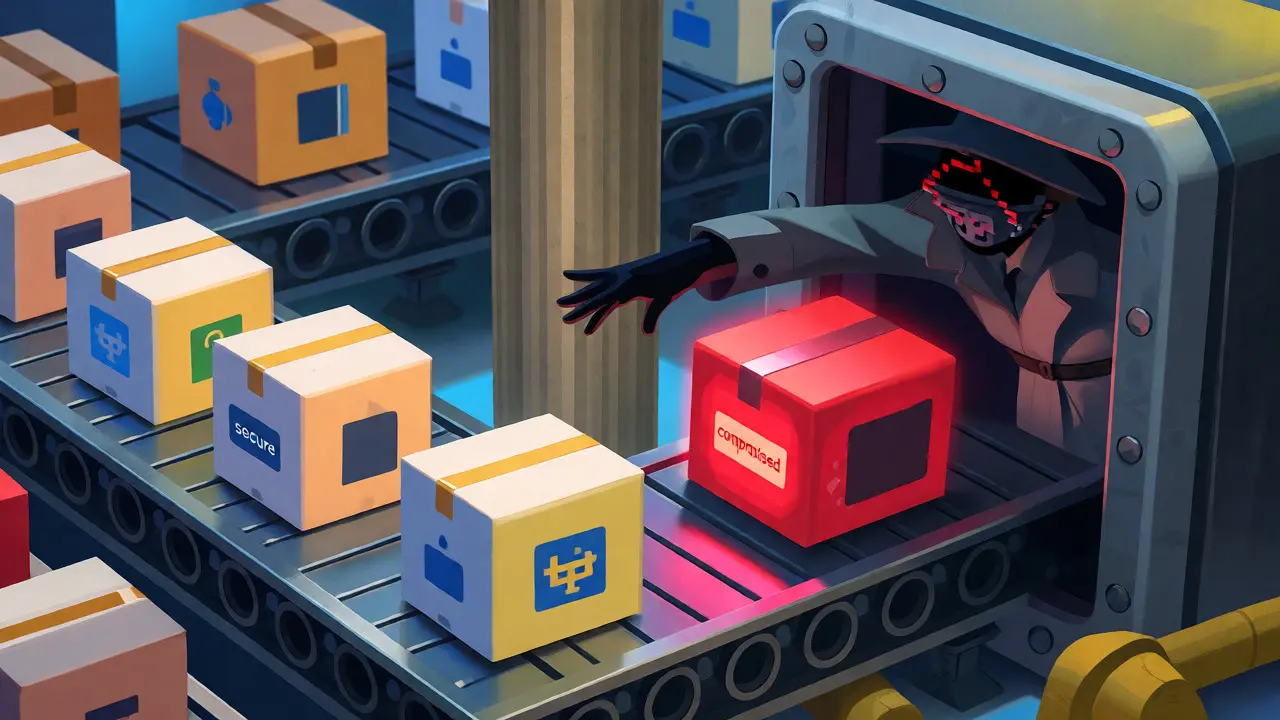
Why does this distinction matter? Because it shows specialization. Earlier North Korean hacks often relied on simple phishing or malware. TraderTraitor, active since at least 2022, focuses exclusively on high-value digital asset theft using advanced techniques like supply chain compromises. They don't just trick users; they compromise the software infrastructure itself. Think of it like this: instead of picking the lock on your front door, they convinced the locksmith to give them a master key before you even installed the door.
| Attack Vector | Primary Method | Target Type | Complexity Level |
|---|---|---|---|
| Traditional Phishing | Email spoofing, fake sites | Individual Users | Low |
| Malware Distribution | Trojans, keyloggers | Exchange Staff | Medium |
| TraderTraitor | Supply chain compromise, private key extraction | Cold Wallets, Infrastructure | Very High |
How Did They Breach a Cold Wallet?
This is the question keeping crypto security experts up at night. Cold wallets are supposed to be offline. No internet connection means no remote hacking. So how did TraderTraitor get the keys?
TRM Labs analysis suggests three likely scenarios, all pointing to a breach of trust rather than a brute-force crack:
- Supply Chain Compromise: The hackers may have infected a third-party service provider used by Bybit for wallet management. If the software signing transactions was compromised, the hackers could sign legitimate-looking transactions without triggering alarms.
- Insider Threat: A human element cannot be ruled out. If an employee with access to signing procedures was coerced or bribed, the security architecture collapses from the inside.
- Private Key Extraction: Advanced persistent threats (APTs) can sometimes extract keys from air-gapped machines via side-channel attacks (like analyzing electromagnetic emissions) or during the brief moments when keys are moved between devices.
The result was the same regardless of the method: unauthorized access to private keys allowed the transfer of billions in ETH without immediate detection. By the time Bybit noticed anomalies, the funds had already begun their journey through the blockchain ecosystem.
The Money Trail: Laundering Billions in Real-Time
Stealing the money is only half the battle. Hiding it is the other half. Once TraderTraitor had the Ethereum, they didn't just sit on it. They employed a technique Nick Carlsen, a former FBI expert now at TRM Labs, calls "flood the zone." Instead of relying solely on mixers like Tornado Cash-which are increasingly scrutinized-they focused on speed and volume.
The stolen assets were rapidly converted across multiple blockchains, including Binance Smart Chain and Solana, before eventually being swapped into Bitcoin. This cross-chain movement makes tracking incredibly difficult because each bridge or swap adds a layer of obfuscation. Thousands of addresses were used to distribute the funds, overwhelming compliance teams and law enforcement agencies trying to follow the trail.
Interestingly, after the initial laundering phase, much of the converted Bitcoin remained stationary. This suggests the hackers weren't rushing to cash out. They were likely preparing for large-scale liquidation via Over-The-Counter (OTC) desks, where big blocks of Bitcoin can be sold without crashing the market price. It’s a patient strategy, indicative of state resources and long-term planning.
Why North Korea Needs Your Crypto
It’s easy to view this as just a tech failure, but the geopolitical stakes are massive. Estimates suggest that up to 50% of North Korea’s foreign currency earnings come from cybercrime. The United Nations has corroborated that these illicit funds directly support the country’s weapons program, including nuclear development.
For the Kim regime, cryptocurrency offers a unique advantage: it bypasses traditional banking sanctions. You don't need a SWIFT code or a correspondent bank account to move value on a blockchain. This makes digital assets the perfect vehicle for a sanctioned nation to accumulate wealth quietly. The Bybit hack isn't just about profit; it's about survival and power projection.

What This Means for Crypto Investors
If you hold crypto on an exchange, you should feel a healthy dose of caution. The Bybit incident proves that centralized exchanges, despite their insurance funds and security protocols, remain vulnerable to sophisticated state actors. Here is what you should take away from this event:
- Not Your Keys, Not Your Coins: The classic adage holds true. Exchanges are targets. If you hold significant amounts, consider self-custody solutions.
- Audit Your Providers: Look into whether your exchange uses multi-signature wallets and hardware security modules (HSMs). Ask about their third-party dependencies.
- Diversify Storage: Don't keep all your eggs in one basket. Splitting assets across different platforms reduces the impact of a single point of failure.
The industry response has been swift. Blockchain analytics firms now tag suspicious addresses faster, and exchanges are under pressure to implement stricter real-time monitoring. However, as long as the prize pool grows, so will the sophistication of the thieves.
Frequently Asked Questions
Was Bybit able to recover the stolen funds?
As of October 2026, full recovery remains unlikely. While some funds were frozen due to rapid reporting and cooperation with blockchain analytics firms, the majority of the $1.5 billion was successfully laundered through cross-chain bridges and OTC markets. Cryptocurrency transactions are irreversible, making recovery dependent on finding the final holders of the assets, which is difficult when state actors are involved.
Is Bybit still safe to use after the hack?
Bybit has since overhauled its security infrastructure, implementing additional layers of verification and auditing. However, no exchange is immune to zero-day exploits or insider threats. Users should monitor official communications from Bybit regarding compensation plans for affected customers and consider diversifying their holdings across multiple platforms.
What is the difference between the Lazarus Group and TraderTraitor?
The Lazarus Group is the overarching name for North Korea's cyber operations unit. TraderTraitor is a specialized subunit within the broader structure, identified by the FBI. While Lazarus handles various cyber espionage and disruption tasks, TraderTraitor focuses specifically on financial theft from cryptocurrency exchanges using advanced supply chain and technical exploitation methods.
How did the FBI identify the attackers so quickly?
The FBI collaborated closely with blockchain analytics companies like TRM Labs. By analyzing transaction patterns, IP addresses, and specific coding signatures left behind in the smart contracts or signing processes, investigators could link the attack to known North Korean IP ranges and previous TraderTraitor campaigns. The speed of attribution reflects the priority placed on state-sponsored cybercrime.
Did this hack affect the price of Ethereum?
Yes, there was an immediate negative sentiment shock. The news of a $1.5 billion outflow caused short-term volatility in ETH prices as investors feared further selling pressure. However, because the funds were largely held or moved slowly into Bitcoin, the long-term impact on Ethereum's utility and value proposition was less severe than initially feared, though confidence in exchange security took a hit.