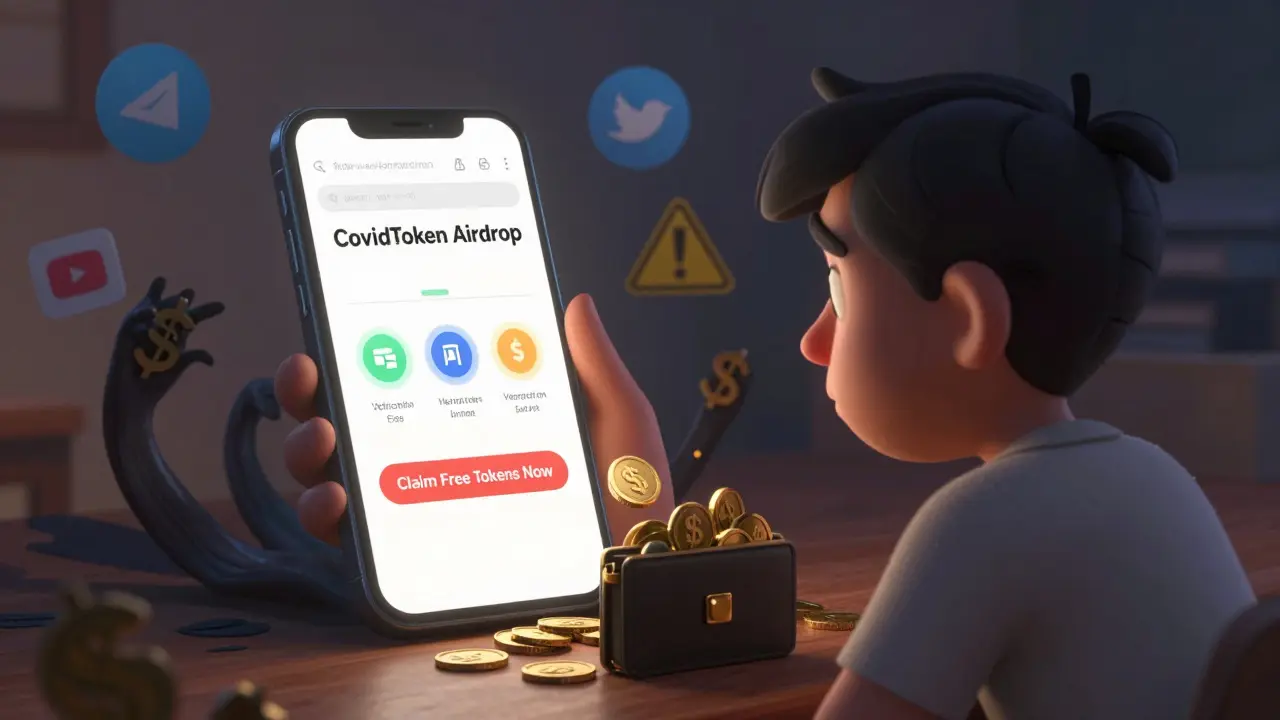
If you’ve seen ads or posts promising a free CovidToken airdrop, stop. Right now. This isn’t a legitimate project - it’s a scam, and it’s been circulating for years. There is no such thing as a real CovidToken airdrop. Not in 2024. Not in 2025. Not in 2026.
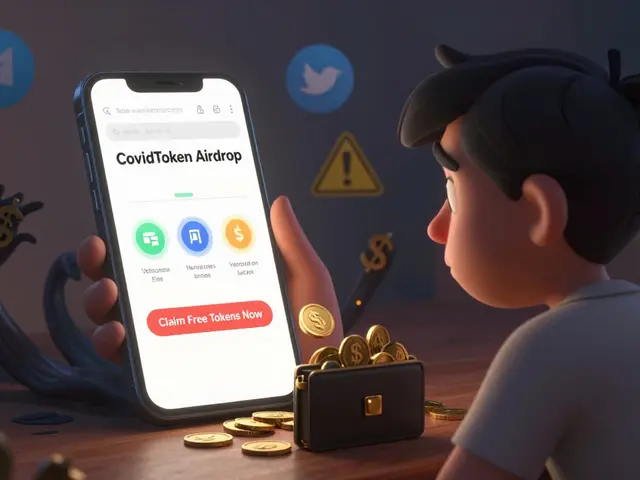
Let’s cut through the noise. You’re probably seeing this on Telegram, Twitter, or YouTube. Someone says, "Join now, get free tokens just for holding Bitcoin or Ethereum!" They show fake screenshots of wallets filled with CovidToken. They post links to websites that look official - white papers, team photos, even fake Twitter verification badges. But here’s the truth: CovidToken has never been listed on CoinGecko, CoinMarketCap, or any major blockchain explorer. No reputable airdrop tracker like Airdrops.io or TokenMetrics has ever mentioned it. Not once.
Why does this scam keep coming back? Because people are desperate. After the pandemic, many were looking for ways to recover financially. Scammers used that fear. They slapped "Covid" on a fake crypto project and claimed it was a "health initiative" or "pandemic relief token." It’s emotional manipulation, plain and simple. No government, no health organization, and no legitimate blockchain team would ever tie a cryptocurrency to a global health crisis like that. It’s unethical, illegal, and obviously fake.
How Crypto Airdrops Actually Work
Real airdrops don’t come from random DMs. They’re announced on official websites, verified social media accounts, and tracked by established platforms. For example, when Starknet is a a Layer 2 scaling solution for Ethereum that uses zero-knowledge proofs to increase transaction throughput did its airdrop in 2023, it was covered by every major crypto news site. They published exact dates, wallet snapshot times, and eligibility rules. You could check your wallet address on their official page. No guesswork.
Legit airdrops usually follow one of two paths:
- Holder-based snapshots: The project takes a snapshot of wallets holding a specific token - like Ethereum or a partner token - at a certain block height. If you held it then, you get tokens later. No action needed.
- Task-based airdrops: You do small tasks - join their Discord, follow their Twitter, share a post - and get rewarded. These are always transparent, time-bound, and never ask for your private key.
Notice what’s missing? No one asks you to send crypto first. No one says, "Pay a small gas fee to claim your free tokens." That’s the #1 red flag.
What Happens If You Fall for the CovidToken Scam
Let’s say you click the link. You connect your wallet. Maybe you even send a tiny amount of ETH to "unlock" your airdrop. What happens next?
- Your wallet gets drained. Scammers use malicious smart contracts that auto-transfer all your assets as soon as you sign a transaction.
- You’re added to a spam list. Your email or phone number gets sold to other scammers. Next thing you know, you’re getting 10 more fake airdrop offers a day.
- You lose trust in real crypto projects. That’s the real cost - it makes people afraid to try legitimate Web3 tools.
In 2024, the Crypto Scam Tracker reported over 2,100 fake airdrop scams. Many used pandemic-related names like "CovidCoin," "PandemicToken," or "VaxToken." All were shut down. All were scams. Zero returned funds.
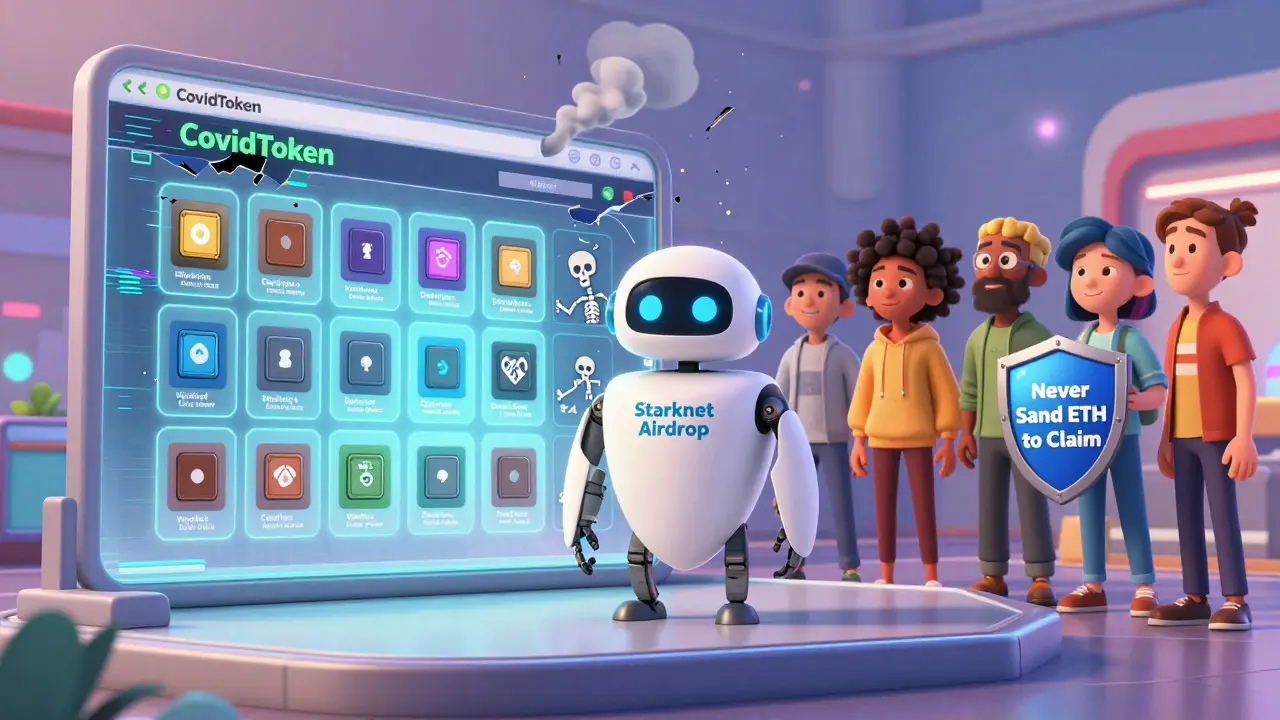
How to Spot a Fake Airdrop
Here’s your quick checklist:
- Is it on CoinGecko or CoinMarketCap? If not, it’s not real.
- Does the website have a .io, .com, or .org domain? Fake sites use weird domains like .xyz or .live.
- Are they asking for your private key? If yes, close the tab. Ever.
- Is there a whitepaper with technical details? Real projects explain how their blockchain works. Scams have one-page fluff.
- Do they have a verified Twitter or Telegram? Check the blue checkmark. Then check who else follows them. Real projects have thousands of real users.
Also, search for the project name + "scam". If you see even one article saying "don’t trust this," walk away.
Legit Airdrops to Watch in 2026
If you want real airdrops, here are some projects with track records:
- Starknet is a Layer 2 scaling solution for Ethereum that uses zero-knowledge proofs to increase transaction throughput - had a 2023 airdrop for early users.
- Monad is a high-performance Ethereum-compatible blockchain designed for scalability - announced a 2025 airdrop for testnet participants.
- Pump.fun is a platform for creating and trading meme coins on Solana - regularly rewards early community members.
- Hyperliquid is a decentralized perpetual exchange on Ethereum - gave out tokens to active traders in 2024.
These projects have public wallets, transparent timelines, and community forums. You can verify everything. No secrets. No pressure.
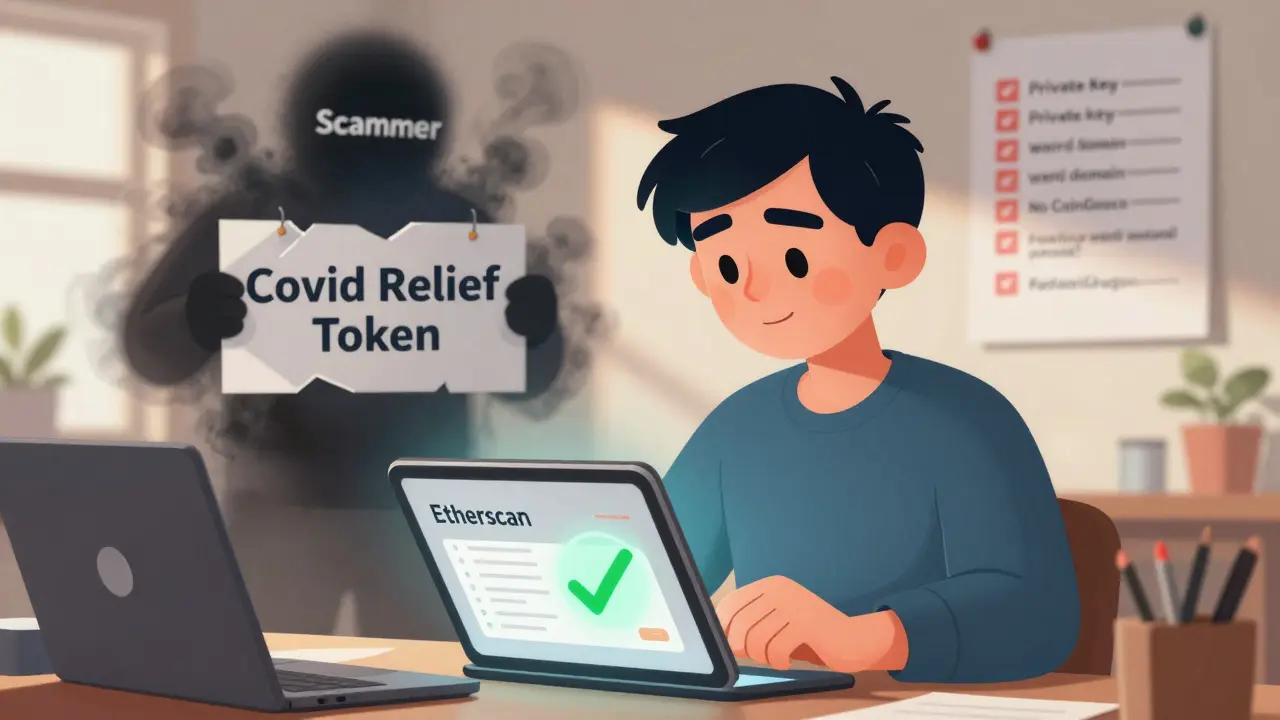
What to Do If You Already Got Scammed
If you sent crypto to a fake CovidToken site:
- Do NOT send more money. You won’t get it back.
- Disconnect your wallet from all dApps. Use a tool like Etherscan is a blockchain explorer for Ethereum that lets users view transactions and smart contracts to check if your wallet has been flagged.
- Change your wallet password and enable 2FA if you haven’t.
- Report the scam to your local financial authority. In New Zealand, that’s the Commerce Commission.
- Warn others. Post in your crypto groups. Scammers rely on silence.
There’s no recovery service for crypto scams. Once it’s gone, it’s gone. The only thing you can control now is stopping it from happening again.
Final Warning
Crypto is full of opportunity. But it’s also full of predators. The "CovidToken" airdrop is one of the oldest tricks in the book. It preys on trust, fear, and hope. Don’t let it work on you.
If you hear "free tokens" tied to health, crisis, or emergencies - it’s fake. Always. No exceptions.
Stick to projects you can verify. Use trusted platforms. Never sign anything you don’t understand. And if it sounds too good to be true? It is.
Is there a real CovidToken cryptocurrency?
No. There is no legitimate cryptocurrency called CovidToken. It has never been listed on CoinGecko, CoinMarketCap, or any blockchain explorer. All websites and social media accounts claiming to offer it are scams.
Can I get free tokens by joining a CovidToken Telegram group?
No. Any Telegram group promising free CovidToken airdrops is designed to steal your crypto. They’ll ask you to connect your wallet or send a small amount of ETH. That’s how they drain your funds. Never interact with these groups.
Why do scammers use "Covid" in fake crypto names?
Because during and after the pandemic, people were anxious about money, health, and security. Scammers exploit that emotional vulnerability by making fake projects sound like they’re helping - "Covid relief," "health tokens," etc. It’s manipulation, not innovation.
How do I check if an airdrop is real?
Check CoinGecko or CoinMarketCap for the project. Look for an official website with a .com or .io domain. Verify their Twitter and Telegram accounts through official links. Read their whitepaper - real projects explain their tech. If they ask for your private key or payment to claim tokens, it’s fake.
Are there any crypto airdrops related to health or pandemic recovery?
No legitimate crypto project has ever tied a token to pandemic recovery, health services, or medical aid. Any such claim is a scam. Real blockchain projects focus on technology, not emotional exploitation.
Comments
CovidToken? Bro that’s a 2020 relic. I got DM’d this last week on Discord. Thought it was a joke until I saw someone actually send 0.3 ETH to claim it. Then I watched their wallet get wiped in 2 seconds. Scammers are getting bolder.
Stop wasting time on this. It’s fake.
I’ve seen so many people fall for this, especially in India and Nigeria. They think it’s a government-backed relief token because of the pandemic. I’ve started making simple Reels explaining why it’s fake-no jargon, just screenshots of CoinGecko not listing it. The response has been wild. People are sharing them like crazy. We need more grassroots awareness. It’s not about crypto, it’s about basic digital literacy.
I’m tired of people treating crypto like a lottery. You don’t get free money just for existing. If it’s too easy, it’s a trap. And using "Covid" as bait? That’s not just scammy-it’s cruel.
Look, I get it. After the pandemic, everyone was scared. Rent was high, jobs were shaky, and suddenly you see "free crypto for surviving a global crisis"? Of course people click. But here’s the thing-real innovation doesn’t need emotional manipulation. Starknet didn’t say "join because of COVID," they said "here’s how ZK-rollups scale Ethereum." That’s the difference. We need to reward substance, not trauma.
LMAO CovidToken 😭 the fact that people still fall for this is peak human behavior. I’m not even mad, I’m just impressed by the sheer audacity. Someone’s making bank on this. I hope they buy a yacht with the ETH they stole from grandmas.
The real issue here isn’t the scam-it’s the systemic failure of crypto education. People aren’t lazy, they’re misinformed. They don’t know how to verify a project because no one taught them. The onboarding flow for Web3 is still garbage. If you want to stop scams, you need to build better UX-not just yell "it’s fake!" at people who’ve never seen a whitepaper.
If you’re new to crypto and you see "free tokens for holding ETH"-ask yourself: why would a project give away free value to people who did nothing? Real airdrops reward participation, not passive holding. And they never ask for your private key. Ever. I’ve helped 12 friends avoid this exact scam this month. Just say: "Check CoinGecko. If it’s not there, it’s not real." It’s that simple.
CovidToken? More like CIA-token. You think this is random? Nah. The same people who ran the 5G scam are behind this. They’re testing emotional triggers. Pandemic = fear. Fear = clicks. Clicks = wallets drained. It’s a psyop. And they’re using it to normalize surveillance. You’re not getting scammed-you’re being profiled.
I lost $800 to this in 2022. Still haven’t recovered. Now I just scroll past all airdrop posts. I can’t even look at Telegram anymore. It’s too triggering.
I mean... technically, if you define "CovidToken" as a metaphor for collective trauma monetization... then yeah, it exists. 😏
I love how this post breaks it down so clearly. I’m sharing this with my mom. She’s 68 and just started using crypto to send money to family overseas. She got a DM yesterday with this exact thing. I’m printing out your checklist and taping it to her fridge. Real talk: education saves money. And dignity.
THIS IS THE MOST IMPORTANT THING YOU’LL READ THIS YEAR. I SWEAR TO GOD. I SAW A 72-YEAR-OLD WOMAN SEND HER ENTIRE SOCIAL SECURITY CHECK TO THIS "CovidToken" SITE. SHE THOUGHT SHE WAS HELPING THE WORLD. I CRIED. WE NEED TO DO BETTER. WE NEED TO PROTECT THE VULNERABLE. NOT JUST SCOLD THEM.
The fact that this still circulates proves crypto culture is broken. We don’t educate. We meme. We don’t warn. We laugh. Then someone loses everything. And we just move on.
I’ve been in crypto since 2017. I’ve seen every scam. This one’s the most insidious because it preys on compassion. Don’t just ignore it. Share this. Tag someone who’s still active in crypto groups. You might save a wallet.
While the intent of this post is commendable, I must note that the conflation of emotional vulnerability with financial naivety risks stigmatizing those who are most at risk. A more constructive approach would be to provide accessible educational resources rather than merely exposing the scam. Empathy without action is performative.
I’ve been telling people this for years. No government ever issued a crypto airdrop. Ever. But people still believe it. It’s wild. I just say: "If it was real, wouldn’t the WHO have announced it?" They always pause. Then they laugh. Then they delete the DM.