
You’ve probably seen the buzz. Social media feeds are flooded with claims about an ECIO a cryptocurrency project claiming to partner with CoinMarketCap for a massive pre-game launch campaign. The promise is simple: participate in some tasks, and you’ll get free tokens that could be worth a fortune when they list on major exchanges. It sounds too good to pass up, especially if you’ve been burned by missed opportunities in the past. But here is the hard truth that most promoters won’t tell you right away: as of August 2026, there is zero official evidence that this campaign exists.
If you are looking for specific details on how to claim your ECIO rewards, you are likely staring at a blank screen on legitimate tracking sites. That silence is loud. In the world of crypto, legitimacy usually comes with noise-official announcements, verified social media accounts, and clear documentation. The absence of these signals for the ECIO CoinMarketCap partnership suggests one of two things: either the project is still in very early stages, or it is a sophisticated scam designed to steal your time and data.
The Missing Link: Why You Can't Find Official Details
To understand why the ECIO airdrop is currently unverified and potentially non-existent is so frustrating, you have to look at where legitimate projects announce their campaigns. CoinMarketCap is the leading cryptocurrency data aggregator, providing real-time prices, market caps, and volume information for thousands of digital assets typically hosts its own dedicated section for current and upcoming airdrops. If a project like Ecio were truly partnering with them for a "Pre-Game Launch," it would be front and center on their platform.
Right now, if you check the CoinMarketCap airdrop page, you will see empty slots. No active campaigns. No upcoming events listed under that name. This isn’t a glitch; it’s a feature of their curation process. CMC vets projects heavily before giving them prime real estate. When a campaign disappears from search results and aggregation platforms like Airdrops.io a trusted platform for verifying and listing legitimate cryptocurrency airdrops, it raises a red flag. It means the project hasn’t gone through the standard verification channels that protect users from rug pulls.
Scammers know this. They create fake landing pages that look identical to CoinMarketCap or other reputable sites. They use terms like "Pre-Game Launch" to create urgency, implying that the token is about to explode in value once the "game" starts. But without a verifiable smart contract address or an official announcement from CoinMarketCap’s verified Twitter account, you are walking into a blind spot.
How Modern Crypto Airdrops Actually Work in 2026
The landscape has changed drastically since the early days of simple email giveaways. Today, legitimate airdrops are complex, programmable events. Projects use advanced smart contracts to distribute tokens based on actual usage, not just clicking buttons. For example, a real airdrop might require you to have used a specific Layer 2 network, swapped tokens on a decentralized exchange, or held a certain NFT.
Here is what a genuine high-value airdrop looks like in 2026:
- Behavioral Verification: Instead of just following a Telegram channel, you need to prove you interacted with the protocol. This often involves using Zero-Knowledge Proofs (ZKPs) cryptographic methods that allow one party to prove to another that a statement is true without revealing any information beyond the validity of the statement itself to verify your activity while keeping your identity private.
- Time-Locked Distributions: Tokens aren’t dumped all at once. They vest over months or years to ensure participants are interested in the long-term health of the project, not just quick profits.
- Cross-Protocol Collaboration: Legitimate partners like MetaMask the popular browser extension and mobile wallet for managing Ethereum-based cryptocurrencies or LayerZero an omnichain interoperability protocol that enables cross-chain messaging announce partnerships weeks in advance via multiple verified channels.
The ECIO campaign lacks these structural elements. There is no whitepaper detailing the tokenomics. There is no GitHub repository showing the code for the distribution mechanism. Without these, you cannot verify if the tokens you are promised even exist.
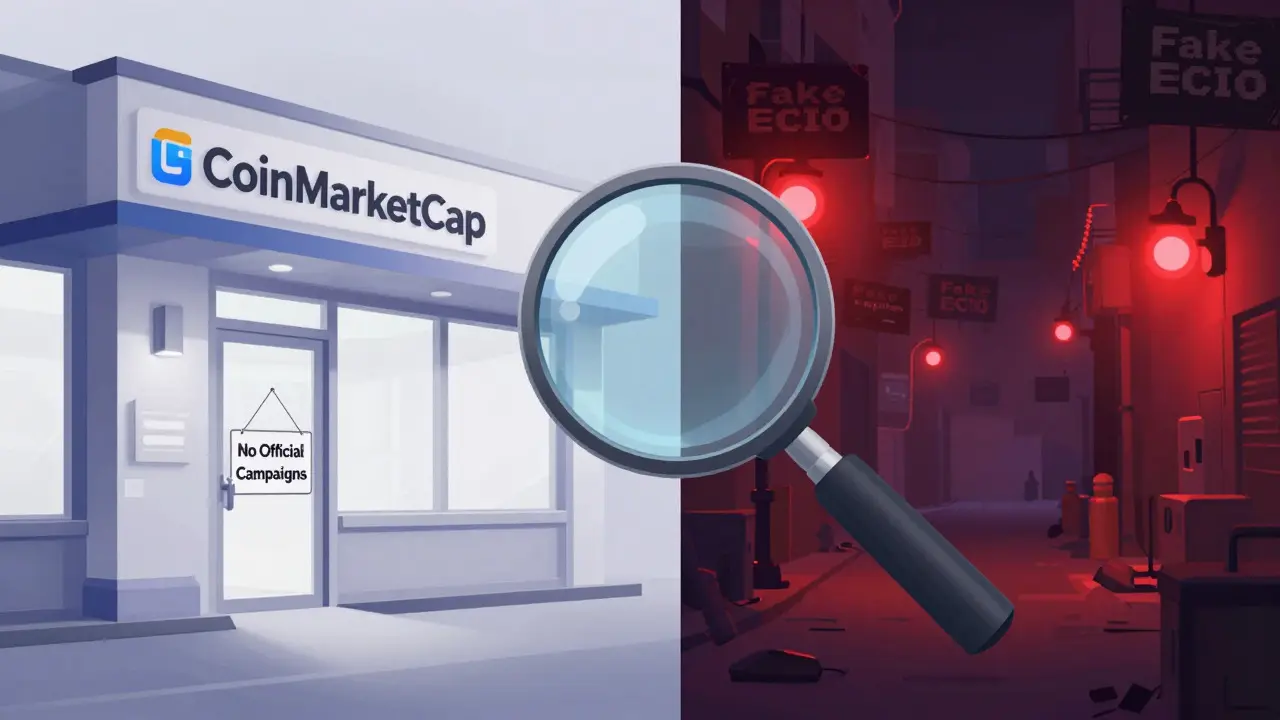
Red Flags: Spotting the Fake "Pre-Game" Campaigns
If you are determined to investigate ECIO further, you need to act like a detective. Scammers rely on your excitement overriding your caution. Here are the specific signs that the ECIO CoinMarketCap link is likely fraudulent:
| Feature | Legitimate Airdrop (e.g., zkSync, Renzo) | Suspicious Campaign (e.g., Unverified ECIO) |
|---|---|---|
| Official Announcement | Posted on verified Twitter/X, Discord, and website blogs | Only found via random DMs, Telegram groups, or SEO-spam articles |
| Verification Platform | Listed on CoinMarketCap, Airdrops.io, or DeFi Llama | Missing from all major aggregators; uses custom, unknown landing pages |
| Smart Contract | Audited by firms like CertiK or OpenZeppelin; code is public | No contract address provided, or contract is unverified on Etherscan/Solscan |
| Task Requirements | On-chain interactions (swaps, bridges, staking) | Off-chain tasks only (follow, join group, fill out survey) |
| Wallet Connection | Read-only connection to check eligibility | Asks for signature approvals or seed phrase immediately |
Notice the pattern? Legitimate projects want you to use their technology. Scammers want your personal data. If the ECIO site asks you to connect your wallet and sign a transaction that costs gas but gives you nothing immediate, pause. Even worse, if it asks for your seed phrase or recovery phrase, close the tab instantly. No legitimate airdrop ever needs your seed phrase.
The Risk of "Sybil" Attacks and Wasted Gas Fees
Even if ECIO turns out to be real, participating in vague "pre-game" campaigns carries hidden costs. Many modern airdrops implement anti-Sybil measures. A Sybil attack occurs when one user creates hundreds of fake wallets to farm more tokens. To combat this, projects analyze your on-chain history.
If you spend money bridging ETH to obscure networks or swapping tokens on low-volume decentralized exchanges just to qualify for a rumored airdrop, you might burn $50-$100 in gas fees. If the project later decides your activity was "bot-like" or insufficient, you get nothing. This is known as "airdrop farming fatigue." In 2026, projects are smarter. They reward organic users, not farmers. Without clear criteria from Ecio, you are gambling your gas fees on a hope rather than a strategy.
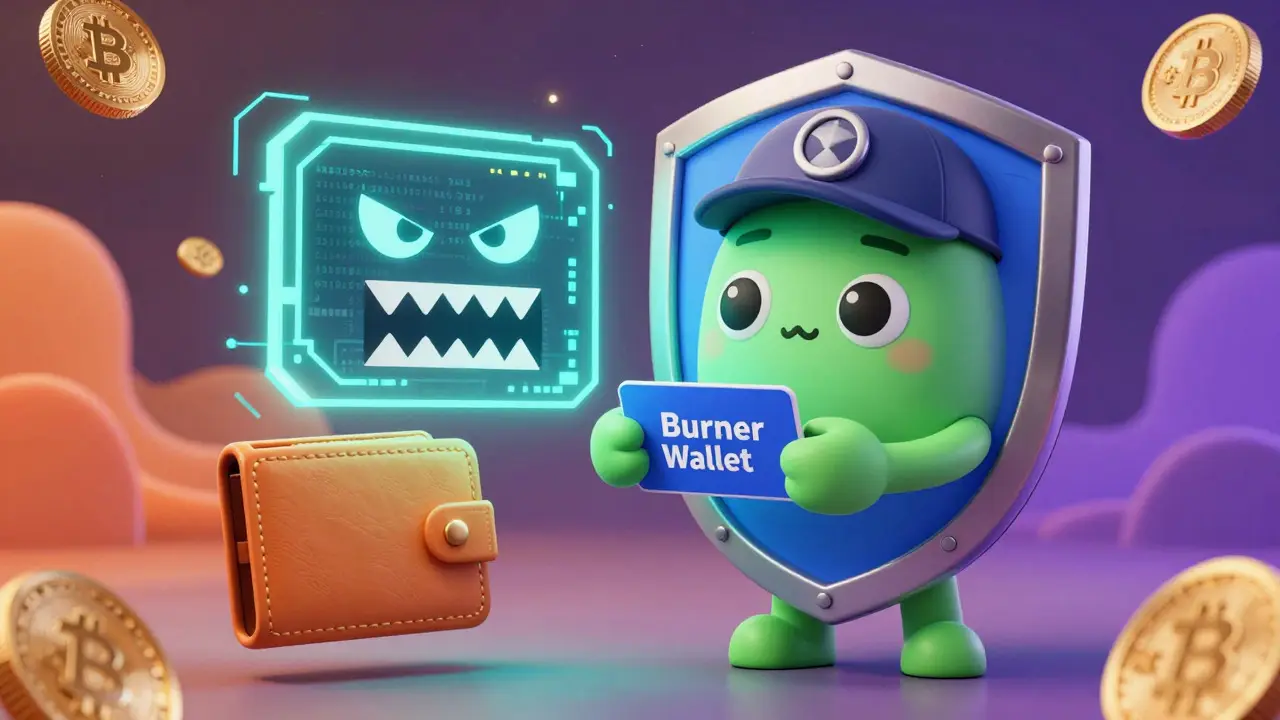
Furthermore, interacting with unverified contracts exposes you to security risks. A malicious contract can drain your wallet if you approve unlimited spending limits. Always use a burner wallet-a separate wallet with minimal funds-for any interaction with new or unverified projects. Never use your main holding wallet for speculative airdrop hunting.
What Should You Do Right Now?
Your best move is patience and verification. Do not rush to click links in Telegram messages or Discord chats promising "guaranteed" ECIO tokens. Here is a step-by-step approach to stay safe:
- Check Primary Sources: Go directly to coinmarketcap.com/airdrops. If it’s not there, it’s not officially recognized by them yet.
- Verify Social Handles: Look for the official Ecio team on X (Twitter). Check if their account is verified (blue checkmark) and if they have posted about the CoinMarketCap partnership. If the only mentions are from small accounts with few followers, it’s likely a rumor.
- Search Community Sentiment: Visit Reddit’s r/CryptoCurrency or specialized Discord servers. Search for "ECIO scam" or "ECIO review." Real users often expose fakes faster than official bodies can.
- Wait for Token Listing: Legitimate tokens eventually list on exchanges like Binance, Coinbase, or Kraken. Until you see ECIO trading on a major exchange with a confirmed ticker symbol, treat it as theoretical.
The crypto market is full of noise. Separating signal from noise is the skill that separates profitable investors from victims. Just because a campaign has a catchy name like "Pre-Game Launch" doesn’t mean it’s worth your attention. Stick to the facts, verify every link, and keep your seed phrase offline.
Frequently Asked Questions
Is the ECIO CoinMarketCap airdrop real?
As of August 2026, there is no official confirmation from CoinMarketCap regarding an ECIO partnership. The campaign does not appear on CoinMarketCap's official airdrop page or other major verification platforms like Airdrops.io. Treat it with extreme caution until official documentation is released by both parties.
How do I verify if a crypto airdrop is legitimate?
Check three things: 1) Is it listed on reputable aggregators like CoinMarketCap or DeFi Llama? 2) Has the project announced it on their verified social media channels (Twitter/X, Discord)? 3) Is there an audited smart contract available on block explorers like Etherscan? If any of these are missing, it is likely a scam.
What is a "Pre-Game Launch" in crypto?
It is a marketing term often used by projects to describe the phase before their token officially trades on exchanges. During this time, they may offer incentives (airdrops) to build a community. However, scammers frequently misuse this term to create false urgency and trick users into connecting their wallets to malicious sites.
Can CoinMarketCap host fake airdrops?
CoinMarketCap itself rarely hosts fake airdrops due to strict vetting processes. However, scammers often create fake websites that look exactly like CoinMarketCap. Always check the URL carefully. The official site is coinmarketcap.com. If the domain is slightly different (e.g., coinmarketcap-airdrop.com), it is a phishing site.
Should I connect my wallet to claim ECIO tokens?
Not yet. Since the ECIO campaign is unverified, connecting your primary wallet poses a security risk. If you must participate, use a "burner wallet" with minimal funds. Never sign transactions that request unlimited approval limits unless you fully understand the contract code.
What are the biggest risks of participating in unverified airdrops?
The main risks include losing money on gas fees for interactions that yield no reward, having your wallet drained by malicious smart contracts, and exposing your personal data to phishing attacks. Additionally, time spent on fake campaigns is time lost from researching legitimate opportunities.
Where can I find legitimate upcoming airdrops in 2026?
Reputable sources include CoinMarketCap's official airdrop section, Airdrops.io, and DefiLlama. These platforms verify projects before listing them. Additionally, following official announcements from established protocols like MetaMask, LayerZero, or zkSync on their verified social media channels is a reliable way to stay updated.

Comments
YES! Exactly what I needed to hear today!! You have to stay sharp out there!!! It is amazing how many people still fall for these obvious traps!!! Keep your head up and keep verifying everything!!!
I mean, who actually believes in free money anymore? 🙄 It’s like finding a winning lottery ticket on the sidewalk. Suspicious much? 😂 But seriously, good write-up. Saved me from looking like an idiot again.
You can do it! Stay positive and keep learning. The crypto journey is tough but you will get better at spotting scams. Just take a deep breath and check the links. You got this!
It’s fascinating how the scammers mimic the UI of legitimate platforms down to the pixel. They put more effort into faking a landing page than most startups do into building their actual product. I’ve seen three different 'ECIO' sites in the last week alone, each with slightly different branding but the same phishing goal. Always inspect the source code if you’re curious; they rarely bother hiding the malicious scripts well.
its all controlled by the central banks anyway why bother checking just trust the narrative or dont the elites want you distracted by these micro scams while they print trillions smart contracts are just another layer of obfuscation for the masses
Bummer. Another one bites the dust. 😞
There is a profound irony in the concept of 'Pre-Game Launch.' It suggests anticipation, excitement, a buildup to something meaningful. Yet, in this context, it feels hollow, a shell designed to extract value without providing substance. We must ask ourselves: what is the true nature of participation in these digital rituals? Are we players, or merely pawns in a larger game of deception?
Hey there! Great reminder for us all. Let's keep supporting each other in this space. Knowledge is power, and sharing info like this helps everyone stay safe. Have a wonderful day!
I just sit back and watch the chaos unfold. It’s like a reality TV show where nobody wins except the producers. These airdrop hunters are running around like headless chickens, clicking every link they see. Meanwhile, the smart money is just holding blue chips. Funny times.
the paradigm shift here is subtle yet devastating to the uninitiated mind we must deconstruct the very notion of 'value' in these pre-market scenarios because without liquidity there is no price only hope which is a currency of the desperate
IT IS OBVIOUS THAT THIS IS A SETUP. THE GOVERNMENT WANTS YOU TO LOSE MONEY SO YOU BUY THEIR BONDS. ALWAYS SUSPECT EVERYTHING. CHECK YOUR NEIGHBORS. THEY ARE WATCHING.
One might argue that the absence of evidence is not necessarily evidence of absence, but in the realm of cryptocurrency, silence is indeed deafening. The lack of verifiable smart contract addresses is a significant oversight that warrants further investigation before any financial commitment is made.
Oh, please. Everyone knows how this works. It’s not rocket science. If it’s not on CoinMarketCap, it doesn’t exist. Stop pretending you’re smarter than the market. 😒
moral decay is evident when people chase free tokens instead of working hard the system rewards the lazy and punishes the diligent its a conspiracy to keep the poor stupid and the rich richer dont trust the media they lie
honestly this whole situation is just exhausting isn't it? i feel like we are constantly being tested and it makes me so sad that people are still falling for it. you really need to protect your energy darling. don't let them drain you.
Let's try to keep the peace here. Everyone has their own journey. Some learn the hard way, others read articles like this. No judgment, just support. We are all in this together. Take care of yourselves.
This is such a crucial point about security! Please, everyone, listen closely. Your seed phrase is your lifeblood. Never, ever share it. It breaks my heart to see people lose their savings because they trusted a stranger online. Stay strong and stay safe!
Actually, I think you're missing the bigger picture here. Sure, it looks like a scam, but maybe it's a testnet? Maybe they are testing user engagement metrics before the real launch? People are too quick to jump to conclusions without considering alternative possibilities. I've seen projects start weirdly and end up huge. Don't be so closed-minded.
just wanted to say thx for the heads up. almost clicked that link lol. typos happen but glad i checked here first.
Well said. It is important to remain vigilant. The information provided here is accurate and helpful. Let us continue to educate ourselves and our communities to prevent future losses. Good work.
yaar, this is so common in India too. Everyone wants to get rich quick. But patience is key. Check the whitepaper, check the team. If its not clear, stay away. Good luck everyone! 🤞
the existential dread of the crypto market is palpable isnt it? we dance with shadows hoping for light. beautiful tragedy really. typo alert but who cares meaning matters more than form sometimes right?