
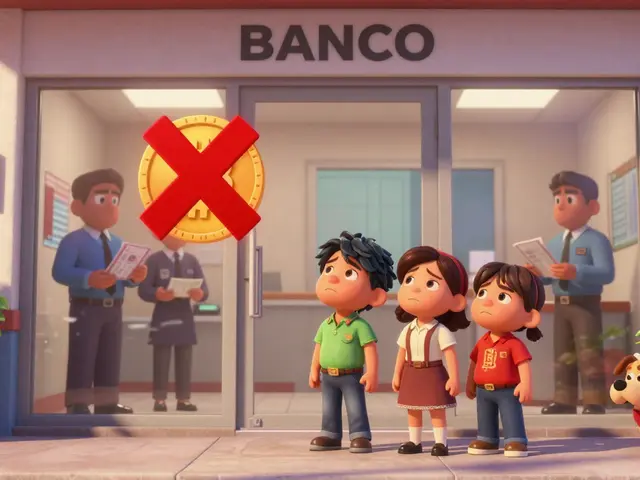
When you walk into a bank in Mexico, you can deposit pesos, withdraw cash, or transfer money internationally. But you cannot buy Bitcoin, sell Ethereum, or store crypto in your savings account - not even through your bank’s app. That’s not a glitch. It’s the law.
Mexico’s banking system has one of the strictest stances on cryptocurrency in Latin America. While crypto trading is legal and growing fast, the banks themselves are locked out. Why? Because the central bank, Banxico, doesn’t trust them with it. And that’s just the start.
How Mexico’s Fintech Law Changed Everything
In 2018, Mexico passed its Fintech Law - a big move meant to bring digital finance into the open. It didn’t ban crypto. It didn’t even try to stop it. Instead, it gave virtual assets a legal label: not money. They’re called virtual assets, not currency. That small wording shift changed everything.
It means Bitcoin isn’t legal tender. You can’t pay for tacos with it - at least not officially. But you can trade it. You can mine it. You can hold it. The law didn’t say no. It just said: don’t treat it like pesos.
The real power came from who got to regulate it. Three agencies now split the job:
- Banxico (Bank of Mexico) - controls how banks and payment platforms handle crypto
- CNBV (National Banking and Securities Commission) - licenses fintech companies
- Ministry of Finance - handles taxes and anti-money laundering
But here’s the catch: none of them let banks touch crypto directly.
The Banxico Rule That Blocks Banks
Rule 4/2019 is the invisible wall between Mexican banks and cryptocurrency. It says: no custody, no exchange, no transmission of virtual assets. That means no wallet services. No crypto trading desks. No crypto ATMs inside branches. Even internal use - like settling payments between banks using Bitcoin - needs special permission. And guess what? Banxico hasn’t granted a single one.
So if you’re a customer of BBVA, Banorte, or Santander, your bank won’t help you buy Dogecoin. If you try to send crypto to a friend through your bank’s app, it’ll get blocked. Not because of tech limits - because of legal ones.
Some fintech apps have found workarounds. Platforms like Bitso or Koinly operate as independent fintech firms, not banks. They’re licensed by CNBV and follow AML rules. But they can’t link directly to your bank account for crypto purchases. You have to deposit pesos first, then buy crypto separately - a two-step process that slows things down and keeps crypto outside the traditional system.
Why Lending With Crypto Is a Grey Zone
Want to borrow money using your Bitcoin as collateral? There are companies in Mexico doing it. But they’re not regulated. Not by Banxico. Not by CNBV.
Under the Anti-Money Laundering Law, any business offering loans - even if it’s just crypto-backed - must identify customers and report big transactions to the Ministry of Finance. So yes, these lenders have to follow AML rules. But they don’t need a license. They don’t get oversight. They don’t have to hold capital reserves. If they go bust, you lose your money. No safety net.
Most of these platforms include disclaimers like: "This service is not supervised by any financial authority. You assume all risks." It’s not illegal. But it’s risky. And it’s growing.
There’s no official data on how many crypto loans are made in Mexico. But reports from local fintech groups suggest thousands of users are already using these services - especially young people who can’t get traditional credit.

What About Stablecoins and NFTs?
Stablecoins? NFTs? Utility tokens? Mexico doesn’t have rules for any of them.
A stablecoin like USDC? It’s treated like any other virtual asset - no special treatment, even if it’s backed by dollars. NFTs? They’re just digital collectibles under the law. No copyright protection. No consumer rights. Just a file on a blockchain.
That’s a problem. If someone sells an NFT as a ticket to a concert and the event gets canceled, there’s no legal path to a refund. If a stablecoin loses its peg, the buyer has no recourse. The law doesn’t see these as financial products. So they’re not protected like stocks, bonds, or even savings accounts.
Even worse - no one’s even trying to fix this. Unlike the U.S. or EU, Mexico hasn’t started classifying different types of tokens. That means regulators are flying blind.
Taxes: No Special Rules, Just Old Laws
When you sell Bitcoin for profit in Mexico, you pay taxes. But not because of a crypto tax law. You pay because of the general income tax code.
In 2021, Mexico’s tax office confirmed: crypto gains are treated like selling goods. If you bought ETH for $1,000 and sold it for $3,000, you owe tax on $2,000. Simple. But messy.
There’s no official form for crypto. No guidance on how to track trades across exchanges. No clear rules on when you owe tax - every time you swap one coin for another? Only when you cash out? No one knows. Taxpayers are left to guess.
And here’s the kicker: the Ministry of Finance once said crypto has "no intrinsic value." That statement still circulates - even though it contradicts how people actually use crypto. It’s outdated. But it’s still official.

The CBDC That’s Coming
While banks are blocked from crypto, Banxico is building its own digital currency - Project Agorá. It’s not Bitcoin. It’s not Ethereum. It’s a central bank digital currency (CBDC), designed to replace cash and reach people without bank accounts.
By the end of 2025, Mexico plans to launch a digital peso. It won’t be decentralized. It won’t be traded on exchanges. But it will be usable on smartphones, even without internet. That’s the goal: financial inclusion without crypto.
This move tells you everything. Mexico doesn’t want private crypto in its banking system. But it does want digital money. So it’s making its own - under full control.
What’s Next for Mexico’s Crypto Scene?
Right now, crypto in Mexico is like a garden growing outside the fence. The banks are locked inside. The regulators watch from the gate. But outside, people are planting seeds - trading, lending, building apps - without permission.
There’s no official timeline for new laws. But Banxico is talking about updating the Fintech Law. Experts expect more clarity on token types, stablecoins, and lending by 2027. Until then, the system stays split: regulated banks on one side, wild west crypto on the other.
For users, that means choice - but also risk. You can use Bitso to trade crypto. You can use a lending platform to borrow against your holdings. But you can’t do it through your bank. And if something goes wrong? You’re on your own.
It’s not a ban. It’s a barrier. And it’s working - just not the way most people expected.
Can I buy Bitcoin through my Mexican bank?
No. Mexican banks are legally prohibited from offering cryptocurrency services like buying, selling, storing, or transferring crypto. Even if your bank has a crypto-related app or feature, it’s either fake or operating outside the law. To buy Bitcoin in Mexico, you must use a licensed fintech platform like Bitso, Koinly, or Binance Mexico - and fund it with a bank transfer, not through direct integration.
Is crypto trading legal in Mexico?
Yes. Trading cryptocurrency is legal in Mexico. You can buy, sell, and hold Bitcoin, Ethereum, and other digital assets. The Fintech Law of 2018 recognizes virtual assets as legal for use as payment - just not as legal tender. You just can’t do it through your bank. All major exchanges operating in Mexico are registered with the CNBV and follow AML rules, making them compliant and safe.
Do I have to pay taxes on crypto profits in Mexico?
Yes. The Mexican tax authority treats crypto gains as income from the sale of goods. If you profit from selling Bitcoin or swapping tokens, you owe income tax on the gain. There’s no special crypto tax form, so you report it under general income. The Ministry of Finance says crypto has "no intrinsic value," but that doesn’t change your tax obligation. Keep records of all trades - you’ll need them if audited.
Can I get a crypto-backed loan in Mexico?
Yes - but not from a bank. Several private platforms offer crypto-backed loans, but they operate in a legal grey area. They’re not supervised by Banxico or CNBV. You must identify yourself and report large transactions to the Ministry of Finance under AML rules. These lenders must include disclaimers stating they’re unregulated. If they default, you lose your collateral. There’s no government protection.
What’s the difference between a CBDC and cryptocurrency in Mexico?
A CBDC - like Banxico’s Project Agorá - is digital money issued and controlled by the central bank. It’s not decentralized. It’s not traded on exchanges. It’s designed to replace cash and reach unbanked people. Cryptocurrency, like Bitcoin, is decentralized, volatile, and privately issued. Mexico wants the benefits of digital money - fast payments, financial inclusion - but without the risks of private crypto. That’s why they’re building their own.
Comments
This is actually one of the clearest breakdowns I've seen on Mexico's crypto stance. The distinction between legal use and institutional restriction is crucial. Most people think it's a ban, but it's really a firewall. Banxico's move makes sense if you're trying to prevent financial instability, even if it stifles innovation. The fact that fintechs can operate independently but can't integrate with banks is a smart middle ground.
I love how Mexico is building its own digital peso instead of letting private crypto take over. It's not about controlling people-it's about protecting them. Too many countries let crypto run wild and then panic when people lose everything. This is responsible innovation.
man i live in india and we got the same vibe but worse like we cant even use binance anymore and banks freeze ur account if u even mention crypto lol
Oh please. This is just state control dressed up as 'financial stability.' You think people don't know how to handle risk? They do. And guess what? The people who actually use crypto are the ones who got shut out of the banking system. This isn't protection-it's exclusion. And the CBDC? That's just surveillance with a shiny interface.
The regulatory framework described here is remarkably thoughtful. By separating custody from trading, Mexico has created a space where innovation can thrive without destabilizing the core financial infrastructure. This is a model other emerging economies should study closely. The two-step deposit process, while inconvenient, ensures accountability and reduces systemic risk.
Wait... so... if you can't use your bank account to buy crypto... and you can't get a crypto loan... and stablecoins aren't regulated... and NFTs have no legal standing... and taxes are just 'guess and hope'... then why does this even exist? It's not a system. It's a glitch with paperwork.
They say 'no intrinsic value'?! That's the dumbest thing I've read all year. Bitcoin isn't backed by gold? Neither is the dollar. It's backed by network effects, scarcity, and trust. The Ministry of Finance is living in 2008. This isn't policy-it's ignorance with a badge.
i think the cbdc is smart but i also think people should be able to use bitcoin if they want. its not like the bank is gonna collapse if someone buys eth. just sayin'
The real story here isn't the ban-it's the workaround. People are using Bitso, lending platforms, peer-to-peer trades. The system is adapting. That’s how innovation works: it doesn’t wait for permission. The banks are stuck in analog bureaucracy while the rest of the world moves. This isn’t regulation. It’s a delay tactic.
honestly i just find it funny how everyone acts like this is some radical stance. most countries have some version of this. even the u.s. doesn't let banks trade crypto directly. it's not unique. just... more honest about it.
No crypto in banks. Got it.
i had no idea stablecoins were treated like digital collectibles in mexico. that’s wild. so if usdc crashes, you’re just out of luck? no recourse? that’s insane. but also kinda makes sense if you think about it-why would they protect something they don’t recognize as money?
I think the real win here is that Mexico didn’t panic. They didn’t ban crypto. They didn’t try to force it into old systems. They built a fence around the banking sector and let crypto grow outside it. That’s actually mature. It’s not perfect, but it’s thoughtful. The CBDC is the bridge. Let’s see how it works before we rush to change anything.