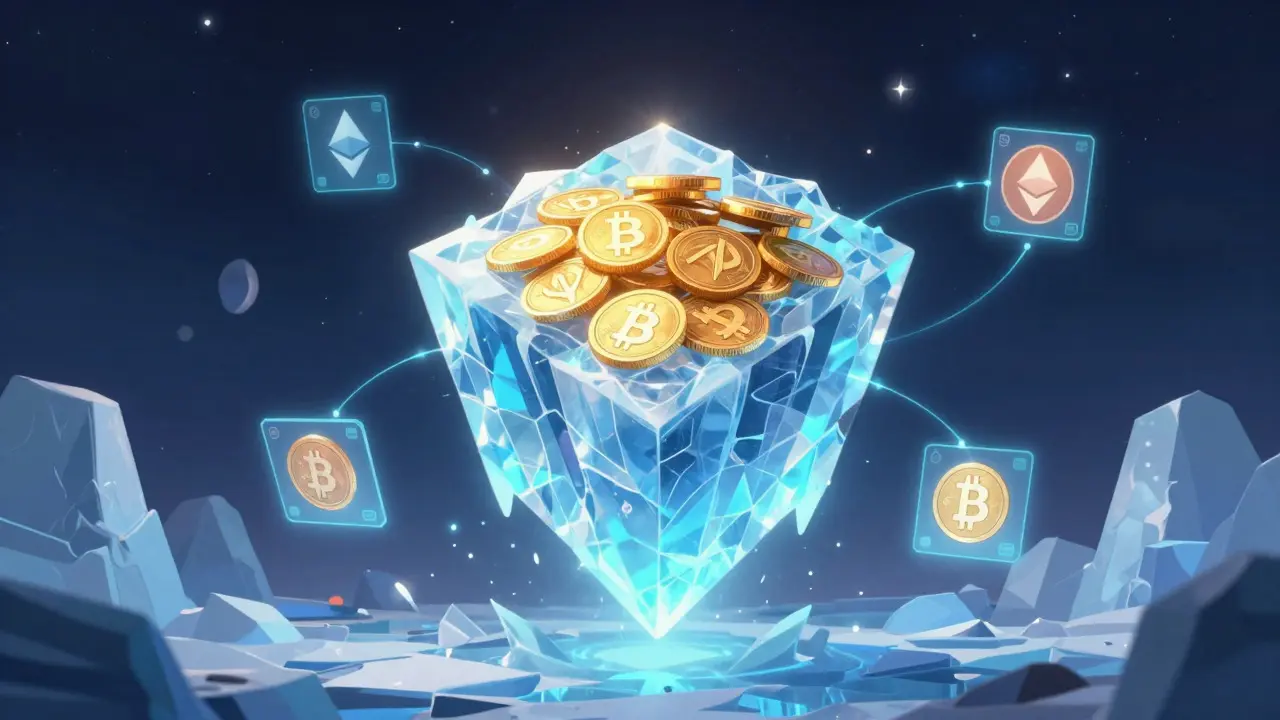
The world of cryptocurrency is full of promises, but few events capture attention like the Midnight Network, a privacy-focused sidechain built on the Cardano blockchain. Its native utility token, NIGHT, was distributed in one of the most ambitious airdrops in recent history. Known as the "Glacier Drop," this initiative aimed to distribute 24 billion NIGHT tokens to eligible holders across eight major blockchain ecosystems. If you are wondering whether you missed out or how this event reshapes the landscape for privacy coins, you have come to the right place.
Unlike typical airdrops that reward social media engagement or arbitrary point systems, the Glacier Drop targeted genuine holders. It required users to hold at least $100 worth of cryptocurrency in their self-custody wallets at a specific snapshot time. This approach filtered out bots and dust accounts while rewarding long-term believers in digital assets. However, with the primary claiming window having closed, many participants are left asking critical questions about eligibility, vesting schedules, and what happens next for unclaimed tokens.
What Is Midnight Network?
To understand the significance of the NIGHT token airdrop, we must first look at the project itself. Midnight Network is not just another blockchain; it is a solution designed to address the fundamental tension between transparency and privacy. Traditional blockchains like Bitcoin and Ethereum offer complete transparency, which can be problematic for businesses and individuals who need to protect sensitive data. On the other hand, fully anonymous chains often struggle with regulatory compliance and usability.
Midnight bridges this gap by introducing "rational privacy." This concept allows users to maintain control over their data while providing selective disclosure capabilities when necessary. The network employs advanced cryptographic tools merged with real-world usability, making it suitable for enterprise applications, decentralized finance (DeFi), and personal use. Charles Hoskinson, the founder of Cardano, developed Midnight as a privacy-centric sidechain, ensuring deep integration with the Cardano ecosystem while offering unique features that enhance user protection.
The dual-token model further distinguishes Midnight from its competitors. While NIGHT serves as the native utility token for governance and participation, DUST functions as the network resource used to pay for transaction fees. This separation aims to stabilize costs and encourage sustainable economic behavior within the network. By separating utility from fee payment, Midnight seeks to create a more resilient ecosystem where value accrues to active participants rather than speculators.
Glacier Drop: How Eligibility Was Determined
The Glacier Drop was structured to reward holders across multiple blockchains, reflecting Midnight's cross-chain ambitions. Eligibility was determined by a snapshot taken on June 11, 2025, at a random, undisclosed timestamp to prevent gaming the system. To qualify, users needed to hold at least $100 worth of cryptocurrency in the native asset of any supported chain at that exact moment. This dollar-denominated threshold ensured fairness across different asset classes, regardless of market price fluctuations.
Eight major blockchain networks were included in the snapshot: Bitcoin (BTC), Ethereum (ETH), Ripple (XRP), Solana (SOL), Avalanche (AVAX), BNB Chain (BNB), Brave (BAT), and Cardano (ADA). The distribution followed a weighted allocation structure, with 50% of the total supply (12 billion NIGHT tokens) reserved exclusively for Cardano holders. This preferential treatment acknowledged Midnight's technical roots as a Cardano sidechain and incentivized the existing ADA community to become early adopters.
Bitcoin holders received 20% of the allocation, while the remaining 30% was shared proportionally among holders of ETH, XRP, SOL, AVAX, BNB, and BAT based on the US-dollar value of their holdings. This strategy allowed Midnight to bootstrap a decentralized privacy network by engaging communities across diverse ecosystems. Importantly, addresses flagged on OFAC's SDN list were explicitly excluded to ensure compliance with sanctions regulations and mitigate Sybil attacks.
| Blockchain Network | Allocation Percentage | Tokens Distributed |
|---|---|---|
| Cardano (ADA) | 50% | 12 Billion |
| Bitcoin (BTC) | 20% | 4.8 Billion |
| Ethereum (ETH) | Part of 30% | Proportional |
| Ripple (XRP) | Part of 30% | Proportional |
| Solana (SOL) | Part of 30% | Proportional |
| Avalanche (AVAX) | Part of 30% | Proportional |
| BNB Chain (BNB) | Part of 30% | Proportional |
| Brave (BAT) | Part of 30% | Proportional |
Claiming Process and Deadlines
The claiming process for the Glacier Drop required two cryptographic proofs and ran through a 60-day window that opened in July-August 2025, with a strict deadline of October 4, 2025. Users had to connect their wallet to the official claim portal at midnight.gd or midnight.network and provide a fresh, unused Cardano wallet address to receive the tokens. This requirement meant that even if you held assets on Ethereum or Bitcoin, you needed to engage with the Cardano ecosystem to claim your NIGHT tokens.
The first proof involved signing a message to demonstrate custody without moving funds, ensuring that only legitimate holders who controlled their private keys could participate. The second step required supplying a new Cardano destination address for token receipt. This two-step verification automatically disqualified custodial exchange accounts unless the custodian specifically chose to claim on behalf of users-a scenario most exchanges did not implement due to operational complexity.
Given the current date of August 7, 2026, the primary claiming window has long since closed. Eligible users who failed to complete the process by October 4, 2025, missed the initial distribution opportunity. However, this does not mean all hope is lost. Unclaimed tokens roll into subsequent phases, creating cascading recovery mechanisms that extend participation opportunities beyond the initial claim window.

Vesting Schedule and Token Unlock
One of the most distinctive features of the NIGHT token airdrop is its sophisticated vesting schedule. Designed to prevent speculative dumping and encourage long-term network participation, claimed tokens are initially locked via a Cardano smart contract. They unlock in four equal phases over a 360-day period, with 25% of the total allocation becoming tradable every 90 days.
This "gradual thawing" mechanism blunts opportunistic selling pressure and incentivizes early participation in block production, governance, and application building. The unlock events occur at randomized times within the 360-day window after Midnight mainnet launches, preventing coordinated selling events. This extended vesting represents a departure from typical airdrops that provide immediate liquidity, treating the distribution instead as a long-term community investment program.
For example, if you claimed 10,000 NIGHT tokens, you would receive 2,500 tokens immediately upon the first unlock phase, followed by another 2,500 tokens 90 days later, and so on. This structure ensures that token holders remain engaged with the network over an extended period, fostering a healthier ecosystem compared to projects where recipients dump their tokens instantly.
Phases Beyond Glacier Drop: Scavenger Mine and Lost-and-Found
If you missed the Glacier Drop, there are still avenues to acquire NIGHT tokens. Tokens not claimed during the 60-day window are automatically transferred to phase two, called the "Scavenger Mine." In this phase, participants solve public-good computational puzzles to earn a share of the remaining allocation while simultaneously seeding core network infrastructure. This mining-like mechanism serves dual purposes: distributing unclaimed tokens to engaged community members and bootstrapping essential network resources through useful computation.
Whatever tokens survive the Scavenger Mine phase become the bounty for phase three, termed "Lost-and-Found." This final recovery opportunity occurs after mainnet launch for users who missed earlier distribution phases. This three-phase structure ensures that the entire 24 billion token supply eventually enters circulation through community participation rather than remaining locked or controlled by a central entity.
The Scavenger Mine introduces an element of gamification and technical challenge, appealing to developers and enthusiasts who enjoy contributing to network security. By solving puzzles, participants help validate transactions and secure the network, earning NIGHT tokens as a reward. This approach aligns incentives between individual contributors and the broader health of the Midnight ecosystem.

Impact on the Cardano Ecosystem
The Glacier Drop marks a significant milestone for the Cardano ecosystem, with 12 billion tokens allocated exclusively to ADA holders. This preferential allocation acknowledges Midnight's deep technical integration as a Cardano sidechain while incentivizing the existing Cardano community to become early adopters and validators of the privacy network. The distribution spans an estimated several million Cardano wallet addresses that met the $100 minimum threshold, creating one of the broadest token distributions in Cardano's history.
Users who held cryptocurrency across multiple eligible blockchains could claim allocations from each chain they qualified on, potentially receiving significantly larger total allocations than single-chain holders. This cross-chain eligibility structure encourages multi-chain participation and network effects, though the ultimate receipt mechanism through Cardano wallets means all participants must engage with the Cardano ecosystem to claim and hold their NIGHT tokens.
From a market perspective, the Glacier Drop attempts something few cryptocurrency projects have executed: merging advanced cryptographic privacy tools with real-world usability across multiple blockchains while maintaining regulatory compliance. This compliance-first approach positions Midnight as a middle path between fully anonymous cryptocurrencies like Monero or Zcash and completely transparent blockchains like Bitcoin and Ethereum. Whether this middle path proves viable remains to be determined by regulatory developments, user adoption patterns, and technical performance at scale.
Practical Considerations for Participants
Navigating the Glacier Drop required a certain level of blockchain literacy. Users reported that the claim process, while technically sound, demanded understanding of digital signatures, wallet connections, and cross-chain concepts. The requirement to provide a "fresh, unused Cardano address" for token receipt added security but created confusion about whether existing Cardano wallets qualified or if entirely new wallets must be generated.
Video tutorials from community members played a crucial role in helping eligible users navigate the claiming process. These step-by-step guides covered eligibility checking, wallet connection and signing, destination address entry, and vesting schedule comprehension. For those unfamiliar with Cardano wallets like Eternl, Lace, or Yoroi, these resources became essential for successful participation.
Looking ahead, the Midnight testnet continues to serve as a crucial intermediary step, allowing rigorous testing and refinement before mainnet launch. Developers are encouraged to browse Midnight documentation and start building applications on the privacy-focused platform. The mainnet launch timing triggers the vesting schedule's commencement for claimed NIGHT tokens, meaning the 360-day unlock period begins only after mainnet goes live rather than from the claim date.
Did I miss the Midnight NIGHT token airdrop?
If you did not claim your tokens by October 4, 2025, you missed the primary Glacier Drop window. However, unclaimed tokens move to the Scavenger Mine phase, where you can still earn NIGHT by solving computational puzzles. Keep an eye on official announcements for details on participating in this next phase.
How much NIGHT token will I receive?
Your allocation depends on the value of your holdings at the snapshot time on June 11, 2025. Cardano holders received 50% of the total supply, Bitcoin holders got 20%, and others shared the remaining 30% proportionally. The exact amount varies based on your specific balance and the blockchain you held.
When do NIGHT tokens unlock?
Tokens unlock in four equal phases over 360 days after Midnight mainnet launches. Each phase releases 25% of your allocation at randomized intervals to prevent coordinated selling. This means you won't have full access to your tokens immediately after claiming.
Can I claim NIGHT tokens if I hold crypto on Binance or Coinbase?
Generally, no. The Glacier Drop required self-custody wallets because centralized exchanges rarely support direct claims for their users. Unless your exchange explicitly partnered with Midnight to distribute tokens on your behalf, holding assets on platforms like Binance or Coinbase likely excluded you from eligibility.
What is the difference between NIGHT and DUST tokens?
NIGHT is the native utility token used for governance and participation in the Midnight Network. DUST, on the other hand, is the network resource used to pay for transaction fees. This dual-token model separates utility from cost, aiming to stabilize fees and encourage sustainable economic behavior.
Is Midnight Network compliant with regulations?
Yes, Midnight emphasizes "rational privacy" and compliance. Addresses on OFAC's SDN list were excluded from the airdrop, and the network uses selective disclosure technologies to allow users to prove compliance without revealing all their data. This makes it suitable for regulated environments unlike fully anonymous chains.