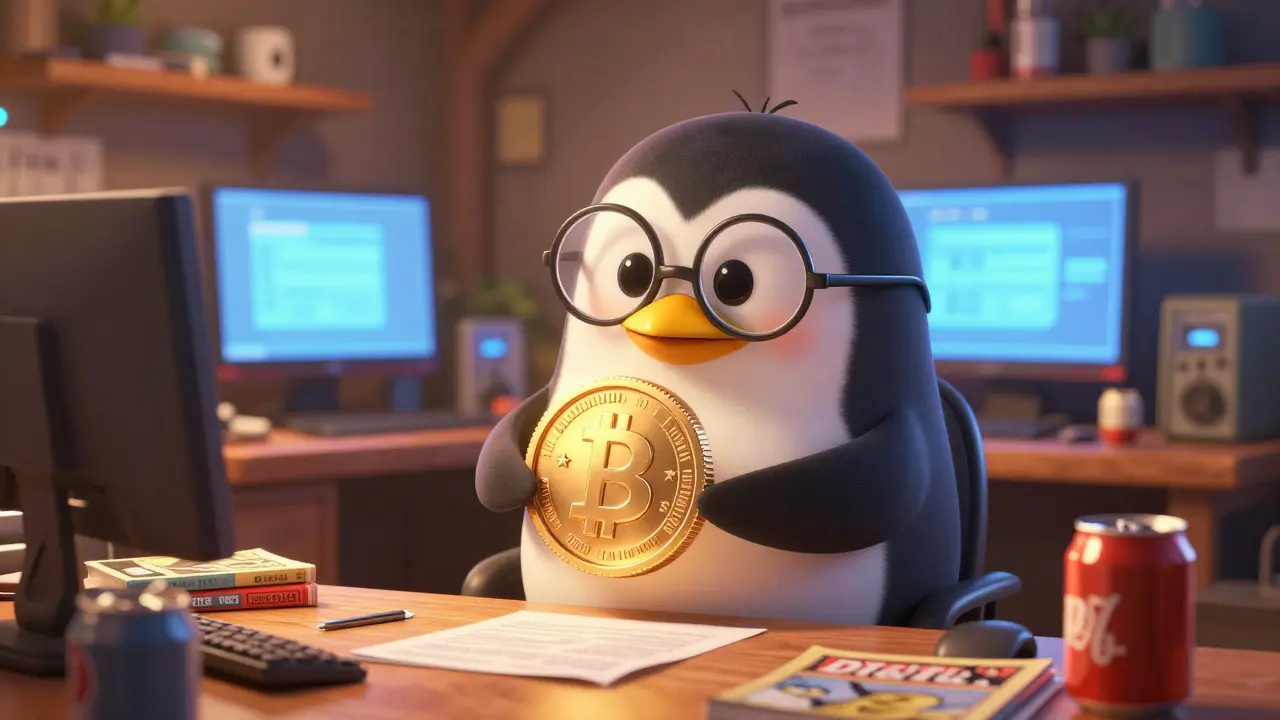
What Is PACO Actually?
If you've stumbled across Paco (PACO) is a satirical meme cryptocurrency created as a joke with no serious development team or utility., your first instinct might be to check the charts. Before you even get that far, here is the hard truth: PACO is widely considered a dead or near-dead asset in the cryptocurrency space. There isn't one single coin here; there are several projects using the same ticker symbol, creating chaos for anyone trying to trade them. While some platforms list it as a token on the PulseChain network or the Solana blockchain, most reliable trackers classify it as a low-cap experiment rather than a functional currency.
The story behind PACO reads more like a prank than a business plan. According to project descriptions found on major tracking sites like CoinMarketCap around late 2025, the coin claims to be "100% penguin-made" with absolutely no humans involved. It was supposedly created in "Paco's basement" purely for amusement. While the narrative is funny, investors looking for returns usually find nothing but silence when they try to sell their holdings.
The Problem With Ticker Symbol Confusion
One of the biggest dangers you face with PACO isn't just the coin itself, but the fact that three different cryptocurrencies share the same name. In the world of digital assets, tickers aren't legally protected, which means anyone can launch a token called "PACO."
| Token Name | Blockchain Network | Typical Status |
|---|---|---|
| Paco (Main Variant) | PulseChain | Low liquidity, meme-focused |
| Plaza Coin (PACO) | Multichain | Nearly abandoned, price $0.000004 |
| Paco De Llama (PACO) | Solana | No active price data recorded |
This fragmentation causes massive confusion. If you see a listing on one site and try to deposit funds from another, you could easily send your money to the wrong wallet address. For instance, some data points suggest a version of PACO exists on Solana, designed to use the network's high-speed transactions, while others show it running exclusively on PulseChain. When you are buying crypto, checking the smart contract address is mandatory because ticker symbols alone cannot guarantee you are getting the right asset.
Liquidity and Trading Realities
The term "liquidity" is often thrown around in crypto circles, but what does it actually mean for your wallet? It refers to how easy it is to turn your tokens into cash without moving the price too much. For PACO, liquidity is effectively non-existent. As of late 2025, the daily trading volume hovered near zero. Some aggregators showed volumes as low as $4.00 across the entire market for the main PACO variant.
Imagine walking into a shop where there is only $30 worth of stock on the shelf. If you try to buy $50 worth of goods, you can't do it without crashing the whole system. That is exactly what happens with PACO. Attempting to trade even small amounts can trigger massive price slippage, meaning the price changes drastically against you the moment you click "swap." The order book depth is so thin that a trade of roughly $30 could manipulate the market price instantly.
Most legitimate exchanges won't touch a token like this due to these risks. You will mostly find PACO on decentralized exchanges (DEXs) like PulseX v2. These platforms allow anyone to create a market pair, such as PACO/PLS (the native coin of PulseChain) or PACO/DAI. However, being listed on a DEX doesn't validate the coin's quality; it simply means someone connected their wallet and opened a swap pool.
Market Cap and Valuation Context
To understand how insignificant PACO is in the grand scheme of things, you need to look at its market capitalization. At its highest point of visibility in late 2025, the total value of all PACO tokens existed was approximately $17,000. Compare this to established meme coins like Dogecoin, which maintains a market cap in the billions of dollars. A $17,000 market cap places PACO in the bottom 0.5% of all cryptocurrencies.
This tiny valuation creates a trap for inexperienced traders. A coin with such a low market cap appears "cheap," tempting people who think a penny stock logic applies to crypto. They believe that because the token costs fractions of a cent, a rise to $0.01 would make them rich. However, the math shows that pumping a $17,000 market cap to something significant requires billions of dollars in fresh investment, which simply does not exist for this asset class.
The Satirical Nature of the Project
We cannot ignore the intention behind the project. While many crypto scams disguise themselves as revolutionary technology, PACO is upfront about being a parody. The project documentation explicitly states it serves no real purpose other than entertaining "Paco." It admits there is no roadmap, no backup, and no accountability.
This distinction matters. Most scams claim to solve world problems like energy efficiency or privacy preservation to lure in victims. PACO tells you it's a joke. Unfortunately, jokes in the financial sector often result in real losses. The community sentiment is largely negative or indifferent. Social media platforms like X (formerly Twitter) and Reddit subreddits dedicated to moonshots have virtually no discussion around PACO. When a token fails to generate buzz or community support, it confirms the "dead coin" status. Community growth is a primary fuel for any crypto asset; without a following, the chart stays flat or moves down.
Risk Assessment and Safety Warnings
If you are considering entering the market for PACO, you must evaluate the risks objectively. First, there is the risk of total loss. With zero buy orders on many days, you might find yourself unable to sell. This is known as illiquidity risk. Even if the price rises on paper, you hold an asset you cannot liquidate.
Secondly, there is security risk. Because there is no active development team auditing the smart contracts, the code might contain vulnerabilities. Without developers to patch holes, hackers could potentially drain the liquidity pool. Finally, there is the regulatory risk. In many jurisdictions, authorities are cracking down on unregistered securities. While PACO is too small to warrant an official lawsuit currently, the broader crackdown on meme coins makes the environment less forgiving for these types of assets.
Alternatives and Better Investment Options
If you are interested in the meme coin culture but want actual exposure, consider established alternatives. Coins like Dogecoin, Shiba Inu, or PEPE have built communities, liquidity, and listings on major centralized exchanges. They still carry volatility, but they operate within a functional economy. Instead of chasing obscure basement projects, diversifying into sectors like Layer 1 blockchains or DeFi governance tokens offers more predictable outcomes.
Is PACO a good investment?
No. PACO is classified as a joke project with near-zero liquidity, no development team, and extremely low market activity. It poses a high risk of losing your entire investment with no ability to sell.
Can I buy PACO on Binance or Coinbase?
Likely not. Major exchanges require strict audit standards and liquidity minimums. PACO is primarily found on decentralized exchanges like PulseX v2, which carries higher operational risks.
Why is the PACO price different on every site?
Multiple distinct tokens share the PACO ticker across different blockchains (like Solana and PulseChain). Poor liquidity leads to wide price variations because there aren't enough trades to stabilize the number.
Does PACO have a whitepaper?
Official documentation describes the project as having no roadmap and no human involvement. There is no formal technical whitepaper explaining utility or future plans.
Is Paco coin a scam?
While labeled as satire rather than an intentional fraud, the lack of liquidity and functionality makes it effectively a "dead" asset where users may lose funds trying to exit positions.

Comments
I strongly recommend checking the contract addresses before moving any funds into this ecosystem.
Honestly spending time analyzing a coin designed by penguins is the real joke here. It sounds like another attempt to drain liquidity from unsuspecting people who miss reading the small print about the project being a parody.
That is quite negative, but staying safe is definitely the best route for beginners right now. We want you to grow your portfolio without taking unnecessary risks that could hurt your financial goals significantly. Being cautious helps us avoid those huge headaches later on when markets turn volatile.
Okay so i was looking into the whole paco thingy last night and let me tell you its pretty wild how nothing really works like we think it does because there are so many fake tokens out there trying to confuse people and honestly im scared to invest anything because the risk is super high and the charts look like a mess everywhere i looked. They talk about penguin made coins but where is the team nobody knows and also the prices are so low its scary because if you buy ten dollars worth you cant sell it back because nobody wants to trade with you. Liquidity is basically zero which means your money sits there stuck forever and thats bad news for anyone hoping for gains. The pulsechain network seems active enough but this token specifically is dead weight dragging down any portfolio that holds it. I keep seeing conflicting info online about whether its on solana or pulse and that is frustrating cause you could lose funds to the wrong chain easily. Plus the market cap is tiny so even if it goes up slightly it doesnt mean anything for your wallet balance overall. Most exchanges wont touch it cause it fails audit standards so you are left with DEX options only which have their own issues. People think memes are fun but when your savings vanish its not funny anymore and that is the cold hard reality of crypto investments today. I tried swapping on pulsex and the slippage settings were ridiculous so i decided to walk away before losing more. Its a prank project meant to entertain a fictional character called pacos basement crew or whatever so why waste energy on it really.
that is so true you scared me :
i cant believe people fall for these pranks :(
maybe the penguins have better luck than us humans sometimes lol
thanks for sharing your thoughts bro :)
The distinction between satire and fraud remains blurred yet the outcome for investors remains identical in terms of financial loss potential. Due diligence requires ignoring hype entirely to examine the underlying technical utility of such assets which is absent here completely.
Stop pretending this is a legitimate opportunity you idiots are going to get burned. It is obvious garbage designed to steal from normies.
You do not have to resort to personal attacks when making a valid point about risk management. While the asset may be worthless, educating others on liquidity traps is more effective than hostility. Let us guide new traders toward safer alternatives instead of shouting at them to quit the industry entirely because one meme failed.
Tis a peculiar state of affairs indeed when digital coppers become the playthings of imaginary avians. The absurdity is almost Shakespearean in its tragicomic nature.
you said it way better than me bruv
the drama of it all is crazy
I feel like my entire life depends on the price of paco today honestly. If it drops lower i might cry for real. Why do things have to be so complicated in the finance sector. It hurts my heart thinking about lost money even if i havent bought any yet.
I just see it as a fun little joke that got out of hand. No need to stress too much about it.
Mess.
Absolutely right about the liquidity risks involved here. Do not trust tickers alone.
Quietly watching everything burn.