Bitcoin's peer-to-peer network lets users send money directly without banks. Thousands of nodes verify transactions globally, making it resilient, censorship-resistant, and free from central control. Learn how it works and why it matters.
Peer-to-Peer Bitcoin: How It Works and Why It Matters
When you send peer-to-peer Bitcoin, a direct digital transaction between two people without intermediaries. Also known as P2P crypto, it’s the original idea behind Bitcoin—cutting out banks, payment processors, and middlemen entirely. This isn’t just a technical detail. It’s a shift in power. You don’t need permission to send Bitcoin. No bank can freeze your transaction. No government can block it. That’s the core promise.
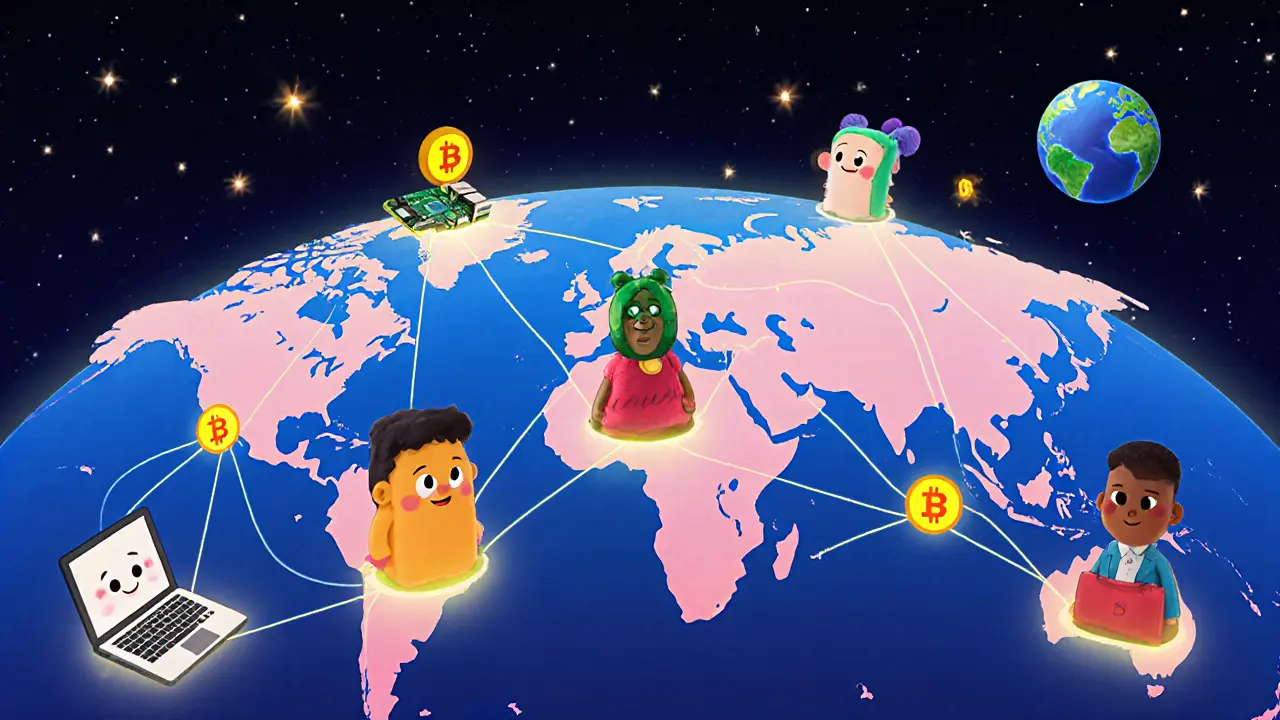
Behind every peer-to-peer Bitcoin transfer is the Bitcoin network, a global system of computers that verify and record transactions on a public ledger. These computers, called nodes, don’t trust each other—they prove trust through math. Every transaction is checked by dozens, sometimes hundreds, of nodes before it’s added to the blockchain. That’s what makes it secure without a central authority. This network runs 24/7, across continents, powered by people who believe in open finance.
Peer-to-peer Bitcoin doesn’t just move money. It changes how you think about ownership. If you hold Bitcoin in your own wallet, you’re not just a customer—you’re the bank. No one else controls your keys. No one else can reverse your payment. That’s why so many posts here focus on wallets, exchanges without KYC, and platforms like Block DX, a decentralized exchange that lets you trade crypto without giving up control of your funds. It’s the same philosophy: no middlemen, no trust needed.
But peer-to-peer doesn’t mean easy. It means responsibility. If you send Bitcoin to the wrong address, there’s no customer service to fix it. If you lose your private key, your coins are gone forever. That’s why so many guides here warn about scams, fake airdrops, and shady exchanges like Tatmas crypto exchange, a known fraud pretending to offer trading services. The freedom of P2P Bitcoin comes with sharp edges. You have to learn how to use it safely.
What you’ll find below isn’t theory. It’s real-world testing. Posts that dig into whether a DEX is truly decentralized, if a token has any real users, or if a crypto exchange is just another scam. You’ll see how peer-to-peer Bitcoin plays out in practice—not in marketing videos, but in low-volume tokens, dead projects, and users who lost money because they didn’t understand the risks. This collection shows you what works, what doesn’t, and why the peer-to-peer model still matters—even when the hype fades.
November 7, 2025
How Bitcoin's P2P Network Operates: A Simple Breakdown of Decentralized Transactions
About
Cryptocurrency