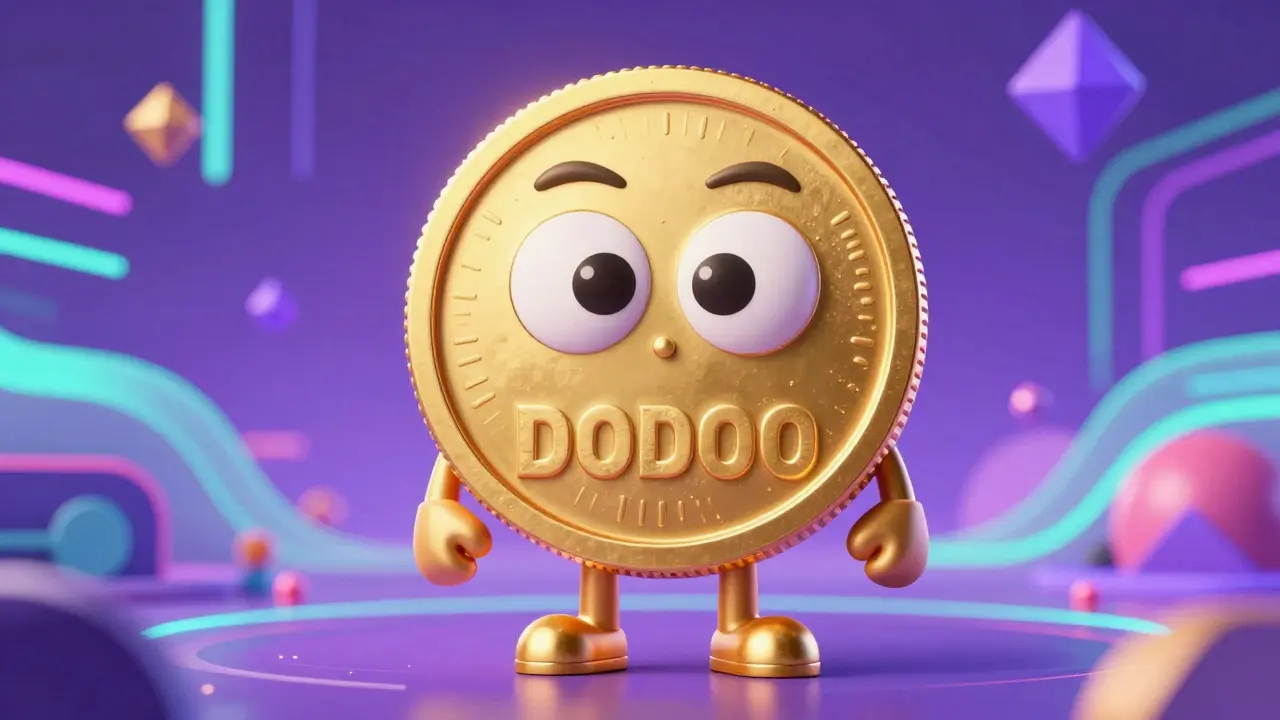
Have you ever seen a token with a name that makes you laugh out loud, only to realize it might be the next big thing-or the next big disaster? That’s exactly where Doodoo (DOODOO) sits right now. It’s a cryptocurrency that leans heavily into the absurdity of the meme coin market. Built on the Solana blockchain, DOODOO isn’t trying to revolutionize finance or solve complex logistical problems. Instead, it operates purely on community hype, viral potential, and the chaotic energy that defines speculative digital assets.
If you’re reading this, you’ve probably spotted DOODOO trending on social media or noticed its quirky ticker symbol flashing across your screen. You want to know if it’s worth your attention, your money, or just a quick chuckle. Let’s cut through the noise and look at what this token actually is, how it performs, and why the data surrounding it is so messy.
The Basics: What Is Doodoo (DOODOO)?
At its core, DOODOO is a meme coin. This means its value doesn’t come from underlying technology, utility, or a revolutionary business model. Instead, its price is driven by sentiment, community engagement, and speculation. Think of it as digital trading cards for internet culture-valuable only because other people believe they are valuable.
The token runs on the Solana network. Solana is known for being fast and cheap compared to older blockchains like Ethereum. This makes it a popular playground for meme coins because traders can buy and sell tokens without paying massive gas fees. For a coin like DOODOO, which relies on rapid buying and selling based on hype, this infrastructure is essential.
Here are the key technical attributes of the DOODOO token:
- Blockchain: Solana
- Total Max Supply: 42,000,000 DOODOO tokens
- Token Type: Meme Coin / Speculative Asset
- Primary Driver: Community sentiment and viral trends
Notice there is no mention of a development team, a roadmap, or a specific use case in the available data. This is typical for many meme coins. They launch, gain traction through social media memes, and then either build a lasting community or fade away quickly. DOODOO falls squarely into this category.
Why the Data Is So Confusing
One of the first things you’ll notice when researching DOODOO is that no two websites agree on anything. The price, the market cap, and even the circulating supply vary wildly depending on where you look. This isn’t necessarily a sign of fraud, but it is a major red flag for volatility and low liquidity.
| Metric | CoinMarketCap | Binance | CoinGecko | LiveCoinWatch |
|---|---|---|---|---|
| Price (USD) | $0.028379 | $0.074581 | ~$0.03 | $0.154446 |
| 24h Volume | N/A | $1,734.41 | $3,950.48 | $4,800 |
| Market Cap | $112.26K | N/A | $0 (Unreported) | Ranks #4583 |
| Fully Diluted Valuation | $1.17M | $3.13M | N/A | N/A |
Look at those prices. On one exchange, DOODOO is worth about three cents. On another, it’s worth fifteen cents. That’s a five-fold difference in value for the exact same asset. Why does this happen?
It comes down to liquidity fragmentation. DOODOO is traded on several smaller exchanges and decentralized platforms. If most of the trading volume happens on one specific platform, the price there will reflect real demand. On other platforms with little to no activity, the price might be stale, manipulated by a few large trades, or simply outdated. When you see such wide discrepancies, it means the market is thin. You could easily buy a large amount of DOODOO on one exchange and crash the price instantly because there aren’t enough buyers waiting on the other side.
Furthermore, the circulating supply data is inconsistent. Some sources report zero circulating supply, while others claim 4.2 million tokens are in play. With a max supply of 42 million, knowing how many tokens are actually available to trade is crucial for calculating true market capitalization. Without accurate supply data, any market cap figure you see is essentially a guess.
Price History: From Peak to Trough
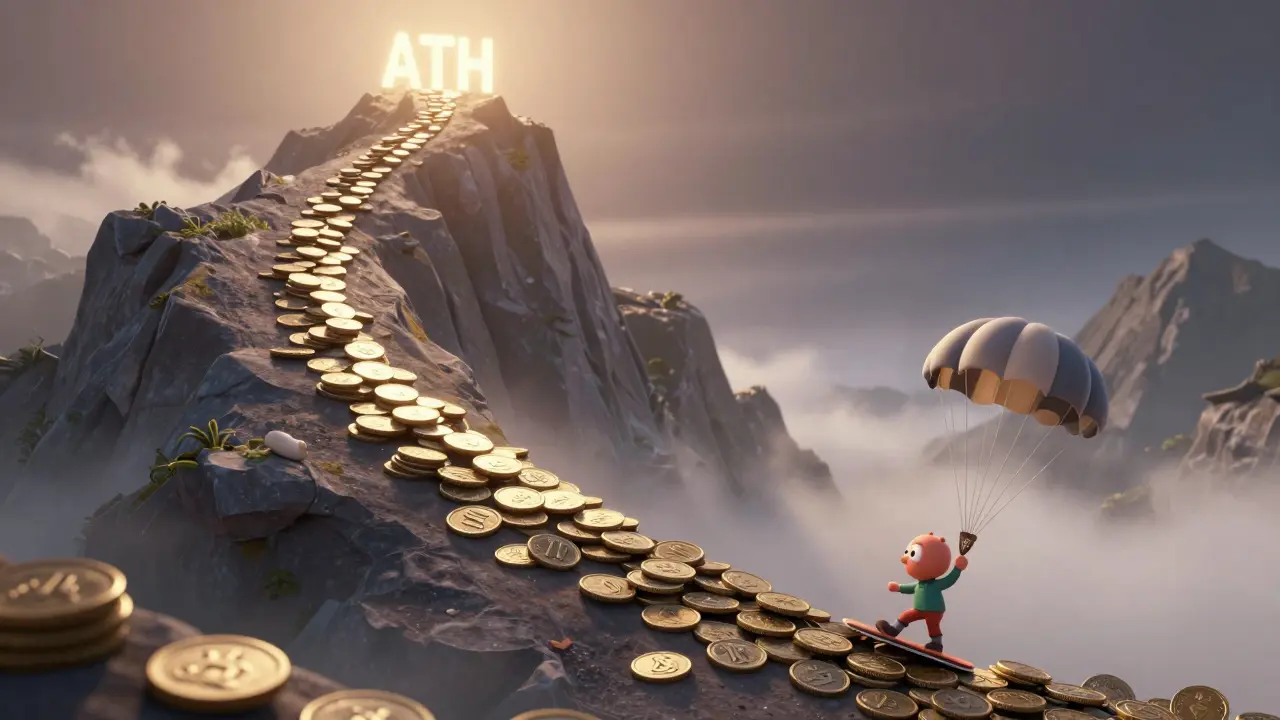
To understand the risk of investing in DOODOO, you need to look at its history. Meme coins often follow a "pump and dump" cycle. They skyrocket due to hype, reach an all-time high, and then slowly bleed value as early investors cash out.
DOODOO hit its all-time high (ATH) around March 2024. Depending on the source, this peak was between $2.25 and $2.56 USD. As of mid-2026, the token is trading significantly lower-between $0.03 and $0.15. This represents a drop of over 94% from its peak. If you had bought at the top, you would have lost almost all your money.
Conversely, the token hit an all-time low (ATL) of roughly $0.09 in April 2025. Currently, it is trading slightly above this low point. This suggests the token has been in a prolonged downtrend or consolidation phase for months. The recent 24-hour volatility shows mixed signals: some platforms report a slight decline, while others show gains of up to 18%. These short-term swings are common in low-volume markets where a single large trade can move the needle dramatically.
How to Buy DOODOO (And What to Watch Out For)
If you decide you want to own some DOODOO, here is how the process generally works. Since it is a Solana-based token, you will need a wallet that supports Solana, such as Phantom or Solflare. You will also need some SOL (Solana’s native currency) to pay for transaction fees.
- Choose an Exchange: DOODOO is listed on platforms like Binance, LBank, and various decentralized exchanges (DEXs). Check which platform offers the best price and highest liquidity at the moment. Remember, the price varies wildly between them.
- Connect Your Wallet: If using a DEX, connect your Solana wallet. If using a centralized exchange like Binance, deposit funds directly.
- Verify the Contract Address: This is critical. Scammers often create fake tokens with the same name. Always double-check the contract address against trusted aggregators. The known contract identifier for DOODOO involves the string `0x73eb...` on the Solana network.
- Execute the Swap: Trade your SOL or USDT for DOODOO. Be aware of slippage. In low-liquidity pools, setting a tight slippage tolerance might cause your transaction to fail, while a loose tolerance might mean you get fewer tokens than expected.
Before you click "buy," ask yourself: Are you doing this for fun, or are you expecting returns? If it’s the latter, understand that you are entering a highly speculative environment with no fundamental backing.
The Risks of Meme Coins Like DOODOO
Let’s be honest. Most meme coins fail. DOODOO is no exception to this rule. Here are the specific risks associated with this token:
- No Utility: DOODOO doesn’t offer staking rewards, governance rights, or access to exclusive services. Its value is purely psychological. If the community loses interest, the price goes to zero.
- Data Inconsistency: The lack of reliable data on circulating supply and market cap makes it impossible to analyze the token’s health accurately. You are flying blind.
- Liquidity Risk: With daily volumes ranging from $1,700 to $4,800 across different platforms, it is easy to get stuck. If you try to sell a large position, you might not find enough buyers, forcing you to accept a much lower price.
- Volatile Pricing: A 18% jump in an hour sounds great until it turns into a 18% drop ten minutes later. This emotional rollercoaster can lead to poor decision-making.
Investing in DOODOO should never be done with money you cannot afford to lose. Treat it like buying a lottery ticket. You might win if the meme goes viral again, but statistically, you are more likely to lose everything.
Is DOODOO Still Relevant in 2026?
In the fast-moving world of crypto, relevance is fleeting. DOODOO peaked in 2024 and has since struggled to maintain momentum. By June 2026, it ranks outside the top 4,000 cryptocurrencies by market cap on most trackers. This indicates that mainstream attention has moved on to newer, shinier objects.
However, niche communities can keep old meme coins alive for years. If DOODOO has a dedicated group of holders who continue to joke, trade, and promote the token, it could experience sporadic spikes in price. But these are usually short-lived. Without new developments, partnerships, or a resurgence in cultural relevance, DOODOO remains a relic of the 2024 meme coin boom.
What is the current price of Doodoo (DOODOO)?
The price of DOODOO varies significantly depending on the exchange. As of mid-2026, reports range from approximately $0.028 on CoinMarketCap to $0.154 on LiveCoinWatch. Always check multiple sources before trading, as these discrepancies indicate low liquidity and fragmented markets.
Is DOODOO a safe investment?
No, DOODOO is considered a high-risk speculative asset. It is a meme coin with no fundamental utility, inconsistent market data, and significant price volatility. It has dropped over 94% from its all-time high. Only invest money you are prepared to lose entirely.
Which blockchain is DOODOO built on?
DOODOO is built on the Solana blockchain. This allows for fast transactions and low fees, which is typical for meme coins that rely on high-frequency trading and community interaction.
What is the total supply of DOODOO tokens?
The maximum total supply of DOODOO is capped at 42,000,000 tokens. However, the circulating supply is inconsistently reported across platforms, ranging from 0 to 4.2 million tokens, making it difficult to calculate the true market capitalization.
Why do different websites show different prices for DOODOO?
Price discrepancies occur due to liquidity fragmentation. DOODOO is traded on multiple exchanges with varying levels of activity. Prices on low-volume exchanges may be stale or skewed by small trades, while higher-volume exchanges reflect more accurate real-time demand.

Comments
I really appreciate how this article breaks down the technical side of meme coins without getting too bogged down in jargon. It’s so easy to feel overwhelmed when you’re just trying to understand if a token is worth your time or money. The explanation about liquidity fragmentation was particularly helpful for me because I’ve seen those price discrepancies before and never quite understood why they happened.
It’s important for newcomers to know that not every coin has a solid foundation, and recognizing the difference between hype and utility can save a lot of heartache. Thanks for laying out the risks so clearly-it takes a lot of courage to admit that most of these projects are basically lottery tickets.
This whole crypto scene is a joke made up by people who don’t want to work for their money. You think Americans should be investing in garbage like Doodoo? We have real problems here at home that need fixing, not some digital poop token running on a blockchain that probably doesn’t even exist properly. Typical globalist nonsense trying to confuse the average worker with fancy charts and numbers that mean absolutely nothing. Stick to gold or cash, folks, before you lose everything to these internet gamblers.
Honestly, I find it hilarious that we’re still talking about DOODOO in 2026. Like, did everyone forget what happened to Doge or Shiba Inu? It’s the same cycle over and over again. People get excited, buy in late, and then cry when the rug pull happens. But hey, if you enjoy watching your savings evaporate because a cartoon dog or a pile of virtual feces went viral, more power to you. Just don’t come crying to me when you can’t afford rent.
🧐 One must question the very integrity of such platforms that allow these tokens to persist. 📉 The data inconsistency is not merely a 'red flag' but a glaring indictment of regulatory failure. 🚩 Why are we allowing unverified assets to trade freely? It is a disgrace to financial literacy. 🤔 Every individual should demand transparency before engaging with such speculative instruments. The lack of a roadmap is not 'typical'; it is negligent. 💼
You people are all idiots for falling for this. I bought in at $2.50 and watched it crash while you were busy reading articles about 'risks.' Now you’re here asking questions instead of taking action. Real investors don’t read warnings; they see opportunity where others see chaos. If you can’t handle the volatility, stay out of the game. Weak hands will always lose to those who understand that fear is just another form of greed. Get out of my way.
so basically its just a scam right? i mean look at the prices everywhere being different. thats crazy. how do u trust any of this stuff. feels like everyone is lying to each other. maybe its better to just put money under mattress. at least then u know where it is. why do ppl keep buying trash like this. its sad really. 😒
Let’s reframe this narrative entirely! Instead of focusing on the losses, consider the lessons learned. Every dip is an opportunity to study market psychology and improve your strategy. You have the power to turn this experience into growth. Stay focused, stay disciplined, and remember that resilience is key in any investment journey. Don’t let temporary setbacks define your potential. Rise above the noise and take control of your financial destiny today!
The discrepancy in pricing across exchanges is a textbook example of low liquidity markets. When volume is thin, even minor trades can cause significant price swings, leading to the fragmentation observed here. It is crucial for investors to verify contract addresses and understand slippage tolerance before executing swaps. Without robust market depth, accurate valuation becomes nearly impossible, rendering traditional analysis tools ineffective.
I am curious about the specific mechanics of the Solana network that allow such rapid trading. How does the proof-of-stake consensus mechanism impact the finality of these transactions compared to Ethereum? Also, what role do decentralized exchanges play in exacerbating the price differences? I want to understand the tech stack better before making any decisions. Can someone explain the gas fee structure in simpler terms?
It is interesting to observe how community sentiment drives value in such assets. While the risks are evident, the social aspect of crypto cannot be ignored. Perhaps there is a lesson here about human behavior and herd mentality. I would encourage readers to approach this with caution but also with an open mind to learn from both successes and failures. Knowledge is the best asset one can hold.
Oh, please. Everyone says it’s a scam until it goes up 100x. Then suddenly it’s 'community-driven innovation.' I’m telling you now, DOODOO is going to the moon. All you haters are just mad because you missed the boat. Buy high, sell higher, and laugh at the bears. This isn’t gambling; it’s alpha. Wake up sheeple.
My heart breaks for those who lost money thinking this was a safe bet. It’s so painful to watch people get hurt by something that looks so fun on the surface. Please, take care of yourselves emotionally as well as financially. There is no shame in walking away. Your peace of mind is worth far more than any potential profit. Sending love and support to anyone feeling stressed about their portfolio.
I actually tried buying some last week. The process was a nightmare. Slippage ate half my order, and then the wallet connection timed out twice. By the time I finally got it through, the price had moved against me. What a disaster. I felt like I was fighting a losing battle against the system itself. Never again.
Do you really believe the data provided by these centralized exchanges? They are likely manipulating the figures to create artificial scarcity or abundance. The government wants you to lose faith in traditional currency so they can push CBDCs. Meme coins are a distraction, a smoke screen for the deeper conspiracy. Trust no one but yourself and keep your gold hidden.