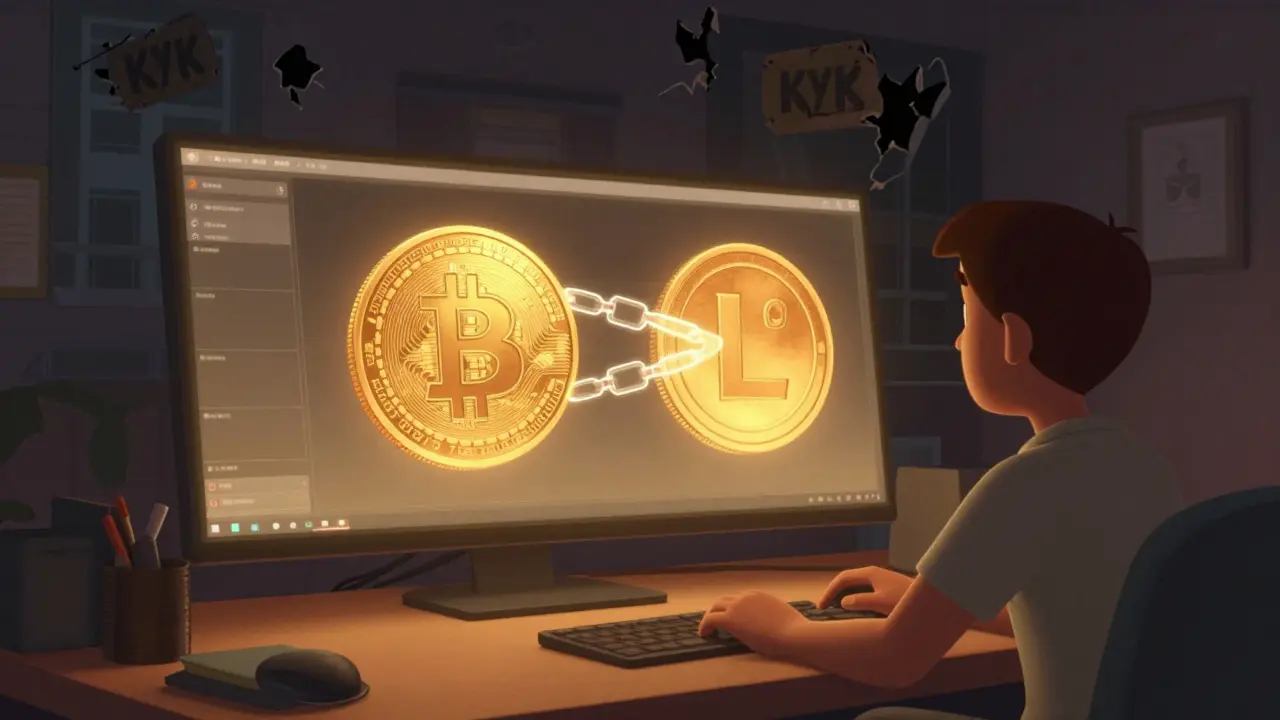
Back in 2017, if you wanted to trade Bitcoin for Litecoin without handing your keys to a company, there was one platform that stood out: BarterDEX. It wasn’t flashy. It didn’t have a mobile app that looked like Instagram. And it definitely didn’t let you buy crypto with your bank card. But for a certain kind of user - the kind who cared more about control than convenience - BarterDEX was a revelation.
Today, you won’t find BarterDEX on any app store. It’s gone. Replaced. But understanding what it did, and how it did it, changes how you think about crypto exchanges entirely. This isn’t just a history lesson. It’s a look at the future of peer-to-peer trading - the kind that never needed a middleman.
What BarterDEX Actually Was
BarterDEX wasn’t a website. It wasn’t even a web app. It was a desktop and mobile wallet - the Komodo Wallet - that doubled as a trading platform. You downloaded it. You set it up. And then, instead of sending your coins to an exchange, you traded them directly from your own wallet.
That’s the big difference. On Coinbase, Kraken, or Binance, you deposit your Bitcoin. The exchange holds it. You trade it. Then you withdraw it back. Along the way, you trust them not to get hacked, not to freeze your account, and not to disappear with your money. BarterDEX removed that trust. Completely.
Here’s how: every trade happened through an atomic swap. No escrow. No third party. Just two people, on two different blockchains, swapping coins in a way that either both got what they paid for - or neither did. If the swap failed, your coins went back to you. No one else touched them. Not even BarterDEX.
It was like bartering in real life. You hand me your apple. I hand you my orange. If I don’t have an orange, you don’t get my apple. Simple. Fair. No bank in the middle.
How BarterDEX Made Cross-Chain Trading Possible
Most crypto exchanges only trade tokens on one blockchain. If you want to swap Bitcoin for Ethereum, you have to sell Bitcoin for USD, then buy Ethereum. BarterDEX did it in one step - directly.
At its peak, BarterDEX supported over 95% of all cryptocurrencies in existence. That included obscure coins like Verge, NavCoin, and Syscoin - things you couldn’t find on Binance or Coinbase. It worked because it didn’t rely on liquidity pools like Uniswap. Instead, it used atomic swaps to connect blockchains directly.
How? Each blockchain had its own rules. Bitcoin uses SHA-256. Litecoin uses Scrypt. Ethereum uses a whole different system. BarterDEX didn’t try to make them the same. It found a way to make them talk to each other using cryptographic time locks. If one side didn’t complete their part of the trade within the agreed time, the whole thing canceled - and both parties got their coins back.
This was huge. For the first time, you could trade between chains without needing wrapped tokens, bridges, or centralized intermediaries. No risk of bridge hacks. No risk of token inflation from minting fake versions. Just pure, native asset swaps.
The Fees That Made It Stand Out
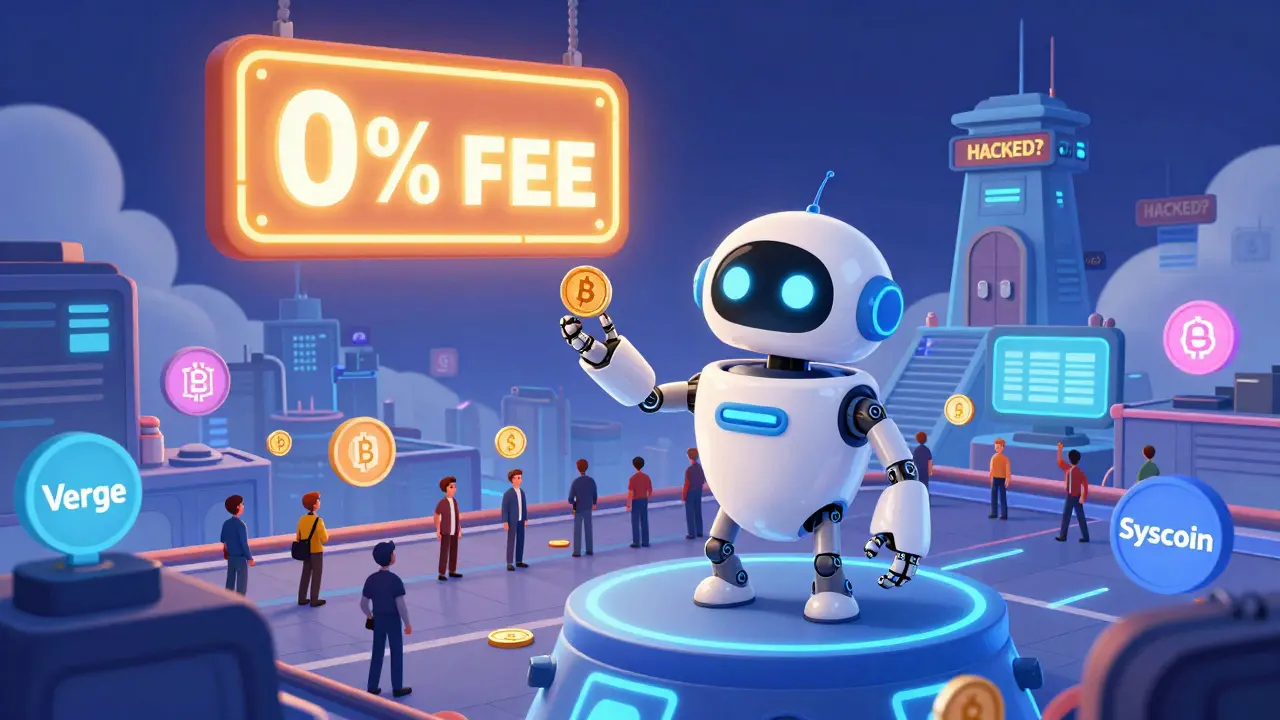
Most exchanges charge you every time you trade. Binance charges 0.1%. Coinbase? Up to 3.99%. Even decentralized exchanges like Uniswap charge around 0.3% - and that’s before gas fees.
BarterDEX? Takers paid 0.15%. Makers paid 0%. That’s right - if you put an order on the books and someone else took it, you paid nothing. That’s because the platform was built around a liquidity system called Liquidity Nodes.
Liquidity Nodes were automated bots run by volunteers. They kept order books full by buying and selling small amounts of coins at set prices. They made money on the spread, not on fees. And because they weren’t centralized, they couldn’t be shut down. If one node went offline, another picked up the slack.
This system meant BarterDEX had deeper order books than most DEXs at the time - and lower fees than almost every centralized exchange. For active traders, especially those doing small, frequent swaps, it was a game-changer.
Why It Wasn’t for Everyone
BarterDEX didn’t have a sign-up button. No email. No KYC. No password reset. You got a seed phrase. You wrote it down. That was it. If you lost it? Your coins were gone. Forever.
That’s the trade-off. Total control. Total responsibility.
Setting up BarterDEX took 15 to 20 minutes just to install and sync. Then you had to learn how atomic swaps worked - what a timeout meant, why a swap might fail, how to manually cancel a transaction if it got stuck. Most users gave up after one failed swap.
Reddit threads from 2018 are full of comments like: “Tried BarterDEX but couldn’t figure out the atomic swap process - went back to Binance for simplicity.” The platform didn’t dumb things down. It assumed you already knew how wallets worked.
And there was no fiat on-ramp. You couldn’t deposit USD, EUR, or NZD. You had to already own crypto. That meant it was never going to attract mainstream users. But for crypto natives - the ones who had been trading since 2013 - it was exactly what they wanted.
The Rebrand: From BarterDEX to AtomicDEX
In July 2019, BarterDEX didn’t die. It evolved.
Komodo Platform quietly rolled out AtomicDEX - a new version built on the same code, but with a cleaner interface, better mobile support, and faster sync times. The old BarterDEX app stopped receiving updates. The name was retired. The technology lived on.
AtomicDEX kept the same atomic swap engine. Same 0.15% taker fee. Same Liquidity Nodes. Same non-custodial model. But now it had a modern UI, push notifications, and better error messages. It still didn’t support fiat. It still didn’t have customer service. But it made the experience less painful.
Today, AtomicDEX supports 99% of all cryptocurrencies. It’s still open source. Still decentralized. Still running on the same core principles BarterDEX pioneered.
So when people say “BarterDEX is dead,” they’re right - the app is gone. But its soul? That’s still alive in every atomic swap you make on AtomicDEX today.
Who Still Uses This Kind of Exchange?
BarterDEX and AtomicDEX weren’t built for beginners. They were built for:
- People who refuse to trust exchanges with their coins
- Traders who want to swap obscure coins without relying on bridges
- Developers testing cross-chain interoperability
- Privacy-focused users who avoid KYC at all costs
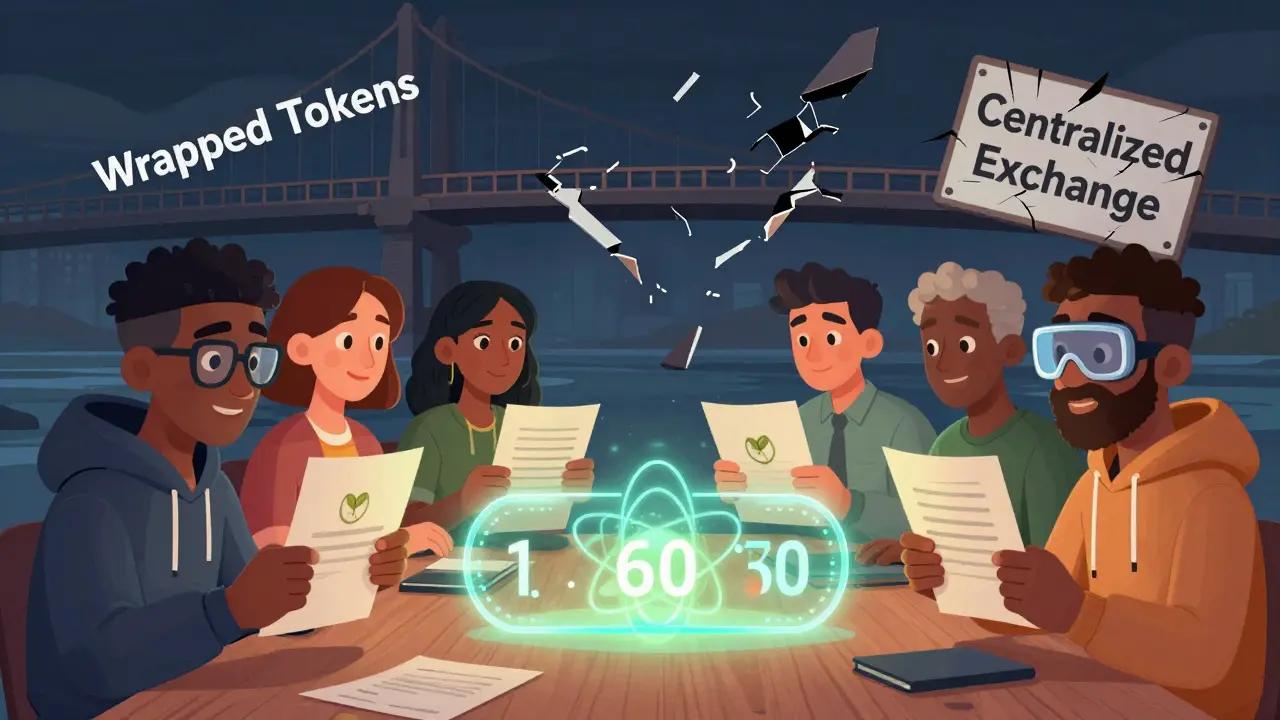
They’re not the majority. But they’re growing. In 2023, only 1.2% of all decentralized exchange volume came from atomic swap platforms. By 2026, analysts at Delphi Digital predict that number will jump to 5-7%. Why? Because more people are realizing that bridges are risky. That wrapped tokens can be hacked. That centralized DEXs still have single points of failure.
BarterDEX proved you didn’t need a company to make trading work. You just needed the right tech - and the patience to learn it.
Why BarterDEX Still Matters Today
You won’t find BarterDEX on CoinMarketCap anymore. You won’t see ads for it on YouTube. But its legacy is everywhere.
Every time you hear someone say “I want to trade crypto without KYC,” they’re echoing BarterDEX’s original promise.
Every time a new DEX tries to connect Bitcoin and Ethereum without a bridge, they’re using the atomic swap model BarterDEX perfected.
And every time a user says, “I don’t want to give up my keys,” they’re standing on the foundation BarterDEX built.
It wasn’t perfect. It wasn’t easy. But it was honest. And in a space full of hype, that mattered.
BarterDEX didn’t try to be the biggest exchange. It tried to be the most trustworthy. And for a small group of users - maybe even you - that was everything.

Comments
barterdex was a nightmare to set up lol i gave up after the 3rd failed swap
honestly barterdex was the only exchange that made me feel like i actually owned my crypto
no one else gave a damn about control
sure it was clunky
sure it needed a manual
but at least my coins weren’t sitting in some corporate server waiting to get drained
atomicdex still runs on the same soul
they just made it less painful
and honestly? that’s progress
why did they even make this? too hard for normal people
i just want to buy btc and move on
barterdex was the real deal 😎
no kyc no stress no drama
just pure crypto vibes
the liquidity node architecture was quietly revolutionary
it decoupled market-making from centralized entities
which meant resilience against regulatory capture
and systemic collapse
most people don’t realize that
they just see the UI
but the real innovation was the distributed liquidity layer
that’s what made atomic swaps scalable
not the protocol
the network
you guys are romanticizing a piece of trash
barterdex was slow
buggy
and barely functional
if you used it in 2018 you were either a dev or a masochist
atomicdex is slightly less terrible
but still not ready for primetime
stop pretending this was a revolution
it was just another crypto experiment that failed to scale
in india we used barterdex to trade between verve and litecoin because local exchanges blocked it
no one asked for kyc
no one asked for id
just two wallets
and a handshake in code
that’s the beauty of it
not the tech
the autonomy
barterdex wasn’t perfect
but it was honest
and in crypto
honesty is rarer than a working bridge
every time i see a new dex with ‘no KYC’
i remember barterdex
and i smile
because they didn’t just talk
they built
and they didn’t care if you got it
they just wanted you to try
barterdex was the government’s worst nightmare
no central server
no logs
no way to track you
and they still let it live?
they must’ve been asleep at the wheel
or…
they knew it would die on its own
and it did
thanks to normal people who just wanted to buy dogecoin with paypal
lol
we were doomed from the start
i love that barterdex didn’t try to be pretty
it was just… there
like a tool
not a product
i remember spending hours trying to get a swap to go through
and when it finally worked
i felt like i’d cracked a code
not because it was hard
but because it was right
it didn’t dumb it down
it just let you be the master of your own coins
and honestly
that’s what crypto was supposed to be about
barterdex was the last true anarchist experiment in crypto
no VC money
no influencer hype
no whitepaper full of buzzwords
just code
and conviction
and the audacity to believe
that people could trade without a middleman
and they did
and for that
i bow
i still use atomicdex for my altcoin swaps
it’s slow
but it works
and i never worry about my coins
that’s worth more than fast trades
if you’re new to self-custody
barterdex was not the place to start
but if you were already deep in the space
it was the only place that didn’t betray you
the liquidity nodes
the atomic swaps
the lack of fees for makers
these weren’t features
they were principles
and that’s rare
the real legacy of barterdex isn’t the tech
it’s the expectation
it proved peer-to-peer crypto trading could work
without bridges
without wrapped tokens
without trust
and now everyone is trying to replicate it
even if they don’t know its name
atomicdex is still the only thing that lets me trade verge for dogecoin without crying
and yes i know its slow
but at least my coins are mine
and i dont have to explain myself to some guy in a suit
lol
the elegance of atomic swaps lies in their symmetry
each party holds equal power
the time lock ensures mutual accountability
no escrow
no arbitration
just cryptographic fairness
barterdex was the first to operationalize this at scale
and its architecture remains the gold standard
for true decentralization
barterdex was a joke
only americans and indians used it
real traders used binance
and they didn’t care about your ‘control’
they cared about liquidity
and speed
and profits
you think this was a revolution?
it was a cult
barterdex died because people were lazy
they wanted easy
not correct
they wanted apps
not autonomy
they wanted fiat onramps
not peer to peer
so the system collapsed
not because it failed
because they refused to learn
i still have a screenshot of my first barterdex swap…
took 47 minutes
failed twice
then finally worked
and i cried
not because it was fast
but because it was real
no one touched my coins
no one knew i did it
no one could stop it
that… was freedom
the most beautiful thing about barterdex was how it didn’t try to convince anyone
it just existed
and if you understood it
you knew
you didn’t need a tutorial
you just needed to try
and if you gave up
that was fine
it didn’t need you
it just needed the ones who did