You’ve probably heard that Bitcoin is "digital gold." But unlike real gold, which you dig out of the ground with a pickaxe, Bitcoin is mined by computers solving complex math problems. And just like any job, those computers get paid for their work. This payment is called the Bitcoin block reward. It’s the engine that keeps the network secure, but it’s also changing in ways that affect everyone from casual investors to massive mining farms.
If you’re wondering why your friend’s mining rig suddenly stopped being profitable, or why people are obsessed with "halving" events, it all comes down to this reward system. Let’s break down exactly how it works, where the money comes from, and what happens when the rewards shrink.
What Exactly Is a Bitcoin Block Reward?
Think of the Bitcoin blockchain as a public ledger that records every transaction ever made. To add a new page (a "block") to this ledger, miners must compete to solve a cryptographic puzzle. The first one to find the solution gets to write the block and claim the reward.
This reward isn't just one thing; it’s actually two separate parts combined:
- The Block Subsidy: These are brand-new bitcoins created out of thin air by the protocol. This is the primary incentive for miners.
- Transaction Fees: When you send Bitcoin, you pay a small fee to prioritize your transaction. Miners collect these fees from all the transactions included in their block.
So, if you see a miner claiming they earned 3.5 BTC today, that might be 3.125 BTC from the subsidy plus 0.375 BTC in fees. As time goes on, the subsidy part shrinks, meaning miners have to rely more heavily on fees to stay in business.
The Coinbase Transaction: Where the Money Appears
You might wonder, "How does the miner actually get these coins?" It happens through something called a coinbase transaction. This is always the very first transaction in every new block.
Unlike normal transactions that move coins from Person A to Person B, the coinbase transaction has no inputs. It simply creates new coins out of nowhere and assigns them to the winning miner’s address. If a miner tries to claim more than the allowed block reward, the entire block becomes invalid, and the whole network rejects it. This strict rule ensures nobody can cheat the system by printing too much money.
The Halving: Why Rewards Keep Dropping
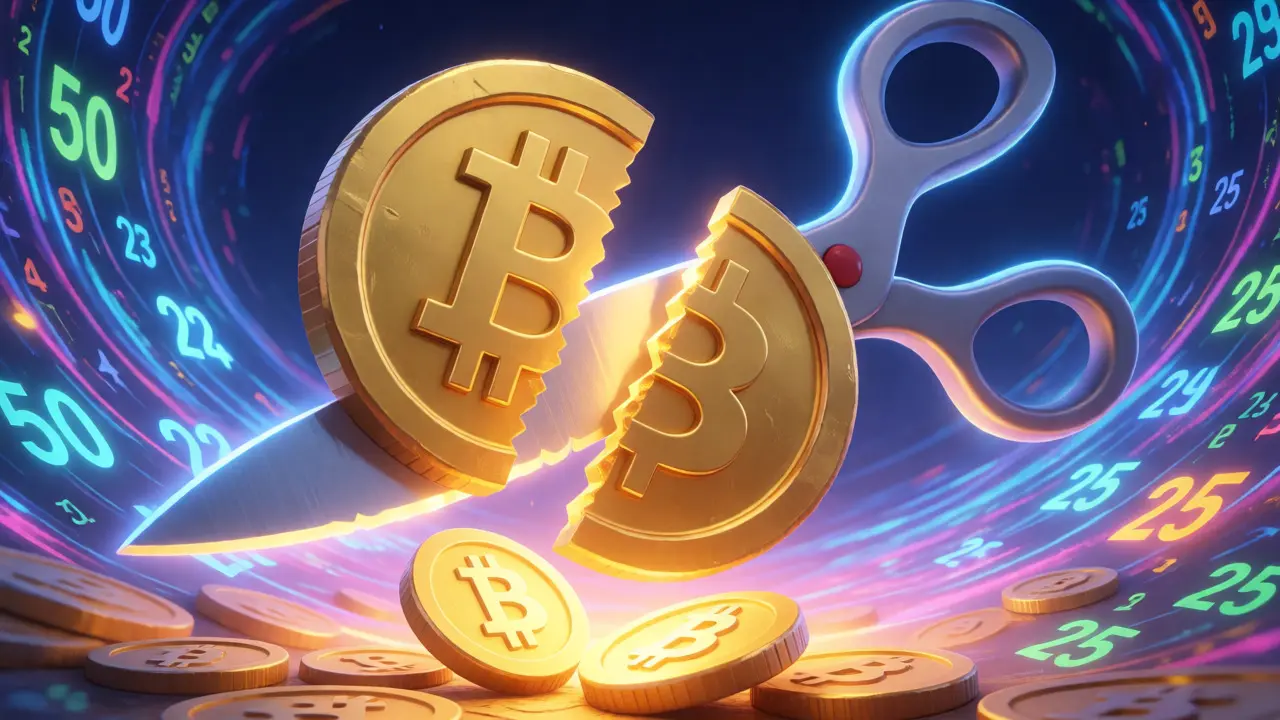
Satoshi Nakamoto, Bitcoin’s creator, didn’t want an infinite supply of coins. He programmed a hard cap of 21 million BTC. To reach this limit gradually, he introduced the halving, a mechanism that cuts the block subsidy in half after every 210,000 blocks.
Since blocks are found roughly every 10 minutes, a halving event happens approximately every four years. Here’s how the history looks so far:
| Date | Event | New Block Subsidy | Approx. Total Supply |
|---|---|---|---|
| Jan 2009 | Genesis Block | 50 BTC | ~1 Million |
| Nov 2012 | 1st Halving | 25 BTC | ~10.5 Million |
| Jul 2016 | 2nd Halving | 12.5 BTC | ~15.75 Million |
| May 2020 | 3rd Halving | 6.25 BTC | ~18.4 Million |
| Apr 2024 | 4th Halving | 3.125 BTC | ~19.7 Million |
As of late 2026, we are deep into the era of the 3.125 BTC subsidy. The next halving is projected for around 2028, when the reward will drop to 1.5625 BTC. This predictable schedule is what makes Bitcoin different from fiat currencies, which can be printed at will by central banks.
Why Miners Still Mine When Rewards Drop
A common question is: "If the reward halves, won’t miners quit?" Sometimes, yes. Inefficient miners often shut down their rigs right after a halving because their electricity costs exceed their revenue. However, the market usually self-corrects.
Two things help balance this out:
- Difficulty Adjustment: Every 2,016 blocks (about two weeks), the network automatically adjusts how hard it is to mine. If many miners leave, difficulty drops, making it easier for the remaining miners to earn rewards.
- Price Appreciation: Historically, Bitcoin’s price tends to rise over time. Even though miners get fewer coins, each coin might be worth significantly more, keeping their total revenue stable or even growing.
For example, in 2024, despite the reward dropping to 3.125 BTC, high transaction fees during periods of network congestion helped keep miners profitable. During peak times, fees accounted for nearly 28% of total miner revenue, up from just 15% before the halving.
The Long-Term Challenge: Transitioning to Fee-Based Security
Here is the big elephant in the room: eventually, the block subsidy will hit zero. This is expected to happen around the year 2140. At that point, miners will rely 100% on transaction fees to secure the network.
Is this sustainable? That’s the debate. Critics argue that if transaction fees remain low (currently averaging around $2.50 per transaction), miners might not earn enough to cover electricity costs. This could lead to a less secure network if major mining companies pull out.
Proponents believe that as Bitcoin adoption grows, so will the demand for block space. They predict that fees will need to average $15-$25 per transaction by 2100 to maintain current security levels. Technologies like the Lightning Network aim to handle small transactions off-chain, reducing pressure on the main chain and potentially allowing higher fees for larger, critical settlements.

Real-World Impact on Miners
If you’re thinking about getting into mining, understand that the economics are tight. Modern mining isn’t done on laptops anymore; it requires specialized hardware called ASICs (Application-Specific Integrated Circuits).
- Hardware Costs: A competitive machine like the Antminer S21 Hydro can cost upwards of $15,000.
- Electricity: You generally need rates below $0.05 per kWh to remain profitable in most regions. Heat dissipation is also a major issue, as these units generate massive amounts of heat.
- Competition: You aren’t just competing against other miners; you’re competing against industrial-scale operations in places with cheap hydroelectric power.
Many individual miners join "mining pools," where they combine their computing power and split the rewards. This smooths out income, turning the lottery-like nature of solo mining into a steady paycheck.
Frequently Asked Questions
Does the block reward change every day?
No, the block subsidy only changes during a halving event, which occurs every 210,000 blocks (roughly every four years). However, the total reward a miner receives varies daily based on the transaction fees included in the blocks they find and the fluctuating price of Bitcoin.
What happens if a miner finds a block but doesn't include their reward?
The coinbase transaction is mandatory. If a miner fails to include a valid coinbase transaction claiming the correct block reward, the block is considered invalid by the rest of the network. The miner loses the opportunity to earn that reward, and another miner will likely win the race to create the next valid block.
Why do transaction fees matter if there is a block subsidy?
Fees serve two purposes. First, they incentivize miners to include specific transactions in their blocks rather than leaving them pending. Second, as the block subsidy decreases over time due to halvings, fees become increasingly important to ensure miners remain financially motivated to secure the network long after new bitcoin issuance ends.
Can the block reward be changed by developers?
Technically, yes, but it would require a hard fork-a fundamental change to Bitcoin's rules that the vast majority of the community and miners would need to agree upon. Given Bitcoin's emphasis on stability and decentralization, changing the fixed supply schedule or halving interval is highly unlikely without overwhelming consensus.
How does the halving affect the Bitcoin price?
Historically, halvings have preceded bull markets, largely due to the reduction in new supply entering the market. However, correlation does not equal causation. Market sentiment, macroeconomic factors, and regulatory news play significant roles. While the supply shock is real, price appreciation often lags behind the halving event itself.