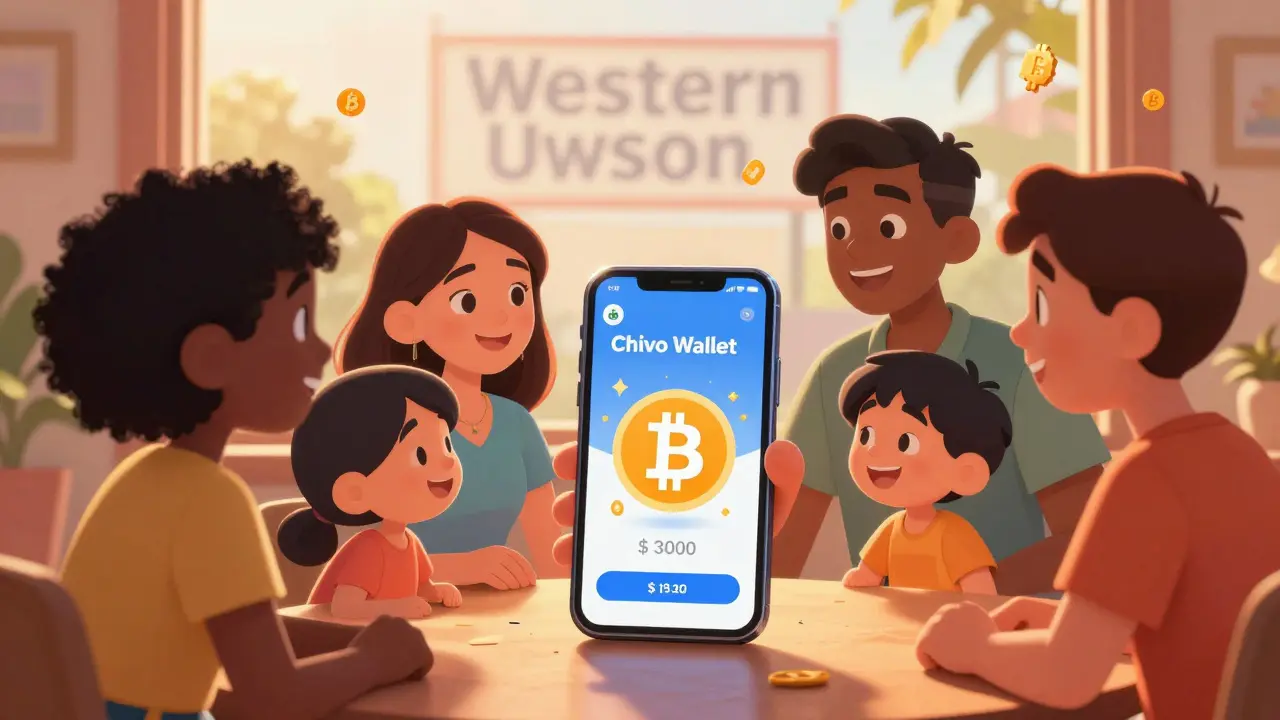
El Salvador made history in September 2021 when it became the first country in the world to make Bitcoin legal tender. At the center of that move was the Chivo wallet - a government-backed app meant to let every Salvadoran send, receive, and spend Bitcoin with zero fees. The idea was simple: cut out expensive remittance middlemen, bring the unbanked into the financial system, and put digital money in the hands of everyday people. But behind the headlines, things got messy - fast.
Why Chivo Was Built
El Salvador’s economy runs on money sent home from abroad. Remittances make up nearly 20% of the country’s GDP. Before Chivo, families relied on Western Union and MoneyGram, where sending $200 could cost $15 or more. For people living paycheck to paycheck, that’s a huge hit. The government claimed Chivo would fix this. No fees. No middlemen. Just Bitcoin, instantly, on your phone. The Chivo wallet wasn’t just a tool - it was a promise. When you downloaded it, the government deposited $30 in Bitcoin into your account. That got people’s attention. By the end of 2021, nearly half the population had installed the app. But downloads aren’t usage. And usage is what matters.How Chivo Was Supposed to Work
Chivo was built to handle two currencies: Bitcoin and the U.S. dollar. Every transaction in Bitcoin was free. Converting Bitcoin to dollars (or vice versa) happened automatically at the point of sale, so merchants didn’t have to worry about price swings. The government partnered with AlphaPoint, a U.S.-based blockchain tech firm with experience in exchange infrastructure, to build the backend. It looked good on paper:- Zero fees for Bitcoin transfers
- Instant settlement
- Government-backed security
- Integration with ATMs and point-of-sale systems
The Problems Started Immediately
Within days, the system started breaking. Users couldn’t log in. Transactions failed. Some people received the $30 bonus - then lost it when the app crashed. Others found their accounts hacked. Identity theft cases spiked. The government had promised a seamless experience, but the infrastructure couldn’t handle the load. Technical issues weren’t the only problem. Bitcoin’s price was volatile. In June 2021, it hit $69,000. By December, it was under $40,000. By early 2022, it dropped to $16,000. People who got $30 in Bitcoin saw their bonus shrink to $7. That didn’t feel like a gift - it felt like a risk they never asked to take. Then there was the learning curve. Many Salvadorans had never used a smartphone properly, let alone a crypto wallet. The government ran training sessions in towns and schools, but it wasn’t enough. One farmer in San Miguel told a reporter: “I don’t understand how Bitcoin works. I just know I lost money when I tried to use it.”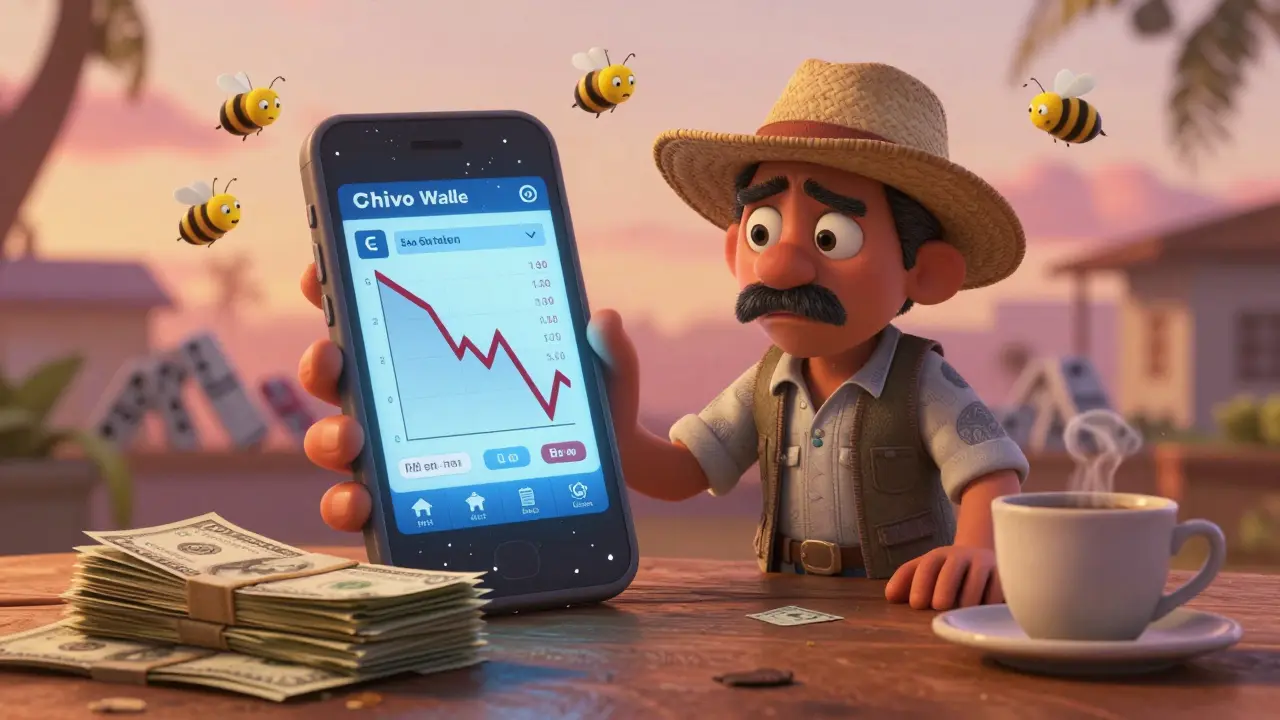
Adoption Wasn’t What They Thought
By 2024, surveys showed that 8 out of 10 Salvadorans weren’t using Bitcoin regularly. Most kept the Chivo app installed - but only because they’d gotten the $30. Once that was gone, they stopped using it. The app became a digital ghost town. The few who used it consistently were mostly people sending money across borders. A mother in New York sending $100 to her sister in Usulután saved $12 in fees. That mattered. But for most people, daily life didn’t change. They still paid in dollars. Still used cash. Still went to the bank. The government’s own data showed something surprising: Chivo’s daily active users peaked at 2.5 million - then dropped to under 800,000 within a year. That’s less than 15% of the population using it regularly. For a national rollout, that’s a failure.The IMF Step In
By 2023, El Salvador’s economy was under strain. Inflation was rising. The government was spending billions trying to prop up Bitcoin’s value by buying more coins. The International Monetary Fund (IMF) stepped in with a $1.4 billion aid package - but with a condition: stop treating Bitcoin as legal tender. The IMF argued that Bitcoin’s volatility posed a systemic risk. If the government held $200 million in Bitcoin and its price crashed 30%, the country’s finances would be thrown into chaos. They didn’t want to be responsible for a national financial crisis. In January 2025, the government officially removed Bitcoin’s legal tender status. Chivo was no longer required to support Bitcoin transactions for public services. It wasn’t banned - but it was no longer the law.What Happened to Chivo After January 2025
Chivo didn’t disappear. The government kept it running - but changed its role. Now, it’s a private fintech app, not a state mandate. The $30 bonus is gone. The automatic Bitcoin-to-dollar conversion still works, but only if users choose it. Merchants can still accept Bitcoin - but they’re no longer forced to. The government still holds a Strategic Bitcoin Reserve of over 6,100 coins, worth around $500 million. They’re not selling. They’re holding - betting Bitcoin will rise again. El Salvador still hosts crypto conferences. The Digital Assets Issuance Act of 2023 created the National Commission of Digital Assets (CNAD), which now regulates private crypto businesses. The door is still open - just not wide open anymore.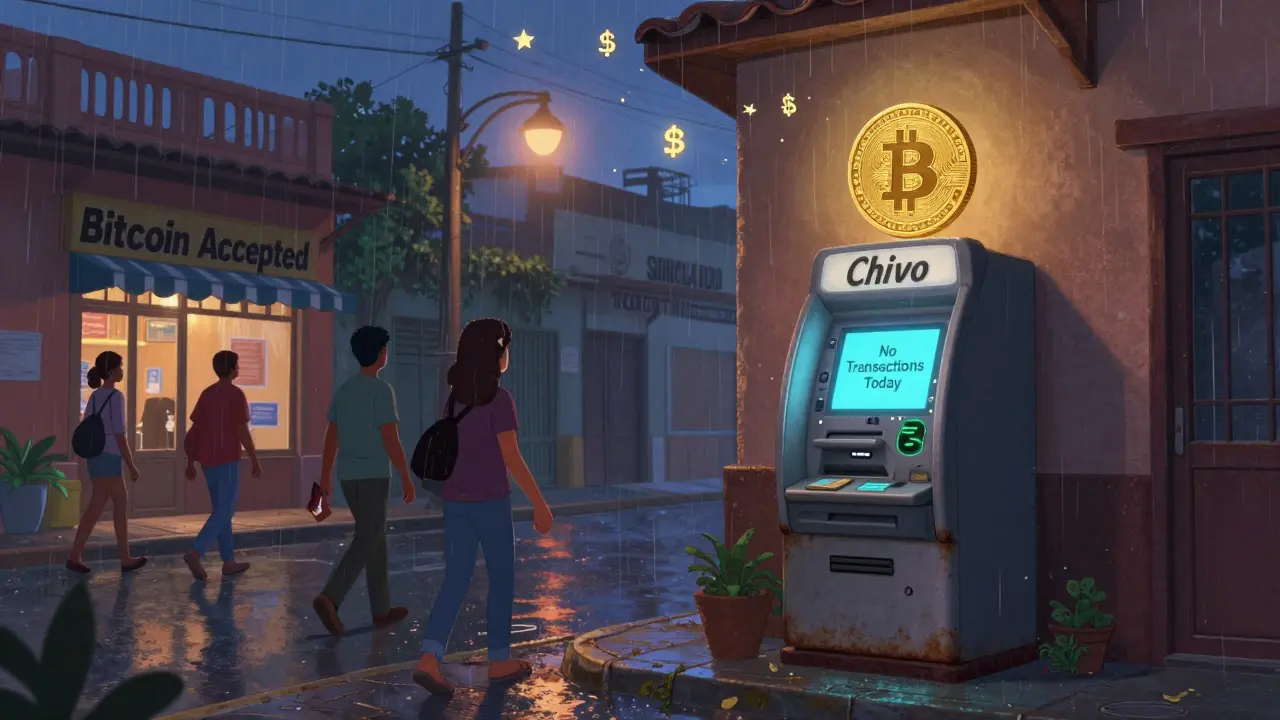
Comments
so like… i downloaded chivo just for the $30 and never opened it again lol. i dont even remember how to use it. my abuela still pays with cash and i dont blame her. why make life harder? 😅
Wait-so you’re telling me the government gave people free Bitcoin… and then didn’t fix the app? And then blamed the people for not using it?!!! That’s not innovation-that’s digital colonialism with a side of performative activism. I’m not even mad… I’m impressed. 🤡
Let’s be real-the infrastructure was a prototype masquerading as a national system. AlphaPoint’s backend? Built for enterprise, not a country of 6M people with spotty 4G. You don’t deploy a blockchain wallet without stress-testing it on 10% of your user base first. This wasn’t a failure of adoption-it was a failure of engineering. And the IMF? They were right to intervene. Volatility isn’t a feature; it’s a bug in sovereign finance.
Also, calling it a ‘digital revolution’ while 80% of users abandoned it? That’s not vision. That’s vanity metrics with a flag.
El Salvador didn’t fail because of Bitcoin. They failed because they confused propaganda with policy. You cannot legislate financial literacy. You cannot mandate trust. And you certainly cannot turn a speculative asset into legal tender without a central bank that can stabilize it. This was a textbook case of technocratic arrogance.
chivo was a scam. period. the $30 was bait. the app was trash. the btc crashed. people lost money. the gov still holds 6k coins. they’re not selling. they’re waiting for the next sucker to buy in.
yo… i’m from nigeria and we tried something similar with eNaira. same story. free money, bad app, no training, people ignore it. the real win? people still use cash. because it works. tech ain’t magic. it’s just… tech.
my cousin in san salvador still uses chivo to send money home. says it’s 5x faster than western union. no fees. no waiting. i think… maybe it’s not dead? just… quiet? 🤷♂️❤️
it’s sad, but also beautiful, how people just… kept going. they didn’t riot. they didn’t burn phones. they just… went back to cash. and kept loving each other. maybe the real revolution was in the humanity, not the blockchain.
🥺
What El Salvador did was unprecedented-not because of Bitcoin, but because it dared to question the global financial hierarchy. The IMF’s reaction? Predictable. The world fears decentralization because it threatens control. Chivo wasn’t meant to be perfect. It was meant to be a spark. And it lit a fire in places no bank ever reached.
Maybe the lesson isn’t that Bitcoin failed. Maybe it’s that we’re not ready for the future… yet.
Oh wow, a country tried to use a volatile asset as currency and people got confused? Shocking. Next you’ll tell me that putting a rocket engine on a bicycle doesn’t make it a spaceship. Congratulations, El Salvador-you proved that people aren’t dumb. And the government? Still trying to sell snake oil.
so… the app still exists? cool. i guess that’s like… the digital equivalent of keeping a broken toaster in the cabinet because you once got free toast with it?
they should’ve just built a better UPI. instead they got obsessed with crypto. dumb. 🤦♂️
lol at the ‘cultural ambassador’ title. i’m pretty sure the only culture chivo promoted was ‘how to lose $30 in 3 clicks’ 🤭
The real innovation wasn’t Bitcoin-it was the narrative. The world now has a case study in the dangers of conflating technological capability with social readiness. Central banks are watching. CBDCs are the new frontier-not because they’re better, but because they’re controllable.
While the experiment had its flaws, it opened a dialogue that many developing nations were afraid to have. The intention-to empower the unbanked-was noble. Perhaps the execution was premature, but the courage to try should not be dismissed. In time, with better infrastructure and education, the vision may yet find its path.