You see the notification pop up on your phone. GameFi Protocol is giving away free tokens, and the campaign is powered by CoinMarketCap. Your heart skips a beat. Free money in crypto? It sounds too good to be true, but isn't that exactly what every successful airdrop feels like before it happens? Before you rush to connect your wallet and sign that transaction, stop. Take a breath. In the world of decentralized finance, "free" often comes with a hidden price tag.
The landscape of crypto giveaways has changed drastically since the early days of Ethereum. Back then, claiming an airdrop was as simple as holding a token and waiting. Today, with thousands of scams targeting unsuspecting users, distinguishing between a legitimate opportunity and a phishing trap is the most critical skill you can have. This guide cuts through the noise to help you verify if the GameFi Protocol (GFI) campaign is genuine and, more importantly, how to protect your assets while participating.
Understanding the GameFi Protocol (GFI) Ecosystem
To evaluate any airdrop, you first need to understand the project behind it. GameFi Protocol (GFI) positions itself as an infrastructure layer for blockchain gaming. Unlike standalone games that launch their own tokens, a protocol aims to provide shared services-like asset interoperability, liquidity pools, or cross-game identity verification-for multiple gaming projects.
In theory, this model creates a robust ecosystem where value flows between different games. If GFI is truly building this infrastructure, its token would likely serve utility functions such as governance voting, staking for rewards, or paying fees for developers using the network. However, many projects use the buzzword "protocol" without delivering substantial technology. When researching GFI, look for technical documentation, GitHub activity, and partnerships beyond just marketing announcements. A real protocol has code; a fake one only has hype.
It is also crucial to check the tokenomics. How many tokens are being distributed? What is the total supply? If 50% of the supply is allocated to the team and investors, the airdrop might just be a marketing cost designed to create sell pressure later. Legitimate projects usually cap airdrop allocations at a small percentage of the total supply to ensure long-term sustainability.
The CoinMarketCap Connection: Verification vs. Partnership
One of the biggest red flags in modern crypto scams is the misuse of trusted brand names. You will often see logos of major exchanges like Binance or data aggregators like CoinMarketCap slapped onto landing pages to build instant trust. But does CoinMarketCap actually partner with every random project that claims they do?
CoinMarketCap primarily lists tokens based on specific criteria: trading volume, liquidity, security audits, and community size. While they occasionally host events or promote featured listings, they rarely manage direct token distribution campaigns for obscure projects. If a website says "Powered by CoinMarketCap," click the logo. Does it lead to an official press release on the CoinMarketCap blog? Or does it lead to a generic page on the project's site?
In past years, there were legitimate events, such as the BSC GameFi Expo, where CoinMarketCap partnered with established projects like Thetan Arena or Binary X for verified airdrops. These were announced on official channels with clear terms. For GameFi Protocol (GFI), you must verify if this partnership exists officially. If you cannot find a direct link from CoinMarketCap’s official social media accounts or news section mentioning GFI, treat the claim with extreme skepticism. Scammers know that seeing a familiar logo lowers your guard.
Red Flags: How to Spot a Fake Airdrop
Before you interact with any contract, run through this checklist. If any of these points apply, close the tab immediately.
- Urgency Tactics: Does the site say "Claim ends in 1 hour" or "Only 50 spots left"? Legitimate airdrops last weeks or months. Urgency is designed to make you act without thinking.
- Spelling Errors: Check the URL carefully. Is it
gamefiprotocol.comorgamefi-protocol-official.xyz? Look for slight misspellings like "GmeFi" or "CoinMarketcap." - Unverified Contracts: When you connect your wallet, does the transaction ask for an "Unlimited Allowance"? This gives the contract permission to drain all your tokens of a specific type forever. Always revoke allowances after interacting with new contracts.
- No Social Presence: Does the project have active Twitter, Discord, or Telegram communities? Are the followers real people or bots posting generic emojis? Check the engagement rates. Low engagement with high follower counts is a classic bot farm signal.
- Requesting Seed Phrases: No legitimate website will ever ask for your 12-word seed phrase. If a form asks for it, it is a scam.
Step-by-Step: Safe Participation Strategy
If you have done your due diligence and believe the GameFi Protocol (GFI) airdrop is legitimate, follow these steps to minimize risk. The goal here is to participate without exposing your main holdings to danger.
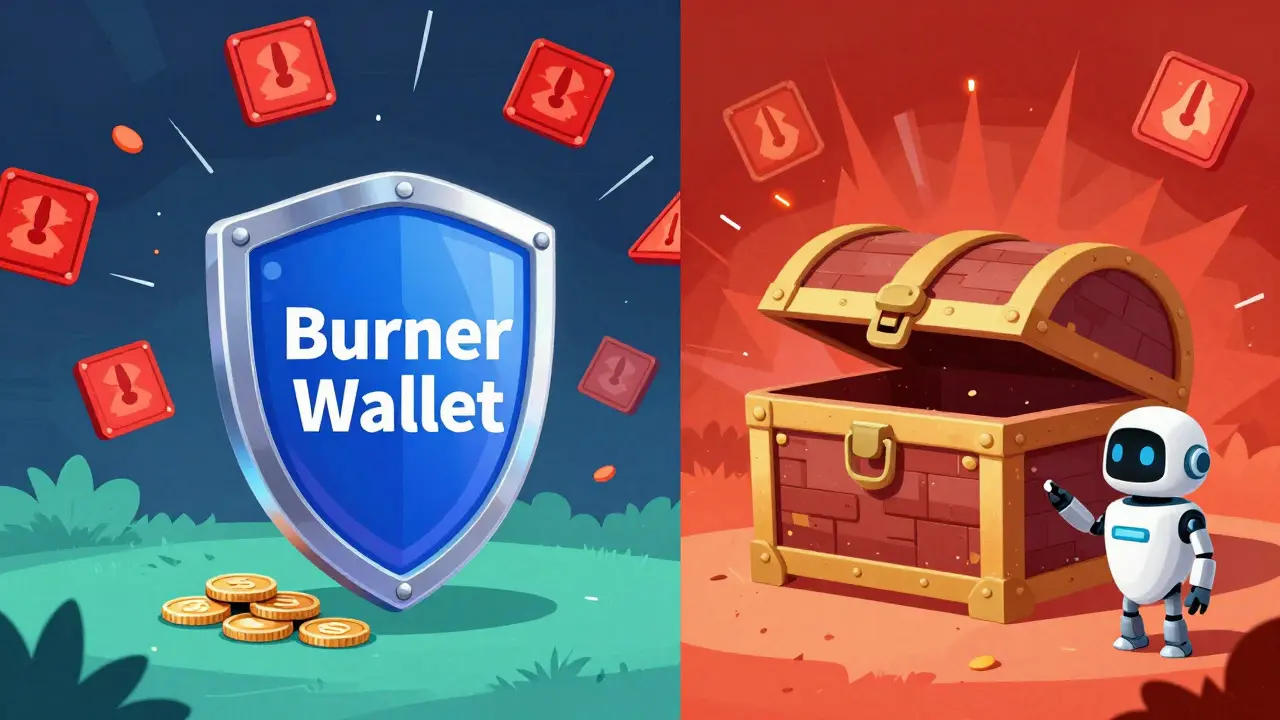
- Use a Burner Wallet: Never connect your primary wallet-the one holding your life savings-to an unproven dApp. Create a new MetaMask or Phantom wallet. Transfer a small amount of ETH, BNB, or SOL (whatever chain GFI is on) just enough to pay for gas fees. Keep the rest safe.
- Verify the Contract Address: Find the official token contract address from the project's verified social media channels (not the airdrop page itself). Copy this address and paste it into Etherscan, BscScan, or Solscan. Check if the contract is verified. If the source code is hidden, proceed with caution.
- Check Liquidity: On the block explorer, look at the liquidity pool. Is there actual money locked in the pool? If the liquidity is near zero, even if you get the tokens, you won't be able to sell them without crashing the price to zero.
- Approve Minimal Amounts: When signing the transaction, if possible, approve a specific amount rather than unlimited. Some wallets allow you to edit the approval amount. If not, use a tool like Revoke.cash to monitor and limit permissions afterward.
- Wait for Distribution: After claiming, wait. Do not swap immediately. Watch how other holders behave. If everyone sells instantly, the price will dump. Patience can sometimes mean the difference between profit and loss.
Comparison: Legitimate vs. Suspicious Airdrops
| Feature | Legitimate Airdrop | Suspicious/Scam Airdrop |
|---|---|---|
| Announcement Source | Official project blog, verified Twitter, CoinMarketCap news | Random DMs, Telegram groups, unofficial websites |
| Wallet Requirements | Connect wallet only; no seed phrases requested | Asks for seed phrase or private key |
| Contract Transparency | Verified source code on block explorer | Hidden source code or proxy contracts with no history |
| Time Pressure | Clear timeline, often lasting weeks | Countdown timers, "last chance" warnings |
| Community Activity | Active discussions, developer updates, AMAs | Bots, silence, or only promotional posts |
What to Do If You Already Claimed
Panic helps no one. If you already connected your wallet and signed a transaction, assess the damage calmly. First, check your wallet balance. Have any tokens disappeared? If yes, note the transaction hash. Second, go to Revoke.cash or Debank and check your approvals. If you granted unlimited allowance to a suspicious contract, revoke it immediately. This prevents future drains on that specific token type.
If you lost funds, document everything. Screenshots of the website, transaction hashes, and chat logs can be useful if you decide to report the scam to platforms like Interpol's IC3 or local cybercrime units. While recovery is rare, reporting helps flag the scam for others. Finally, move your remaining assets to a hardware wallet or a fresh software wallet. Assume the compromised wallet is tainted.
The Future of GameFi Airdrops
As the GameFi sector matures, we are seeing a shift from speculative airdrops to merit-based distributions. Projects are increasingly using tools like Gitcoin Passport or Proof of Humanity to prevent sybil attacks-where one person creates hundreds of wallets to farm free tokens. This means future airdrops may require you to prove you are a unique human user with a genuine history in the ecosystem.
For GameFi Protocol (GFI), watch for announcements regarding vesting schedules. Legitimate projects lock up airdropped tokens for several months to prevent immediate dumping. If GFI implements smart vesting, it signals a commitment to long-term growth rather than a quick cash-out. Stay informed, stay skeptical, and always prioritize security over greed.
Is the GameFi Protocol (GFI) airdrop legit?
As of now, there is limited independent verification of a direct partnership between GameFi Protocol and CoinMarketCap for a specific airdrop. Many scams use the CoinMarketCap name falsely. To verify, check official CoinMarketCap news and the project's verified social media channels. If you cannot find a direct announcement from both parties, assume it is high-risk.
How do I check if a crypto airdrop is a scam?
Look for red flags like urgency tactics, spelling errors in URLs, requests for seed phrases, and unverified smart contracts. Always use a burner wallet for airdrops and check the project's presence on reputable tracking sites like CoinGecko or CoinMarketCap for official listings.
What is a burner wallet and why should I use it?
A burner wallet is a secondary cryptocurrency wallet used for risky interactions like claiming airdrops or testing new dApps. It contains minimal funds, so if the wallet is compromised, your main savings remain safe. It is a best practice for security hygiene in DeFi.
Does CoinMarketCap host airdrops directly?
CoinMarketCap occasionally partners with projects for featured listings or events, but they do not manage token distribution for most projects. Be wary of sites claiming to be "powered by" CoinMarketCap unless you can verify the partnership on their official blog or social media.
What should I do if I connected my wallet to a scam site?
Immediately revoke all token approvals using tools like Revoke.cash. Move any remaining assets to a new wallet. Monitor your transaction history for unauthorized transfers. While fund recovery is difficult, revoking approvals stops further potential losses.