
You’ve probably seen the buzz. Maybe a friend forwarded a link, or you stumbled upon a Discord channel promising free SteakBank Finance tokens. The promise is always the same: deposit assets, stake them, and get rewarded with an airdrop of the native SBF token. It sounds too good to be true because, in the world of decentralized finance, it often is.
As of mid-2026, there is no verified, official airdrop program for SteakBank Finance. In fact, digging into the on-chain data reveals a much more concerning picture. If you are looking for details on how to claim these tokens, you need to stop and read this first. This isn't just about missing out on free money; it's about protecting your capital from potential scams and understanding the reality of this specific project on the Binance Smart Chain ecosystem.
The Truth About the SBF Token Supply
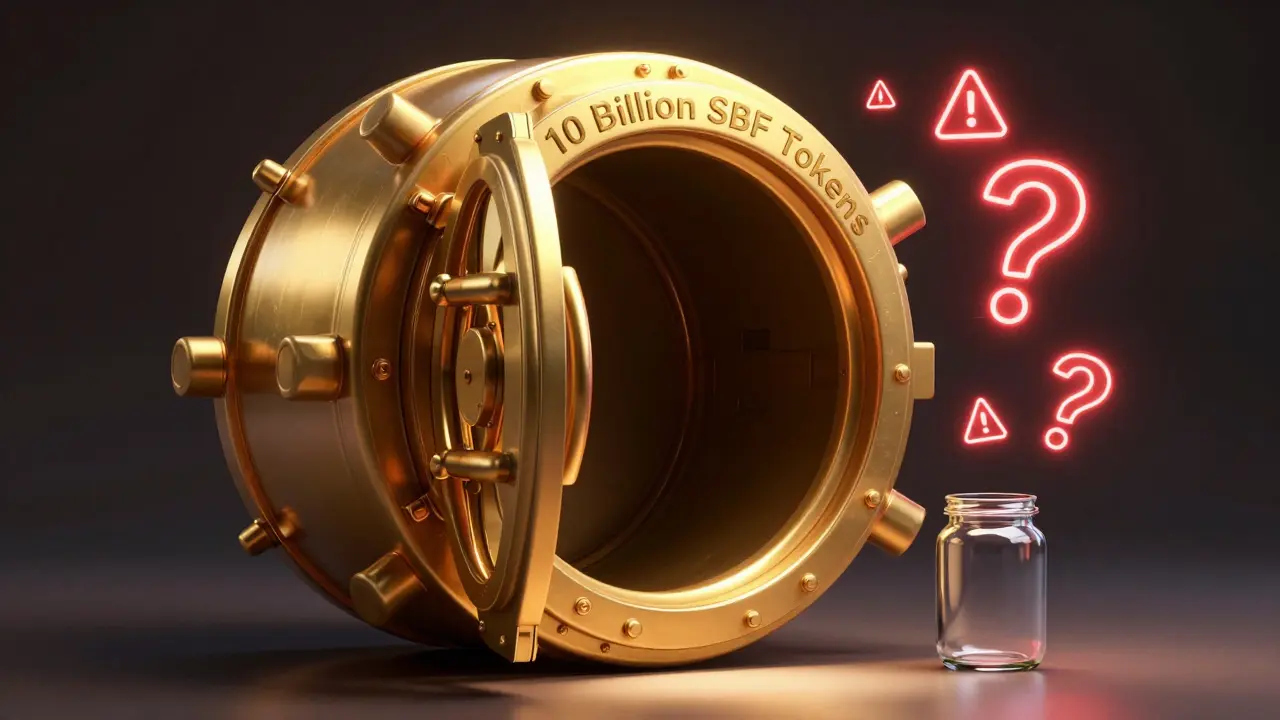
Let’s look at the hard numbers before we talk about rewards. Any legitimate cryptocurrency project has a transparent tokenomics structure. For SteakBank Finance, the documentation claims a maximum supply cap of 10 billion SBF tokens. That sounds impressive until you check the actual circulation.
Current data shows zero tokens in active circulation. Not one. When a project claims to have a massive supply but none are circulating, it usually means one of two things: either the project hasn't launched yet, or the tokens are held entirely by the developers and insiders, waiting to be dumped on unsuspecting users. There is no public trading volume, no price discovery, and no liquidity pools where you could actually sell the tokens if you did receive them.
This lack of circulation is a major red flag. In a healthy liquid staking protocol, tokens are issued when users stake assets. If no one is staking-or if the smart contracts aren't issuing tokens as promised-the "airdrop" might just be a marketing hook to get people to interact with unevaluated code.
| Metric | Status/Value | Risk Level |
|---|---|---|
| Max Supply | 10 Billion SBF | Low (Standard) |
| Circulating Supply | 0 Tokens | Critical |
| Trading Volume | Negligible/None | High |
| Smart Contract Audit | Unverified/Unknown | High |
| Airdrop Confirmation | No Official Announcement | High |
How Liquid Staking Is Supposed to Work
To understand why SteakBank Finance’s current state is suspicious, we need to understand what it *claims* to do. The platform positions itself as a liquid staking solution on the Binance Smart Chain (BSC). In a normal scenario, here is how it works:
- You Deposit Assets: You send BNB or other supported tokens to the platform’s smart contract.
- You Receive Derivatives: In return, you get a liquid derivative token (like SBF). This token represents your stake.
- You Earn Rewards: Your original assets are used by validators to secure the network, earning you staking rewards.
- You Maintain Liquidity: Unlike traditional staking where your funds are locked up, you can trade, lend, or use your SBF tokens in other DeFi protocols while still earning those background rewards.
The value proposition is clear: double utility. You get yield from staking plus yield from using the derivative token elsewhere. Platforms like Ankr Staking and pSTAKE Finance have built successful businesses on this model. They have millions in Total Value Locked (TVL), audited contracts, and active communities.
SteakBank Finance promises the same mechanism. However, without circulating tokens or verified audits, the "smart contract" at address 0xBb53...b01734 remains a black box. Are the funds actually being staked? Or are they sitting in a wallet controlled by the developers? Without transparency, you cannot know.
Why "Airdrop Farming" Is Dangerous Here
You might hear advice online to "farm" the airdrop. This involves interacting with the protocol-staking small amounts, swapping tokens, providing liquidity-to prove you are a user and qualify for future rewards. While this strategy works for established projects launching new tokens, it is incredibly risky with early-stage or unverified projects like SteakBank Finance.
Here are the specific dangers you face if you try to farm the SBF airdrop:
- Smart Contract Vulnerabilities: If the code hasn’t been audited by reputable firms (like CertiK or OpenZeppelin), it may contain bugs that allow hackers to drain user funds. Many "rug pulls" start exactly like this: a promising platform, an upcoming airdrop, and then suddenly, all funds disappear.
- Honeypot Tokens: Even if you receive the SBF tokens, you might not be able to sell them. Honeypot contracts allow you to buy tokens but block any selling function. You end up holding worthless digital receipts.
- Phishing Scams: Fake websites mimicking SteakBank Finance are common. They ask you to connect your wallet to "claim" the airdrop. Once connected, malicious scripts can approve transactions that drain your entire wallet balance, not just the intended interaction.
- Opportunity Cost: Time and capital spent on a zero-supply project is time and capital not spent on verified opportunities. The BSC ecosystem is full of legitimate liquid staking options with proven track records.
Comparing SteakBank to Established Alternatives
If you are interested in liquid staking on Binance Smart Chain, you don't need to gamble on unverified projects. Let’s compare SteakBank Finance against industry standards to see what a safe option looks like.
| Feature | SteakBank Finance (SBF) | Ankr / pSTAKE (Established) |
|---|---|---|
| Token Circulation | Zero (No market) | Active trading pairs |
| Audits | Unconfirmed | Multiple third-party audits |
| Community Size | Limited/Speculative | Large, active user base |
| Risk Profile | Extremely High | Medium (Standard DeFi risk) |
| Liquidity Options | None available | Integrated with major DEXs |
Projects like Ankr and pSTAKE have survived multiple market cycles. They have published roadmaps, regular development updates, and transparent governance. SteakBank Finance lacks these foundational elements. The absence of recent development updates or community announcements suggests the project may be inactive or purely speculative.

Red Flags to Watch For in Crypto Projects
Whether it’s SteakBank Finance or the next big thing popping up on Twitter, here is a checklist to evaluate any airdrop or new DeFi protocol. Use this every time you consider connecting your wallet.
- Check the Circulating Supply: Go to CoinMarketCap or CoinGecko. If the token isn't listed, or if the circulating supply is near zero while the max supply is huge, walk away.
- Verify the Smart Contract: Look for audit reports. If the team says "audit pending" for more than six months, treat it as unaudited. Never trust a verbal promise from a Telegram admin.
- Inspect the Team: Do the founders have public LinkedIn profiles? Are they anonymous? Anonymous teams are not inherently bad, but combined with high-risk features, they increase danger significantly.
- Look for Organic Community: Real communities discuss technology, governance, and issues. Fake communities consist of bots posting "To the moon!" and emoji spam. If the Discord is silent or filled with generic hype, be cautious.
- Test with Dust: If you must interact, use a burner wallet with only the minimum amount required. Never connect your main savings wallet to a new, unverified contract.
What Should You Do Now?
If you have already interacted with SteakBank Finance contracts, take immediate steps to secure your account. Revoke all token approvals on platforms like Revoke.cash. This ensures that even if the contract is compromised later, it cannot access your remaining funds.
For those seeking yield on Binance Smart Chain, stick to protocols with deep liquidity and verified security. The allure of a free airdrop is strong, but the cost of a hack is permanent. In the crypto space, patience and verification are your best tools. Don't let FOMO (Fear Of Missing Out) drive you into a trap disguised as an opportunity.
Monitor official channels for any *verified* news, but assume nothing until you see code commits, audit certificates, and real trading volume. Until then, the safest move is to stay on the sidelines.
Is the SteakBank Finance (SBF) airdrop real?
There is no confirmed, official airdrop program for SteakBank Finance as of June 2026. The project lists zero tokens in circulation, which makes a standard distribution unlikely. Most mentions of an airdrop are speculative or potentially part of phishing campaigns. Always verify information through official, verified social media channels and avoid clicking links from unknown sources.
What is the contract address for SBF?
The primary contract address associated with SteakBank Finance is reported as 0xBb53...b01734 on the Binance Smart Chain. However, due to the lack of audits and circulating supply, interacting with this contract carries extreme risk. Ensure you are copying the address from a verified source, though caution is strongly advised regardless.
Why is the circulating supply of SBF zero?
A zero circulating supply typically indicates that the token has not been launched publicly, or all tokens are held by the development team and insiders. In legitimate liquid staking models, tokens are minted as users stake assets. Zero circulation suggests either the platform is inactive, the staking mechanism is broken, or the project is in a pre-launch phase with no transparency regarding distribution plans.
Is SteakBank Finance a scam?
While we cannot definitively label it a scam without legal determination, SteakBank Finance exhibits several high-risk characteristics common in fraudulent projects: zero circulating supply, lack of public audits, no verifiable trading volume, and vague airdrop promises. These red flags suggest you should exercise extreme caution and likely avoid participating until significant transparency is provided.
What are safer alternatives for liquid staking on BSC?
Safer alternatives include established protocols like Ankr Staking, pSTAKE Finance, and BNB Chain's native staking services. These platforms have undergone multiple security audits, have large total value locked (TVL), active development teams, and transparent tokenomics. They offer similar benefits of liquid staking derivatives but with a proven track record of security and reliability.
How can I protect my wallet if I've already connected to SteakBank?
If you have connected your wallet to SteakBank Finance contracts, immediately revoke all token approvals using a service like Revoke.cash. This prevents the contract from accessing your tokens in the future. Additionally, monitor your wallet for any unauthorized transactions and consider moving your assets to a new, clean wallet address for enhanced security.


Comments
These crypto guys are just thieves. They steal your money and run away. It is evil to promise free tokens when there is nothing there. You should be ashamed of yourselves for even looking at this garbage.
i see you dont understand the real game here. its not about the token its about the data they collect from your wallet. i know because i looked into their code last night while you were sleeping. they are tracking every move you make on bsc. wake up sheeple. the zero supply is a trap to get you to connect so they can drain your other assets too. dont let them win.
hey everyone just wanted to say that yeah this looks sketchy but if you really want to try it use a burner wallet. i did that with another project once and lost like 5 bucks but learned a lot. dont put in more than you can afford to lose. also check revoke.cash after you do it just in case. hope that helps
Another day another rug pull waiting to happen. The fact that people still fall for 'free money' schemes is truly pathetic. Read the contract or go back to playing mobile games.
The analysis provided in the post is superficial at best. A zero circulating supply does not automatically equate to a scam; it often indicates a pre-launch phase where liquidity is being accumulated off-chain. However, the lack of audit reports from reputable firms such as CertiK is indeed a significant oversight that cannot be ignored by prudent investors. One must consider the broader context of BSC ecosystem dynamics before jumping to conclusions.
Great breakdown of the risks involved here 🛡️. As someone who has been in DeFi since the early days, I can confirm that unverified contracts are a major red flag. Always ensure you are using multi-sig wallets for any interactions with new protocols. Stay safe out there! 🚀📉
In my experience working with various blockchain projects across Asia, transparency is key. Without clear tokenomics and active community engagement, these platforms struggle to gain trust. It is important to look at the development history and team background before committing any funds. Cultural differences in business practices also play a role in how these projects are managed.
This is exactly why I avoid most DeFi projects. The risk-to-reward ratio is simply not worth it for amateurs. Stick to established platforms if you have no idea what you are doing.
I totally agree with the caution advised here. It is better to be safe than sorry. If you are new to this space, start small and learn the basics first. There are plenty of resources available to help you understand smart contracts and security audits. Take your time and don't rush into anything.
yo guys just remember that fomo is real but scams are worse. take it slow and do your own research. u dont wanna lose ur hard earned cash on some fake airdrop. stay strong and keep learning!
Hey friends! Let's not be too harsh on newcomers. Everyone starts somewhere. The important thing is to educate ourselves and support each other. We can build a safer community by sharing knowledge and warning others about potential dangers. Together we are stronger! 💪
Hello dear users. In India we have many such cases where people lose money due to lack of awareness. Please be careful and always verify the sources. God bless you all. :)
Oh wow, another article telling us what we already know. Groundbreaking stuff. Can we move on to something more interesting now?
It is concerning to see how easily individuals are swayed by promises of quick riches. This behavior undermines the integrity of our financial systems. We must uphold higher standards of diligence and skepticism when evaluating such opportunities. National pride should also motivate us to protect our citizens from foreign-based fraudulent schemes.
I have been monitoring these entities closely and believe there is a larger conspiracy at play. The silence from regulators is suspicious. They may be complicit in allowing these operations to continue until they have gathered enough personal data from unsuspecting users. Trust no one.
the existential dread of losing everything in a digital void is palpable here. are we truly free if our wealth is controlled by anonymous developers? i feel like i am screaming into the abyss. nobody cares about the little guy anymore. just another cog in the machine.
Look, I get that people are excited about crypto, but this is just dangerous. I've seen too many friends get burned by similar schemes. Please listen to the warnings and protect yourself. Your peace of mind is worth more than any potential profit.
I think the point about revoking approvals is super important. I almost forgot to do that last time and could have lost a lot. Thanks for reminding us all to stay vigilant. Let's keep helping each other stay safe in this wild west of finance.