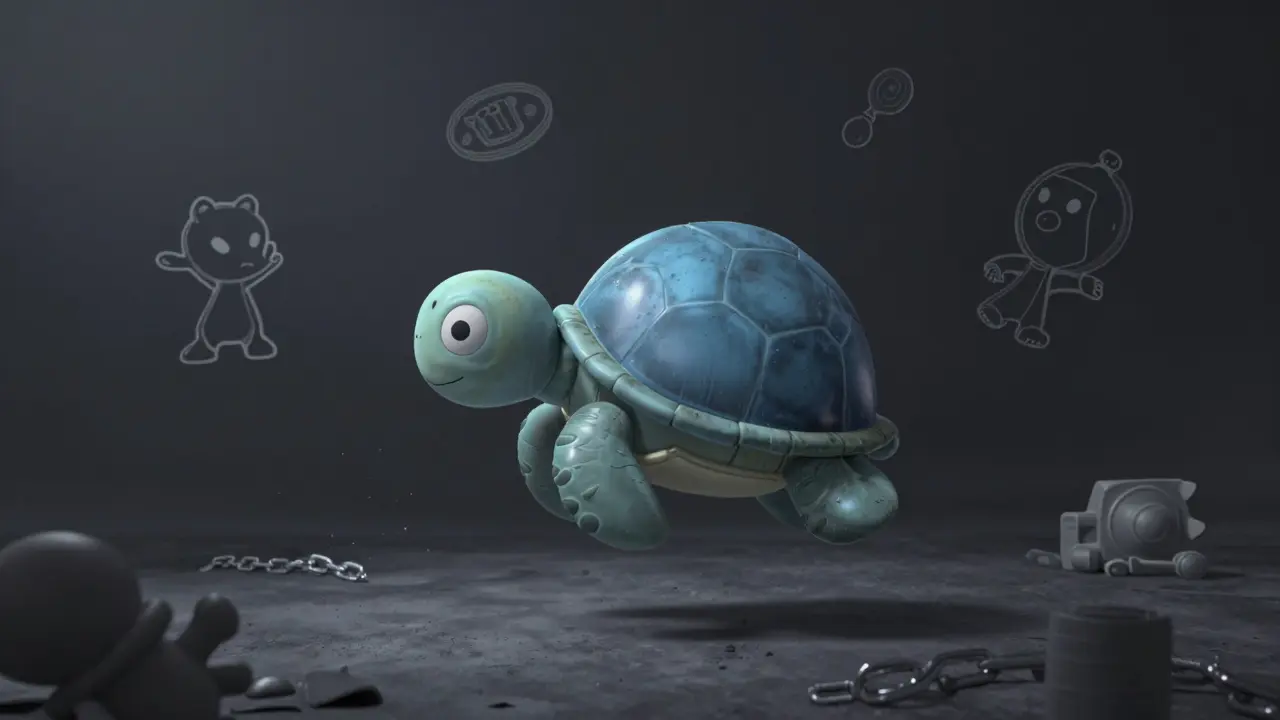
Imagine finding a shiny new Pokémon card in your pocket. You’re excited, you buy it for a dollar, and six months later, it’s worth less than the paper it’s printed on. That is exactly where SQUIRTLE (SQUIRT) is a low-cap meme cryptocurrency operating on the Sui Network blockchain, inspired by the Pokémon character Squirtle sits right now. Launched in 2025 as part of the endless wave of internet-culture tokens, SQUIRT promised "fluid elegance" and nostalgia. It delivered neither. If you are reading this because you saw a ticker symbol flash on an exchange or heard a rumor about a hidden gem, stop. This isn’t a guide on how to get rich quick; it’s a reality check on why most micro-cap meme coins vanish into thin air.
The Basics: What Actually Is SQUIRT?
To understand SQUIRT, you have to strip away the marketing fluff. At its core, it is a standard ERC-20-style token built on the Sui Network is a high-performance Layer 1 blockchain known for parallel transaction execution and Move programming language. Unlike Bitcoin, which stores value, or Ethereum, which hosts applications, SUIRT has no utility. It doesn’t govern a protocol. It doesn’t pay for gas fees. It exists solely because someone created a digital asset named after a water-type Pokémon and listed it on a decentralized exchange.
The project claims to tap into "cultural storytelling," but that’s just fancy talk for having zero function. The total supply is fixed at 1 billion tokens. Sounds manageable, right? Wrong. When you look at the circulating supply, the numbers get messy. Some platforms report nearly all 1 billion are out there, while others show only a few million. This discrepancy is a huge red flag. In crypto, when the data doesn’t match across major aggregators like CoinMarketCap is a leading cryptocurrency price tracking and market data aggregation platform and DexTools is a real-time charting and analytics platform for decentralized finance tokens, it usually means the liquidity pool is either manipulated or practically empty.
The Liquidity Trap: Why You Can’t Sell
Here is the part that will save you money: liquidity. Liquidity is the ability to buy or sell an asset without causing its price to crash. For SQUIRT, liquidity is effectively non-existent. As of mid-2026, multiple sources report a 24-hour trading volume of $0. Zero dollars. Not a penny.
Why does this matter? Imagine you manage to buy $100 worth of SQUIRT. Because there are no other buyers in the pool, you cannot sell those tokens unless you dump them all at once, crashing the price to near-zero instantly. Or worse, you can’t sell at all. The order book is dry. This is common in what analysts call "zombie coins"-tokens that are technically live but have no active traders.
The market capitalization tells the same story. Depending on who you ask, SQUIRT is worth between $5,000 and $8,000. To put that in perspective, the entire global cryptocurrency market is worth trillions. SQUIRT represents a microscopic fraction of that. It is not an investment; it is a statistical anomaly that hasn’t been deleted from the ledger yet.
| Feature | SQUIRTLE (SQUIRT) | Dogecoin (DOGE) | Shiba Inu (SHIB) |
|---|---|---|---|
| Blockchain | Sui Network | Dogecoin Chain (PoW) | Ethereum (ERC-20) |
| Market Cap (Approx.) | $5,430 - $8,360 | $15.6 Billion+ | $8.2 Billion+ |
| 24h Volume | $0 (Illiquid) | $Billions daily | $Hundreds of Millions |
| Utility | None (Speculative only) | Tips, Payments, Charity | NFTs, DeFi Ecosystem |
| Community Size | Virtually Non-existent | Massive Global Base | Large Active Community |
Price Chaos and Data Discrepancies
If you try to find the current price of SQUIRT, you’ll likely end up confused. One site might say it costs $0.000005, while another says $0.00122. That is a difference of over 200x. How can the same coin have two wildly different prices?
This happens because SQUIRT trades on very small, unregulated pairs with no arbitrage bots to correct the price. On larger exchanges like Binance, if they list it at all, the price might be suppressed due to lack of interest. On smaller DEXs, a single large wallet moving tokens can skew the price artificially.
Historically, SQUIRT hit an all-time high of $0.007596 in May 2025. Since then, it has dropped by 99.93%. It briefly bounced back from its November 2025 low, but that was likely just noise, not genuine buying pressure. In the world of meme coins, a 99% drop is not unusual-it’s expected. Most meme coins fail within 18 months. SQUIRT is already showing signs of being one of them.
Is There a Team Behind SQUIRT?
No. And that is dangerous.
Successful crypto projects, even meme coins like Dogecoin or Shiba Inu, eventually develop visible communities, roadmaps, or at least anonymous but consistent developers. SQUIRT has none of this. There is no whitepaper. There is no GitHub repository showing code updates. There are no social media channels with active engagement.
When a project has no identifiable team, it is often called a "rug pull" risk. This doesn’t mean a rug pull has happened yet, but it means the creators could withdraw the remaining liquidity at any second, leaving holders with worthless tokens. Without audits from firms like CertiK or Hacken, you have no way of knowing if the smart contract has backdoors that allow the creator to mint infinite tokens or block your wallet from selling.

The Sui Network Context
SQUIRT operates on the Sui Network is a Layer 1 blockchain designed for speed and scalability using the Move language. Sui itself is a legitimate, growing blockchain with real utility, used for gaming, DeFi, and fast transactions. However, just because a token is on a good chain doesn’t make the token good.
Think of Sui as a busy highway. SQUIRT is a broken-down car parked on the shoulder. The highway is fast and efficient, but the car isn’t going anywhere. Other tokens on Sui, like DEEP (an AI-focused token), have actual use cases and development teams. SQUIRT has neither. It is leveraging the Sui brand for visibility without contributing anything to the ecosystem.
Should You Buy SQUIRT in 2026?
Let’s be blunt: No.
If you are looking for high-risk speculation, there are thousands of other meme coins with at least some community buzz. SQUIRT has no buzz. It has no volume. It has no future roadmap. Buying SQUIRT is not investing; it is gambling with odds stacked heavily against you. The likelihood of this token recovering to its all-time high is statistically near zero.
Instead of chasing dead meme coins, consider looking at established assets with liquidity, transparency, and community support. If you want exposure to the Sui Network, buy SUI itself. If you want meme coin exposure, stick to the top-tier players that have survived multiple market cycles. SQUIRT is a cautionary tale, not an opportunity.
What blockchain is SQUIRTLE (SQUIRT) on?
SQUIRTLE primarily operates on the Sui Network blockchain. While some outdated or incorrect listings may mention Solana, the majority of reliable data points and contract addresses confirm it is a native token on Sui.
Why is the price of SQUIRT different on every website?
The price discrepancies occur because SQUIRT has extremely low liquidity. Different exchanges and decentralized pools have isolated order books with little to no trading activity. This allows prices to drift wildly without correction, making it impossible to determine a true market value.
Is SQUIRTLE a scam?
While there is no definitive proof of a malicious hack, SQUIRT exhibits many characteristics of high-risk or abandoned projects. These include anonymous creators, zero utility, no security audits, and virtually non-existent trading volume. These factors make it highly susceptible to rug pulls or permanent loss of value.
Can I still buy SQUIRTLE in 2026?
Technically, yes, if you can find a working pair on a decentralized exchange. However, due to the reported $0 trading volume, executing a trade may be impossible or result in extreme slippage, meaning you would lose most of your funds in fees and price impact.
What is the total supply of SQUIRT?
The total supply of SQUIRTLE is fixed at 1,000,000,000 (1 billion) tokens. However, the circulating supply is unclear and varies significantly between data providers, ranging from millions to billions, indicating potential data errors or locked/unverified tokens.