
Imagine trying to buy a house in another country. You'd likely deal with a mountain of paperwork, expensive lawyers, confusing wire transfers, and a prayer that the title deed is actually legitimate. It's a slow, fragmented process that feels like it belongs in the 1980s. This is where Propy (PRO) is an Ethereum-based blockchain platform designed to move the real estate market on-chain. By replacing legacy systems with smart contracts, it aims to make buying property as easy as buying a stock online.
The Core Idea: Why Put Real Estate on a Blockchain?
The real estate market is massive-roughly $300 trillion globally-but it's incredibly inefficient. Most transactions rely on "trusted" intermediaries who take a cut of the profit and slow down the process. Propy tackles this by using a decentralized ledger. Instead of relying on a paper trail that can be lost or forged, every transaction is recorded on a blockchain, making it immutable and transparent.
For the average person, this means no more waiting weeks for a title search or worrying about hidden fees from a middleman. By digitizing the process, Propy allows buyers and sellers to interact directly. This is especially a game-changer for international investors who usually face massive regulatory and banking hurdles when moving money across borders.
How Propy Works: The Tech Behind the Title
At its heart, Propy isn't just a coin; it's an ecosystem. It relies on Ethereum is the decentralized computing platform that provides the smart contract functionality Propy needs to automate agreements . When a buyer and seller agree on a price, a smart contract acts as the escrow. It holds the funds and the digital representation of the property, only releasing them once all predetermined conditions-like inspections or document verification-are met.
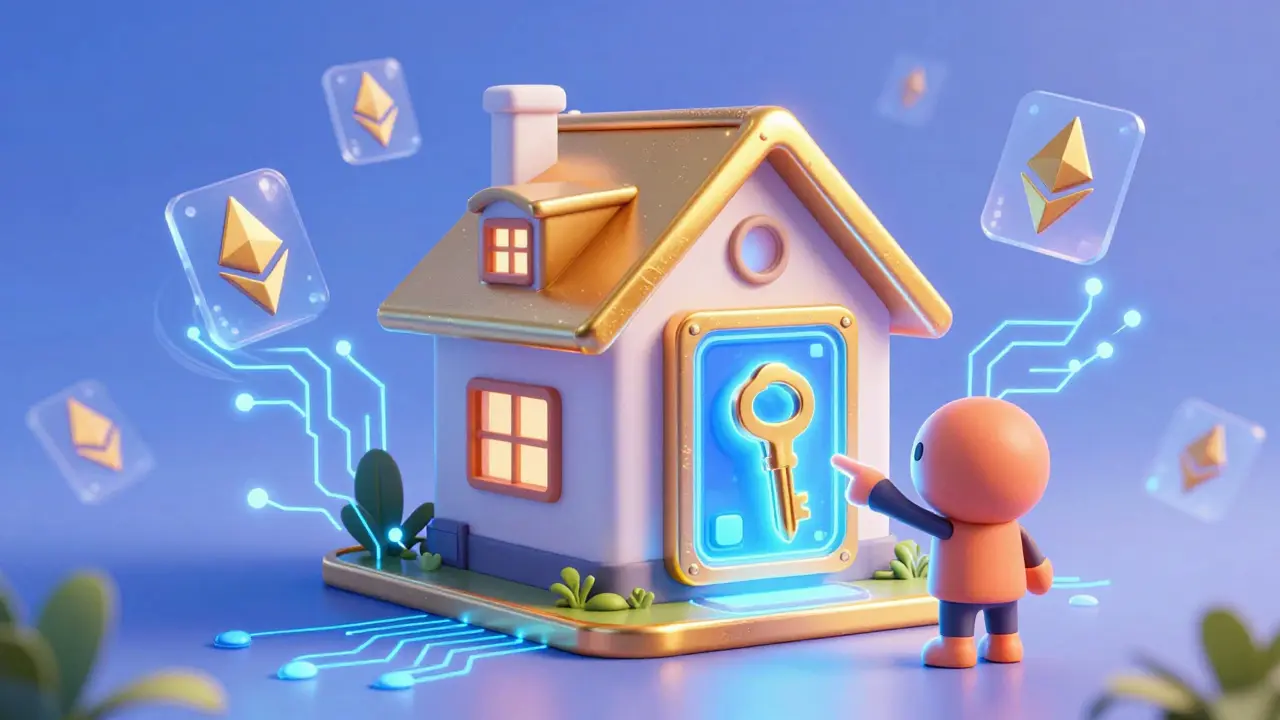
One of the most innovative parts of the system is the use of NFTs (Non-Fungible Tokens) which serve as digital certificates of ownership for specific real estate parcels . By turning a property title into an NFT, Propy creates a secure, transferable asset that can be traded almost instantly. This removes the need for traditional title insurance and manual registries that are prone to human error.
| Feature | Traditional Process | Propy Approach |
|---|---|---|
| Intermediaries | Brokers, Lawyers, Escrow Agents | Smart Contracts |
| Closing Time | Weeks or Months | Significantly Reduced/Near-Instant |
| Transparency | Private, Fragmented Records | Public, Immutable Ledger |
| Payment Method | Bank Wires, Fiat Currency | Cryptocurrencies (PRO, ETH, etc.) |
| Accessibility | High Capital, Local Focus | Fractional Ownership, Global Reach |
The Role of the PRO Token
You might wonder why a platform needs its own currency. The PRO token is the native utility token of the Propy ecosystem used for payments and platform services . It isn't just a speculative asset; it's the fuel that keeps the engine running. Users use PRO to pay for transaction fees and access specialized services within the marketplace.
One of the big draws for token holders is the scarcity. There is a fixed total supply of 100,000,000 tokens. In the world of crypto, a hard cap usually helps maintain value as demand for the platform's services grows. Beyond simple payments, Propy is introducing staking features, allowing users to earn rewards while helping stabilize the network. They've even integrated lending capabilities, where you can loan out your crypto holdings to earn interest, blending real estate with DeFi (Decentralized Finance) which removes traditional banks from financial transactions like lending and borrowing .
Real-World Assets (RWA) and the Future of Ownership
Propy is a leading player in the Real World Asset (RWA) category, which refers to the process of tokenizing physical assets like real estate or gold and bringing them onto a blockchain . This isn't just about making it easier to buy a whole house; it's about fractional ownership.
Think about it: most people can't afford a $500,000 apartment in New York or London. But what if you could buy 1% of that property via an NFT? You would own a fraction of the asset and receive a proportional share of the rental income. Propy's infrastructure makes this possible, democratizing access to high-value real estate for people who previously were priced out of the market.
To make this even more secure, Propy has integrated AI into its Title and Escrow services. This combination of AI and blockchain ensures that the data entering the chain is accurate, further reducing the risk of fraud in regions where property registries are unreliable or outdated.
Key Milestones: From Idea to Execution
Propy hasn't just stayed in the "concept" phase. Since its founding in 2016 by Natalia Karayaneva, the platform has hit several major markers. Back in 2018, they successfully facilitated the first-ever blockchain-based real estate transaction in the United States, specifically in California. This proved that the legal framework of the US could actually coexist with blockchain technology.
By 2019, the Transaction Platform was live, allowing agents and buyers to complete deals entirely online. This was a huge step forward from the "digital signatures on a PDF" approach that many agencies call "digital transformation." Propy's approach is deeper; it changes how the asset is recorded, not just how the document is signed.
What to Expect in 2025 and Beyond
The roadmap for Propy is aggressive. They are currently pursuing a $100 million financing initiative that mixes private credit with DeFi loans. Why? Because they want to buy actual title firms. Instead of just hoping title companies use their software, Propy plans to acquire these firms and upgrade them from the inside out, replacing old paper-based closings with their on-chain model.
They are also leaning into "gamification." By adding game-like mechanics to the ecosystem, they hope to attract a younger generation of investors who are comfortable with digital assets but intimidated by the traditional real estate market. Between crypto-escrow services and the push for global borderless transactions, the goal is to make the Propy (PRO) ecosystem the default layer for all property ownership.

Common Pitfalls and Considerations
While the tech is impressive, it's not without challenges. The biggest hurdle isn't the code-it's the law. Real estate is governed by local, state, and national laws that vary wildly. A smart contract might be technically perfect, but if a local government doesn't recognize a blockchain record as a legal deed, the system breaks. Propy is fighting this by working within existing frameworks and focusing on the "closing" part of the deal first.
Additionally, for those looking at PRO from an investment perspective, remember that utility tokens are tied to the adoption of the platform. If more people use Propy to buy houses, the demand for PRO tokens generally increases. However, like all crypto assets, it remains subject to market volatility and the regulatory shifts of the broader Ethereum ecosystem.
Is Propy legal for buying houses?
Yes, Propy works within the legal frameworks of the regions where it operates. For example, they successfully completed a legal real estate transaction in California. However, the legal recognition of blockchain titles varies by country, so users should check local regulations.
How does the PRO token differ from Bitcoin?
Bitcoin is primarily a store of value or a medium of exchange. PRO is a utility token specifically designed for the Propy ecosystem. It is used to pay for services, fees, and to participate in the platform's governance and staking mechanisms.
Can I buy a fraction of a house with Propy?
Propy is building the infrastructure for fractional ownership using NFTs. This allows a single property to be split into multiple digital tokens, enabling smaller investors to own a piece of a high-value asset and earn a portion of the rent.
Does Propy eliminate the need for a real estate agent?
It eliminates the need for many of the *administrative* tasks agents and lawyers handle, such as escrow and title verification. While it doesn't remove the need for a professional to help find a house or negotiate a price, it removes the middleman from the closing process.
What happens if I lose my PRO tokens?
Since PRO is an Ethereum-based token, it is stored in a digital wallet. If you lose your private keys or seed phrase, you lose access to your tokens. There is no central "password reset" for decentralized wallets.
Next Steps for New Users
If you're new to the world of RWA and want to explore Propy, start by setting up a compatible Ethereum wallet (like MetaMask). From there, you can track the PRO token on major exchanges to understand its price movements. If you're a property owner, look into the Propy Transaction Platform to see how your current closing process compares to the on-chain model.
For those interested in the investment side, keep an eye on Propy's acquisition of title firms. This will be the clearest signal of whether they can successfully bridge the gap between the "old world" of paper deeds and the "new world" of blockchain ownership.

Comments
It is fascinating to think about how the concept of 'home' shifts when it becomes a liquid asset. We are moving toward a world where stability is traded for accessibility, which is a profound psychological shift for society.
The premise is fundamentally flawed. You cannot tokenize a legal right that depends on a physical jurisdiction's whims. If the local magistrate decides your NFT doesn't count, you have a very expensive digital picture of a house you can't enter. This is a classic pump-and-dump scheme wrapped in 'innovation' to lure in retail investors who don't understand property law.
This could be such a blessing for people in emerging markets! In many places, land records are a mess, and blockchain could bring the transparency we desperately need to empower small landowners.
Call me a dinosaur, but I love the smell of a dusty old deed. There is something delightfully tactile about a paper trail that a fancy Ethereum smart contract just can't replicate. Who needs efficiency when you can have a bureaucratic odyssey?
STOP OVERTHINKING IT! Fractional ownership is the way to go! Get in now or stay broke forever!
From a professional standpoint, the integration of AI for title verification is the most promising aspect. Ensuring the integrity of the data before it is committed to the blockchain is paramount for the system's long-term viability.
too much hype lol
just another way to lose money in a wallet you'll probably forget the key to :)
Everyone acts like this is new. I've been telling people about RWA for years. The only thing that actually matters here is the PRO token price, and honestly, it's all just a game of musical chairs until the regulators wake up.
I feel so strongly that we need more of this!! It is just so heartbraking to see people struggle with such old systems. We must find a way to make it work for everyone, even if there are a few typos in the legal docs along the way!!
It is simply common sense that this won't work. Most people can't even use a smartphone properly, and we expect them to manage their house deeds via a crypto wallet. It's a bit naive to think the world is ready for this.
I wonder if this could help with affordable housing initiatives by allowing communities to collectively own land? That would be a wonderful application of the tech.
too many words
just buy the dip
The transition will be slow, but as long as it remains inclusive and helps those in underdeveloped regions, it is a step forward. We should embrace the change carefully.