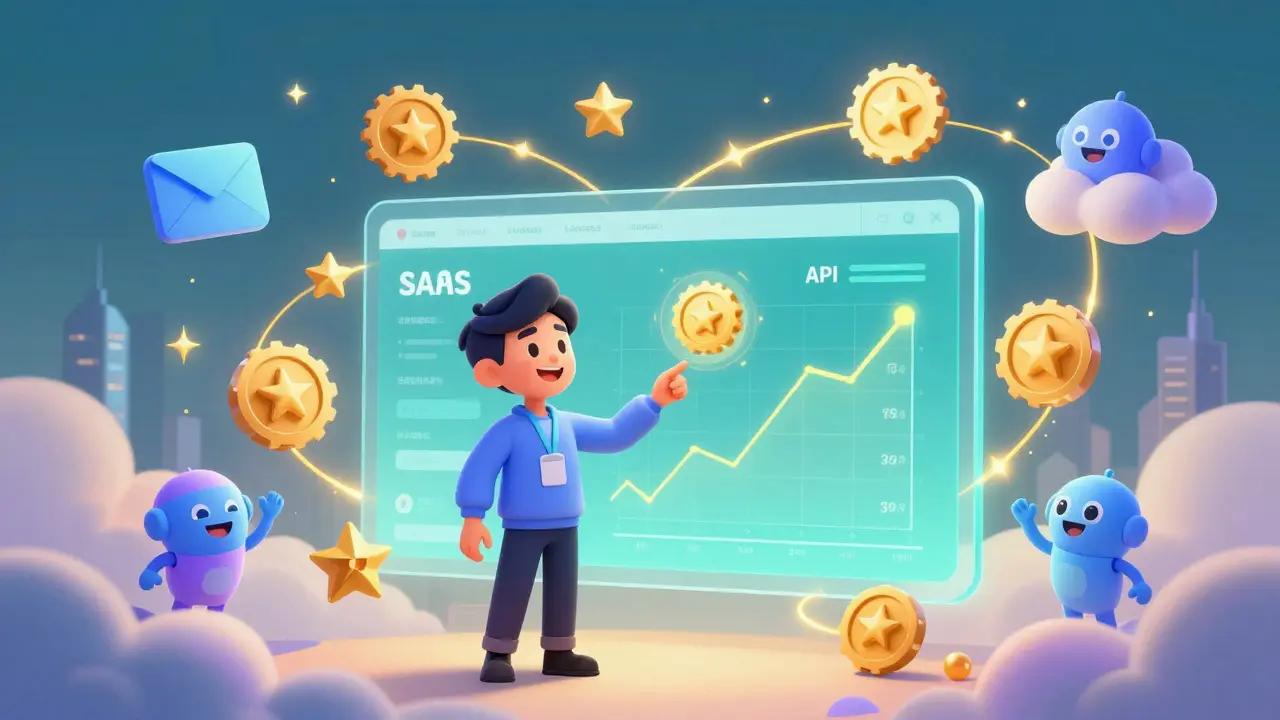
Valyr (VALYR) isn’t another meme coin chasing trends. It’s a behind-the-scenes tool trying to solve a real problem: how do you turn everyday digital services - like a SaaS app, an API, or a microservice - into something that works on the blockchain? Most people think of crypto as Bitcoin or Ethereum, but Valyr is building the plumbing that lets non-blockchain businesses plug into Web3 without needing a PhD in smart contracts.
Think of it this way: if you run a subscription-based app that charges users monthly, Valyr lets you turn that monthly fee into a tokenized asset. Instead of just collecting payments through Stripe or PayPal, you can now let users hold a piece of your service as a blockchain-based token. That token can be traded, staked, or even used as collateral in DeFi protocols. Suddenly, your app isn’t just a tool - it’s a financial asset.
How Valyr Works: From SaaS to Blockchain
Valyr’s core innovation is its tokenization engine. It’s a simple interface that lets businesses connect their existing digital services to the Ethereum blockchain. No coding required. You don’t need to build a new app or rewrite your backend. You just link your API endpoints or SaaS dashboard to Valyr’s system. Then, the platform automatically generates a token that represents usage, revenue, or access rights.
For example, a company offering a weather data API could tokenize it. Every time someone calls that API, the system records the usage. That data becomes part of the token’s value. Users who hold the VALYR token tied to that API can earn rewards based on how much the API is used. Developers who build on top of it can stake tokens to get discounted access. It turns a technical service into a living, economic ecosystem.
This isn’t theoretical. Valyr already lists real-world services on its marketplace. There are tokenized email marketing tools, CRM dashboards, and even AI inference APIs. Each one has its own token, usage stats, and revenue stream tracked on-chain. Investors can browse these like products on Amazon - but instead of buying a product, they’re buying exposure to its future income.
The VALYR Token: Supply, Distribution, and Where It Lives
The VALYR token is an Ethereum-based ERC-20 token. Its total supply is capped at 1 billion tokens. As of now, 999.62 million are already in circulation, meaning almost the entire supply is out in the market. There’s no more minting planned - this isn’t a project that’s going to flood the market later.
The smart contract address for VALYR is 0x8A85...31f7f4 the official Ethereum contract address for the VALYR token. You can verify transactions, check balances, or audit the contract on Etherscan using this address. It’s one of the few crypto projects that makes its core infrastructure publicly verifiable.
Valyr doesn’t have a traditional mining or staking reward system. Instead, the token acts as a utility and governance key within its own ecosystem. Businesses that want to list their services on the Valyr marketplace must hold a minimum amount of VALYR. Developers who build integrations or create new tokenization templates earn VALYR as a reward. It’s a self-sustaining loop: more services attract more users, which increases demand for the token.
Where You Can Trade VALYR and What the Price Looks Like
VALYR is available on several major exchanges, including Bybit, Crypto.com, MEXC, and TradeSanta. But here’s the catch - prices vary wildly between them.
As of March 2026:
- Bybit shows $0.00001023 per VALYR
- Crypto.com lists it at $0.0000218
- TradeSanta reports $0.00000724
That’s a 200% difference between the highest and lowest prices. Why? Because the token has low trading volume - under $4,000 in the last 24 hours on most platforms. This means a few large buys or sells can swing the price hard. It’s not a liquid asset like Bitcoin or Ethereum. If you’re thinking of trading VALYR, be ready for wild swings. The market cap is under $10,000 USD across all exchanges combined.
Don’t rely on price alone. VALYR’s value isn’t just in speculation - it’s tied to real usage. If 50 new SaaS tools go live on the Valyr platform next month, demand for the token could spike, even if the price is flat today.
Who Is Valyr For?
Valyr isn’t aimed at retail investors looking to flip coins. It’s built for:
- Developers who build APIs or SaaS tools and want to monetize them beyond subscriptions
- Startups that need to raise capital without giving up equity - tokenizing usage rights is a new funding model
- DeFi protocols that want to integrate real-world revenue streams into yield strategies
- Web2 companies trying to transition into Web3 without rebuilding everything from scratch
Imagine a small team running a niche analytics tool. Instead of charging $20/month, they tokenize their service. Users who pay in VALYR get early access, voting rights on feature updates, and a share of future revenue. It’s not just a payment - it’s ownership.
What’s Missing? The Unknowns
Valyr’s idea is strong, but it’s still early. There’s no public whitepaper. The founding team hasn’t been officially named. There’s no detailed roadmap with timelines. No security audit reports have been published. Community feedback is scarce. The project’s Twitter/X account exists, but updates are infrequent.
That doesn’t mean it’s a scam. Many serious Web3 projects start this way - building quietly before going public. But it does mean you’re investing in potential, not proven results. If you’re considering VALYR, treat it like a startup investment: high risk, high reward, and no guarantees.
The Bigger Picture: Valyr and the Internet Capital Markets
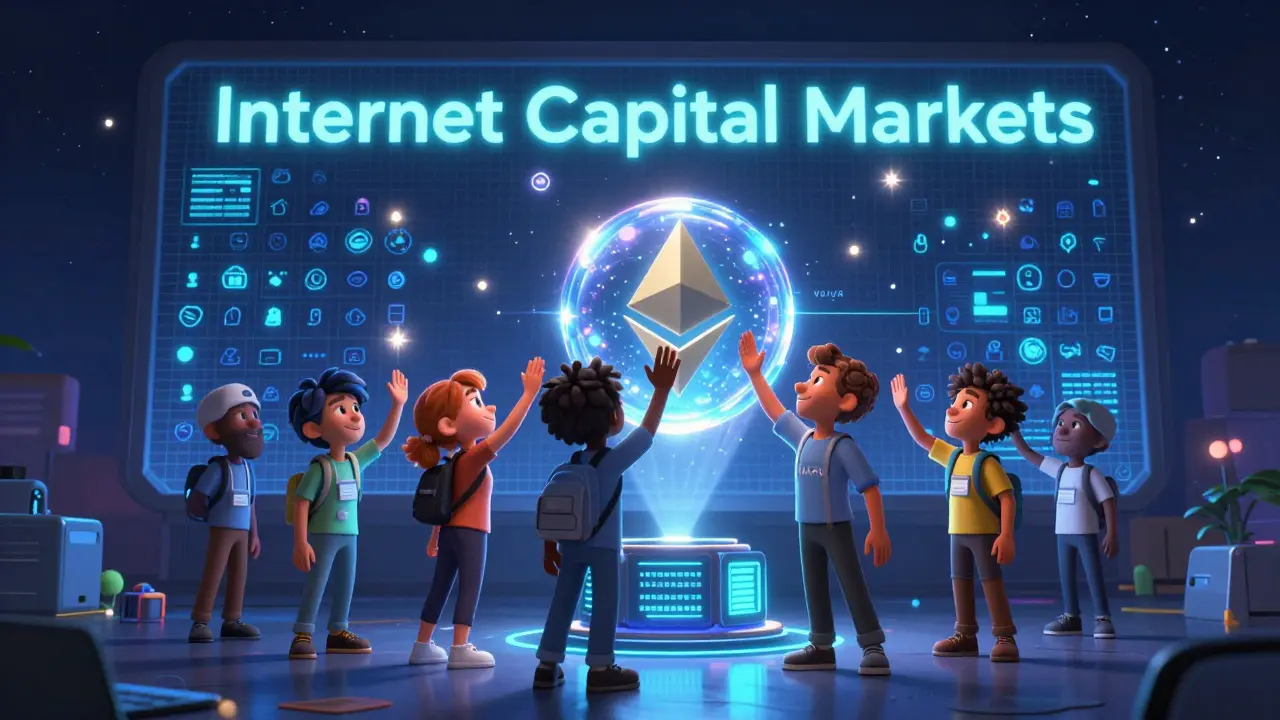
Valyr’s vision is bold: it wants to create what it calls the "Internet Capital Markets." That’s a fancy way of saying: every digital service should be tradeable like a stock. Not because it’s a company, but because it generates real, measurable value.
Think of Netflix. Its value comes from subscribers and content. Valyr wants to let a small API provider do the same - tokenize their usage, let people trade it, and let the market decide its worth. This could change how software is funded, owned, and valued.
If this works, Valyr could become the Shopify of Web3 tokenization - the platform that lets anyone turn their digital product into a blockchain asset. Right now, it’s still small. But the infrastructure is there. The technology works. The question isn’t whether it’s possible - it’s whether enough businesses will adopt it.
Is Valyr (VALYR) a good investment?
Valyr isn’t a traditional investment like Bitcoin or Ethereum. Its value is tied to adoption of its tokenization platform. If more SaaS companies start using it, the token could rise. But if adoption stalls, the price may stay flat or drop. Only invest what you can afford to lose. It’s speculative, not stable.
Can I stake VALYR tokens?
No, there is no official staking program for VALYR tokens. Unlike many crypto projects, Valyr doesn’t offer rewards for locking up tokens. The token is used for access, governance, and marketplace fees - not yield generation. Be cautious of third-party sites claiming to offer staking - they’re likely scams.
Where can I buy VALYR tokens?
VALYR is available on Bybit, Crypto.com, MEXC, and TradeSanta. Always use the official contract address: 0x8A85...31f7f4. Never send funds to any other address. Check the exchange’s listing page to confirm it’s the real VALYR token - there are fake versions on lesser-known platforms.
Is Valyr audited for security?
There are no publicly available security audit reports for Valyr’s smart contracts as of March 2026. While the contract is on Ethereum and can be viewed on Etherscan, no third-party firm has published a formal audit. This is a risk. Always assume un-audited contracts could have hidden vulnerabilities.
What makes Valyr different from other tokenization projects?
Most tokenization projects focus on real-world assets like real estate or commodities. Valyr is different - it tokenizes software. APIs, SaaS tools, microservices - things already running on the internet. This makes it uniquely suited for developers and digital businesses, not just investors looking for asset-backed tokens.
Next Steps: What to Do If You’re Interested
If you’re a developer or run a digital service, visit the Valyr website and test their tokenization engine. It’s free to try. See if your app can be listed. If you’re a trader, monitor the price on multiple exchanges - don’t trust one source. Track how many new services get added to the marketplace each week. That’s the real indicator of growth.
Valyr isn’t a coin you buy and forget. It’s a tool - and like any tool, its value depends on how you use it.

Comments
Valyr isn't just tech-it's a philosophical shift. We've been treating software as a product, but what if it's a *living entity*? A tokenized API doesn't just generate revenue-it generates relationships. Every call, every user, every transaction becomes a thread in a decentralized social contract. This isn't about money. It's about redefining ownership in the digital age. If we can tokenize a weather API, why not tokenize a therapist's time? A teacher's lesson? A poet's verse? The blockchain doesn't just record value-it reanimates it. We're not building a new financial layer. We're rebuilding the soul of the internet.
The ERC-20 tokenomics here are fundamentally flawed. 999.62M circulating with zero emission mechanism? That’s not deflationary-it’s a dead end. No staking, no yield, no liquidity incentives. This isn’t a protocol-it’s a graveyard for speculative capital. The fact that trading volume is under $4k across four exchanges proves it. This isn’t innovation. It’s a liquidity trap dressed up as infrastructure.
Let’s be brutally honest: this reads like a VC pitch deck written by someone who’s never shipped code. "Tokenize your SaaS"? You think a small dev team running a CRM tool gives a damn about blockchain? They care about uptime, customer support, and Stripe fees. Valyr’s entire value proposition assumes developers are crypto-native-which they’re not. And the price discrepancies between exchanges? That’s not market inefficiency. That’s a pump-and-dump waiting to happen. Also, no audit? Seriously? You’re asking people to trust a contract with no third-party review. That’s not bold. That’s negligent.
Interesting. I’m gonna try it out.
Of course. Another "Web3 solves everything" scam. The team is anonymous. No whitepaper. No roadmap. And you’re telling me this is the future of software monetization? Please. This is how they lure in retail fools who don’t know the difference between a blockchain and a blockchain-themed t-shirt. The fact that it’s listed on MEXC and TradeSanta? Red flag. Those are the exchanges you go to when your coin got kicked off Binance. And don’t get me started on the "Internet Capital Markets" buzzword-sounds like a Ponzi scheme with a PowerPoint.
Wow. So now my email marketing tool is a "financial asset." Next they’ll tokenize my toaster. At least with meme coins, you know you’re gambling. This? This is financial gaslighting. "It’s not speculation-it’s adoption." Yeah, right. Like when they said NFTs were "digital art."
THIS IS THE FUTURE 🚀✨
Imagine if every SaaS tool could pay YOU just for using it. That’s not crypto. That’s justice. I’ve been waiting for this since 2017. The old world wants to control everything. Valyr? It’s giving power back. 💪🔥
USA built the internet. Now we’re letting some anonymous devs tokenize it? No. This isn’t innovation-it’s surrender. If you want to monetize APIs, use AWS. If you want to build real value, build in America. Not some Ethereum ghost town with a 0.00000724 token. This is why we lost tech leadership. We let crypto bros turn innovation into a casino.
This is a scam. No audit. No team. Price jumps 200% between exchanges? That’s not market volatility. That’s insiders moving the price. I’ve seen this before. They call it "tokenization." I call it theft. Don’t touch this. Run. It’s rigged.
I’m not sure I’m convinced-but I’m not dismissive either. There’s something quietly powerful here. The idea that a small API could become a tradable asset, not because it’s a company, but because it *does something real*-that’s poetic. It’s like turning a neighborhood coffee shop into a community stock. You don’t own the shop, but you own a piece of its rhythm. And maybe that’s the future: not ownership, but participation. Not profit, but purpose. I don’t know if this works. But I want it to. Because the alternative? A world where software is just a black box we pay for, and never understand.
So you're saying if I have a weather API I can now sell it like a stock? That's wild. I didn't even know you could do that. I think more devs should try this. It's kinda cool. Maybe I'll give it a shot.
Why should anyone care about tokenizing a weather API? In India, we have real problems-electricity, water, internet access. This feels like a luxury for Silicon Valley engineers. Meanwhile, 700 million people here still use 2G. Tokenization won’t fix that. Maybe focus on infrastructure before you tokenize your dashboard.
Let me break this down properly because I’ve been watching this space for years. Valyr’s real innovation isn’t the token-it’s the tokenization engine. The fact that you can plug in your existing SaaS API without rewriting a single line of code? That’s monumental. Most Web3 projects force you to rebuild everything. Valyr doesn’t. It works with what’s already there. That’s why it’s not just another coin-it’s a bridge. And yes, the liquidity is low. But that’s because adoption is still in stealth mode. Look at the number of services listed: email tools, CRM dashboards, AI APIs. Those aren’t vaporware. Those are real products with real users. The token price? It’s irrelevant right now. What matters is usage. If 50 new services go live next month, the demand will follow. And remember-no more minting. Supply is fixed. That’s rare. Most tokens are inflationary. This isn’t. It’s a utility key, not a speculative asset. If you’re a dev or a founder, this is the quietest revolution in Web3. And you’re sleeping on it.
Tokenizing APIs? That’s cute. But where’s the community? Where’s the roadmap? Where’s the team? You can’t just drop a contract address and call it innovation. This feels like a ghost town with a fancy website. I’ve seen too many projects do this-build the hype, vanish, leave investors holding the bag. Don’t be fooled. This isn’t Web3. It’s Web3 theater.
This is the most underrated thing in crypto right now. I’ve built SaaS tools for 10 years. I’ve seen how hard it is to raise capital without giving up equity. This changes everything. Imagine a dev team with a $500/mo tool-no investors, no VCs, just users who believe in it enough to hold the token. That’s not speculation. That’s community-powered growth. And the fact that it’s on Ethereum? That means it’s open, verifiable, unstoppable. I’ve invested. Not because I think the price will go up. But because I believe in the model.
Tokenization of digital services is not a novel concept. It’s been theorized since 2015 under the framework of asset-backed token economies. What Valyr offers is merely an implementation layer atop Ethereum with no significant architectural innovation. The ERC-20 standard is outdated. The lack of a formal audit renders the entire system non-compliant with DeFi best practices. Furthermore, the pricing discrepancies across exchanges suggest market manipulation via wash trading-a well-documented pattern in low-volume, low-liquidity assets. This is not a breakthrough. It is a rebranding of an obsolete paradigm with performative transparency.
so u just turn ur saas into a coin?? like… why? idk man. i think its dumb. but also kinda cool? idk. maybe ill try it. lol
OMG this is so cute 🤩 I love how it’s like a little crypto garden 🌱✨ I’m gonna buy some and watch it grow 🌈💖
There’s something deeply human about this. A weather API isn’t just data-it’s a story. A farmer in Bihar checks it. A student in Kerala uses it. A startup in Bangalore builds on it. Now, each of them can hold a piece of it. That’s not finance. That’s connection. The token isn’t a currency. It’s a handshake across borders. I don’t care about the price. I care that this exists. Maybe this is how the internet becomes more than a tool. Maybe it becomes a home.
Wait, so you’re telling me I can tokenize my little API and people will just… trust it? No KYC? No legal docs? No accountability? That’s not innovation. That’s anarchy. You’re handing over financial power to anonymous contracts. And you wonder why people get scammed? This isn’t Web3. It’s Web3.0: The Wild West. And I’m not riding that horse.
I’m from a small town in Texas. We don’t have venture capital. We have neighbors who help each other. This feels like that. A dev in Ohio, a designer in Georgia, a user in Florida-all holding a piece of something real. Not because they’re rich. But because they care. That’s beautiful. I don’t understand crypto. But I understand community. And this? This feels like community.
That’s why I’m not surprised no one’s auditing it. Audits are for institutions. This is for the people who don’t trust institutions. The real audit is the usage. The real security is the network. If 50 SaaS tools are live and growing, the contract doesn’t need a third-party seal-it needs users. And those users? They’re not waiting for a whitepaper. They’re building.