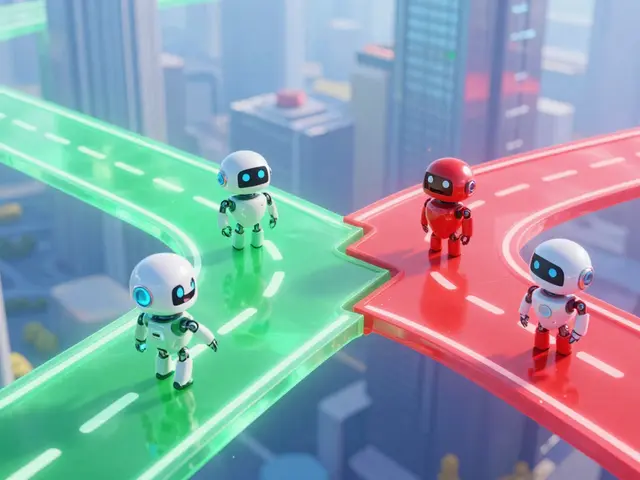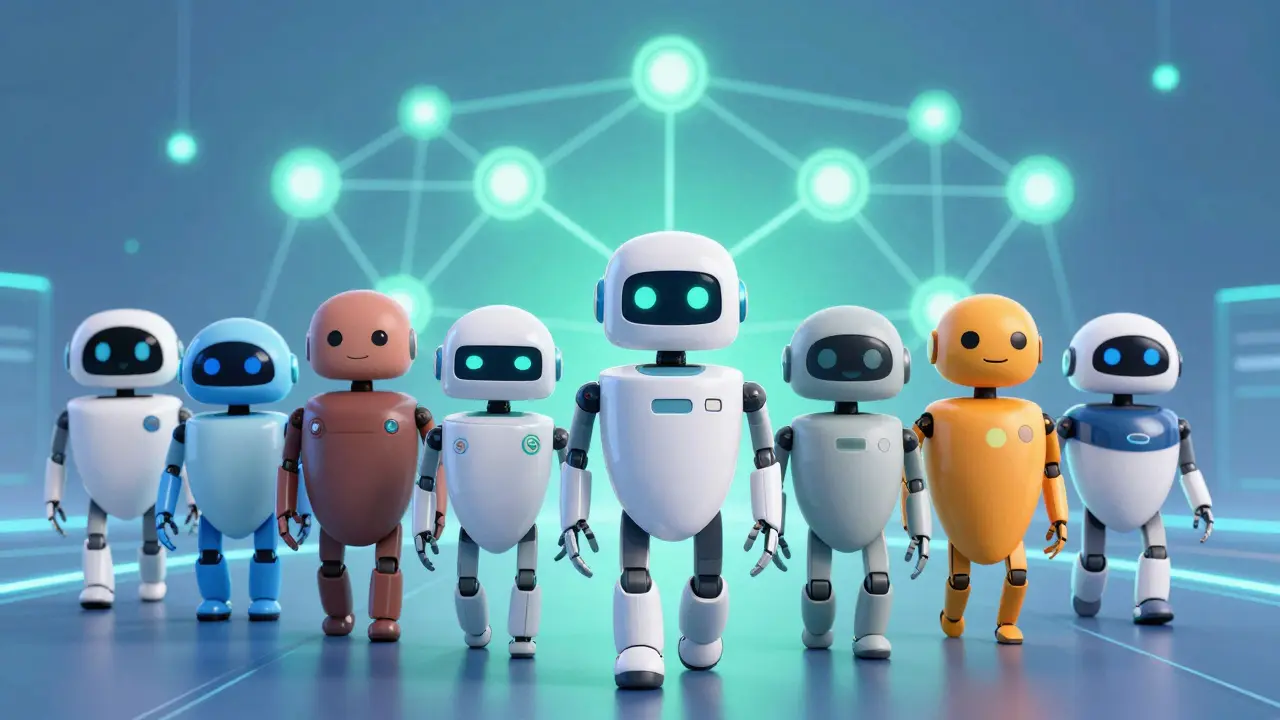
Imagine you are part of a group project. Everyone agrees on the next step, and you all move forward together. That is a planned fork. Now imagine half the group wants to go left, the other half wants to go right, and nobody can agree. The group splits in two. That is a contentious fork.
In the world of blockchain, these splits are called forks. They happen when the rules of a network change. Sometimes it is smooth sailing. Other times, it feels like a divorce. Understanding the difference matters because it affects your coins, your security, and the future of the technology you trust.
The Quick Reality Check
- Planned forks are agreed-upon upgrades. Almost everyone participates. The chain stays one.
- Contentious forks are born from disagreement. The chain splits permanently. You might get tokens on both chains.
- Planned forks usually mean stability and growth. Contentious forks often lead to fragmentation and lower value.
- You rarely need to do anything for a planned fork. For a contentious fork, you must act quickly to secure assets.
What Exactly Is a Blockchain Fork?
A blockchain fork occurs when nodes (the computers running the network) disagree on which blocks are valid. Since blockchains rely on consensus-everyone agreeing on the same history-a disagreement creates a divergence. One path follows the old rules, another follows new rules.
This isn't just technical jargon. It is how decentralized systems handle change. There is no CEO to sign off on an update. Instead, developers propose changes, miners vote with their hash power, and users decide which chain to support. If everyone agrees, it's a planned event. If they don't, it becomes contentious.
Planned Forks: The Smooth Upgrade
Planned forks are the bread and butter of blockchain evolution. They are scheduled months in advance. Developers publish proposals, community members debate them, and once there is enough support, the upgrade goes live at a specific block height.
Take Ethereum. Since its launch in 2015, Ethereum has executed over a dozen planned hard forks. The Berlin upgrade in April 2021 is a perfect example. It implemented several improvements to reduce transaction costs. About 99.5% of the network upgraded within 24 hours. There was no drama. No split. Just a better, faster chain.
Why do planned forks work so well? Because coordination is key. Exchanges announce support weeks ahead. Wallet providers update their software. Miners signal their readiness. By the time the activation block arrives, the entire ecosystem moves as one unit. This unity preserves the network effect-the biggest driver of value in any blockchain.
| Feature | Planned Fork | Contentious Fork |
|---|---|---|
| Consensus | Broad agreement (>95%) | Divided opinion (30-70% split) |
| Outcome | Single upgraded chain | Two permanent separate chains |
| User Action | Usually none required | Must claim tokens on new chain |
| Market Impact | Stable or positive growth | Volatile, often value dilution |
| Example | Ethereum Shanghai Upgrade | Bitcoin Cash Split |
Contentious Forks: When Communities Split
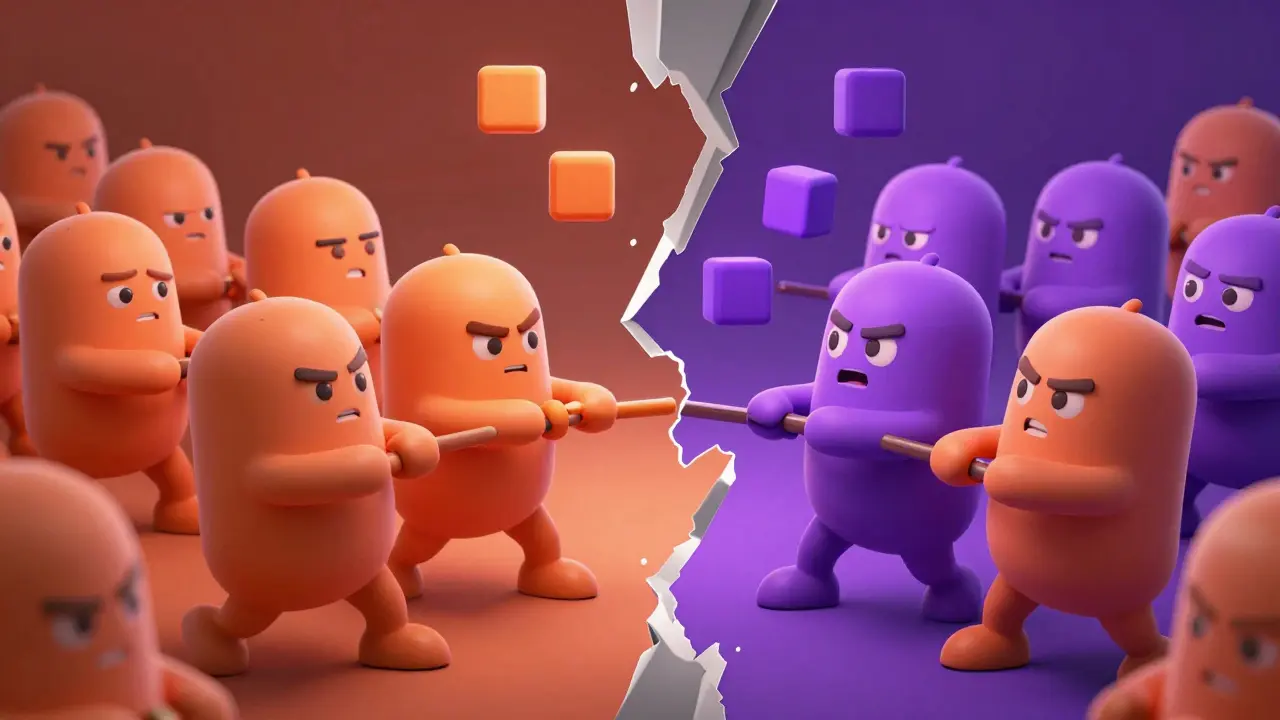
Contentious forks happen when the community cannot reach a consensus. Usually, the disagreement centers on something fundamental: scalability, privacy, or ideology. When one faction pushes a change that others reject, the network splits.
The most famous example is the Bitcoin Cash fork in August 2017. Some Bitcoin users wanted larger block sizes to handle more transactions. Others believed increasing block size would centralize mining and hurt decentralization. The result? Bitcoin (BTC) kept the original small blocks. Bitcoin Cash (BCH) adopted 8MB blocks. Two chains. Two communities. Two different visions.
Another major case was the Ethereum Classic split in 2016. After the DAO hack, the majority of the Ethereum community voted to reverse the theft. A minority argued that code should never be changed, even if it means losing money. That minority stayed on the original chain, now known as Ethereum Classic (ETC), while the main chain continued as Ethereum (ETH).
These splits are messy. Hash power divides. Developers scatter. Users get confused about which token is "real." And often, the smaller chain struggles to survive long-term.
How Forks Affect Your Assets
If you hold cryptocurrency, knowing the type of fork coming up is crucial. Here is what happens to your wallet in each scenario.
During a Planned Fork: In most cases, you do nothing. Your exchange or wallet provider handles the upgrade behind the scenes. Your balance remains the same. The only change might be improved speed or lower fees. For example, during Ethereum’s London fork, users saw EIP-1559 introduced, which made fee predictions more accurate. No action needed.
During a Contentious Fork: This is where you need to pay attention. If you held Bitcoin before the 2017 fork, you were entitled to Bitcoin Cash too. But exchanges had to distribute it manually. If you held coins in a personal wallet, you could import your private keys into a BCH-compatible wallet to claim your free tokens. However, timing mattered. Many people missed out because they didn’t know how to act fast.
Also beware of replay attacks. In some early contentious forks, transactions sent on one chain could be "replayed" on the other, draining funds. Always check if a fork requires special precautions like sending small test amounts first.
Why Governance Matters More Than Ever
Forks reveal the strengths and weaknesses of blockchain governance. Decentralized systems lack a central authority, so they rely on social consensus. When that consensus breaks, forks happen.
Projects with formal governance frameworks experience far fewer contentious forks. According to research from the Cambridge Centre for Alternative Finance, networks with structured decision-making processes saw 68% fewer disruptive splits compared to those without. This suggests that mature communities tend to resolve disagreements internally rather than splitting.
Look at Polkadot. It uses on-chain voting mechanisms that allow upgrades without forking the chain at all. Since 2020, Polkadot has executed 12 consecutive runtime upgrades without creating competing branches. This model shows the future: seamless evolution without the chaos of splits.
On the flip side, projects lacking clear governance often suffer repeated contentious forks. Bitcoin SV, for instance, emerged from a split within Bitcoin Cash itself in 2018. It has since struggled with low adoption and minimal development activity, processing only about 1,200 transactions daily compared to Bitcoin’s hundreds of thousands.
Security Risks You Should Know
Forks aren’t just philosophical debates-they carry real security risks. Replay attacks are the biggest threat during contentious splits. If Chain A and Chain B share similar transaction formats, signing a transfer on one might accidentally broadcast on the other.
Chainalysis reported 17 instances of replay attacks between forked chains since 2017. One notable incident caused $1.2 million in losses during the Ethereum/Ethereum Classic split. To protect yourself:
- Never send large amounts immediately after a fork activates.
- Use separate wallets for each chain if possible.
- Check official announcements for "replay protection" status.
Planned forks generally don’t pose this risk because there is only one resulting chain. But always verify with your exchange or wallet provider.
What the Data Shows
Let’s look at the numbers. Out of 1,287 recorded blockchain forks since 2009, 78% were planned upgrades and only 22% were contentious splits. This trend is accelerating. Between 2021 and 2023, contentious forks dropped to just 14% of all events.
Market cap tells a stark story. As of late 2023, Bitcoin’s market capitalization hovered around $800 billion. Bitcoin Cash sat at roughly $1.2 billion. Bitcoin SV was even lower. Combined, the forked chains represented less than 0.2% of the original chain’s value. This illustrates a harsh truth: fragmentation usually destroys value.
Enterprise adoption follows the same pattern. Gartner’s 2023 survey found that 92% of Fortune 500 companies experimenting with blockchain use networks relying on planned forks (like Hyperledger or Enterprise Ethereum). Only 8% engage with ecosystems born from contentious splits.
Future Outlook: Fewer Splits, Smarter Upgrades
The industry is moving toward smoother transitions. Formal governance models are becoming standard. On-chain voting, quadratic financing, and delegated staking help align incentives before conflicts arise.
Gartner predicts that by 2025, 90% of major blockchain networks will implement formal governance frameworks, reducing contentious forks by 75%. Projects like Polkadot and Cosmos already demonstrate how interoperable, forkless upgrades can work.
However, risks remain. Ideological differences won’t disappear entirely. New layers like Layer 2 solutions may introduce their own compatibility challenges. And regulatory scrutiny continues to grow. The SEC has noted that tokens created via contentious forks may constitute unregistered securities, adding legal complexity to already messy situations.
Do I lose my coins during a planned fork?
No. During a planned fork, your existing coins simply continue on the upgraded chain. Most exchanges and wallets handle the transition automatically. Your balance remains unchanged, though you may benefit from improved features like faster transactions or lower fees.
What happens to my tokens after a contentious fork?
You typically receive tokens on both the original chain and the new forked chain. If you hold coins on an exchange, they usually distribute the new tokens automatically. If you use a self-custody wallet, you must manually import your private keys into a compatible wallet for the new chain to access those tokens.
Are contentious forks dangerous for my investment?
They can be. Contentious forks often lead to price volatility and value dilution. Historically, the original chain retains most of the market cap, while forked chains struggle to gain traction. Additionally, replay attacks pose security risks if you transact carelessly across both chains.
How can I tell if a fork is planned or contentious?
Planned forks are announced months in advance with broad developer and miner support. Look for official documentation, community votes, and coordinated exchange listings. Contentious forks emerge suddenly amid heated debate, with conflicting roadmaps and divided hash power. Check forums like Reddit or GitHub to gauge community sentiment.
Will blockchain forks become obsolete?
Traditional forks may decline as governance improves. Networks like Polkadot show that on-chain upgrades can occur without splitting the chain. However, ideological disagreements will likely persist, meaning occasional contentious forks may still happen. The focus is shifting toward minimizing disruption through better coordination tools.