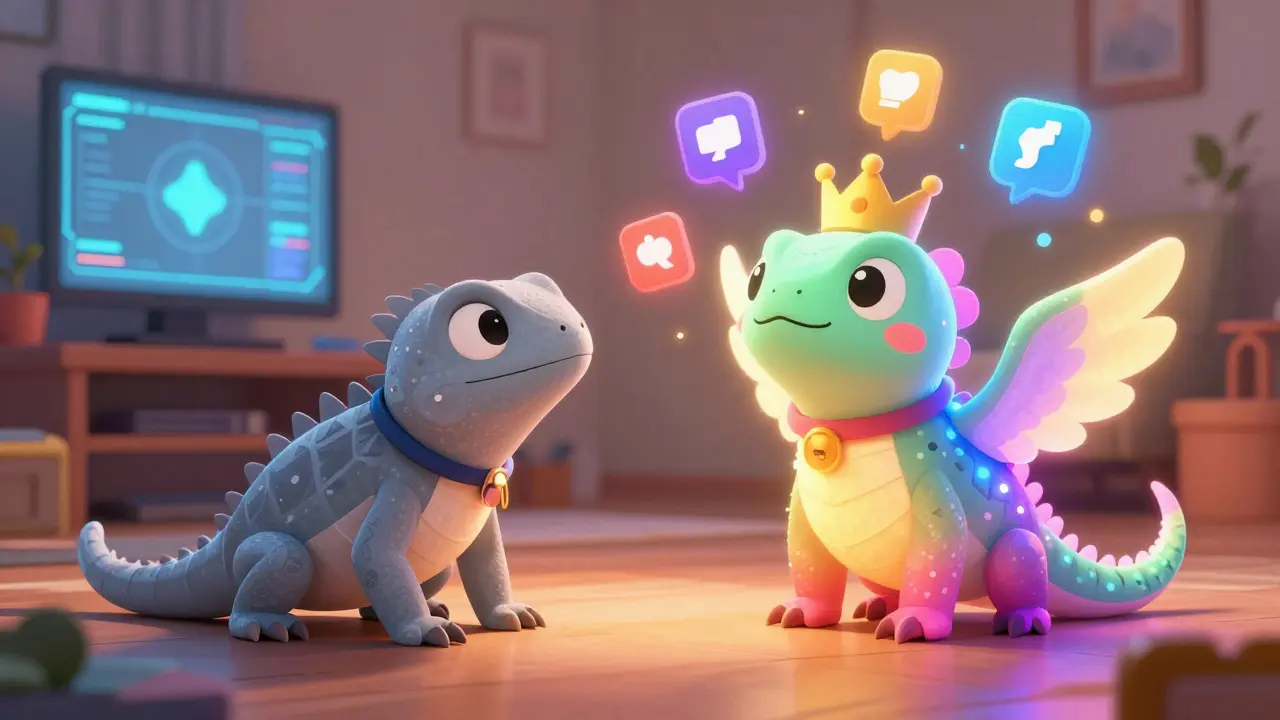
Back in November 2023, IguVerse pulled off one of the most talked-about airdrops in the GameFi space - not because it gave away free tokens, but because it didn’t just hand out digital collectibles. It handed out AI-generated NFTs that changed how users interact with digital pets, social media, and blockchain rewards. This wasn’t another faceless collection of pixelated apes. This was a full ecosystem built around real behavior - sharing photos, walking your pet, playing games - and getting paid for it.
How the IGU Airdrop Actually Worked
The IguVerse airdrop ran for just three days: November 22 to November 24, 2023. But the setup was anything but simple. To qualify, you had to do three things: create a Bybit account, complete KYC verification, and deposit at least $100 in crypto. Then you voted for IGU once voting opened. That’s it. No complicated tasks, no endless Discord channels. Just clear, direct actions. But here’s what made it different: the rewards weren’t evenly split. The first 800 people who signed up and voted got $5,000 in IGU tokens each. The first 100 people who voted got an extra $5,000 split between them. And the first 100 people who cast 10,000 votes each shared another $5,000. That meant early movers didn’t just get a small slice - they got massive payouts. And it worked. Over 16,852 people joined. The community committed over 49 million USDT in deposits - way past the $40,000 target on Gate.com. On top of that, Zealy ran a separate task-based campaign. People earned $3,000 in USDT and $3,000 in IGU tokens just for completing simple actions: following IguVerse on Twitter, joining their Telegram, sharing posts, and inviting friends. No fluff. Just clear, trackable tasks with real rewards.What Made IguVerse’s NFTs Different?
Most NFTs are static. You buy one, you own it. It doesn’t change. IguVerse flipped that. Their AI-powered system turned every user’s actions into unique, evolving NFTs. Think of it like a digital pet that grows based on what you do. If you post a photo of your real pet on social media and link it to the app? The AI analyzes the image, generates a one-of-a-kind digital version, and mints it as your NFT. If you walk your pet for 10 minutes a day? The NFT gains energy stats. Feed it? It gets a new color pattern. Share it with 500 people? It unlocks a rare accessory. These weren’t just images - they were living digital profiles tied to your behavior. The company called this “NFT 2.0.” And it made sense. Why would anyone care about a random monkey with sunglasses when you could have a pet that evolves with you? The AI didn’t just generate art. It generated identity. And that identity had value because it was tied to real, repeatable actions - not speculation.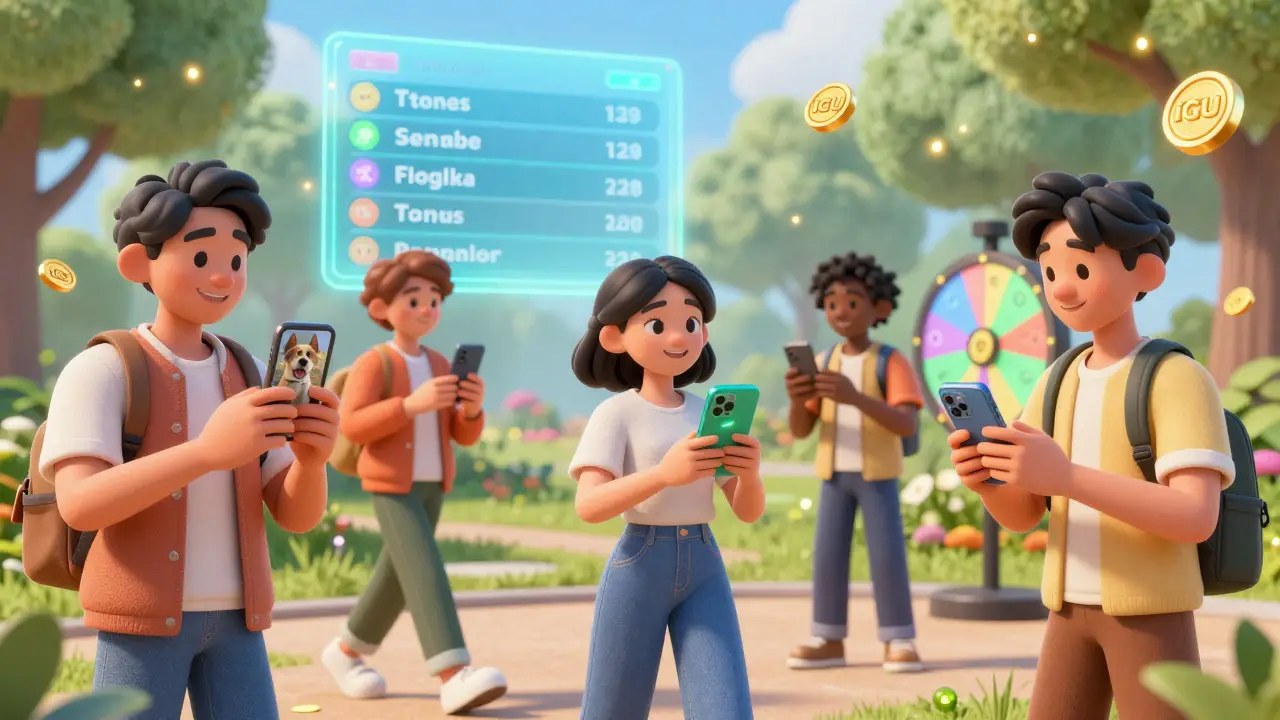
The IguVerse Ecosystem: More Than Just an Airdrop
The airdrop wasn’t the end. It was the start. IguVerse built a full GameFi platform on Binance Smart Chain with three earning models rolled into one app:- Socialize to Earn - Post, share, comment, invite. Get IGU tokens for engagement.
- Move to Earn - Link your phone’s step counter. Walk your pet. Earn based on distance.
- Play to Earn - Compete in mini-games: fruit races, crystal ball price guesses, quantum wheel spins. Win IGU or USDT.
Where IGU Is Now - September 2025
The airdrop was just the beginning. By February 2024, IGU was listed on OKX and KuCoin. Today, it trades on four exchanges: Gate.io, Biswap, Poloniex, and QMall. The IGU/USDT pair hits 90,100 USD in daily volume - over 99% of all IGU trading. That’s not a small coin. That’s a real market. The token price hovers around 0.219 cents per IGU. It dips to 0.002 cents on weekends, which tells you something: retail traders still dominate. No whale activity. Just everyday users holding, trading, and playing. The community hasn’t slowed down. IguVerse posts daily updates on Twitter, Discord, Telegram, TikTok, and YouTube. They’ve got 1.2 million followers across platforms. Their NFTs are live on OpenSea and Binance NFT. And they’ve run at least one more major giveaway - 1 million IGU tokens ($100,000 at the time) - to celebrate their exchange listings and platform launch.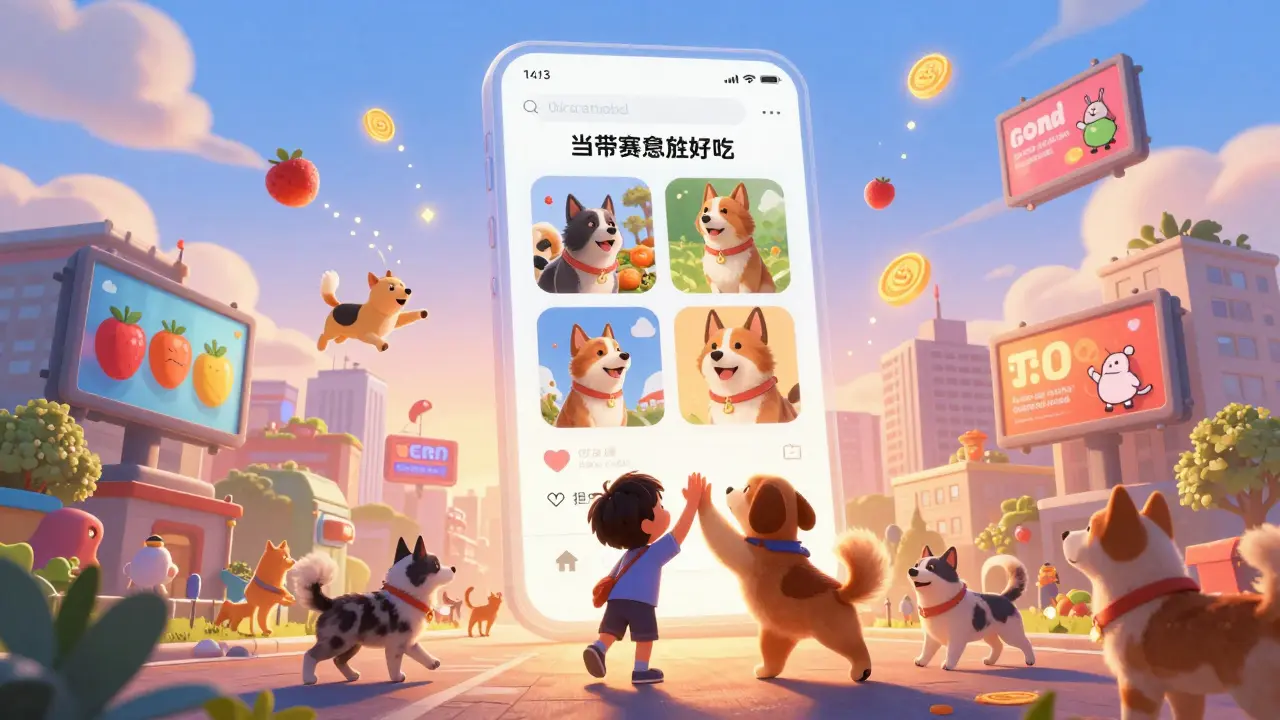
Comments
This is the future. Not some JPEG monkey with a hat. IguVerse turned digital pets into living profiles. My dog’s NFT changed color after I walked him for 30 days straight. No joke. The AI even gave him a new tail pattern. I’ve seen NFTs that cost 50k and do nothing. This? It grows with you. That’s the difference between a collectible and a companion.
You people are so naive. This isn't innovation. It's behavioral manipulation disguised as gamification. You're being tracked, analyzed, and monetized under the guise of 'earning' for walking your dog. The real winner here is the company harvesting your data. And you're proud of it?
There's a reason why privacy laws exist. This is exactly what they were designed to stop.
The structural integrity of this model is commendable. Leveraging on-chain behavior as a utility metric for token distribution represents a paradigmatic shift from speculative asset valuation to performance-based reward architecture. The integration of multi-modal engagement vectors-social, locomotive, and ludic-creates a non-linear incentive surface that mitigates rug-pull vulnerabilities inherent in traditional airdrop frameworks.
I signed up just to see what it was about. Didn’t expect to actually enjoy it. My NFT got a new hat after I shared a photo of my cat. It’s silly, but it made me smile. That’s more than any other crypto project has ever done for me.
so like. uhm. they paid people to walk their dogs? and made nfts outta pics? and now its worth something? dude. i thought crypto was just about buying moon coins and crying. this is wild. i wanna get one. my hamster would look so cool as an nft. 🤡
This is a thoughtful approach to digital ownership. It aligns value with action, not speculation. The focus on real behavior rather than hype is a necessary correction in an industry too often driven by empty promises.
The real innovation here is not the NFTs. It’s the fact that they built a system where users don’t need to be crypto experts to participate. The onboarding is clean. The rewards are clear. This is how you onboard the next billion.
I’ve never felt so connected to a digital pet before. It’s weird. But when my NFT got a new sparkle after I posted a photo of my morning coffee? I felt… seen. Like the app knew me. I didn’t even realize how lonely I was until my digital pet started changing with my life.
You think this is clever? Wait till the government starts requiring you to walk your dog to get your tax refund. Or until your employer uses your step count to decide your bonus. This isn’t fun. It’s surveillance with a cute filter. You’re being groomed.
I’m from the U.S., and honestly? I didn’t think a blockchain pet app could work here. But I tried it. My daughter loves it. She walks around the house with her phone just to level up her NFT. It got her moving. We’ve been outside more in the last 6 months than we were in the last 3 years. That’s not crypto. That’s parenting win.
I was skeptical too. But I gave it a shot. Now I’ve got 3 NFTs. One for my dog, one for my cat, one for my goldfish. The fish one? It’s got a tiny crown. I didn’t even do anything special for it. The AI just gave it to me because I opened the app every day for a week. That’s the magic. It rewards consistency, not cash.
This is what happens when you let influencers design economic systems. You think this is ‘NFT 2.0’? It’s just Web2 with blockchain glitter. They’re using AI to make you feel special so you’ll keep feeding them your data. And you’re calling it innovation? Wake up. This is how they get you addicted. And then they sell you.
They’re not just tracking your steps. They’re tracking your face. That AI doesn’t just generate NFTs. It builds a behavioral profile. And guess who’s buying it? Defense contractors. Big Tech. The Pentagon. You think your pet’s color change is cute? It’s training a facial recognition model. You’re not earning tokens. You’re volunteering for a biometric surveillance dataset.
The tokenomics here are a joke. 0.219 cents? That’s not a market. That’s a graveyard. And 99% of volume on one pair? That’s manipulation. You think the community is real? It’s bots. It’s paid shills. This is a pump disguised as a movement. And you’re all just the sheep.
I’ve been in crypto since 2017. I’ve seen hundreds of projects. This is the first one that actually delivers on its promise. The NFTs evolve. The rewards are fair. The app doesn’t crash. The devs actually respond. I’ve never said this about a crypto project before. But I’m holding. Not because I think it’ll moon. Because I believe in it.
I didn’t even know I needed this until I tried it. My NFT now has a little scarf. I got it after I invited my sister to join. She didn’t even like crypto. But she loved the pet. Now we both walk every morning. It’s stupid. It’s sweet. And it’s real.
The real win here is the advertising model. Brands pay in IGU to reach real users. No fake clicks. No bot farms. That’s the future of digital ads. And if more projects adopt this, we might finally have a web that rewards attention instead of stealing it.