Bitcoin's peer-to-peer network lets users send money directly without banks. Thousands of nodes verify transactions globally, making it resilient, censorship-resistant, and free from central control. Learn how it works and why it matters.
Bitcoin P2P Network: How Decentralized Trading Really Works
When you send Bitcoin, you’re not talking to a bank or a company—you’re talking directly to other users across the globe through the Bitcoin P2P network, a decentralized system of computers that validate and relay transactions without central control. Also known as peer-to-peer blockchain network, it’s what makes Bitcoin truly independent of governments and financial institutions. This isn’t just theory—it’s how over 15,000 active nodes keep the network running every second, even when some go offline.
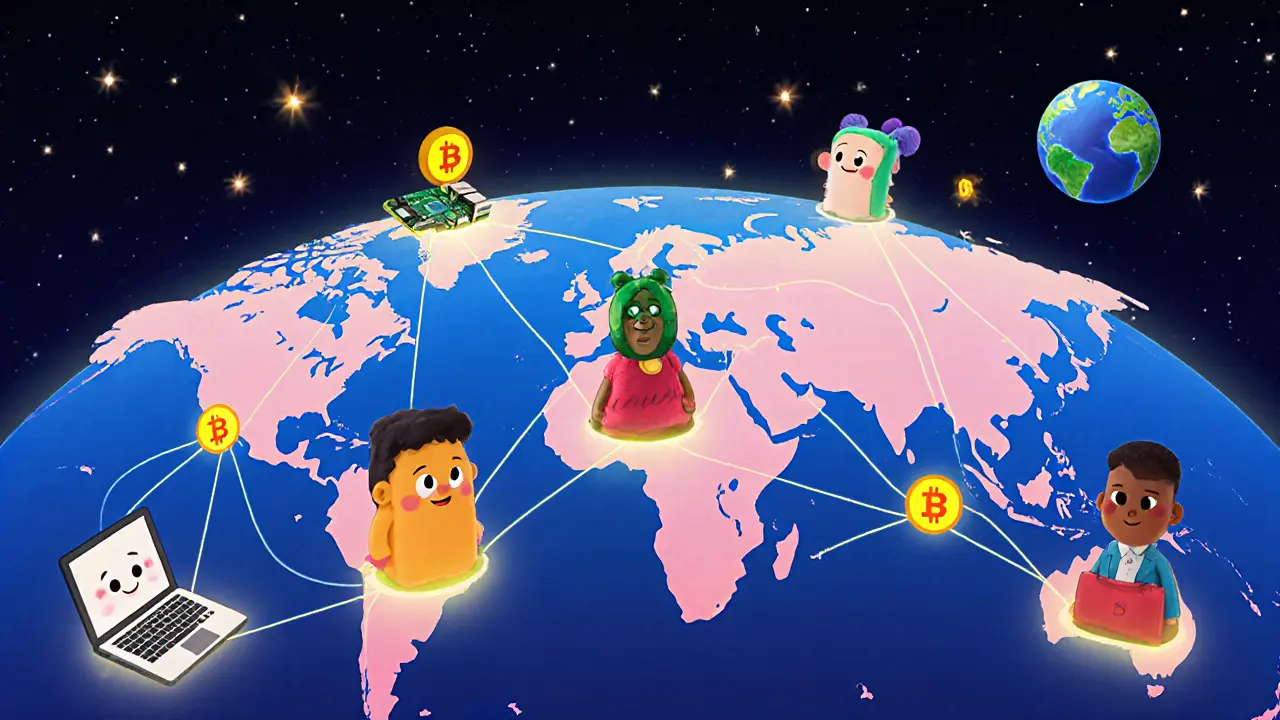
The Bitcoin nodes, computers that store the full blockchain and verify transactions are the heartbeat of this system. Each one checks new blocks, rejects fake transactions, and shares valid data with neighbors. No single node runs the network. No server controls it. That’s why you can’t shut it down by taking down one company or country. Even if half the nodes disappeared, the rest would keep going. This is what makes it resistant to censorship, hacking, and political pressure. It’s not just secure—it’s durable by design.
Behind the scenes, the Bitcoin consensus, the process by which nodes agree on which transactions are valid uses Proof of Work to lock in changes. Miners compete to solve puzzles, and the first to win gets to add the next block. Everyone else checks their work. If someone tries to cheat—like double-spending or creating fake coins—the network ignores them. This isn’t magic. It’s math, economics, and network rules working together. And it’s why Bitcoin has stayed intact for over 14 years, through crashes, bans, and hype cycles.
You won’t find this kind of resilience in centralized exchanges. Platforms like CoinExchange or CriptoSwaps still rely on servers, APIs, and corporate oversight. They can freeze accounts, block withdrawals, or vanish overnight. The Bitcoin P2P network doesn’t need them. It runs on open-source software anyone can run—even on a Raspberry Pi. That’s why traders who care about true ownership, privacy, and control always look back to the P2P layer. It’s the foundation everything else is built on.
What you’ll find in the posts below isn’t just a list of exchanges or airdrops. It’s a collection of real-world examples showing how the Bitcoin P2P network’s principles shape everything in crypto—from how tokens are distributed, to why some exchanges get shut down, to why scams like Tatmas or Velas GRAND airdrops always fail. If you understand how Bitcoin moves without a middleman, you’ll see why most crypto projects fall short. This isn’t about speculation. It’s about infrastructure. And it’s the only thing that lasts.
November 7, 2025
How Bitcoin's P2P Network Operates: A Simple Breakdown of Decentralized Transactions
About
Cryptocurrency