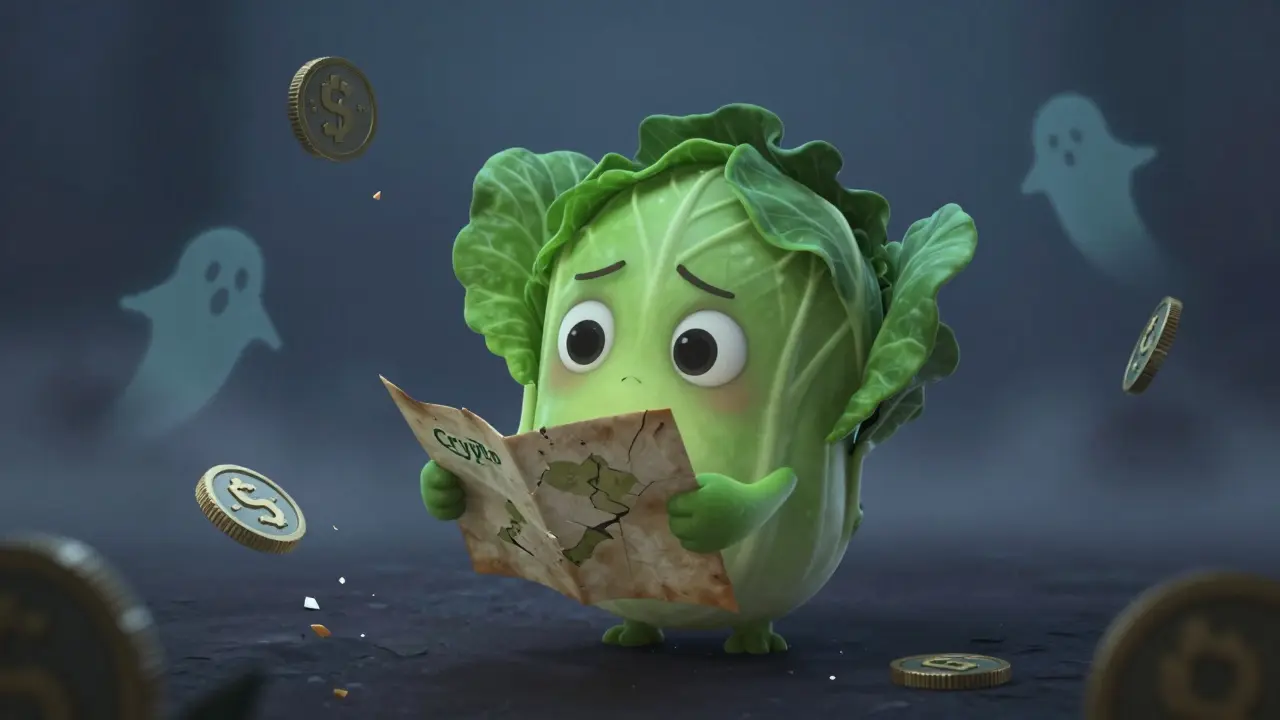
You might have stumbled across the name Cabbage (CAB) while scrolling through a list of obscure cryptocurrencies. Maybe you saw it on an old forum post or a forgotten price tracker. It sounds harmless enough-a vegetable-themed coin in a market full of dog and meme coins. But here is the hard truth: Cabbage (CAB) is not just a bad investment; it is effectively dead.
If you are wondering what happened to this project, why it still shows up on some lists, or if there is any hidden value waiting to be discovered, you are in the right place. We need to look at the raw data behind CAB because the numbers tell a story of abandonment that is rare even in the volatile world of crypto. This isn't about missing out on the next big thing. It is about understanding how to spot a "ghost token" before you waste your time-or worse, your money-on something that no longer exists.
The Reality Behind Cabbage (CAB)
To understand why CAB is dangerous, we first need to define what it is supposed to be. On paper, Cabbage is a cryptocurrency token created around 2016 with a fixed total supply of roughly 10.5 million tokens. That sounds specific, right? You would expect to find a whitepaper, a team page, or at least a working website explaining its utility. Instead, you hit a wall.
The official website, once listed as www.cabbage.tech, returns 404 errors. There is no active GitHub repository showing code commits. There are no recent announcements on Twitter or Telegram. The project has been silent for years. In the crypto world, silence usually means one of two things: the developers moved on to a new scheme, or they cashed out and left the community holding nothing. With CAB, the evidence points strongly to the latter.
Here is the most critical detail that separates CAB from a merely "bad" coin: zero circulating supply. While the total supply is listed as ~10.5 million tokens, major tracking platforms like CoinMarketCap and Binance report that none of these tokens are actually in circulation. How can a coin exist if nobody holds it? This anomaly suggests the tokens were never released to the public, or they were all retained by the creators, making it impossible for anyone else to buy or sell them legitimately.
Why the Numbers Don't Add Up
When you look at price data for CAB, you will see conflicting information depending on which site you visit. This inconsistency is a major red flag. One platform might show a price of $0.001, while another shows $0.00007. Why the discrepancy?
It comes down to liquidity. Liquidity is the ability to buy or sell an asset quickly without affecting its price. For CAB, liquidity is non-existent. Here is a breakdown of the key metrics that reveal the token's true state:
| Metric | Value / Status | What It Means |
|---|---|---|
| Total Supply | ~10.5 Million | The maximum number of tokens ever created. |
| Circulating Supply | 0 | No tokens are available for trading. This is the biggest warning sign. |
| 24h Trading Volume | $0 | No real transactions are happening. Any "price" shown is likely stale or fake. |
| Market Cap | $0 - $11k | Inconsistent data reflects lack of real market activity. |
| All-Time High | $0.056 (June 2018) | The peak was over 7 years ago, during a previous market cycle. |
| Exchange Listings | None Major | Not listed on Binance, Coinbase Pro, or Kraken for active trading. |
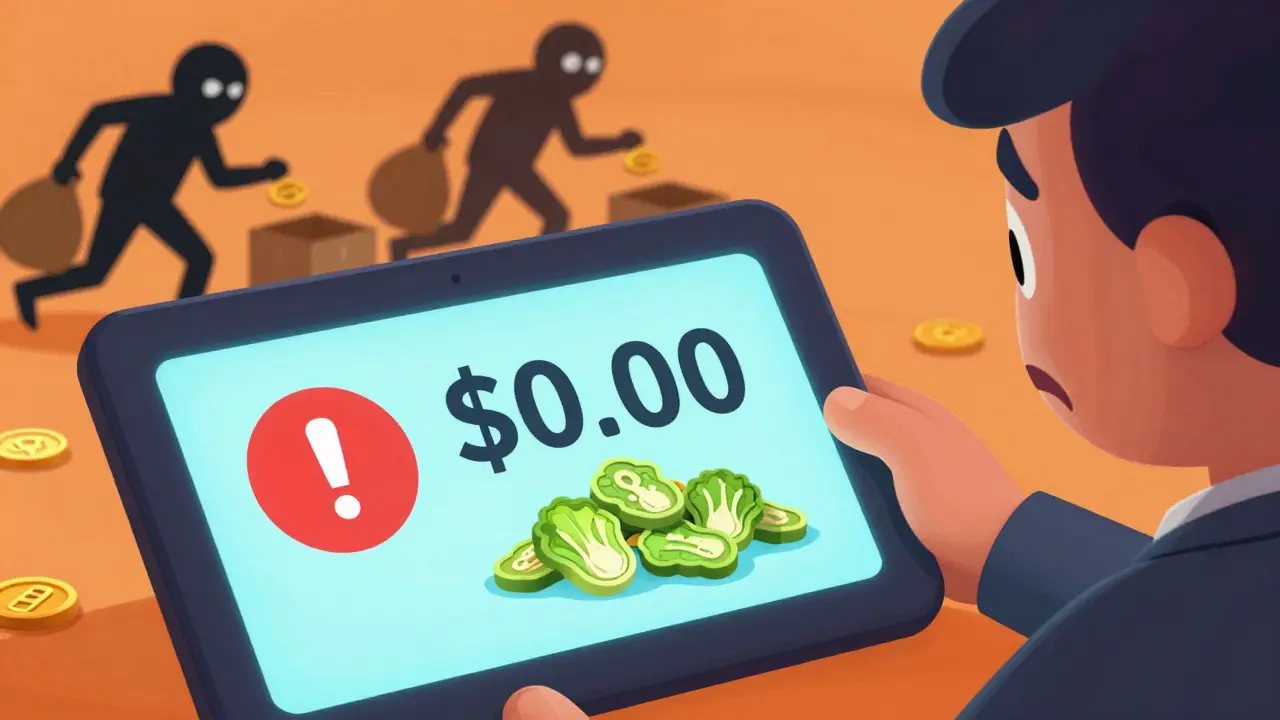
Notice the zero trading volume. If you try to buy CAB on a decentralized exchange (DEX), you might find a tiny pool of liquidity, but the fees would be astronomical, and you would likely be unable to sell later. This is known as a "rug pull" scenario, where the exit liquidity is removed, leaving buyers trapped. Even if you somehow hold CAB tokens, their value is functionally zero because there is no market to absorb your sale.
Understanding "Ghost Tokens"
Cabbage (CAB) belongs to a specific category of cryptocurrencies known as Ghost Tokens. These are projects that technically exist on the blockchain but have no active development, no community, and no trading volume. They are digital ghosts.
According to market analysis from firms like Messari and Delphi Digital, these tokens make up a small but significant portion of the crypto landscape-often cited around 8% of all tracked assets. They persist on tracking websites because automated bots scrape blockchain data, but they offer no utility to users.
Why do they stay on trackers? Because deleting them requires manual effort. Platforms like CoinGecko and CoinMarketCap have cleanup initiatives, but they cannot remove every dead project instantly. CAB remains visible only because someone entered its contract address into a database years ago, and the system hasn't flagged it for removal yet. This creates a false impression of legitimacy for unsuspecting investors who see a ticker symbol and assume it is tradable.
The Security Risks of Interacting with CAB
You might think, "If I already own some CAB, maybe I should wait for it to revive." Or perhaps you found a tutorial claiming you can mine it. Both ideas carry serious risks.
- Wallet Compatibility Issues: Most standard wallets like MetaMask, Exodus, or Trust Wallet do not support CAB. To interact with it, you would need to add a custom token contract address. This opens your wallet to potential exploits if you accidentally approve a malicious transaction.
- Scam Indicators: Security researchers at firms like CertiK have flagged similar tokens with zero circulating supply as high-risk. The absence of a verifiable team and the retention of all tokens by unknown entities are classic signs of a scam designed to trick users into sending funds to addresses that will never send anything back.
- Opportunity Cost: Time spent researching dead tokens is time taken away from learning about legitimate blockchain technologies. The crypto space moves fast. Focusing on abandoned projects prevents you from engaging with networks that have real adoption, such as Ethereum, Solana, or Bitcoin.
There are no success stories associated with CAB. No companies use it for payments. No developers build apps on its chain. It serves no purpose other than occupying space on a ledger.
How to Spot Dead Coins Before You Buy
Learning about Cabbage (CAB) is valuable not because you should invest in it, but because it teaches you how to avoid similar traps. Here is a checklist to help you identify ghost tokens or abandoned projects:
- Check Circulating Supply: If the circulating supply is zero or significantly lower than the total supply without a clear explanation (like locked staking), walk away.
- Verify Trading Volume: Look at the 24-hour volume. If it is $0 or less than $100, the market is illiquid. You won't be able to sell.
- Inspect Social Channels: Visit the project's Twitter, Discord, or Telegram. Are the posts from months or years ago? Are the replies generic bots? Real communities are active.
- Look for Code Activity: Check the project's GitHub. If the last commit was years ago, the developers have stopped working on it.
- Search for News: Use Google to search for the token name plus "scam," "dead," or "abandoned." If the results are sparse or negative, proceed with extreme caution.
These steps take five minutes but can save you from losing money to vanity projects or outright fraud.
Conclusion: Move On From CAB
Cabbage (CAB) is a relic of the early altcoin boom. It has no utility, no community, and no future. The data is clear: zero circulating supply and zero trading volume mean it is mathematically impossible for this token to function as a currency or investment vehicle. Holding it offers no benefit, and attempting to acquire it exposes you to unnecessary security risks.
Instead of chasing dead ends like CAB, focus your energy on cryptocurrencies with transparent teams, active development, and genuine market participation. The crypto market is full of opportunities, but they are found in living, breathing ecosystems-not in the graveyard of abandoned tokens.
Is Cabbage (CAB) still alive?
No, Cabbage (CAB) is considered a defunct or "ghost" token. It has zero circulating supply, zero trading volume, and no active development since approximately 2019. It does not function as a viable cryptocurrency.
Can I buy Cabbage (CAB) on Binance or Coinbase?
You cannot actively trade Cabbage (CAB) on major exchanges like Binance or Coinbase. While these platforms may list historical data for the token, they do not support buying or selling it due to its lack of liquidity and market presence.
Why is the circulating supply of CAB zero?
A zero circulating supply typically indicates that the project creators retained all tokens and never distributed them to the public. This is a major red flag often associated with abandoned projects or scams, as it makes trading impossible for regular users.
Is it safe to hold Cabbage (CAB) tokens?
Holding CAB tokens carries no financial gain as they have no market value. However, interacting with the token contract on a blockchain could pose security risks if you approve malicious transactions. It is best to ignore or delete references to this token from your wallet.
What happened to the Cabbage (CAB) team?
The identity of the Cabbage (CAB) team is unknown. There is no verifiable information about the founders or developers. The project's website is inactive, and there has been no communication from the team since the project was abandoned years ago.