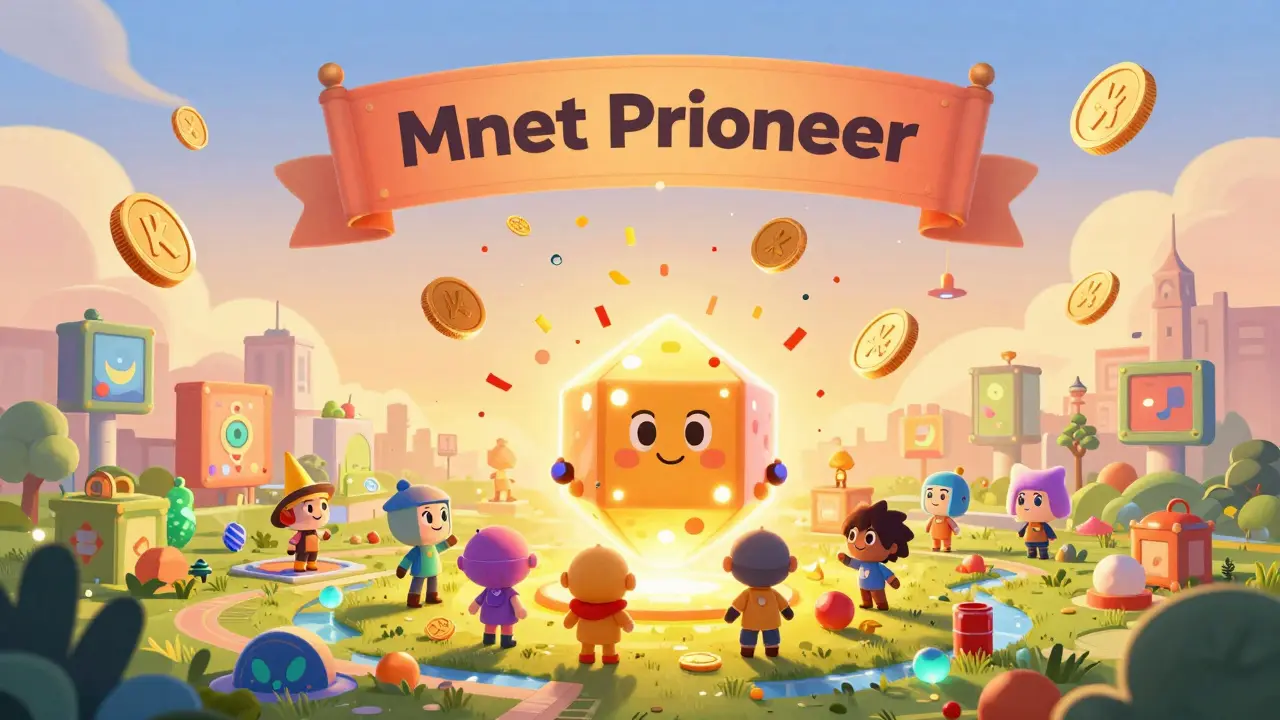
The NUUM airdrop by Bit.Country was tied to the MNet Pioneer crowdloan on Kusama, rewarding KSM stakers with NEER tokens later converted to NUUM on Polkadot. Though the token price crashed 99%, the metaverse platform remains active, letting users build and monetize their own digital worlds.
Polkadot Metaverse: What It Is, Why It Matters, and What’s Really Happening
When people talk about the Polkadot metaverse, a collection of interoperable virtual worlds and decentralized applications built on the Polkadot blockchain network. Also known as Web3 virtual ecosystems, it’s not one place—it’s a whole network of parallel digital universes that can talk to each other, thanks to Polkadot’s unique architecture. Unlike other blockchains that run in isolation, Polkadot lets different chains—called parachains—share security and swap data. That’s the core idea behind its metaverse: no more walled gardens. A game on one parachain can pull assets from a virtual land project on another, all without bridges, swaps, or middlemen.
This isn’t just theory. Projects like PolkaWar (PWAR), an NFT-based battle game built on Polkadot that tried to combine gaming with token rewards and Bit Hotel (BTH), a retro-styled virtual world where users could earn tokens by exploring digital spaces were early attempts to bring the metaverse idea to life on Polkadot. But here’s the truth: most of them faded fast. PolkaWar’s token is worth pennies. Bit Hotel’s trading volume is zero. Why? Because building a metaverse isn’t just about flashy graphics or airdrops—it needs users, utility, and ongoing development. Too many of these projects were hype cycles disguised as innovation.
The real potential of the Polkadot metaverse isn’t in single games or virtual real estate plots. It’s in the infrastructure. Polkadot’s parachain ecosystems, independent blockchains that connect to the Polkadot relay chain for security and communication give developers the freedom to build specialized worlds without starting from scratch. One parachain could handle identity, another could manage digital assets, and a third could run the game engine—all talking to each other in real time. That’s the future. But right now, most of what’s labeled as "Polkadot metaverse" is either dead, dormant, or just a token with no product.
What you’ll find in the posts below isn’t a list of shiny metaverse projects. It’s a reality check. You’ll see what worked, what failed, and why most of these projects vanished. You’ll learn how blockchain ownership, consensus, and liquidity actually impact virtual worlds—not just the marketing claims. If you’re looking for the next big metaverse play, you’ll find out what to avoid and what, if anything, still has a chance. This isn’t about dreams. It’s about what’s actually running on-chain today.
December 9, 2025
NUUM Airdrop Details: How Bit.Country’s MNet Token Distribution Worked and What Happened Since
About
Cryptocurrency